We've now detected 40,000 near-Earth asteroids, thousands more will be discovered soon
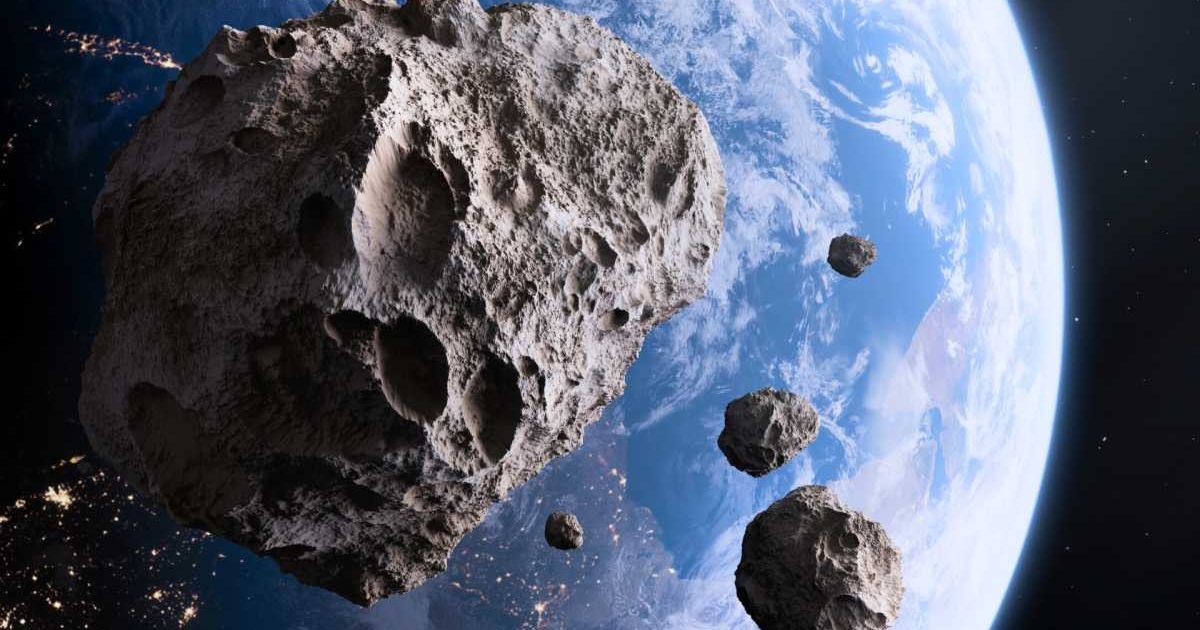
10,000 of the 40,000 were discovered in the last three years alone.
PUBLISHED NOV 28, 2025
Blue Earth and asteroids in the space along with a view of planet Earth, elements of this image furnished by NASA (Representative Cover Image by mikdam / Getty Images)

Thanks to the discovery of yet another near-Earth asteroid, the tally now stands at a whopping 40,000, according to the European Space Agency (ESA). “The number of discoveries is rising exponentially, from one thousand at the beginning of the century to 15,000 in 2016 and 30,000 in 2022,” said ESA’s Near-Earth Object Coordination Centre manager Luca Conversi.
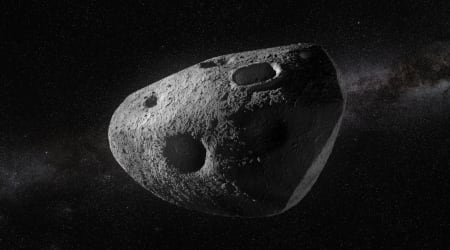
A digital illustration of an asteroid.
(Representative Cover Image Source: Getty Images | Andrzej Wojcicki/Science Photo Library.)
A digital illustration of an asteroid. (Representative Image Source: Getty Images | Andrzej Wojcicki/Science Photo Library.)

“As the next generation of telescopes enters operation, we expect the number of known NEAs to continue to grow at an even higher pace.” For the uninitiated, asteroids are rocky remnants from the formation of the solar system about 4.6 billion years ago.
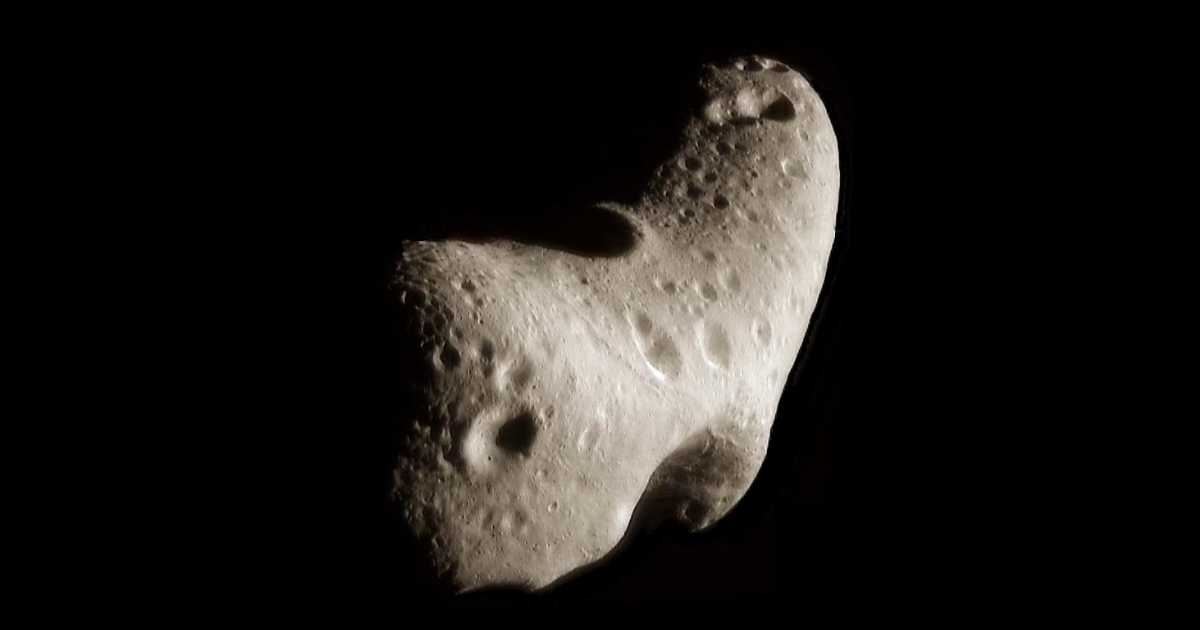
Asteroid Eros, as seen by NEAR Shoemaker (Resized by Starlust staff) (Image Credit: NASA/JPL/JHUAPL)

And while most of them can be seen orbiting around the Sun between Mars and Jupiter, some that come too close to Earth (around 27 million miles) warrant close monitoring from our planetary defense teams. These are what we refer to as near-Earth asteroids.
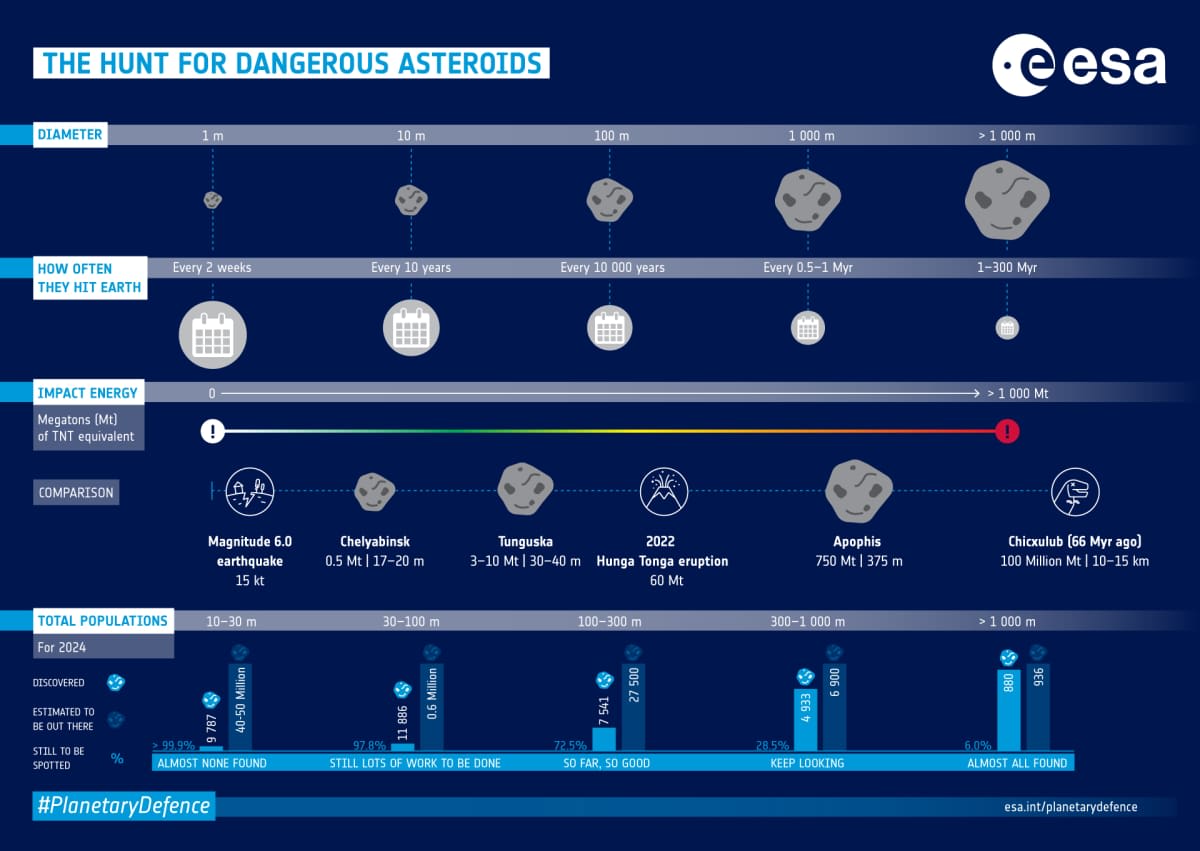
A chart showing danger levels posed by different types of asteroids. (Image Credit: ESA)

The sheer number of NEAs discovered till now not only shows us how vulnerable we are in the context of the larger cosmos, but is also proof of the exponential progress in the domain of planetary defense. Following the detection of the first NEA, Eros, in 1898, discoveries were pretty slow. However, in the 1990s and 2000s, dedicated survey telescopes began to find hundreds of new NEAs each year. In fact, 10,000 of the 40,000 total were discovered in the last three years alone, and Conversi assures that future surveys are going to be even more extensive.
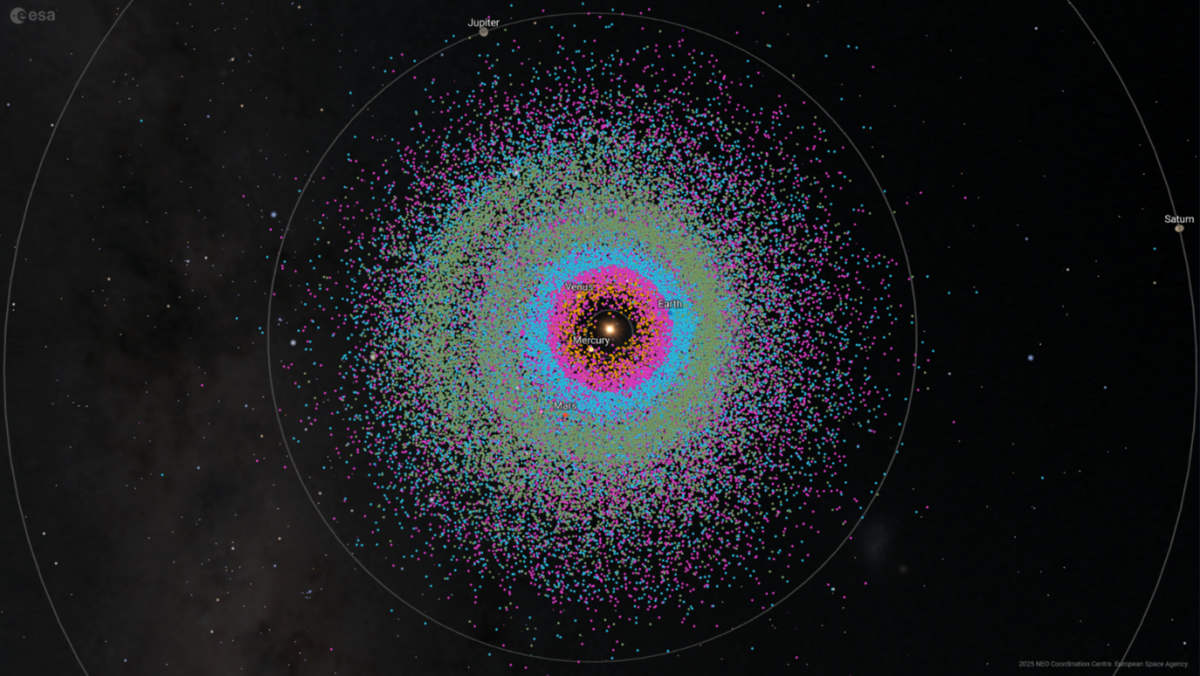
An illustration of ESA's orbit visualization tool Orbit Visualisation Tool, which can display collections of asteroids and the Keplerian and perturbed orbits of NEOs in a 3D environment of the Solar System. (Image Credit: ESA)

“Inaugurated this year, the Vera C. Rubin Observatory in Chile, while not dedicated exclusively to asteroid surveys, will discover tens of thousands of new NEAs and other asteroids,” Conversi added. “Meanwhile, ESA’s Flyeye telescopes, designed with a wide, insect-like view of the sky, will catch asteroids that slip past current surveys.”
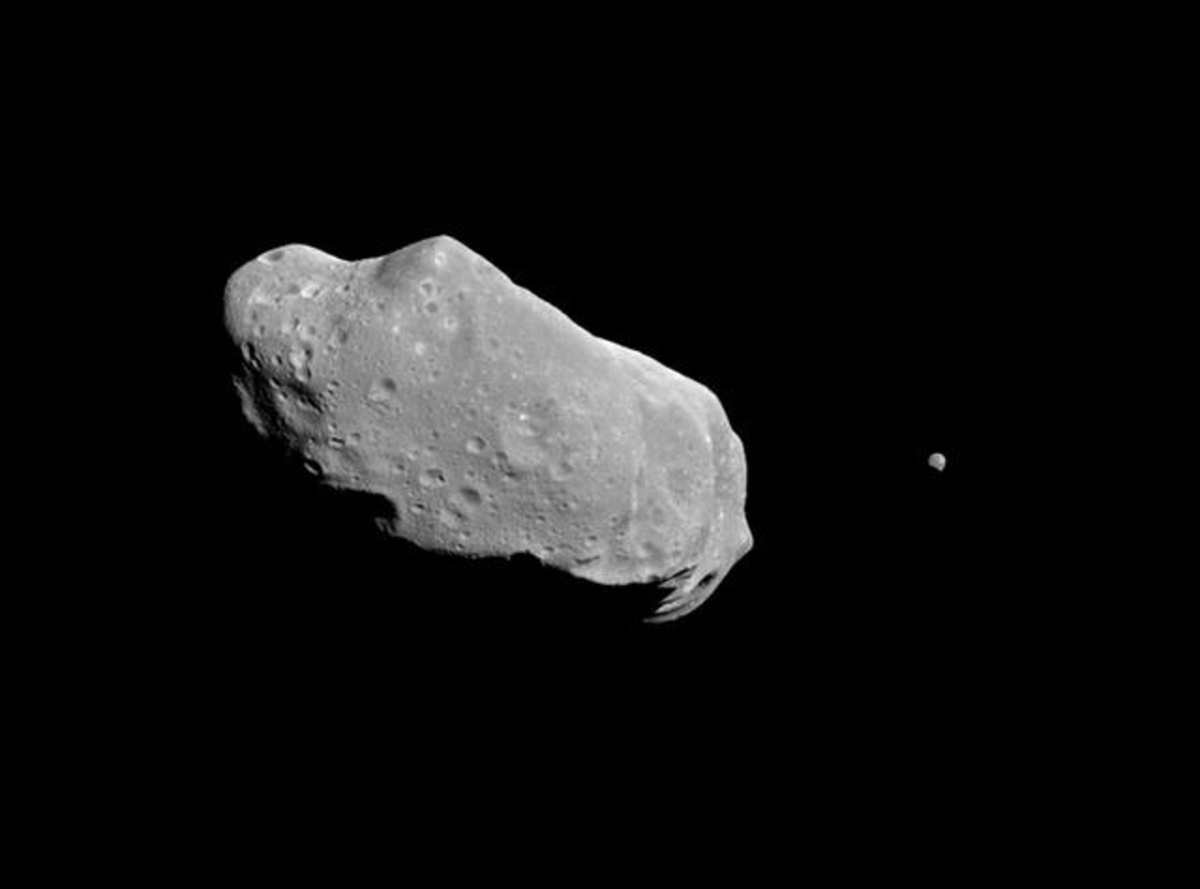
This is the first full picture showing both asteroid 243 Ida and its newly discovered moon to be transmitted to Earth from the National Aeronautics and Space Administration's (NASA's) Galileo spacecraft (Cover Image Source: NASA Image and Video Library | NASA)
This is the first full picture showing both asteroid 243 Ida and its newly discovered moon to be transmitted to Earth from the National Aeronautics and Space Administration's (NASA's) Galileo spacecraft (Image Source: NASA Image and Video Library | NASA)

Once an NEA is discovered, astronomers predict its trajectory years, decades, and even centuries into the future as dedicated software calculates whether it has any chance of hitting Earth. The risk assessments and predictions are updated and refined with each new observation by the ESA’s Near-Earth Object Coordination Centre (NEOCC), which is part of the Planetary Defence Office.
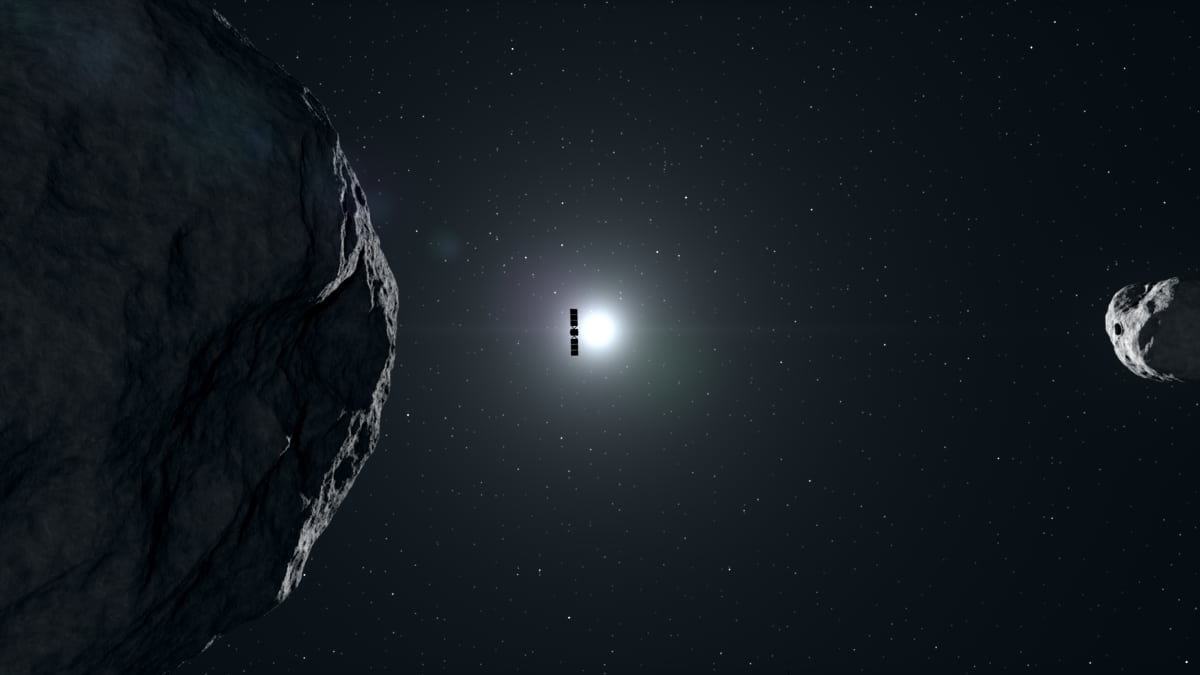
Hera glides past Didymos to Dimorphos (Image Credit: ESA)

Thankfully, none of the 40,000 NEAs that we know of are predicted to hit Earth, at least in the foreseeable future. That being said, the ESA's focus goes beyond just passive detection. The agency’s Planetary Defence team is also responsible for building and strengthening Europe’s asteroid mitigation capabilities. Hera, which is currently on its way to study the aftermath of the impact of NASA’s DART spacecraft on the asteroid Dimorphos, is an example of its efforts. It will carry out a thorough examination of how DART’s impact changed the path and structure of the asteroid, which, in turn, will help establish asteroid deflection as a reliable option to protect Earth from potential asteroid impacts.
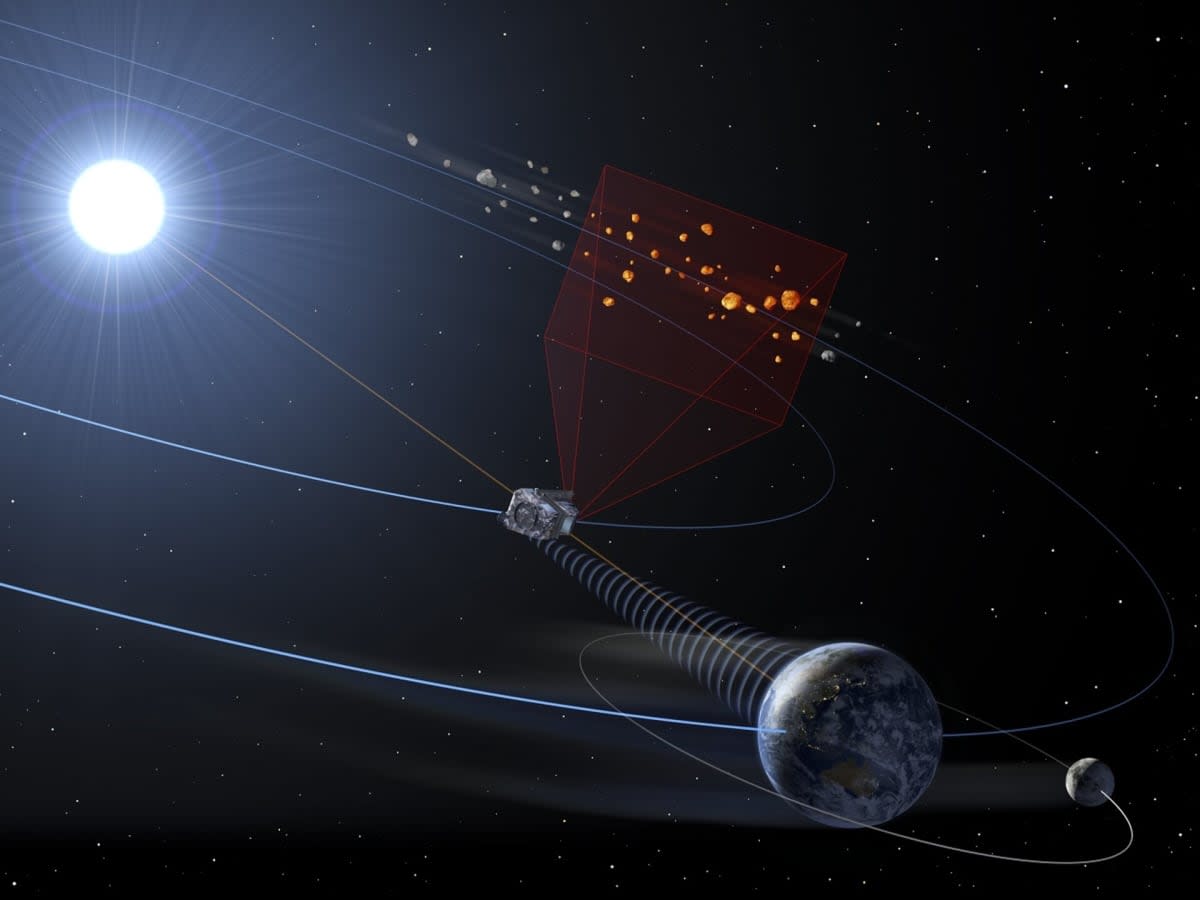
An illustration of NEOMIR in orbit (Representative Image Credit: ESA / Pierre Carril)

Meanwhile, ESA’s Ramses mission is set to follow the 375-m Apophis as the latter goes about a safe but close flyby of the planet in 2029. And that’s not all, ESA’s NEOMIR (Near-Earth Object Mission in the Infra-Red), set to liftoff in the mid-2030s, will allow the agency to detect impact hazards in advance for the first time ever. All this effort shows that we cannot take the safety of our planet for granted, despite not being in any possible danger for the foreseeable future.

More on Starlust

Counting the comets: 2025’s discovery tally so far

Unknown asteroid flew past Earth closer than a satellite—and we didn't spot it until hours later
MORE STORIES

The data suggest this small, super-hot world is shrouded in a thick layer of gas, likely hovering above a planet-wide ocean of magma.
3 hours ago
The region around black holes was not thought to be conducive to star formation, yet research proved otherwise.
20 hours ago
The discovery, validated by a separate European team led by the University of Exeter, may offer fresh insight into interactions between planets and binary star systems.
1 day ago
During its 1986 observation of the planet in the first and only flyby, the spacecraft measured a surprisingly strong electron radiation belt.
2 days ago
Previously, the most ancient supernova ever confirmed dated back to when the universe was 1.8 billion years old.
2 days ago
NASA's Fermi telescope was the first to identify the highly unusual cosmic explosion.
3 days ago
An international team of astronomers conducted a ten-day observation of the NGC 3783 black hole using mainly the XRISM space telescope.
3 days ago
A nova is a massive, temporary star explosion caused when a dense white dwarf star pulls material from a nearby star, setting off an uncontrolled nuclear reaction.
5 days ago
A team of computational astrophysicists has developed a simulation that explains the behavior of matter around black holes.
7 days ago
A study has also concluded that the interior of 3I/ATLAS is rich in metal, which could challenge our current understanding of comet formation.
7 days ago