SpaceX conducts first Starship V3 static fire test in preparation for April test flight
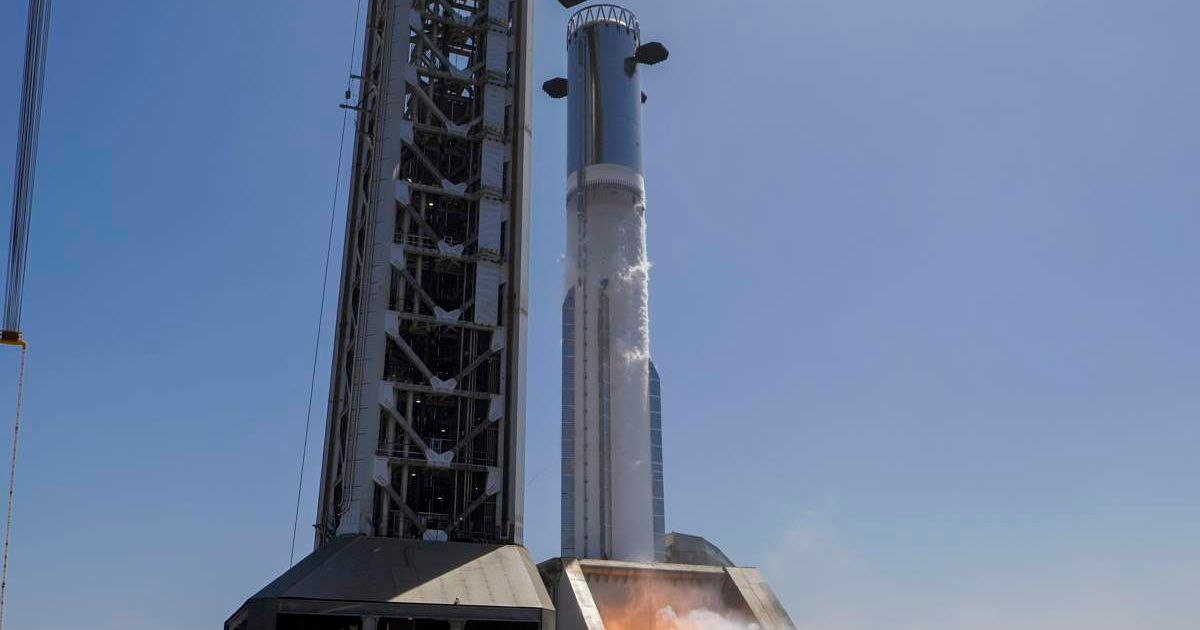
SpaceX has conducted a successful ignition test of its next-generation Starship V3 rocket. This static fire check of the rocket’s massive “Super Heavy” booster completed a major step for the program. As a part of the key pre-launch test, the most powerful Starship yet had its engines briefly fired up while being anchored to the ground. Ignition without liftoff is typically done to verify and validate a spacecraft’s performance and systems. The test took place on March 16 at a new launch site at SpaceX’s Starbase facility in South Texas.
Initial Super Heavy V3 and Starbase Pad 2 activation campaign complete, wrapping up several days of testing that loaded cryogenic fuel and oxidizer on a V3 vehicle for the first time. While the 10-engine static fire ended early due to a ground-side issue, we saw successful… pic.twitter.com/uHGji17srv
— SpaceX (@SpaceX) March 18, 2026
In a post on X on Wednesday, SpaceX said, "Initial Super Heavy V3 and Starbase Pad 2 activation campaign complete, wrapping up several days of testing that loaded cryogenic fuel and oxidizer on a V3 vehicle for the first time." The Super Heavy, known as Booster 19, saw only 10 of its Raptor engines fire during the test. The Starship V3’s full set of 33 engines will be ignited in a future test, as more engines are set to be installed. Although the test was a success, the firing was cut short by a ground-side issue—not a problem with the rocket itself. Moreover, once it’s fully operational, Pad 2 is expected to double launch capacity and, in turn, SpaceX’s flight cadence and testing.
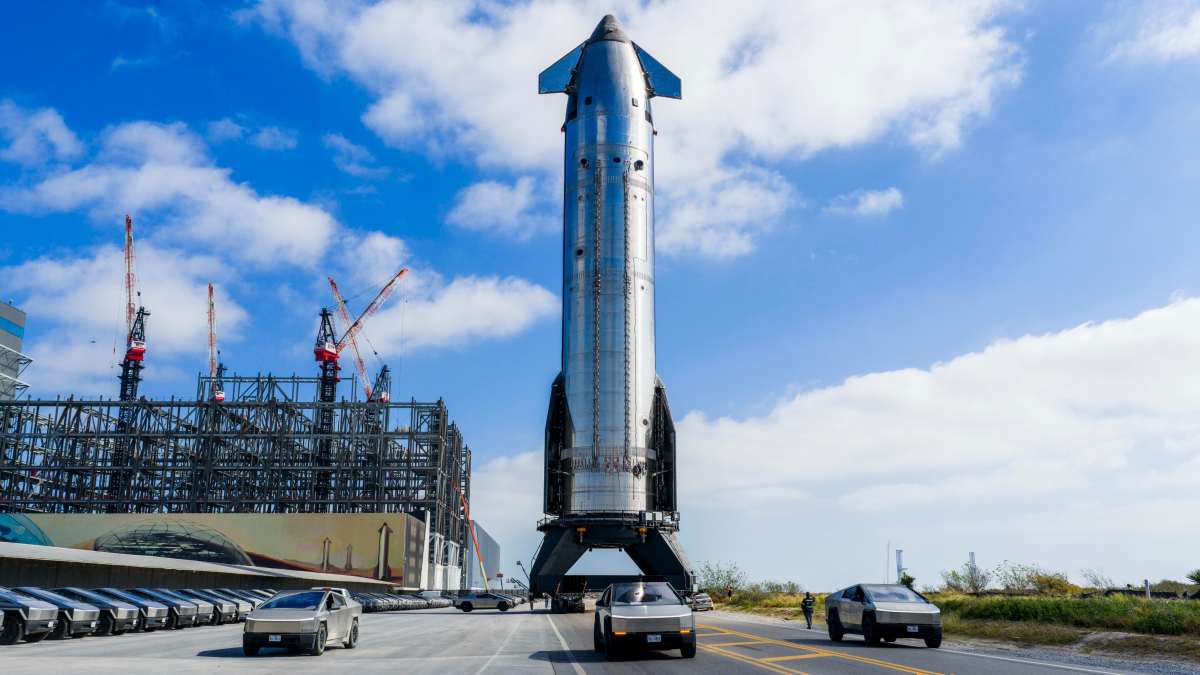
These preliminary tests are on schedule ahead of the 12th Starship test flight in early to mid-April—the first for a V3 vehicle. The upcoming test flight in April will feature Booster 19 launching with a Starship upper stage called Ship 39, which recently passed a critical “cryoproofing” test.
Ship 39 cryoproof operations complete, the first campaign with a next generation Starship V3.
— SpaceX (@SpaceX) March 8, 2026
Across several days, engineers tested the vehicle’s redesigned propellant system and its structural strength, including squeeze tests to mimic the forces of future ship catches pic.twitter.com/aFtCYIqwLh
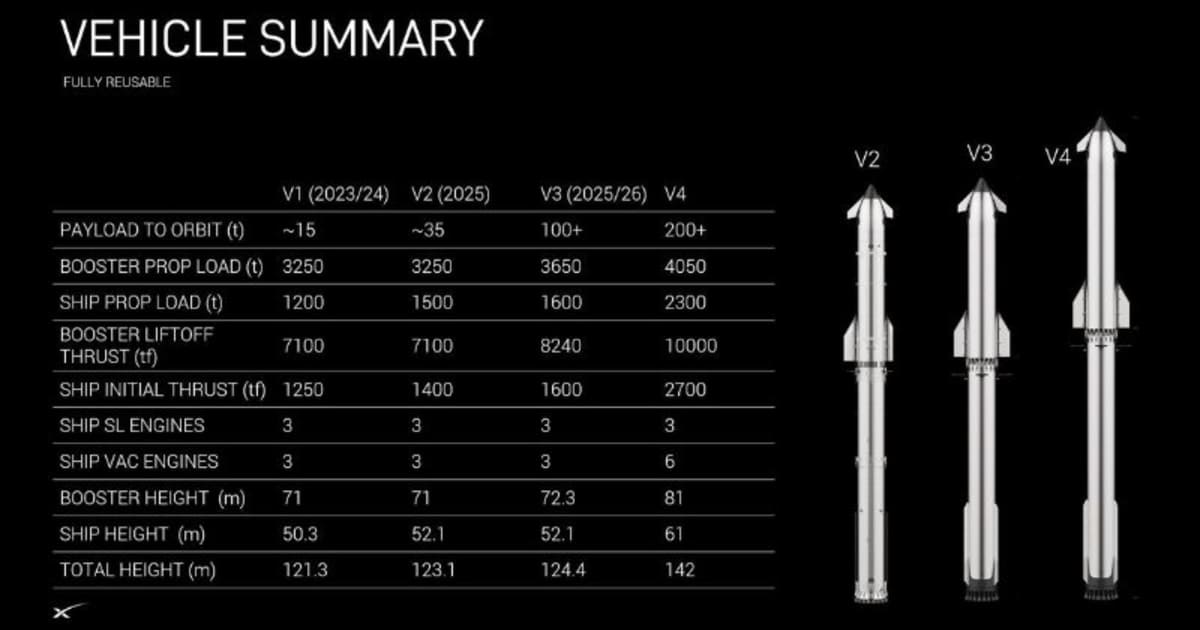
Designed with the future Moon and Mars crewed missions in mind, Starship V3 introduces some major improvements in power and capability. At a height of 124.4 m, the Starship V3 is taller than V2 by more than a meter. But the biggest upgrade comes from the new Raptor engines, which reportedly give enough power to the V3 to carry over 100 tons to low Earth orbit. In comparison, this is a massive boost from the Starship V2’s payload capacity of 35 tons, making it a far more capable heavy-lift rocket.
SpaceX’s Starship V3 still has a long road ahead in terms of rigorous testing before it’s fully deep-space mission-ready. The next-gen rocket should pass checks like reaching Earth orbit and survive repeated test flights to prove its reliability. Another key test is in-space refueling, which is crucial for longer missions to the Moon and Mars. Last month, SpaceX head Elon Musk had posted on X that he was “highly confident that the V3 design will achieve full reusability.”
More on Starlust
Artemis II: NASA decides to roll out SLS rocket to launchpad tonight; crew enters quarantine
NASA selects United Launch Alliance to provide upper stage for Artemis IV and V