South Korea's Nuri rocket falls just short of perfect on its most complex mission yet
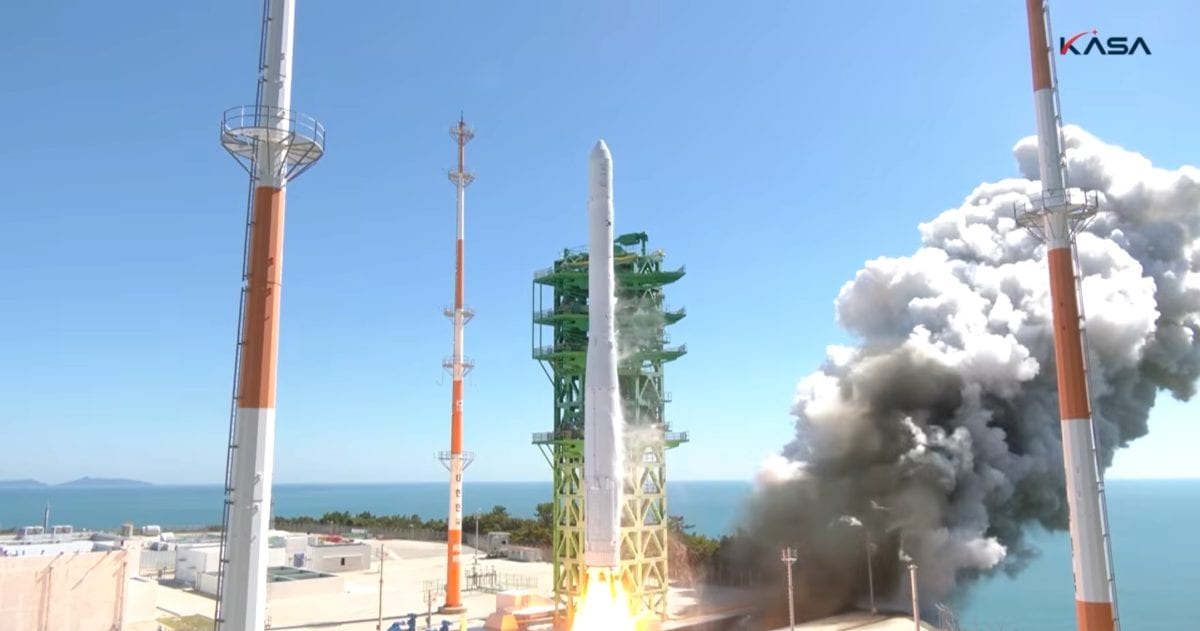
South Korea's homegrown rocket Nuri hit a major milestone yesterday, October 6. Following liftoff at 11:25 p.m. EDT (12:25 p.m. local time on October 7) from the Naro Space Center in Goheung, which is around 250 miles west of Seoul, the rocket successfully deployed 14 of the 15 satellites it was carrying into orbit. This was only the fifth mission of the rocket and its first attempt to sequentially deploy multiple primary satellites designed for the same mission.
The rocket, officially called Korea Space Launch Vehicle (KSLV)-II, weighs around 200 tons and consists of three stages. The first two stages performed their tasks optimally during this fifth flight, before the third stage shut down at 12 minutes and 30 seconds. It was at this point that the latter began the sequential deployment of the satellites at an altitude of over 350 miles.
[누리호, 5차 발사 성공!] 오늘 10월 7일 12시 25분 발사된 누리호가 계획된 비행 절차를 정상적으로 수행하며 5차 발사 임무를 성공적으로 마쳤습니다. 누리호는 목표 태양동기궤도에 정상적으로 진입한 뒤, 주탑재위성인 초소형군집위성 2~6호 5기를 계획된 절차에 따라 성공적으로 분리했습니다. 또한 큐브위성 10기 중 9기가 정상적으로 분리되었으며, 쿼터니언이 개발한 ‘퍼샛’ 1기는 미사출된 것으로 최종 확인되었습니다. 13시 08분경에는 남극 세종기지에서 초소형군집위성 6호와의 최초 교신에도 성공했습니다. 이번 5차 발사를 통해 여러 기의 위성을 한 번의 발사로 정밀하게 궤도에 배치하는 누리호의 우주수송 임무 수행 역량을 한 단계 더 높였습니다. 누리호의 성공적인 비상을 위해 따뜻한 관심과 성원을 보내주신 국민 여러분께 진심으로 감사드립니다. #한국항공우주연구원 #항우연 #KARI #누리호 #누리호5차발사 #KSLVII #우주수송 #국민_여러분_감사합니다
— 한국항공우주연구원 (@kari2030) October 7, 2026
Out of the 15 satellites carried by Nuri, five were part of the New-space Earth Observation Satellite Constellation for National Safety (NEONSAT). These are micro-satellites weighing less than 220 pounds that will monitor the Korean Peninsula and surrounding areas for national security and disaster response. Each of these NEONSATs is equipped with an electro-optical camera that can resolve objects that are as small as 3.3 feet when observing in black-and-white and 13.1 feet when imaging in color. Nuri's third stage rotated gradually as it deployed these microsatellites, leaving a space of 35 to 40 seconds between each deployment. This was so that the NEONSATs would stay clear of one another while in orbit. Five more of these satellites will launch on Nuri's sixth flight next year, completing the constellation. And once the constellation is fully operational, it will be able to image the Korean Peninsula over three times a day and revisit the same location within 24 hours, according to the South Korean News Agency Yonhap.
[초소형군집위성, 초기 교신 성공!] 누리호 5차 발사에 탑재된 KAIST 인공위성연구소의 초소형군집위성 2~6호가 대전 항우연, 남극 세종기지, 북극 스발바르 지상국과 양방향 교신에 성공했습니다! 향후 초소형군집위성 2~6호 양산기별 위성체와 광학 탑재체, 통신 및 자세제어계의 상태를 점검하고 시험영상을 촬영·수신할 예정입니다. 이후 궤도상 시험과 영상 품질 확인을 거쳐 기존 위성과 연계한 군집 지구관측 임무에 투입할 계획입니다. 이번 발사는 우리나라 국가위성 가운데 처음으로 동일한 임무를 수행하는 양산위성 5기를 동시에 발사하고 모두 교신에 성공한 사례입니다 :) #한국항공우주연구원 #항우연 #KARI #KAIST #우주항공청 #초소형군집위성 #누리호 #누리호5차발사 #초기교신성공
— 한국항공우주연구원 (@kari2030) October 7, 2026
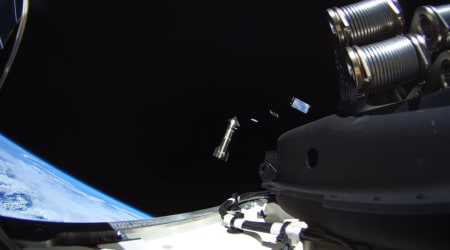
While all the NEONSATs were deployed successfully, an anomaly occurred during the ejection of the 10 CubeSats that had also hitched a ride on the flight. The Korea Aerospace Research Institute (KARI) said that 9 out of the 10 CubeSats were successfully deployed, while one developed by the South Korean Company Quaternion failed to eject. Nevertheless, the mission was a huge success and represented a big step forward from the rocket's fourth flight, which carried only a single primary payload. "Through this 5th launch, we have further elevated the Nuri rocket's capability to perform space transportation missions by precisely deploying multiple satellites into orbit in a single launch," KARI wrote in the same X post where it announced that the tenth satellite had failed to deploy. "We sincerely thank all citizens for your warm interest and support for the successful flight of the Nuri rocket." The rocket will stay in orbit for a while before reentering Earth's atmosphere, where it will burn up.
More on Starlust
Mega-constellations of satellites could soon interfere with astronomical observations, warns study