Scientists detect dry ice in a planetary nebula for the first time using James Webb Telescope
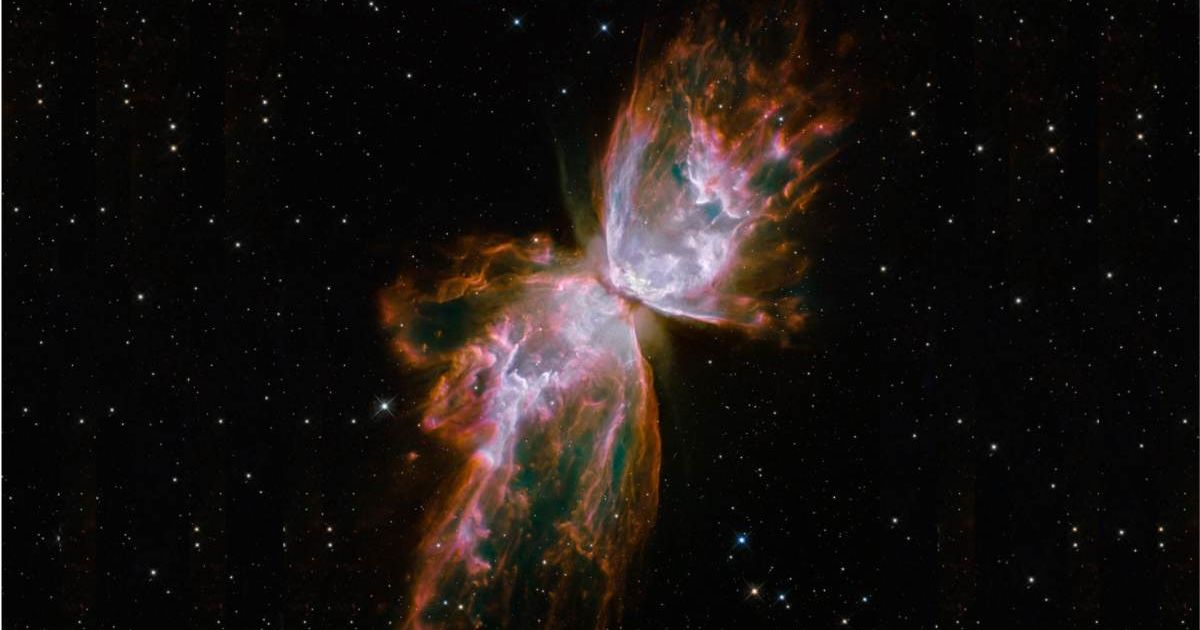
A planetary nebula is a violent environment filled with intense UV radiation that is hostile and destructive toward molecular species. However, new observations from an international team of astronomers have just subverted this idea, as they have discovered the presence of dry ice (carbon dioxide) in a planetary nebula known as NGC 6302. These latest observations, detailed in a paper published on February 25 on the arXiv preprint server, utilized the James Webb Space Telescope (JWST) Mid-Infrared Instrument (MIRI) to look into the planetary nebula.

NGC 6302
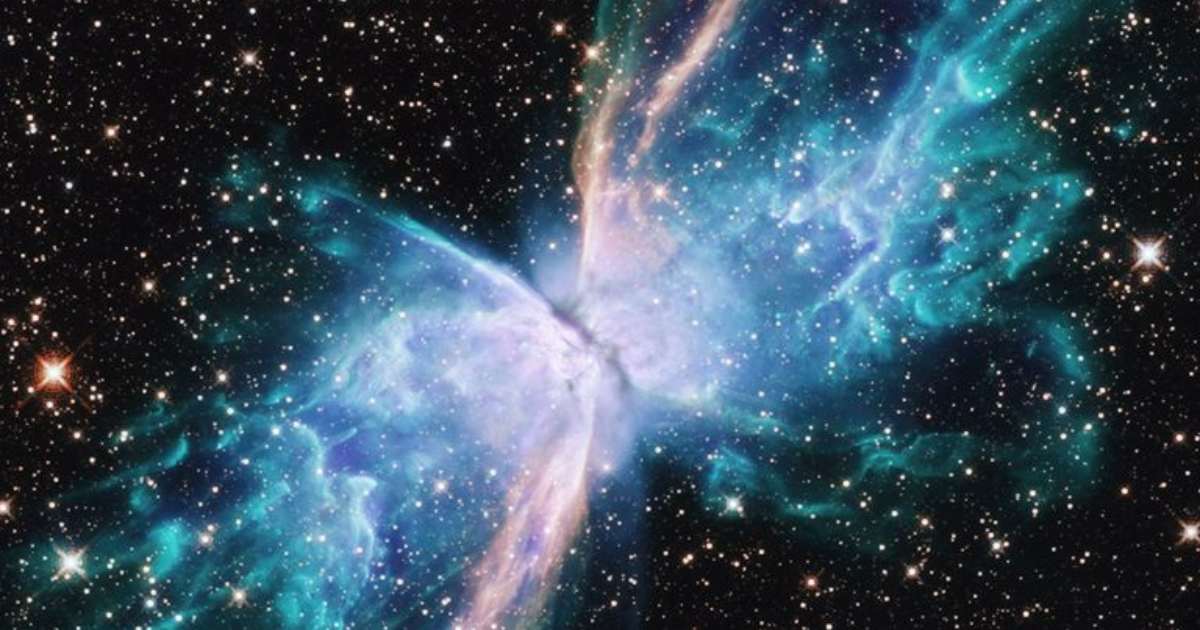
NGC 6302, also known as the Butterfly Nebula, is a bipolar type planetary nebula (PNe), exhibiting bright east-west-oriented lobes split by a huge dusty structure. It is located approximately 3,400 light-years away in the constellation Scorpius and has a radius of at least 1.5 light-years. A planetary nebula is an expanding cloud of gas and dust that is ejected from a main-sequence star as it transforms into a red giant or white dwarf. NGC 6302 has been a topic of investigation for a long time within the astronomy community. Previous observations of the butterfly detected the presence of methyl cation (CH₃⁺). Some studies also found a widespread presence of polycyclic aromatic hydrocarbons (PAHs) within it. This indicated that rich chemical processes could take place in the environment of the Butterfly Nebula, thus making it an important case study for looking into chemical pathways of planetary nebulae.
Studying the Icy planetary nebula
PhD candidate Charmi Bhatt of the University of Western Ontario, Canada, and her team observed the nebula with the MIRI medium-resolution spectrometer (MRS) and found clear absorption features in the 14.8–15.2 micrometer (µm) range, which corresponded to gas-phase carbon dioxide. Further investigations unveiled “two key signatures of CO₂ ice: (1) a shallow, broad absorption between ∼14.9-15.15µm, and (2) a second absorption between ∼15.2-15.3µm. This characteristic double-peak structure matches laboratory CO₂ ice spectra features,” explained the study authors.
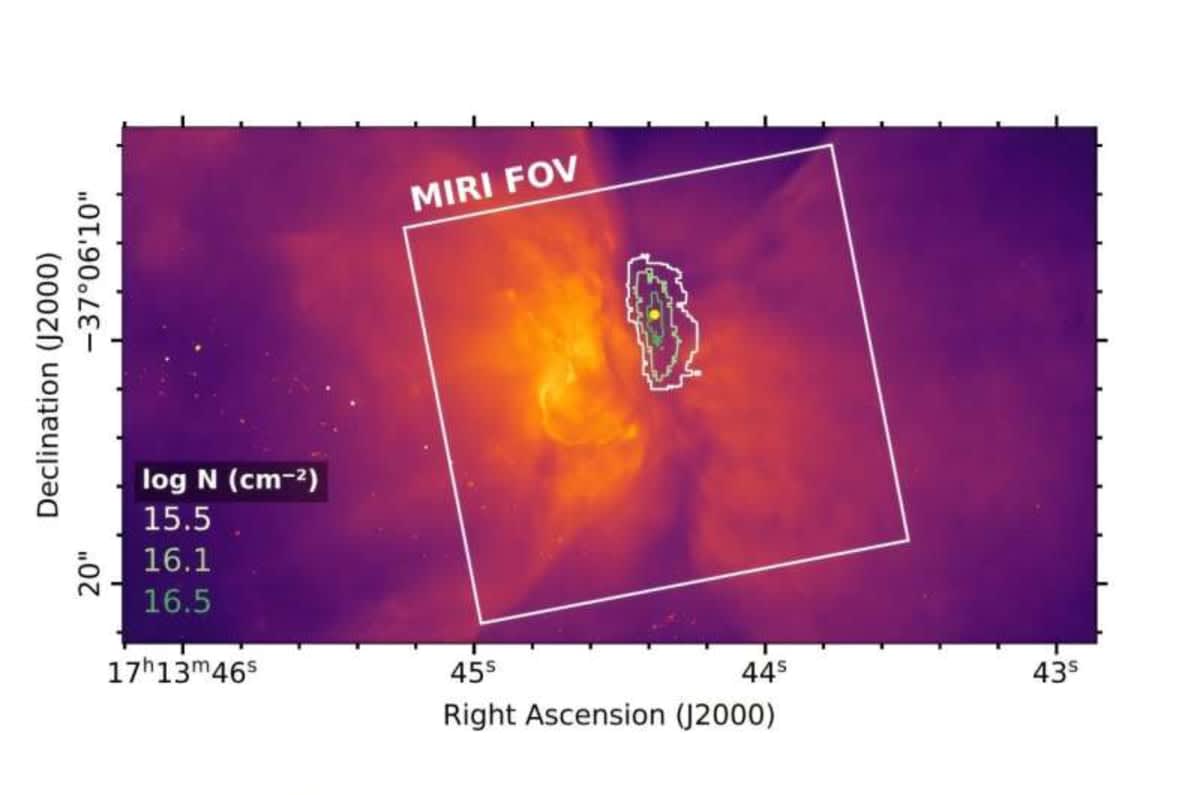
The astronomers have underlined that this identification of carbon dioxide ice in NGC 6302 marks the first detection of an ice species more volatile than water in any planetary nebula. This is particularly interesting—even shocking to an extent—as even though molecular ices are abundant in cold, shielded environments, including dense molecular clouds, coverings of young stellar objects (YSOs), and protoplanetary disks, violent environments like this would usually destroy fragile molecular species and ices, making this quite a rare find. The study states that the gas-to-ice ratio in the Butterfly Nebula is considerably higher than that observed in YSOs, suggesting distinct ice formation or processing mechanisms in evolved stellar environments.

Conclusion
This latest discovery emphasizes the importance of detailed, high-spatial-resolution observations of planetary nebulae to gain deeper insights into their chemical processes, temperature, and ice formation processes. This is vital to determine if ice can form or exist in dense areas of planetary nebulae.
More on Starlust
Cosmic collaboration: Hubble and Euclid show Cat’s Eye Nebula in intricate detail
NASA’s James Webb Space Telescope images 'Exposed Cranium' nebula in never-before-seen details