Private Chinese rocket Gravity-1 accomplishes third launch from sea, deploys nine satellites in orbit
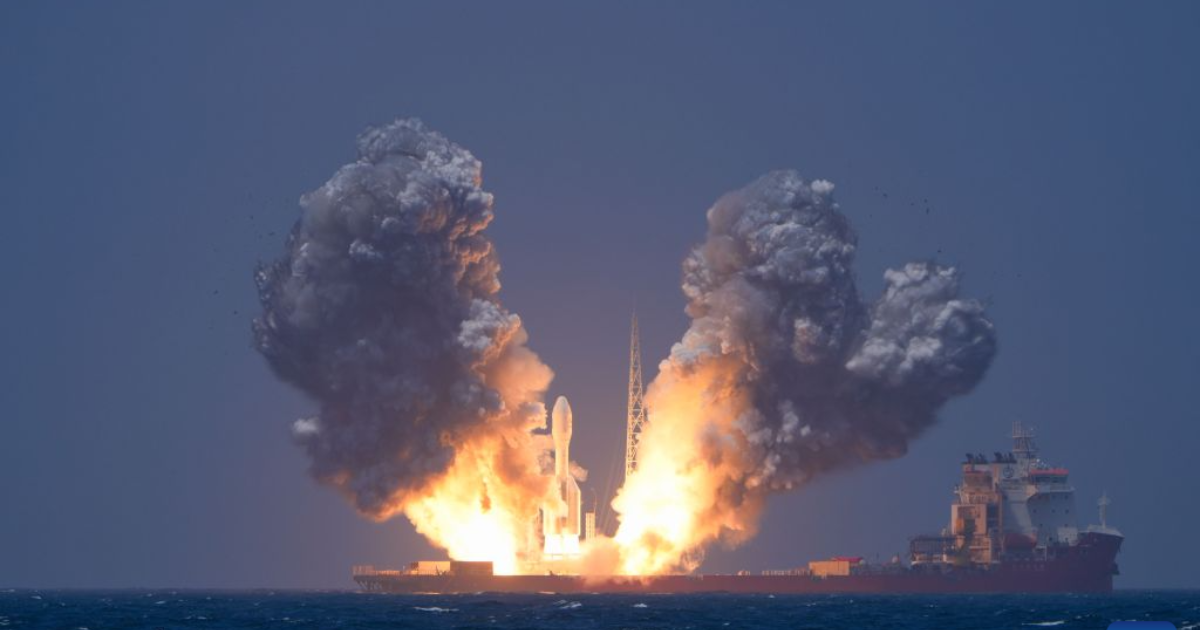
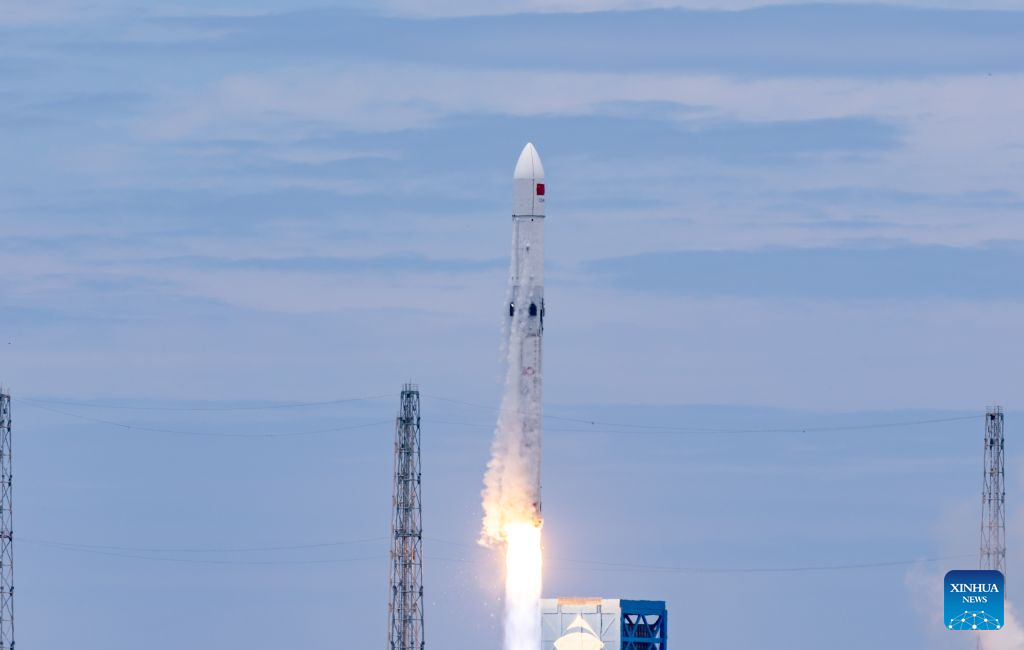
Private Chinese company Orienspace has added another feather in its cap by acing its third sea-based launch of Gravity-1 — said to be the world’s most powerful solid-fuel vehicle. Launched from a vessel at China’s sole commercial maritime launch base in Shandong Province’s Haiyang, the rocket lifted off at 10:54 p.m. EDT on July 21 with nine satellites. According to the state-run Chinese outlet Xinhua, all satellites were placed in the intended orbits, marking the successful completion of Gravity-1’s third mission.
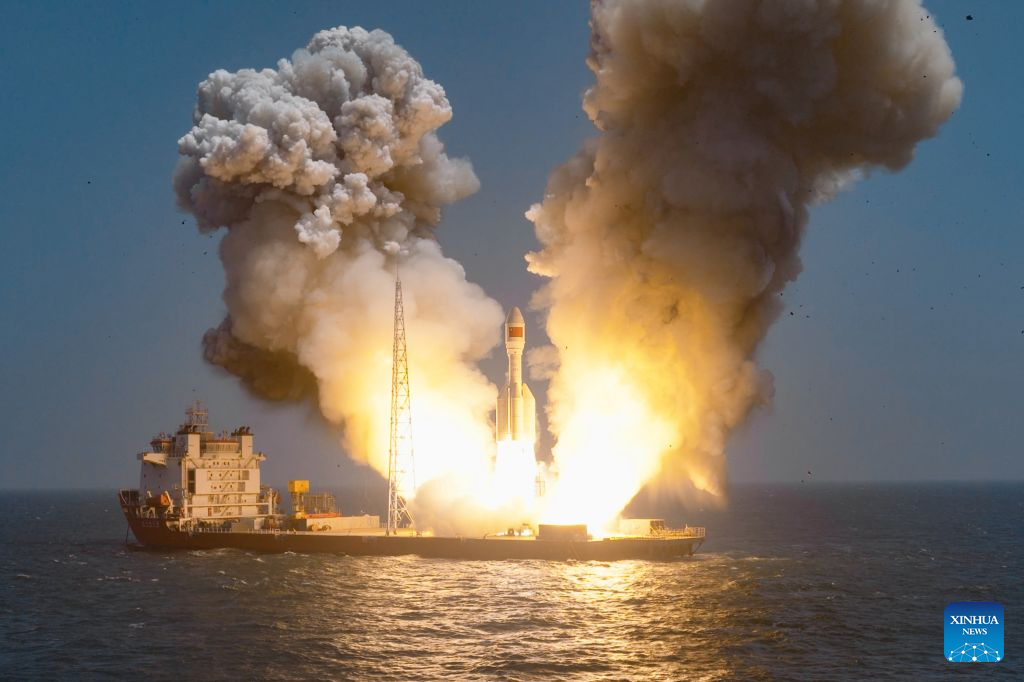
Citing a press release by the Haiyang aerospace industry development center, Global Times reported that this mission proved the rocket’s ability to operate under far-sea conditions, validated the adaptability of the solid-propellant boosters, and confirmed it could remain in a launch-ready state for an extended period. While the rocket's first two launches took place just off the coast, the vehicle sailed to a zone 170 kilometers east of Shanghai for this mission. "Open-sea launch means we face completely different conditions," said Xu Guoguang, chief designer of Gravity-1, according to state-run outlet CGTN. "The sea is rough even without wind. We had to plan support for the entire journey in advance."
Gravity-1, which made its debut in 2024, has three core stages and stands 100 feet (30 meters) tall with four strap-on solid rocket motors. Less than half the height of SpaceX’s workhorse Falcon 9 rocket, Gravity-1, it is capable of carrying 14,300 pounds (6,500 kg) to low-Earth orbit and 9,259 pounds (4,200 kg) to a sun-synchronous orbit. CGTN says that the rocket could fly again later this year if all goes well. Besides, Orienspace is developing more powerful versions of the vehicle, namely Gravity-2 and Gravity-3, and the former could also launch this year from sea.
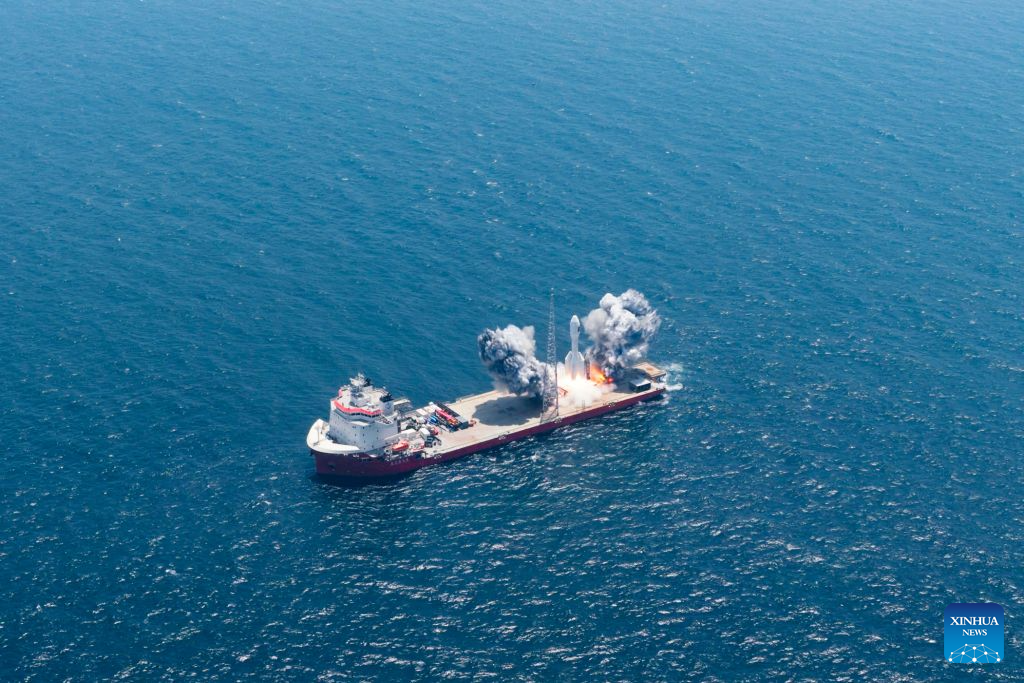
As for the satellites launched by Gravity-1, they’re designed for several purposes ranging from all-weather Earth observation and commercial industry services to technical testing. Six of the nine satellites (two optical and four synthetic aperture radar) belong to the Dongpo series. They will join four satellites already in orbit to improve data acquisition efficiency, land surveying and mapping, emergency response and disaster relief, and water conservation. The other satellites part of the payload are designed to provide Earth observation services for mineral exploration, agriculture and forestry, environmental monitoring, and urban planning sectors, among other things.
The latest mission adds to China’s success in launching rockets from sea. On July 10, China also became only the second nation after the US to achieve a controlled recovery of an orbital-class booster. The booster of the Long March-10B reusable rocket was recovered using an unconventional method—it deployed four hooks that were caught by a giant net on a ship in the South China Sea. According to state broadcaster CCTV, the booster's next test flight could take place later this year.
More on Starlust
MS-28 astronauts prepare for departure from ISS this weekend after 8-month-long stay