Pentagon plans to deploy space-based sensors to identify missile threats as part of Trump's 'Golden Dome' project

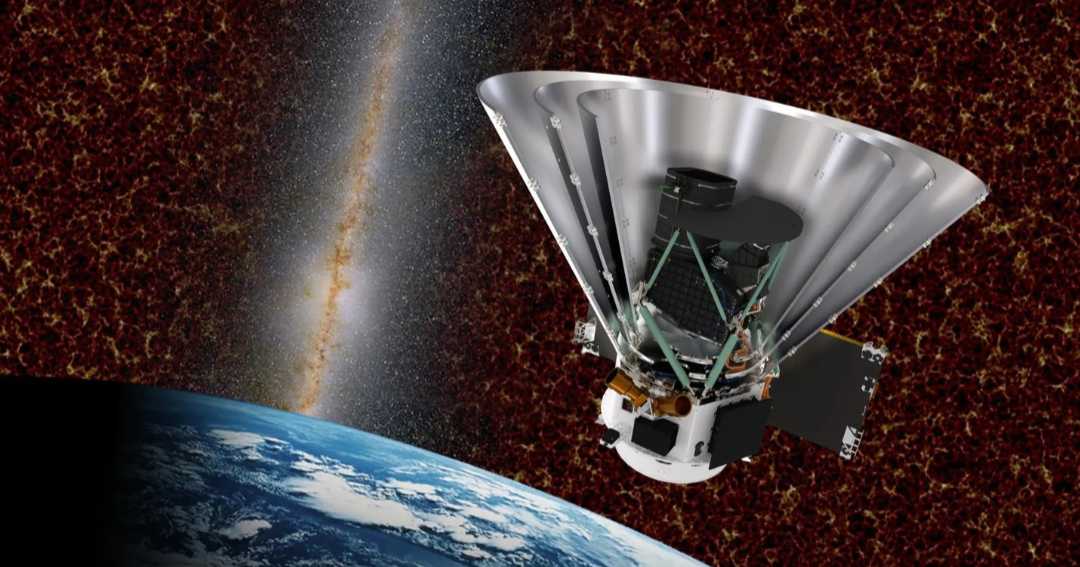
As a central element of the Golden Dome missile initiative, the Pentagon is actively developing space-based sensors. These sensors, known as the Discriminating Space Sensor (DSS), are designed to significantly improve the ability to distinguish genuine missile threats from irrelevant clutter, reported Air and Space Forces Magazine.

Lt. Gen. Heath Collins, who heads the Missile Defense Agency (MDA), announced during a Senate Armed Services Committee hearing on May 13 that a “we’re working on prototyping space sensor capabilities, in particular, Discriminating Space Sensor (DSS) to help improve ballistic missile defense in the future,” and will ultimately be operationalized by the Space Force.

The fundamental goal of DSS is to overcome the limitations of older, Cold War-era systems, such as the Defense Support Program and the Space-Based Infrared System (SBIRS), which often struggle to differentiate between actual targets, decoys, and debris. The new DSS aims to precisely identify real warheads, thereby enabling interceptor missiles to effectively neutralize threats during mid-flight. The MDA anticipates launching a prototype DSS satellite by the years 2029.

The DSS system is intended to function in conjunction with the Hypersonic Ballistic Tracking Space Sensors (HBTSS) constellation. This collaborative effort between the MDA and the Space Force has already seen the launch of its first two satellites last February. While HBTSS is specifically engineered to detect and track high-speed hypersonic threats, DSS will concentrate on the more predictable trajectories of ballistic missiles.
Notably, HBTSS satellites completed a demonstration test in March. During this test, the Navy destroyer USS Pinckney tracked a hypersonic-like target and simulated an intercept with an SM-6 missile. The HTBSS satellites demonstrated accurate target tracking and rapid data relay, crucial for interceptor operation. According to Lt. Gen. Collins, “So far we have proven out the timeliness, latency, that of the fire control loop with those systems, as well as the sensitivity of those systems to close the loop.” He further added that the agency plans to continuously implement "algorithm updates" to further enhance the overall performance of these vital missile defence capabilities. Furthermore, Collins added, “All along, we’ve worked in parallel with the Space Force and Space Development Agency.” He continued, “They now have our HBTSS-like requirements as part of their proliferated warfighting space architecture. In the tranches to come in the following years, they will solely be building up an operational hypersonic tracking layer for us.”
Despite the emergence of maneuverable hypersonic weapons, conventional ballistic missiles are expected to remain the primary missile threat to the United States from China and Russia. Both nations possess the capability to strike the US mainland with these missiles. Additionally, Russia can reach significant portions of the continental United States with cruise missiles. Similarly, China is developing cruise missile capabilities with ranges extending to Alaska, Hawaii, and the US. West Coast. The Defence Intelligence Agency (DIA) forecasts that within the next decade, both Beijing and Moscow will each possess approximately 5,000 cruise missiles.
Missile threats to the US homeland will grow in number and sophistication over the next decade, involving advanced conventional and nuclear delivery systems. The DIA categorizes these threats into six types: intercontinental ballistic missiles, submarine-launched ballistic missiles, two types of hypersonic weapons, land attack cruise missiles, and fractional orbital bombardment systems, as mentioned in a press release by the agency.