NASA to release unseen 3I/ATLAS images on November 19: Here's everything you need to know
The images were taken by various NASA missions over the span of a month.
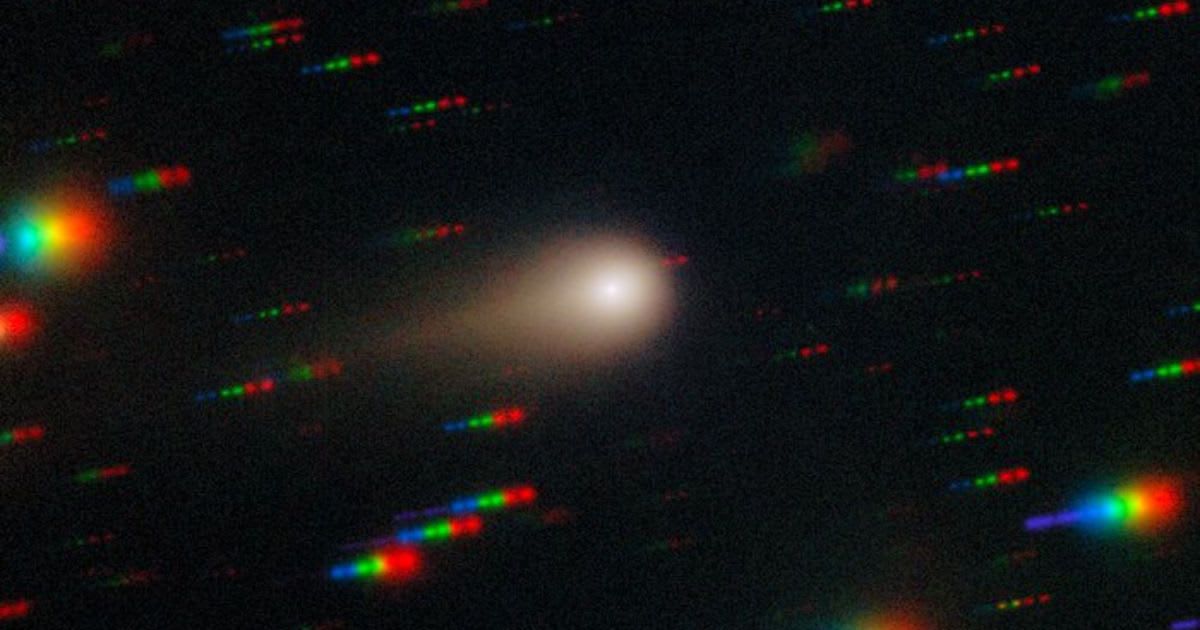
Comet 3I/ATLAS streaks across a dense star field in this image captured by the Gemini Multi-Object Spectrograph (GMOS) on Gemini South at Cerro Pachón in Chile (Cover Image Source: International Gemini Observatory/NOIRLab)

The wait is going to be over soon. NASA just announced that it is going to share never-before-seen imagery of interstellar comet 3I/ATLAS at a live event to be held at the Goddard Space Flight Center in Greenbelt, Maryland, at 3 p.m. EST on Wednesday, November 19. The images taken by its various telescopes and spacecraft over the past month or so could not be shared, let alone discussed, with the general public because of the U.S. government shutdown that began on October 1 and ended on November 12.
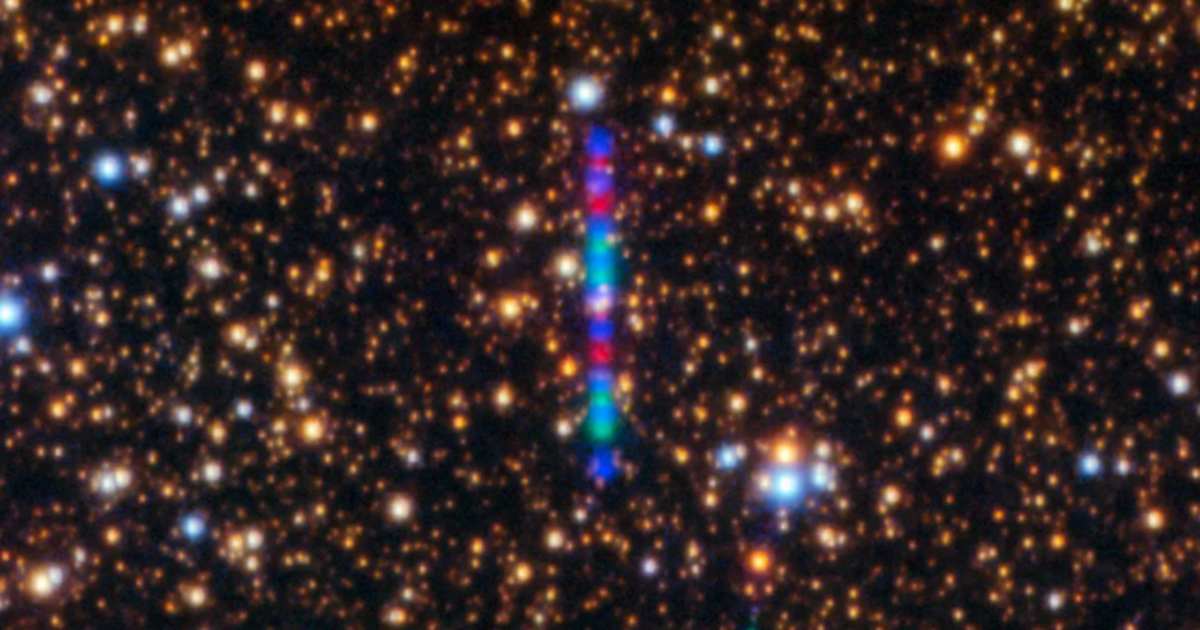
Interstellar comet 3I/ATLAS going past a dense star field  (Image credit: International Gemini Observatory/NOIRLab/NSF/AURA/K. Meech (IfA/U. Hawaii). Image processing: Jen Miller & Mahdi Zamani (NSF NOIRLab))
Interstellar comet 3I/ATLAS going past a dense star field (Image credit: International Gemini Observatory/NOIRLab/NSF/AURA/K. Meech (IfA/U. Hawaii). Image processing: Jen Miller & Mahdi Zamani (NSF NOIRLab))

It was a real bummer that NASA couldn’t communicate with the public during that time. That’s because on October 29, 3I/ATLAS, only the third interstellar object discovered till now, made its closest approach to our Sun—a phase during which it was at its brightest and most active, thanks to the sublimation of its surface ices from the heat of the star, according to LiveScience. Not to mention, during that time, it also made its closest approach to Mars, reaching within 19 million miles (30 million kilometers) of the planet.
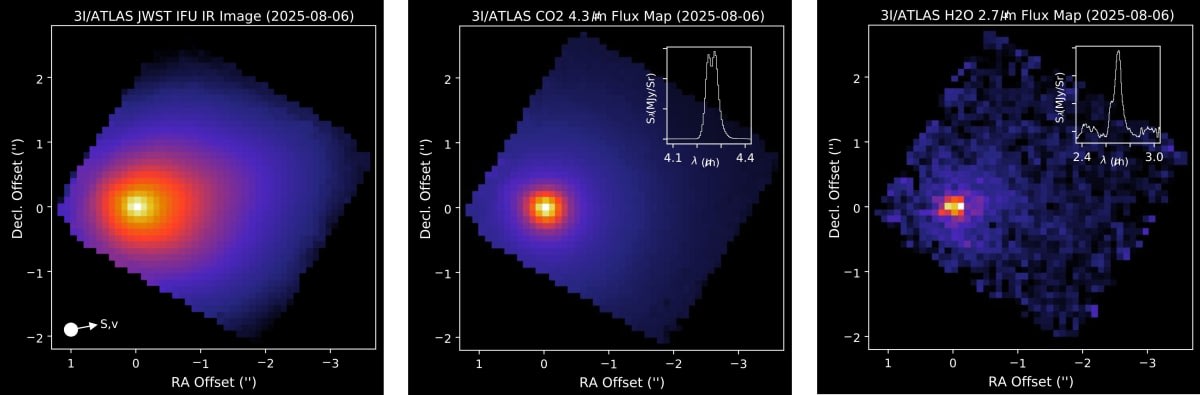
NASA’s Webb Space Telescope's image of Comet 3I/ATLAS.
(Image Source: NASA | James Webb Space Telescope.)
NASA’s Webb Space Telescope's image of Comet 3I/ATLAS. (Image Source: NASA | James Webb Space Telescope.)

Just to put things into perspective, when it makes its closest approach to Earth on December 19, 3I/ATLAS will come no closer than 170 million miles (273 million kilometers). Thankfully, the ESA’s ExoMars TGO satellite had us covered during that time. The images it managed to take of the comet during its flyby past the Red Planet are the closest images of the object we have until now. But since the ExoMars TGO was only designed to observe the surface of Mars, just a few hundred miles below, and not distant fast-moving objects, its Colour and Stereo Surface Imaging System (CaSSIS) couldn’t distinguish the coma from the tail.
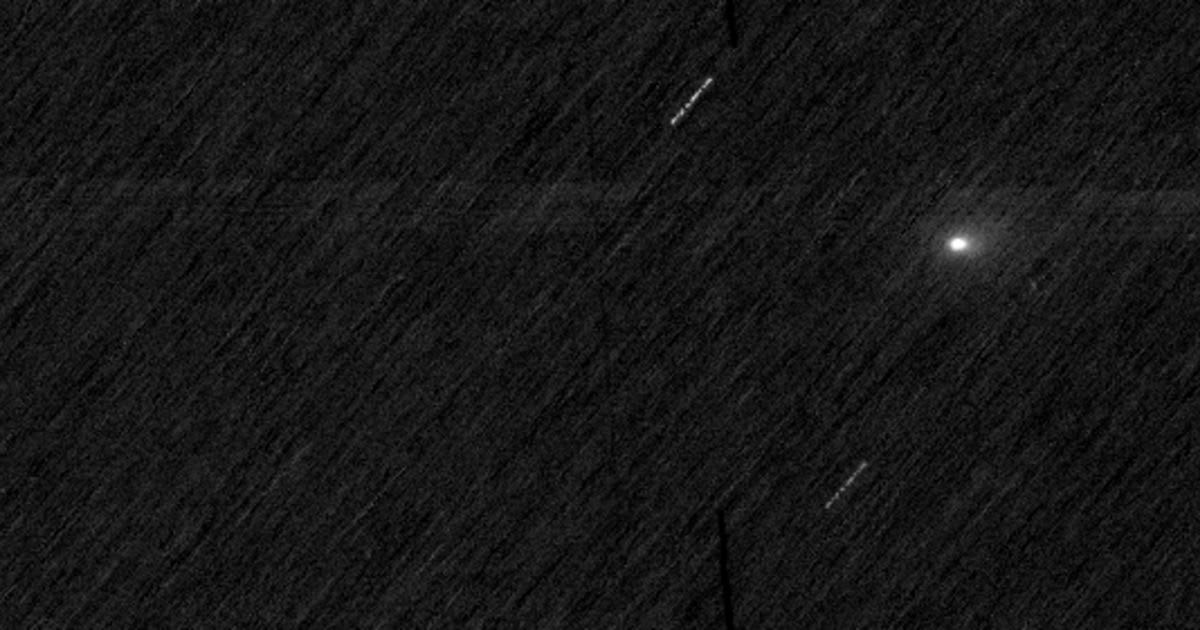
A black space background with white streaks and a single fuzzy white dot. The streaks are stars and the dot is comet 3I/ATLAS (Cover Image Source: ESA/TGO/CaSSIS)
A black space background with white streaks and a single fuzzy white dot. The streaks are stars and the dot is comet 3I/ATLAS (Image Source: ESA/TGO/CaSSIS)

“This was a very challenging observation for the instrument,” said Principal Investigator Nick Thomas of the CasSSUS camera, per the ESA. “The comet is around 10,000 to 100,000 times fainter than our usual target.” That being said, the ESA was able to achieve 10x accuracy in triangulating the comet’s position by comparing the data from the Mars orbiter with observations from Earth telescopes.
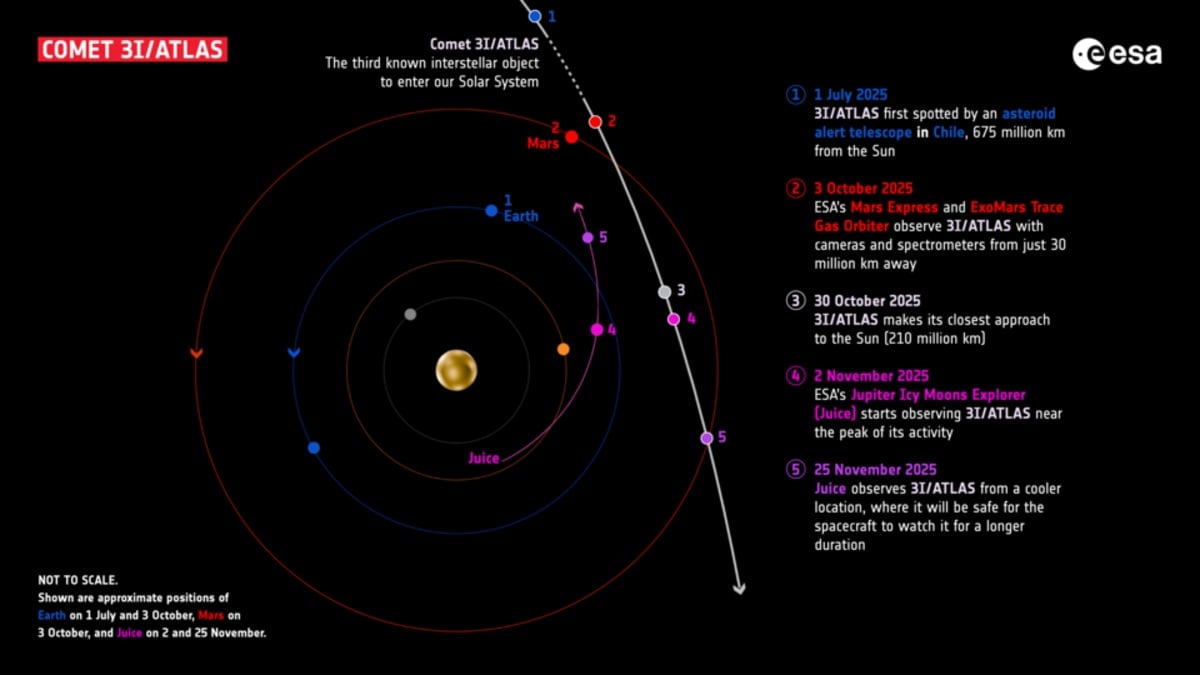
ESA’s Mars and Jupiter missions observe comet 3I/ATLAS (Image Source: ESA)

According to Harvard astronomer Avi Loeb’s Medium blog, among the images released by NASA will be those from the HiRISE camera onboard the Mars Reconnaissance Orbiter. Loeb is confident that the images would help us get a better understanding of the shape of the anti-tail of 3I/ATLAS, as it would come with a side-view and a spatial resolution much higher than the last high-resolution image obtained by the Hubble Space Telescope on July 21, 2025. Additionally, Loeb believes that the images could also assist in establishing a better estimate of the diameter of the nucleus.
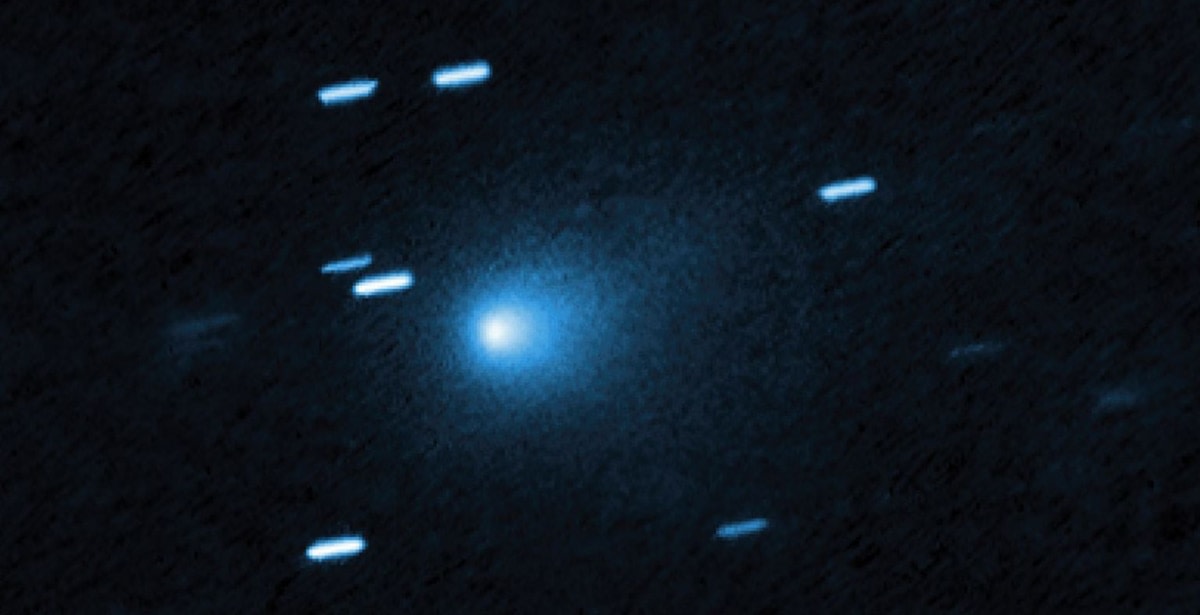
Image of interstellar comet 3I/ATLAS captured by the Hubble Space Telescope’s Wide Field Camera on 21 July 2025. (Image Source: NASA | Photo by NASA, ESA, D. Jewitt (UCLA))

As for the NASA event, it is set to air on multiple platforms: NASA’s app, NASA+, its official website, and YouTube channel, along with Amazon Prime. 

More on Starlust

'Other' comet ATLAS caught breaking apart ahead of its upcoming Earth fly-by

Penn State astronomer rebuts Avi Loeb’s claims of 10 'anomalies' in 3I/ATLAS
MORE STORIES

Fluctuating levels of radioactive iron-60 suggest the solar system recently entered a cosmic cloud.
2 days ago
The very long lives of our Sun, or any star, hinges on a delicate balance of forces.
2 days ago
Uranus and Neptune may contain rocky atmospheres, with new research challenging long-held ice giant identity.
3 days ago
The new study published in Nature Astronomy stresses the need to look for patterns in organic molecules and not just the molecules themselves.
4 days ago
The study used molecular physics to map unseen interactions, narrowing the search for dark matter.
5 days ago
3I/ATLAS is now exiting our solar system at more than 137,000 miles per hour.
5 days ago
The files raise intrigue but stop short of confirming the existence of extraterrestrial life.
5 days ago
A new study, published in the journal Physical Review Letters, suggests that some of the highest-energy cosmic rays could contain atomic nuclei heavier than iron.
7 days ago
Knowledge of oxygen abundance may shed light on the evolutionary history of the Sun and other stars.
7 days ago
Growing levels of light pollution due to satellites is obscuring our view of the universe.
May 8, 2026