Moon dust collected by Chang'e 6 reveals water rich asteroids were common in the early solar system
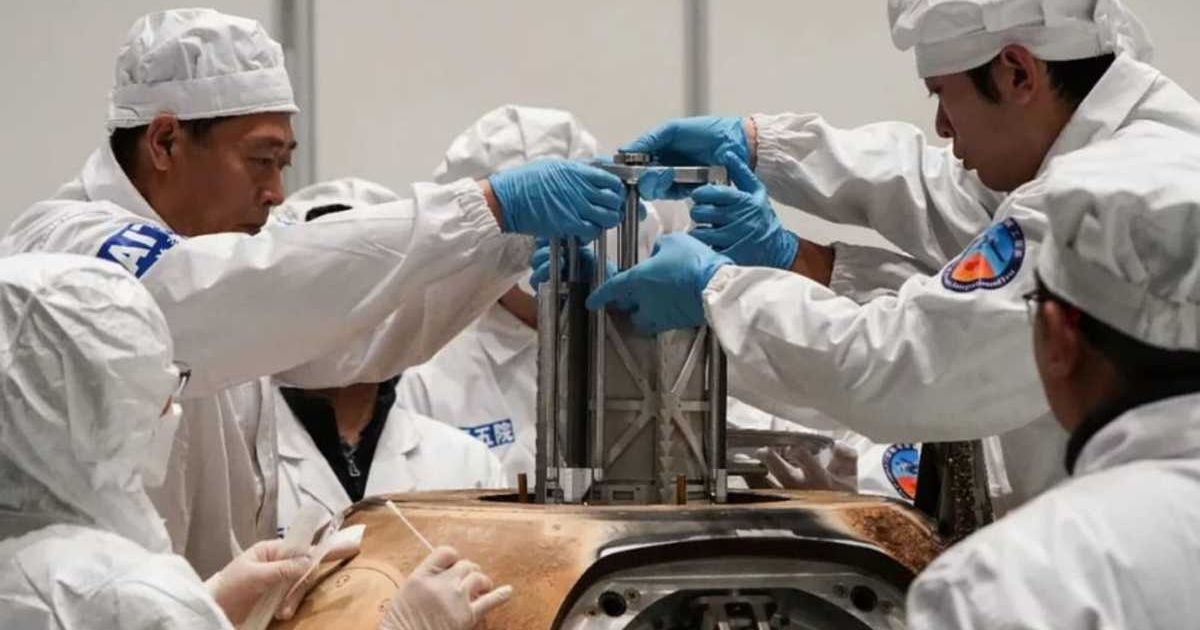
In a finding that could drastically revise our understanding of water's origins in the inner solar system, an analysis of the first-ever lunar samples from the far side of the Moon suggests that water-rich asteroids were far more prevalent than previously assumed. This groundbreaking research on material collected by China's Chang'e-6 mission was recently published in the journal Proceedings of the National Academy of Sciences.

The dust, retrieved in June 2024, contains rare meteorite relics that offer a unique, unfiltered look at the bombardment of the early Earth and its satellite. While Earth's thick atmosphere typically destroys fragile, volatile-rich space rocks upon entry, the Moon's near-vacuum environment has perfectly preserved evidence of past impacts, making it a better cosmic archive, according to Phys.org. This atmospheric bias has skewed the planet's meteorite collection, leading scientists to an incomplete picture of the solar system's true composition.
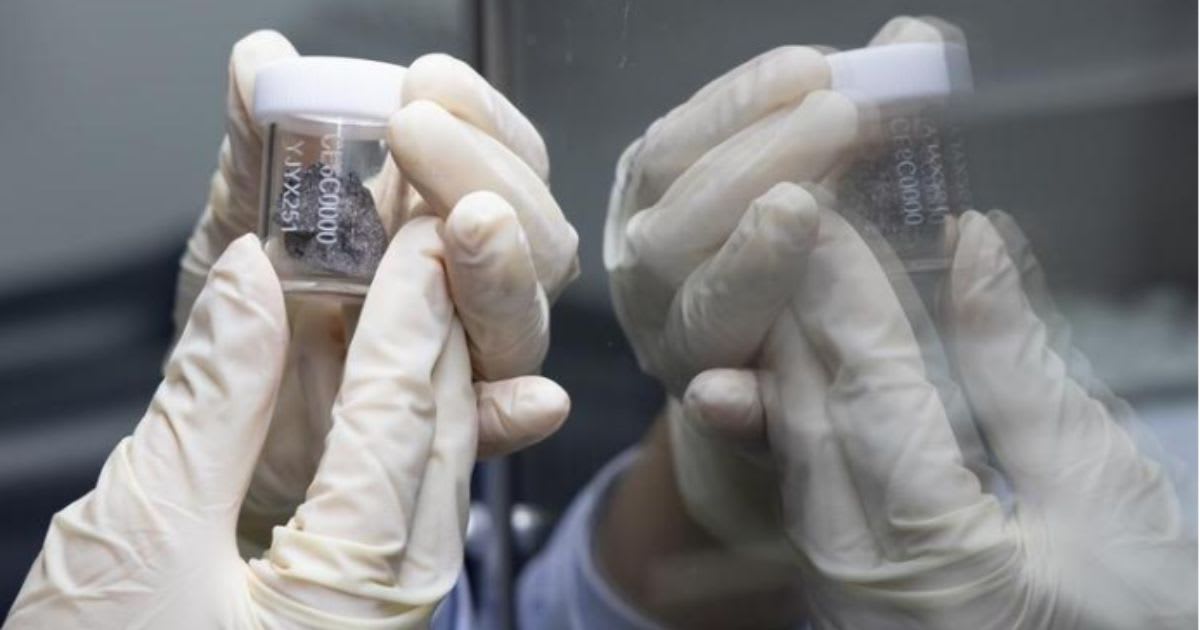
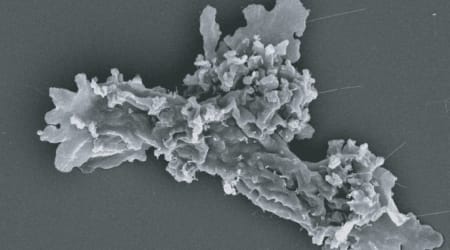
Researchers meticulously sifted through a mere two grams of the lunar regolith, successfully isolating seven microscopic fragments of carbonaceous chondrites (CI chondrites). These types of meteorites are highly valued because they are packed with essential ingredients for life, including water and organic compounds, yet they are extremely rare on Earth and thought to be infrequent impactors on the Moon.
A battery of sophisticated tests confirmed the identity of these tiny relics. Scientists first measured the ratios of key metals, including iron, manganese, and zinc, to confirm they were alien to the Moon's native geology. Further analysis showed the fragments formed during the high-energy impact of a large rock melting into the lunar surface. Finally, using a Secondary Ion Mass Spectrometer (SIMS), the team measured the chemical signature of their triple oxygen isotopes, which provided an exact match to CI-like carbonaceous chondrites.
The findings overturn prevailing assumptions by establishing CI-like chondrites as a significant source of external material delivered to the Moon. The team states that this lunar preservation of fragile, volatile-rich fragments proves that the inner solar system was struck by more water-bearing asteroids than current estimates based on Earth's biased meteorite record would suggest. This pivotal work compels a reassessment of the proportion of various chondrites that contributed material to the Earth-Moon system.
The groundbreaking scientific revelation stems from the meticulously executed Chang'e-6 mission, which successfully collected 4.26 pounds of material from the South Pole-Aitken (SPA) Basin. Launched on May 3, 2024, the probe gathered the samples from within the Moon's oldest and most expansive impact feature, a colossal structure spanning an astonishing 1,553.5 miles in diameter, before making its successful return to Earth on June 5, 2024. For decades, the profound geological and thermal consequences of the immense impact event that formed the SPA Basin approximately 4.25 billion years ago have represented one of planetary science's most enduring mysteries. The current, in-depth analysis of these carefully retrieved samples is now beginning to resolve these long-standing puzzles.
More on Starlust
China is sharing precious moon samples globally — but one 2011 law prevents NASA from accessing them
Half-century-old Apollo 17 moon sample uncovers new clues to the origin of a lunar landslide