James Webb Space Telescope discovers 'Red Potato' galaxy
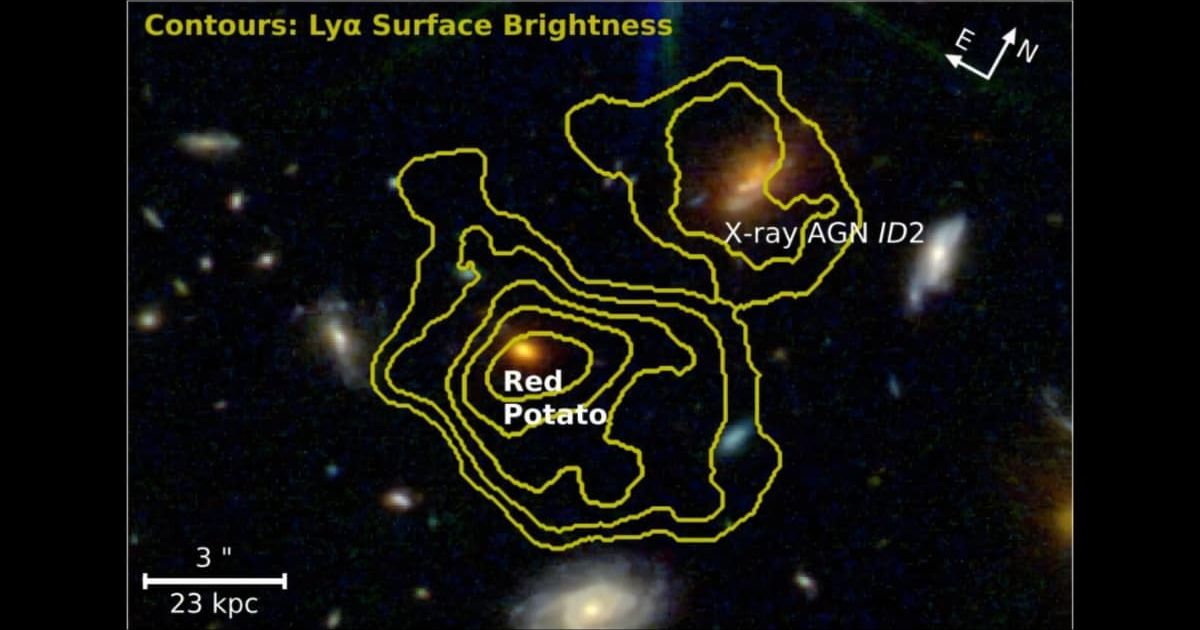
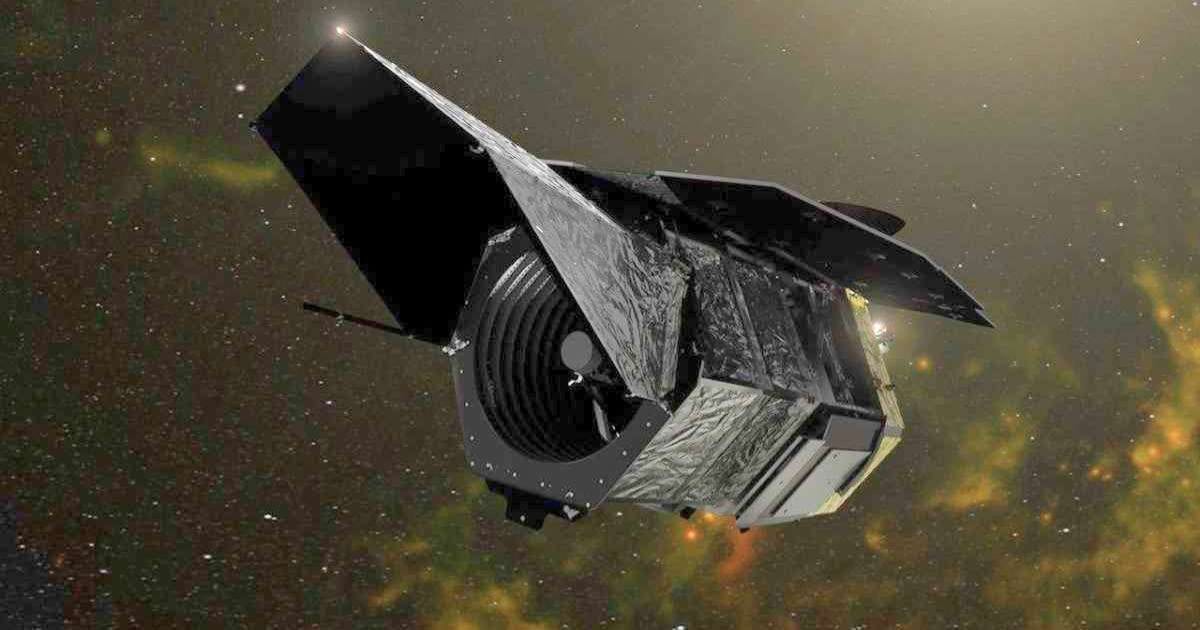
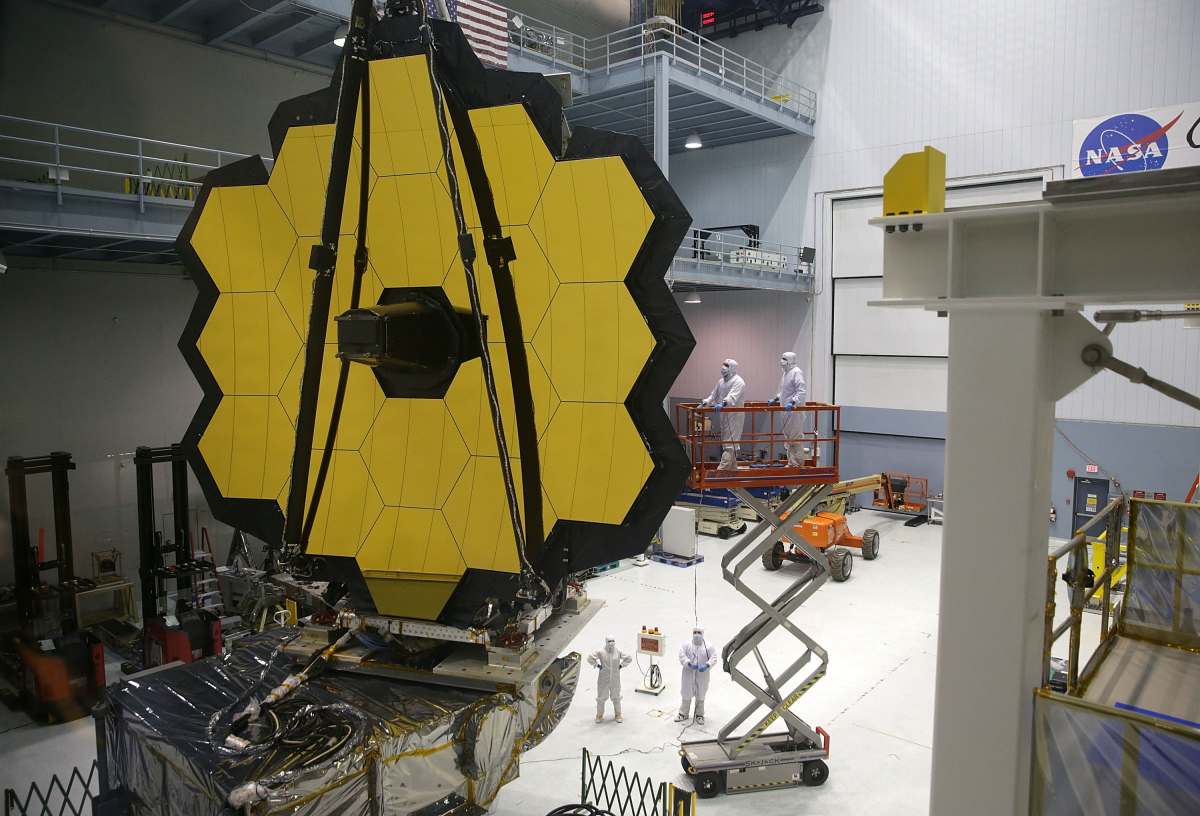
Astronomers have discovered a massive red galaxy, which they are calling 'Red Potato' owing to its morphology and color. The discovery has been reported in a research paper published on January 28 on the arXiv preprint server. The scientists, led by Weichen Wang of the University of Milan, found Red Potato while investigating a gas-rich cosmic node using the James Webb Space Telescope's Near Infrared Camera (NIRCam) and Near Infrared Spectrograph (NIRSpec). "In this work, we present the discovery of a massive quiescent galaxy in a gas-rich environment of a cosmic web node or protocluster at z ∼ 3.2, identified and spectroscopically confirmed from a JWST program," the paper reads.
The researchers found that the Red Potato, whose official designation is MQN01 J004131.9-493704, possesses a half-light radius of around 3,260 light-years and a stellar mass of 110 billion solar masses. However, as far as the molecular gas mass of Red Potato is concerned, it was found to be less than 7 billion solar masses, which means that the molecular gas yield fraction is less than 0.06. There is also no evidence for powerful outflows, and the galaxy is apparently a dispersion-dominated system according to the kinematics of ionized gas. Moreover, Wang and his teammates have found that the galaxy has a star-formation rate (SFR) at a level of 4.0 solar masses per year. It is a very low SFR for a galaxy that sits at the center of a large reservoir of cool circumgalactic medium (CGM).
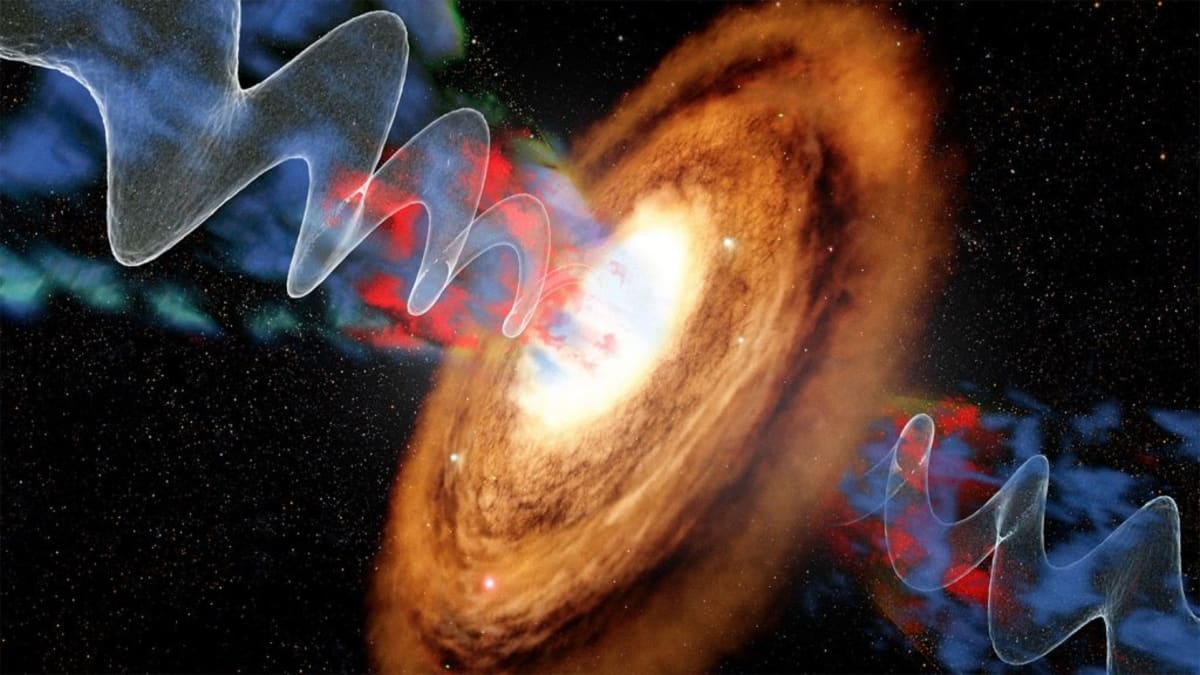
Despite being surrounded by a sea of gas, why is it not making stars? The researchers have found that the answer lies in the neighboring region of the Red Potato. Close to it, at a projected distance of 48 kpc, is a star-forming galaxy hosting a powerful active galactic nucleus (AGN), detected by deep Chandra X-ray observations. It has detected that X-ray jets are emanating from the AGN. These jets stir the surrounding gas into a turbulent state, making it harder for the cool gas to fall into the galaxy and form stars. "Our study demonstrates that the star formation rates of high-redshift galaxies could be substantially reduced and maintained at a low level even within gas-rich and overdense environments in particular situations," the researchers concluded.
More on Starlust
Astronomers find the earliest, hottest galaxy cluster that should not exist: 'Too strong to be real'
NASA's Hubble Space Telescope confirms first-ever failed starless galaxy made of dark matter