Hubble Telescope spots mysterious collisions in nearby star system echoing our solar system's birth

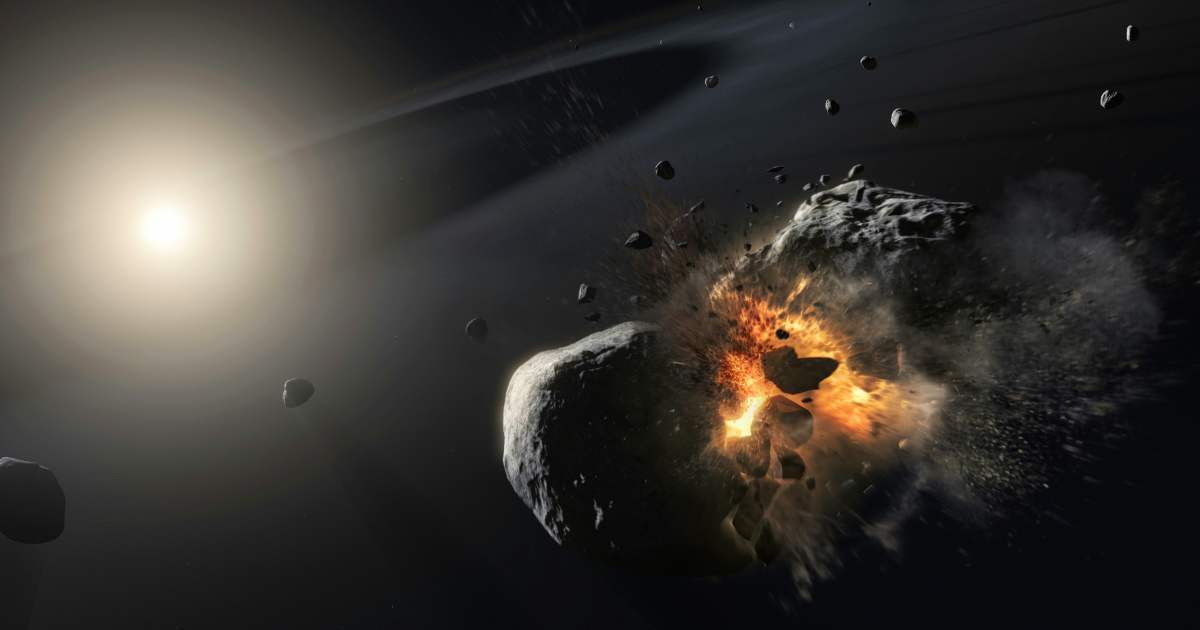
A research team used NASA's Hubble Space Telescope to find enormous clouds of debris formed by the collisions between massive space rocks in a nearby developing planetary system around the star Fomalhaut, according to the Max Planck Institute for Astronomy. The crashes involved "planetesimals," the rocky materials that make up the planets.
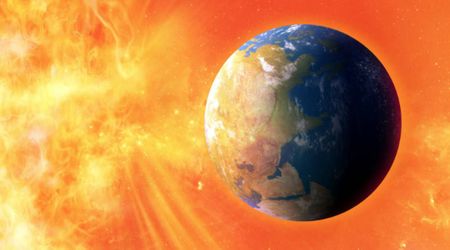
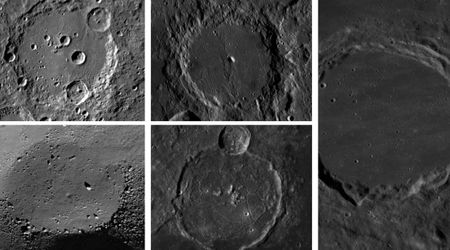
Our own solar system is believed to have gone through a similar process, which saw debris generated from the collisions between planetesimals, comets, and asteroids later hit Earth, our Moon, and other inner planets. That being said, existing theory suggested that such collisions happened every 100,000 years or more, but, in the last two decades, two such events have been observed in the Fomalhaut system.
![An artist's concept showing the sequence of events leading up to the creation of dust cloud cs2 around the star Fomalhaut. [Representative Image Credit: NASA, ESA, STScI, Ralf Crawford (STScI)]](https://de40cj7fpezr7.cloudfront.net/7e4d5578-110d-4dc8-8c35-5024871284ed.png)
“This is certainly the first time I’ve ever seen a point of light appear out of nowhere in an exoplanetary system,” stated Paul Kalas, the leading scientist of the study from UC Berkeley. He added that the new object named "cs2" (circumstellar source 2) was totally missing from the previous photos, thereby signifying an extremely violent and recent crash. Situated 25 light-years away in the constellation of Piscis Austrinus, Fomalhaut is a star that is younger and more massive than the Sun. Due to its proximity, the Hubble was able to capture the very faint light emitted by these impacts. Max Planck Institute for Astronomy's Bin Ren, a Hubble specialist whom his team members refer to as the "goalkeeper," made sure that the signal was authentic by testing it against his own data processing algorithms. "In this way, we ensured that the ‘detection’ was not caused by some initial data preparation step that introduced fake signals," Ren explained.
![A composite Hubble Space Telescope image showing the debris ring and dust clouds cs1 and cs2 around the star Fomalhaut. [Image Credit: NASA, ESA, Paul Kalas (UC Berkeley); Image Processing: Joseph DePasquale (STScI)]](https://de40cj7fpezr7.cloudfront.net/965ff5d0-794c-420b-b45a-2ec4c9cb6b73.png)
In 2008, astronomers were confident in reporting a planet by the name of Fomalhaut b. Ultimately, it disappeared, showing itself as an enlarging glob of dust from a past impact (now referred to as "cs1"). Curiously, cs1 and cs2 are located quite near each other. Had collisions between asteroids and planetesimals been random, they would have appeared at unrelated locations.
Despite the mysteries it presented, the observation enabled the research team to come up with several surprising insights regarding the Fomalhaut system. They concluded that the colliding bodies were very large, with a size of approximately 18 miles (30 kilometers), and thus the impacts were a billion times more powerful than the DART mission of NASA in the year 2022. In addition, the large quantity of dust gives the impression that the system is very much populated, with around 300 million such rocky bodies travelling around the star.
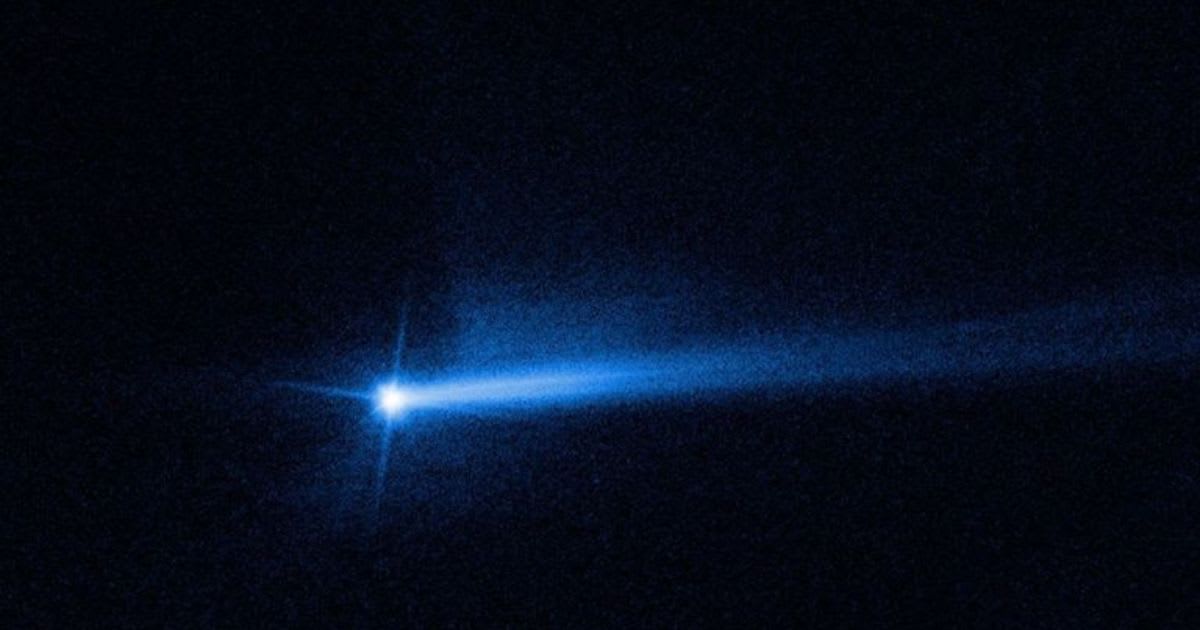
The team has been able to get more time with both the Hubble telescope and has requested access to the James Webb Space Telescope (JWST). Hubble will observe the evolution of cs2 over the next three years, whereas Webb's NIRCam (Near-Infrared Camera) will obtain color information about cs2 that Hubble's STIS (Space Telescope Imaging Spectrograph) could not provide.
More on Starlust
10 strangest things Hubble Space Telescope has discovered in space