ESA engineer becomes first-ever wheelchair user to cross the 'Kármán Line' into space

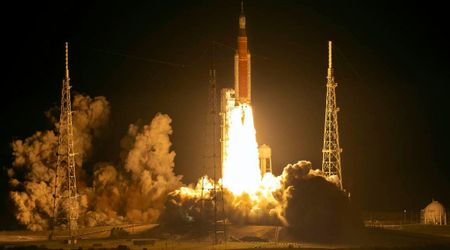
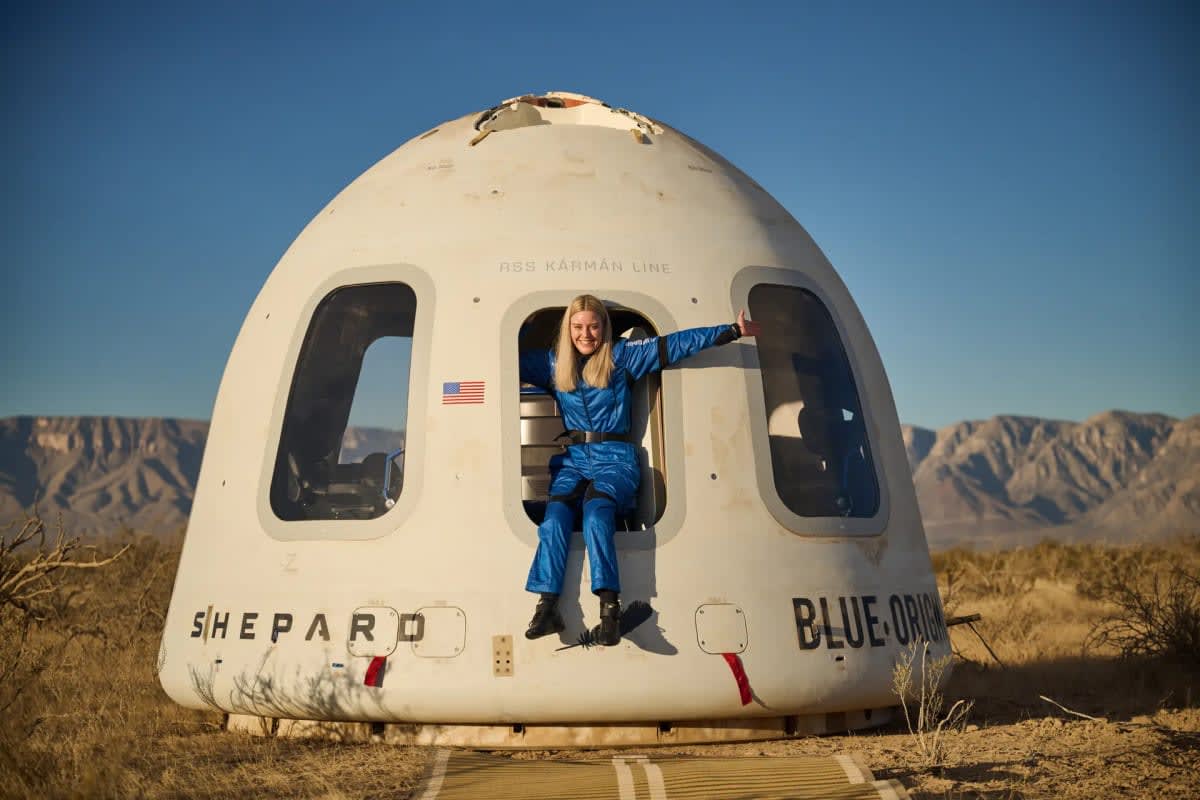
Blue Origin, Jeff Bezos' space venture, marked a milestone in inclusive spaceflight Saturday morning with the successful launch and recovery of its 37th New Shepard mission. Part of the six-person crew was Michaela "Michi" Benthaus, who became the first person using a wheelchair to cross the Kármán Line, or the internationally recognized boundary of space, as per Blue Origin.
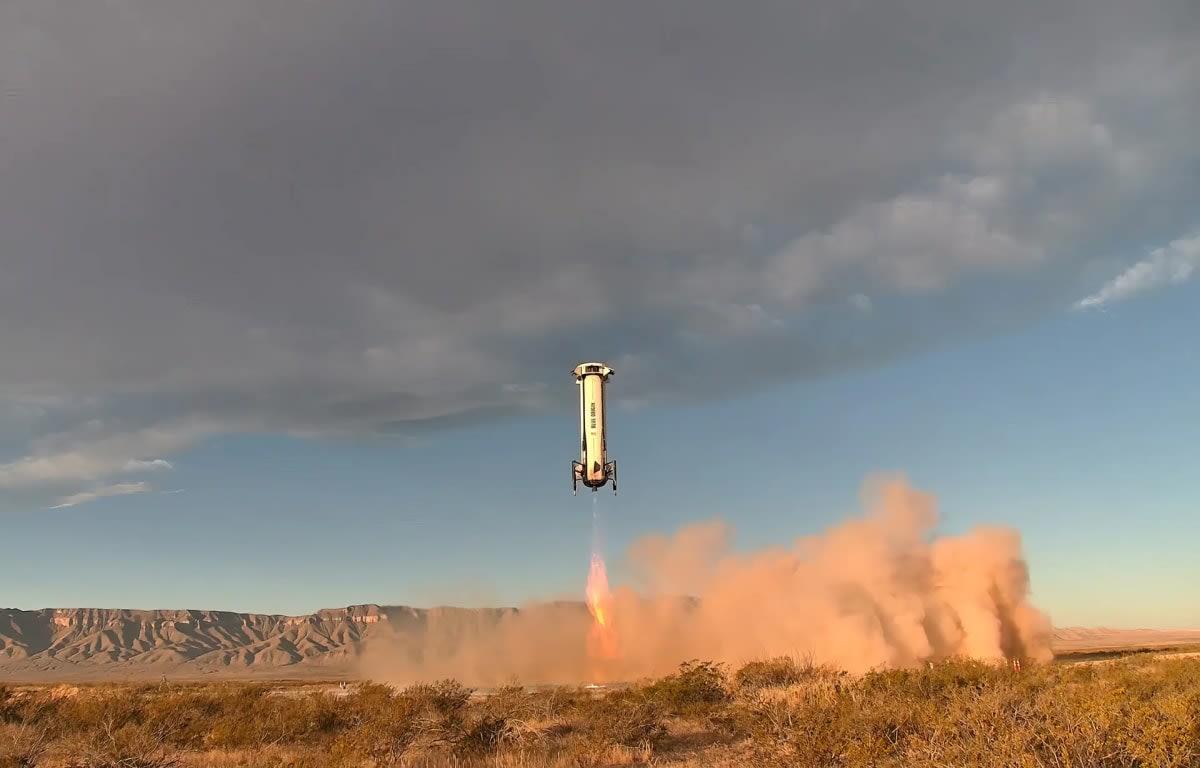
The NS-37 mission lifted off at 8:15 a.m. CST and lasted just a little more than 10 minutes in the air. The automated capsul climbed to an altitude of about 66 miles, or 107 kilometers, before parachuting back to West Texas, as mentioned on Blue Origin's X post. New Shepard, which was built with accessibility in mind, has flown 92 people to space till now. They include individuals who are hard of hearing, are legally blind, or have limited mobility or limb differences.
Key stats from today’s NS-37 mission:
— Blue Origin (@blueorigin) December 20, 2025
The crew capsule reached an apogee of 346,775 ft AGL / 350,422 ft MSL (106 km AGL / 107 km MSL).
The booster reached an apogee of 346,386 ft AGL / 350,033 ft MSL (106 km AGL / 107 km MSL).
The official launch time was 8:15:00 AM CST /…
Michi Benthaus, an aerospace engineer with the European Space Agency, has been using a wheelchair since a mountain biking accident in 2018. An accomplished athlete and scholar, she had already flown on a Zero-G research flight and completed an analog mission. The other five private astronauts that joined her in the cabin were Joey Hyde, Hans Koenigsmann, Neal Milch, Adonis Pouroulis, and Jason Stansell.
Officials with Blue Origin said this flight, the company's ninth of the year, reflects a continued trend of a rising cadence. "Michi's flight is particularly meaningful, demonstrating that space is for everyone, and we are proud to help her achieve this dream." Phil Joyce, Senior Vice President of New Shepard, said in the release. He stated that the company plans to further increase the rate as it heads into 2026.
The mission also boasted a specially designed mission patch, which included symbols that represent the backgrounds and passions of the astronauts. The design includes a hippo, Benthaus' favorite animal, along with a tennis ball in celebration of her journey and competitive spirit. Other symbols include a spiral galaxy for Joey Hyde's background in astrophysics, a baobab tree honoring Adonis Pouroulis' South African roots, and a DNA strand representing Neal Milch's dedication to science. The patch also featured a dog-bone shape, the letter "K", and the number "201" in tribute to Jason Stansell's brother. Most strikingly, the artwork depicts shards of broken glass—a nod to Blue Origin's mission to break barriers related to cost, nationality, and physical ability.
The New Shepard system is a fully reusable rocket system named after Alan Shepard, who became the first American in space. The technology differs from traditional rockets because the booster is designed to return to Earth and touch down vertically. As part of the company's vision to make space travel more sustainable, this enables the capability to renovate the vehicle and launch it again. The six passengers flew in a temperature-controlled, pressurized cabin inside the capsule for maximum comfort. The cabin was configured such that each seat had a large window, and every passenger had a breathtaking view of the cosmos. Before the company began flying passengers in 2021, the New Shepard system underwent a rigorous phase of development and testing for safety.
More on Starlust
Blue Origin announces major New Glenn upgrades as rivalry with SpaceX intensifies
Blue Origin's New Glenn successfully launches NASA’s twin ESCAPADE spacecraft