ESA’s Euclid telescope provides remarkable insights into formation of galaxies and supermassive black holes
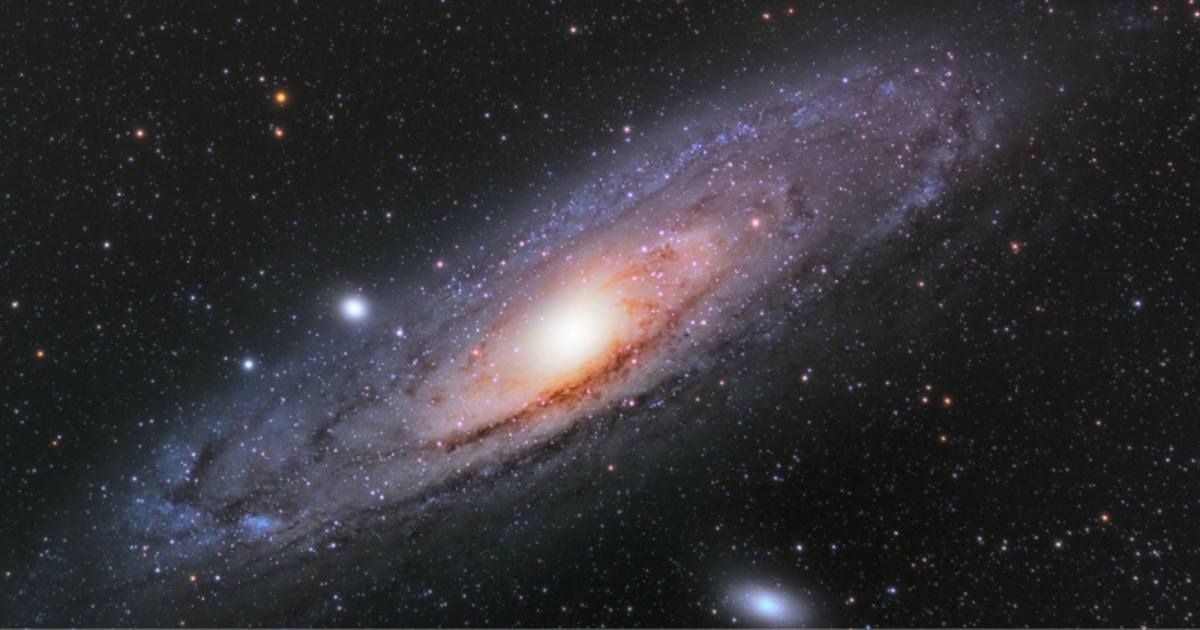
With its sharp observation and wide-field view, Euclid has already found more than 1.2 million large galaxies and obtained details of their morphology.
PUBLISHED NOV 15, 2025
A telescopic view of the Andromeda Galaxy (Cover Image Source: Getty Images | Wirestock)

Why do galaxies look so different from one another? From beautiful blue spirals like our Milky Way to golden ellipticals like the Messier 87? ESA’s Euclid space telescope is beginning to answer this question within just one year of observation, offering new insights into how galaxies form, grow, and transform over time.
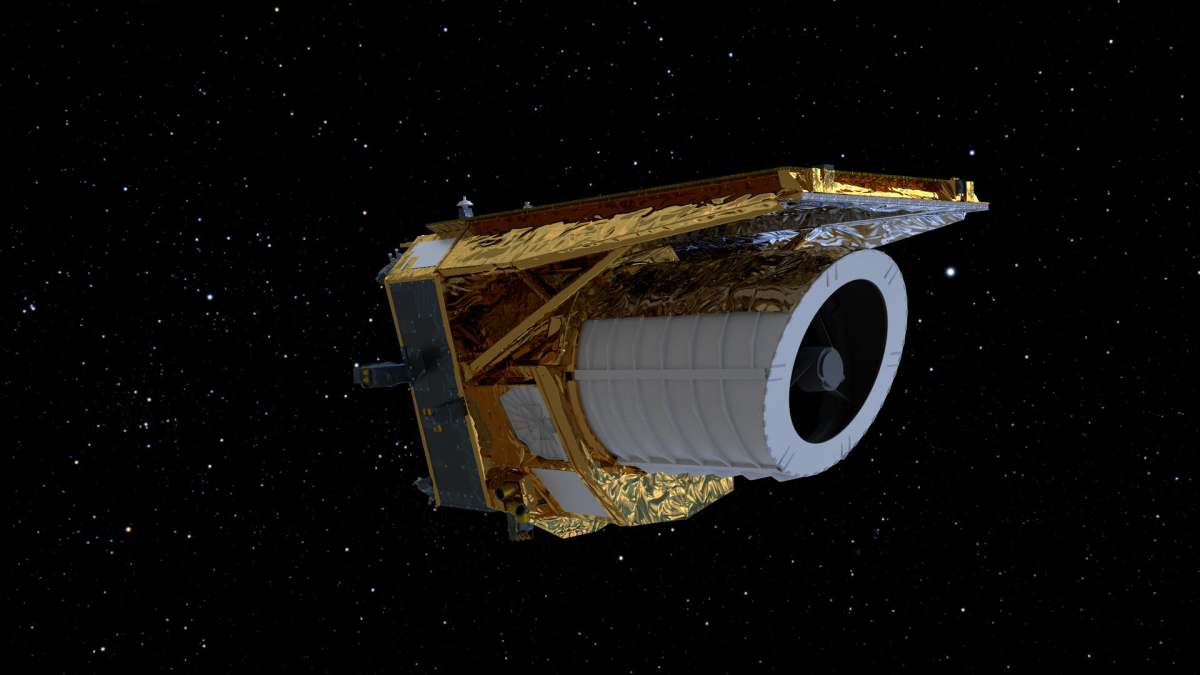
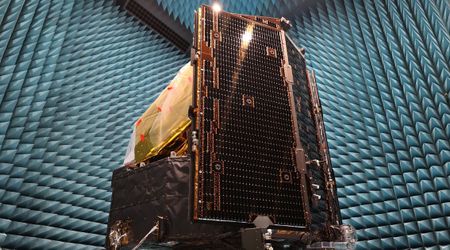
An image of Euclid Space Telescope (Image Source: ESA)
An image of the Euclid Space Telescope (Image Source: ESA)

One of Euclid’s main missions is to study what shapes the universe’s galactic population. With its sharp observation and wide-field view, Euclid has already found more than 1.2 million large galaxies and obtained details of their morphology—the shapes, sizes, colors, and masses that reveal their story, as per the Euclid Consortium. Data from Euclid is helping scientists at the Max Planck Institute for Extraterrestrial Physics (MPE) to study how galaxies merge and host supermassive black holes. 
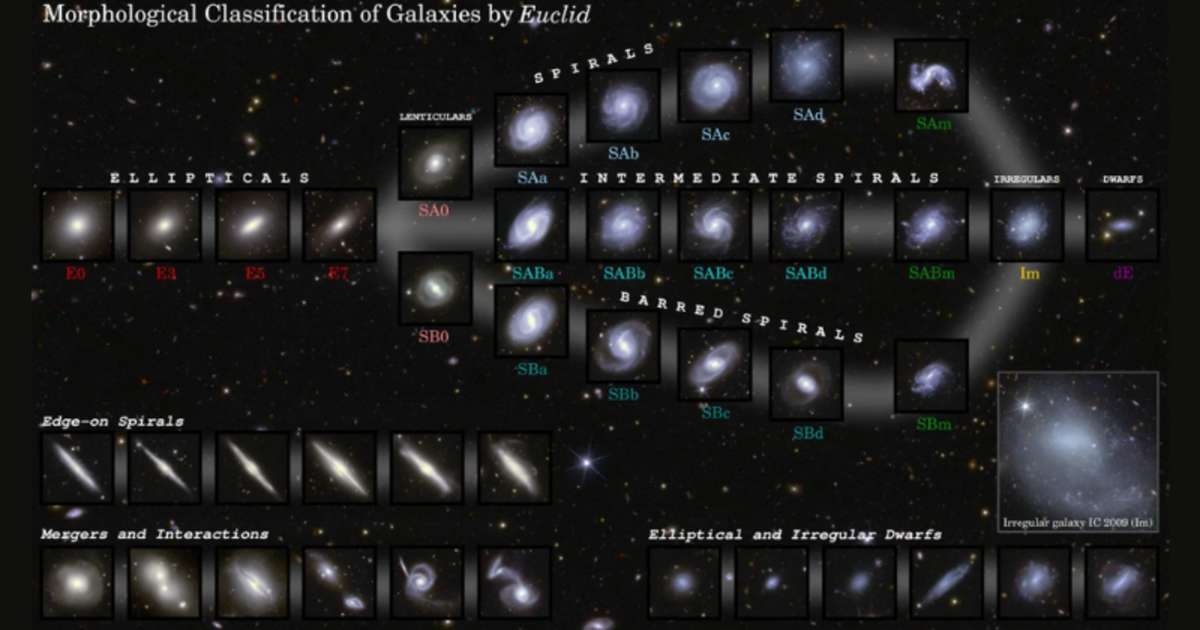
An image of “Morphological Tuning Fork” of galaxy classifications, created using Euclid’s high-resolution images from data release Q1 (Image Source: ESA | Euclid | Euclid Consortium | NASA| Diagram by J.-C. Cuillandre, L. Quilley, F. Marleau)

According to researchers at Max Planck Institute for Extraterrestrial Physics (MPE), the data from Euclid indicate that galaxies begin their lives as blue, star-forming discs, as shown on the right side of the Hubble diagram given above. Over time, they burn through their gas, collide and merge, gradually transforming into larger elliptical systems. Euclid’s observations not just show the present but also how they got here. “Euclid offers an unprecedented combination of sharpness and sky coverage, it will map the entire extragalactic sky,” says Maximilian Fabricius, scientist at MPE, which built major parts of the telescope’s optics. “For the first time, we can systematically study how the shapes and central structures of galaxies relate to their formation history on truly cosmic scales.”
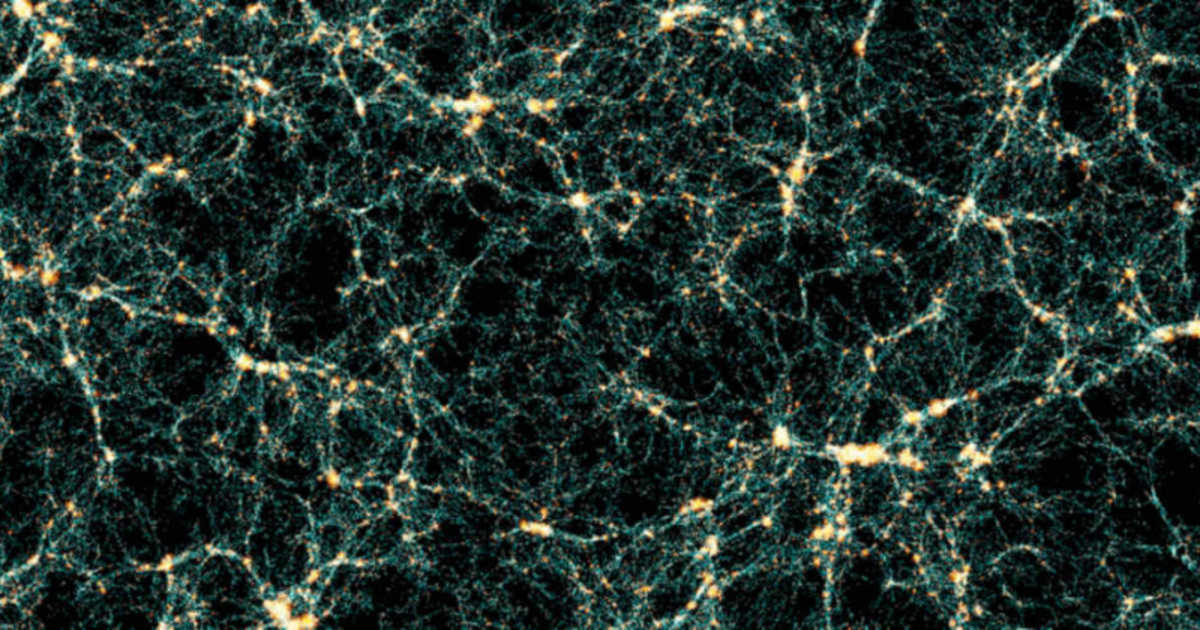
Image extracted from the Euclid Flagship simulations catalogue. Each dot represents a galaxy: blue points mark galaxies at the centers of dark matter clumps, while red points denote satellites within them (Image Source: Euclid Consortium | Jorge Carretero & Pau Tallada)

With their team, Fabricius and Roberto Saglia have already identified hundreds of galaxies with secondary nuclei that may eventually create supermassive black hole binaries. “The most massive black holes lie at the centres of giant elliptical galaxies and are thought to grow primarily through mergers with other supermassive black holes,” added Fabricius. “By detecting and analysing secondary nuclei, Euclid enables us to explore how these enormous black holes continue to grow and how their growth influences the galaxies that host them.”
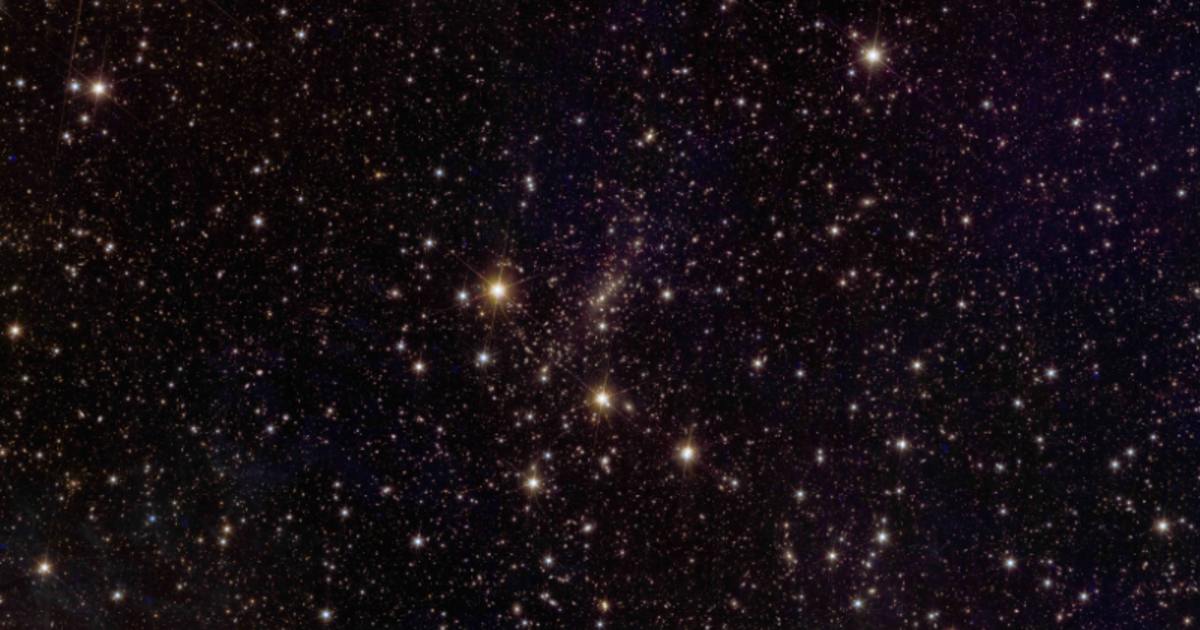
An image of the galaxy cluster Abell 2390 (Image Source: 
ESA | XMM-Newton Euclid | Euclid Consortium | NASA)
An image of the galaxy cluster Abell 2390 (Image Source: ESA | XMM-Newton Euclid | Euclid Consortium | NASA)

Euclid’s Q1 release spans 63 square degrees of the extragalactic sky, barely 0.5 % of what the whole target is. But this data is already enough to accelerate discoveries and studies across multiple fields of extragalactic astronomy. Among them is a study led by Daniela Vergani and co-led by Christoph Saulder (MPE), which uncovered 65 galaxies with highly ionized emission lines. Such features are indicative of extreme astrophysical phenomena like active galactic nuclei, shock fronts, or Wolf–Rayet stars, each providing insight into feedback mechanisms responsible for shaping galaxy evolution.
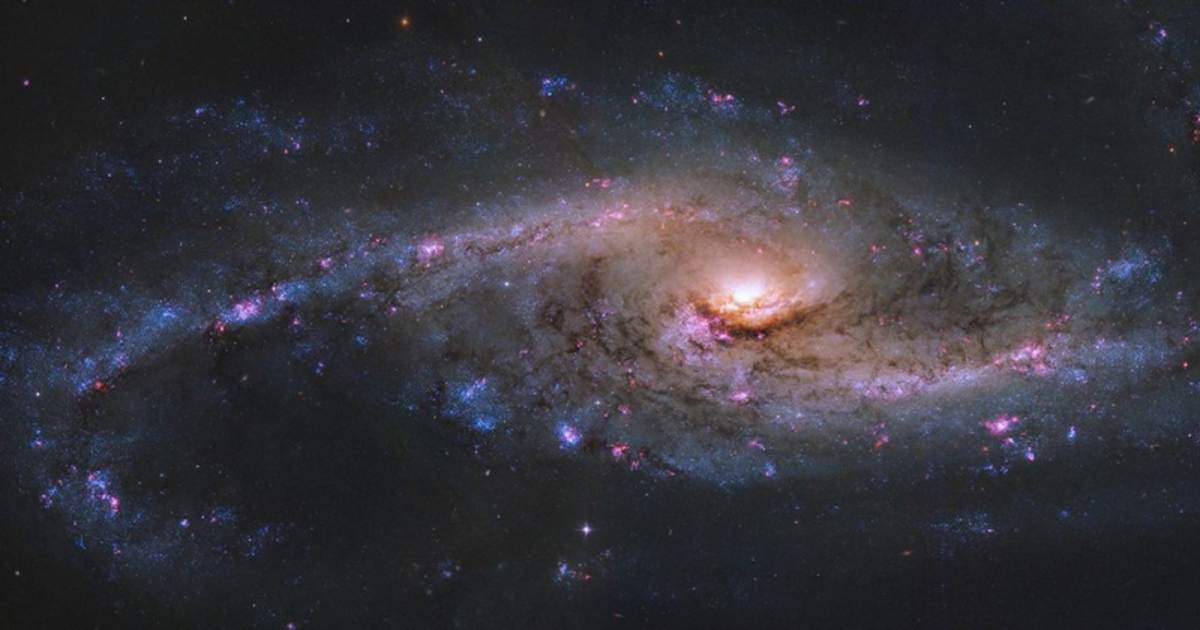
Image of Starburst spiral NGC 4536 which is bright with blue clusters of star formation and pink clumps of ionized hydrogen.
(Image source: NASA | ESA  | J. Lee (Space Telescope Science Institute); Processing: Gladys Kober- NASA/Catholic University of America)
Image of Starburst spiral NGC 4536, which is bright with blue clusters of star formation and pink clumps of ionized hydrogen. (Image source: NASA | ESA | J. Lee (Space Telescope Science Institute); Processing: Gladys Kober- NASA/Catholic University of America)

Thanks to Euclid, it is now also evident that the universe is mostly populated by dwarf galaxies, instead of huge spirals. So far, 2,674 dwarfs have been spotted, about 58 % dwarf ellipticals and 42 % dwarf irregulars, per the Euclid Consortium. Many of these galaxies show compact blue cores or globular clusters. These small systems are thought to be the foundation of larger galaxies, offering insights into how systems like the Milky Way came to be.

More on Starlust

Astronomers find a 5.5 million light-years-long 'galaxy filament' connecting 14 galaxies 

Twin spiral 'arms' caught feeding a black hole in the Circinus galaxy 
MORE STORIES

The exoplanet is located seven times closer to its star than Mercury is to our own planet.
1 day ago
The rocks were determined to be kaolinite, which is found in tropical regions on Earth.
2 days ago
Five young stars in the Ophiuchus region were studied to detect ultraviolet radiation and understand its role in the formation of stars.
4 days ago
On September 23, 2025, NASA's OSIRIS-APEX successfully used an Earth flyby to slingshot toward its target: potentially hazardous asteroid Apophis.
4 days ago
The Hubble Space Telescope has been surveying space since 1990 and has captured some interesting cosmic elements in action.
7 days ago
The Moon's far side never faces Earth, so currently, radio signals cannot reach us directly. But it may change in the future.
7 days ago
Perseverance's main job is Martian weather forecasting, but its routine solar scans on November 25 unexpectedly detected the large sunspot.
Nov 27, 2025
The telescope's outer barrel and solar panels were subjected to a powerful acoustic blast reaching 138 decibels, louder than standing next to a jet engine during takeoff.
Nov 26, 2025
The spacecraft is on its way to study Jupiter's moon Europa.
Nov 24, 2025
The Perseverance Mars rover discovered the unusual rock at its first landing site.
Nov 21, 2025