Elon Musk says SpaceX revenue will reach $15.5 billion and exceed 'the entire budget of NASA' in 2025

Elon Musk announced on Tuesday, June 3, that SpaceX is projected to hit roughly $15.5 billion in revenue this year, a clear sign of the company's increasing dominance in the commercial space industry. Also, Musk highlighted on X that SpaceX's commercial space revenue is expected to surpass NASA's approximate $1.1 billion budget for projects related to Musk's company next year. This growth stems from SpaceX's focus on meeting demand for affordable launch services and satellite communications, while NASA continues to concentrate its funding on deep space exploration and research missions, as reported by Reuters.

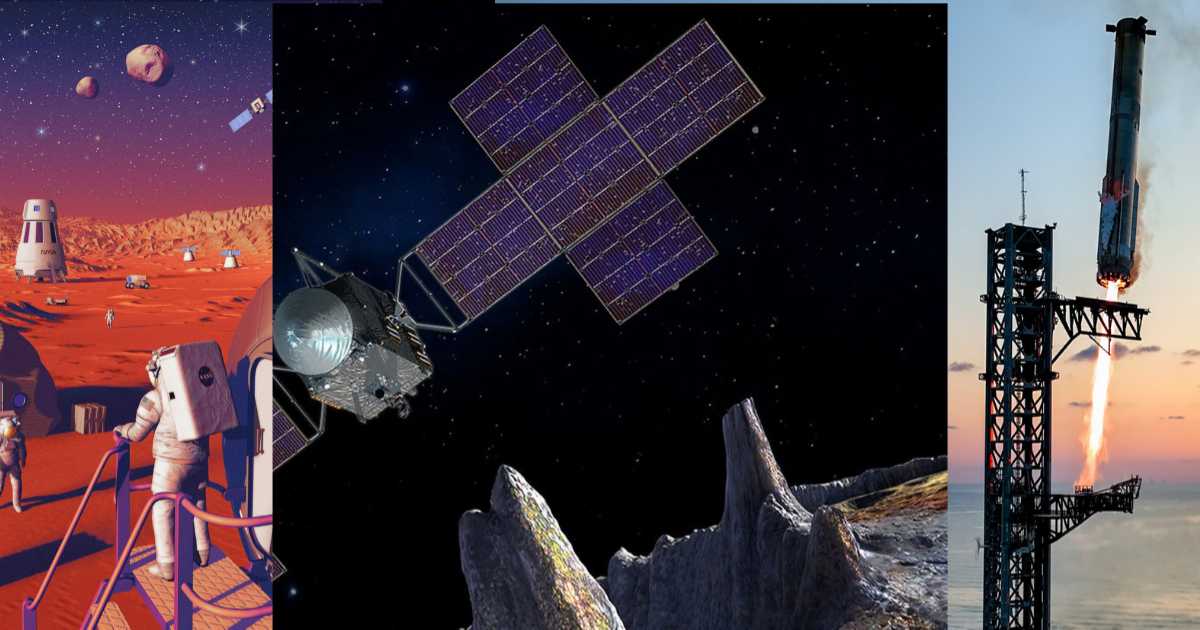
A key component of SpaceX's long-term vision is the 400-foot (122-meter) tall Starship rocket system, which Musk has stated will be crucial for sending humans to Mars. Complementing this ambitious project, the company's reusable Falcon 9 and Falcon Heavy rockets have dramatically cut launch costs, allowing SpaceX to capture a significant portion of the global launch market. This efficiency led to a record-breaking 2024 for SpaceX, with 134 Falcon launches, solidifying its position as the world's most active launch operator.
Perhaps an interesting milestone: @SpaceX commercial revenue from space will exceed the entire budget of @NASA next year.
— Elon Musk (@elonmusk) June 3, 2025
SpaceX revenue this year will be ~$15.5B, of which NASA is ~$1.1B.
Looking ahead, SpaceX aims to surpass its own record with 170 launches by the end of 2025, as announced last week, to keep pace with the increasing demand for satellite deployment. While its rockets are busy, a major driver of SpaceX's revenue comes from Starlink, its satellite internet service. Elon Musk has indicated Starlink will eventually go public, though a timeline remains unconfirmed. As of November 2023, Starlink had already achieved breakeven cash flow, having successfully deployed thousands of satellites to provide global broadband internet under its banner.
Beyond its commercial endeavors, SpaceX, alongside two partners, has also emerged as a frontrunner for a significant role in US President Donald Trump's ambitious "Golden Dome" missile defense shield. Recently, despite some explosive setbacks with its massive Starship rocket, SpaceX has reaffirmed its unwavering commitment to its audacious goal of reaching Mars by 2026. This long-held inspiration of Musk to establish a self-sustaining civilization on the Red Planet was a central theme of his recent 42-minute presentation, shared on SpaceX's X account.
The Road to Making Life Multiplanetary: an update from @elonmusk on SpaceX's plan to reach Mars pic.twitter.com/d2cnsVKK80
— SpaceX (@SpaceX) May 29, 2025
During the presentation, Musk emphasized, "Progress is measured by the timeline to establishing a self-sustaining civilization on Mars," underscoring the ongoing dedication to Starship's development despite the challenges. Following a successful Starship journey to Mars in 2026, SpaceX intends to significantly ramp up its efforts, with plans for roughly 20 Starship missions to the Red Planet between 2028 and 2029, some of which could carry human passengers. Musk explained their strategy: "Assuming the first missions are successful and they land successfully, we'd send humans on the next mission, and we really start building the infrastructure for Mars."
He also considered a more cautious approach, adding, "Maybe, just to be safe, we might just do two landing episodes with Optimus and do the third one with humans. We'll see." In addition, Starship currently holds the title of the largest and most powerful rocket ever built, approximately 397 feet (121 meters). Even larger versions are already on the horizon, with Elon Musk announcing that Version 3 will reach 408 feet (124,4 meters) when fully assembled. This forthcoming iteration is specifically designed to facilitate Martian settlement.