Astronomers break down the truth behind Earth's 'second moon' expected to hang around our planet until 2083
An asteroid, designated 2025 PN7, has effectively become a long-term 'quasi-moon' to Earth.
PUBLISHED OCT 23, 2025
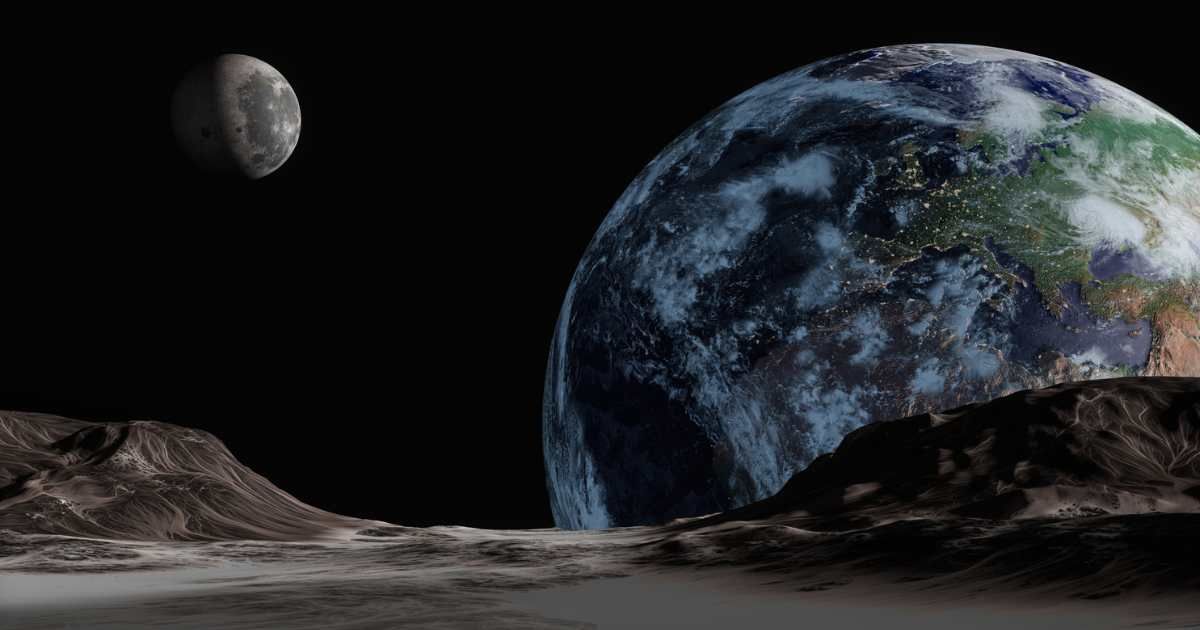
Land on a black background and the distant earth and moon (Representative Cover Image Source: Getty | leoimage)

An asteroid has effectively become a long-term "quasi-moon" to Earth, shadowing our planet in a shared solar orbit until the year 2083, according to recent findings published in IOP Science. Designated 2025 PN7, the object is not a true satellite; it does not actually orbit Earth. Instead, it maintains a path around the Sun that closely mirrors our planet's, creating the illusion of a temporary companion.
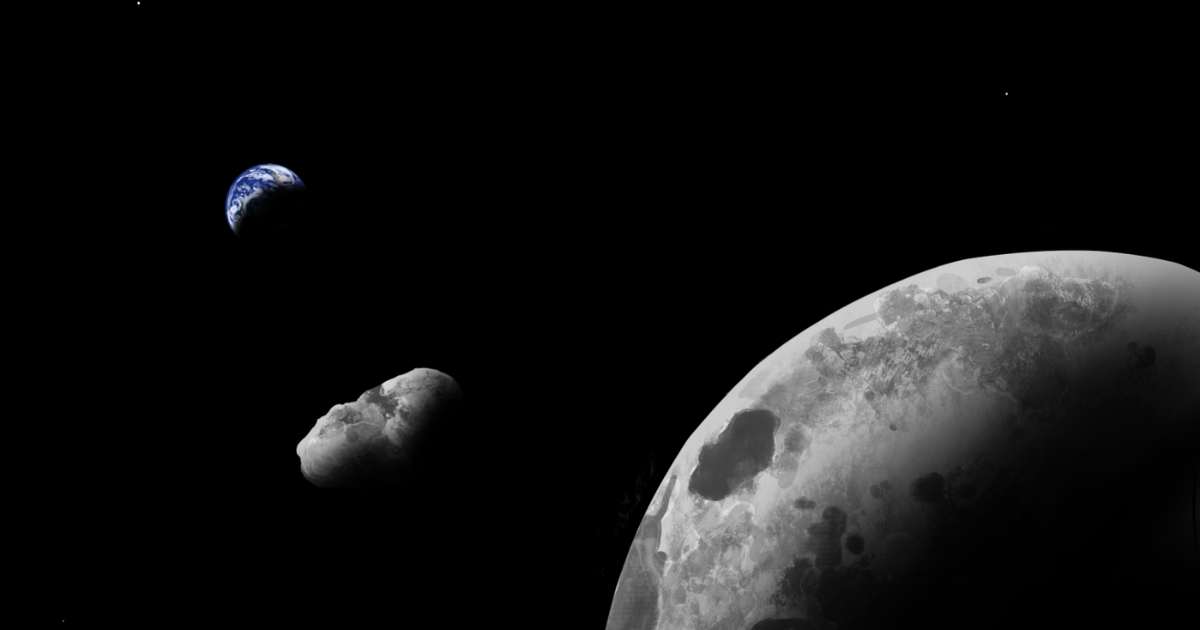
An artist's impression of Earth quasi-satellite Kamo`oalewa near the Earth-moon system. Using the Large Binocular Telescope, astronomers have shown that it might be a lost fragment of the moon (Representative Cover Image Source: University of Arizona | Addy Graham)
An artist's impression of Earth's quasi-satellite Kamo`oalewa near the Earth-moon system. Using the Large Binocular Telescope, astronomers have shown that it might be a lost fragment of the moon (Representative Image Source: University of Arizona | Addy Graham)

Cornell University Astronomy Professor Phil Nicholson explained that these objects orbit the Sun on paths extremely similar to Earth’s. He further added, "They sometimes 'keep company' with the Earth for years, or even decades." He likened the phenomenon to a wild animal following a group of people without officially joining the pack, as per ABC News.

Illustration of asteroids approaching Earth (Representative Image Source: Getty | VICTOR HABBICK VISIONS/SCIENCE PHOTO LIBRARY)

From Earth's perspective, this orbital dance makes the asteroid appear to circle our planet, said Zoe Ponterio, manager of Cornell University's Spacecraft Planetary Image Facility. The asteroid’s oval-shaped orbit means its speed relative to Earth constantly changes: it accelerates when closer to the Sun and slows down when farther away. This repeated overtaking and lagging effect creates the optical illusion that the object is in an orbit around Earth.
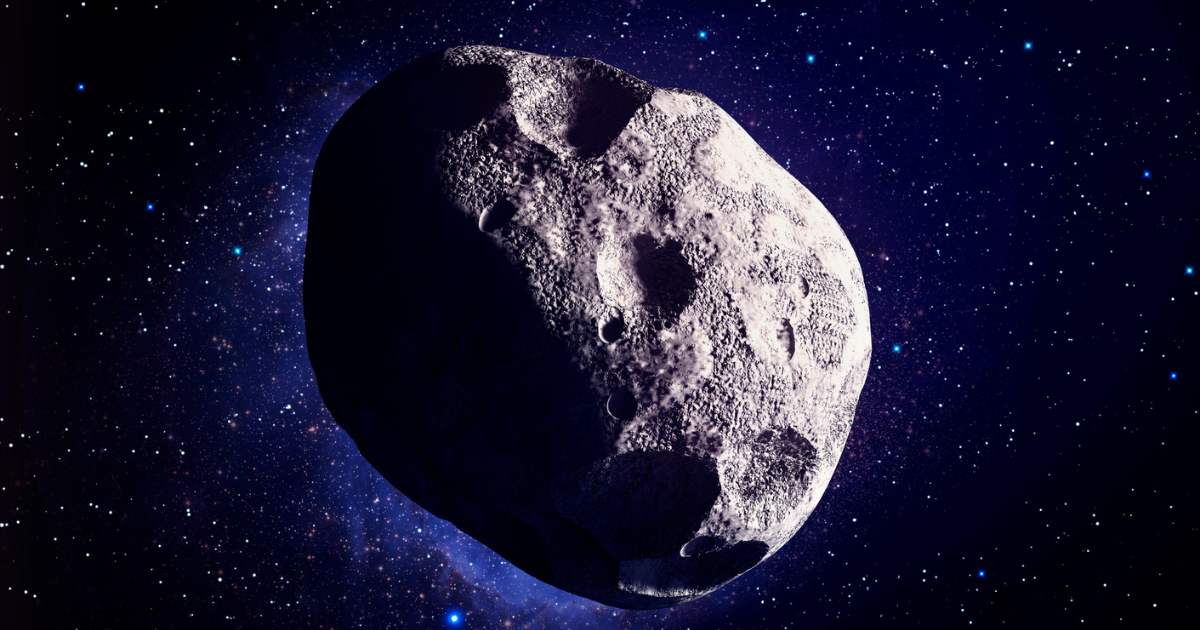
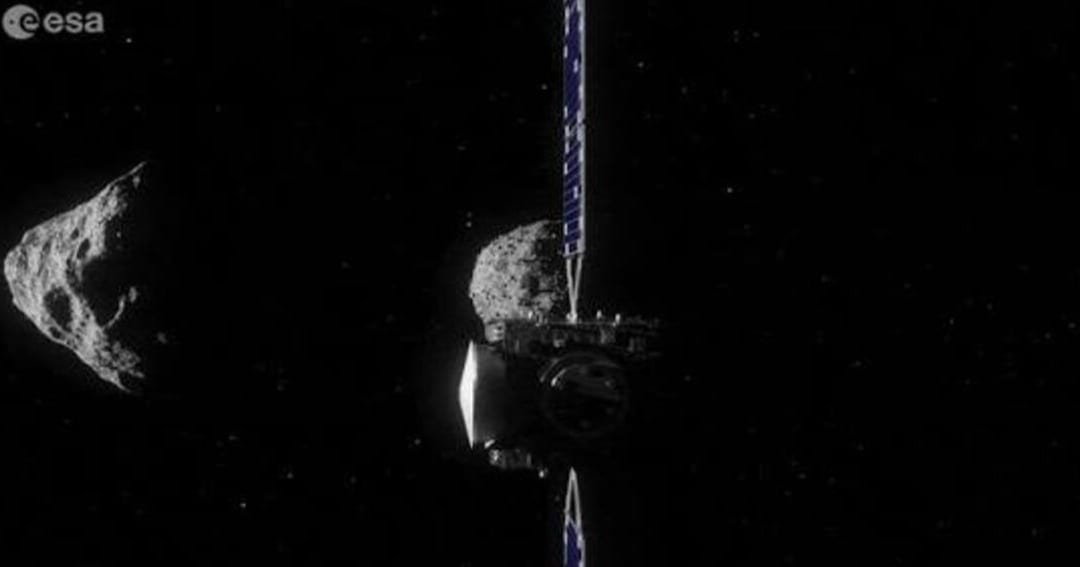
A digital illustration of an asteroid.
(Representative Cover Image Source: Getty Images | Andrzej Wojcicki/Science Photo Library.)
A digital illustration of an asteroid. (Representative Image Source: Getty Images | Andrzej Wojcicki/Science Photo Library.)

The celestial body's path is predicted to eventually evolve into a horseshoe orbit, where it will appear to swing back and forth across the sky as it alternately passes Earth on its inner and outer tracks. This kind of temporary association is not unprecedented; astrophysicists have previously documented at least six other partial or temporary quasi-moons near Earth. The discovery was formalized after the Pan-STARRS telescope in Hawaii captured images of the object on August 29. However, analysis of older datasets suggests the quasi-moon has been in this particular orbital alignment for the past six decades.

Pan-STARRS is the largest single research project at the Institute for Astronomy (Image Source: Institute of Astronomy)

Astronomers stress that the average person won't see this new visitor. The object is both small and extremely dim, possessing a magnitude of only 26, far too faint to be detected without powerful specialized telescopes. The existence of objects like 2025 PN7 underscores the complexity of our local system. Kelle Cruz, Associate Professor of Physics and Astronomy at Hunter College, emphasized that the Solar System contains "far more than just the familiar planets." She noted that ongoing and forthcoming projects, such as the LSST Survey using the Rubin Observatory, promise a "flood of new discoveries" of small, faint objects lurking both in our Solar System and the Milky Way

View of Rubin Observatory at sunset in May 2024. The 8.4-meter Simonyi Survey Telescope at Rubin Observatory, equipped with the LSST camera, the largest digital camera in the world, will take enormous images of the Southern Hemisphere sky, covering the entire sky every few nights (Image Source: SLAC National Accelerator Laboratory |  Olivier Bonin)
View of Rubin Observatory at sunset in May 2024. The 8.4-meter Simonyi Survey Telescope at Rubin Observatory, equipped with the LSST camera, the largest digital camera in the world, will take enormous images of the Southern Hemisphere sky, covering the entire sky every few nights (Image Source: SLAC National Accelerator Laboratory | Olivier Bonin)

The concept of a temporary companion orbiting Earth is not new. In the fall of 2024, our planet briefly acquired a "mini-moon," a captured asteroid officially named 2024 PT5. Unlike the decades-long orbital alignment of a quasi-moon like 2025 PN7, a mini-moon is an object that becomes gravitationally bound to Earth for a short time. Asteroid 2024 PT5, estimated to be about 10 meters across, was captured on September 29 and released on November 25, remaining in our planet's orbit for just 57 days.

The observation of 2024 PT5 was a notable event, as it represented only the fifth mini-moon ever recorded to have been captured by Earth. This highlights the rarity of detecting these fleeting cosmic visitors, even as sophisticated survey projects continue to monitor the space surrounding our planet. 

More on Starlust

Asteroid to hit our Moon? Scientists consider destroying 220-foot asteroid 2024 YR4 before it is too late

Asteroid the size of a skyscraper set for a close approach to Earth this month—should we be worried?
MORE STORIES

The celestial event this month is a rare one, with the Moon retreating to an apogee from Earth's center.
37 minutes ago
The three interstellar objects are unique, billion-year-old fragments and kinetic artifacts collected from countless extrasolar systems across the galaxy.
4 hours ago
English physicist and science communicator Professor Brian Cox draws parallels between the journey of 3I/ATLAS and that undertaken by humanity.
8 hours ago
Conspiracy theories can be put to rest as new evidence from the MeerKAT radio telescope has emerged.
1 day ago
Consecutive X-class solar flares have set the stage for severe space weather to strike on November 11 and 12.
1 day ago
The observation, made on November 9, unveiled a shockingly complex jet system that overshadows prior data, immediately casting doubt on the comet's origin.
2 days ago
The object, discovered by Gennady Borisov on November 2, 2025, quickly became the focus of speculation amid the curiosity surrounding 3I/ATLAS.
2 days ago
To assess Martian viability, scientists subjected yeast cells to Mach 5.6 shock waves and the corrosive perchlorate salts common on the Red Planet.
6 days ago
These impacts pack surprising power; a mere 11-pound meteoroid can blast a 30-foot (9-meter) crater, ejecting 75 metric tons of lunar soil.
6 days ago
Sunspot AR3474 detonated with an X1.8 solar flare on November 4, sending an ultraviolet wave silencing South America's shortwave radio communications.
7 days ago