U.S. lawmakers warn Trump’s NASA budget cut may hinder its ability to identify and track hazardous asteroids

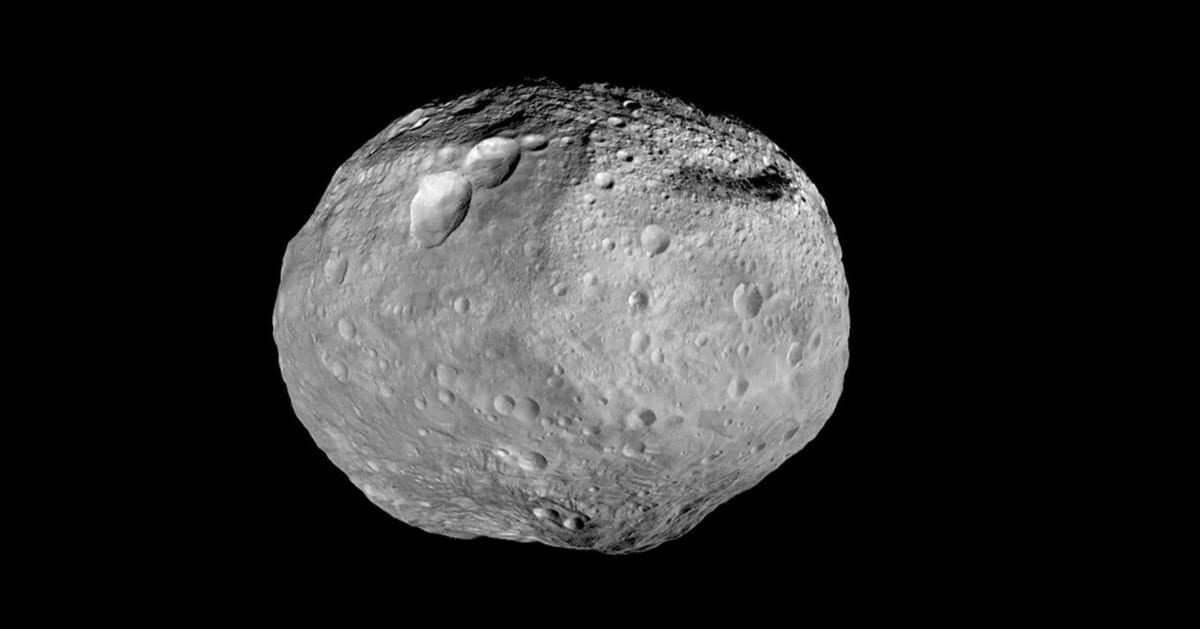
The U.S. House Committee on Space, Science and Technology held a meeting with scientists on May 15 to tackle a compelling question: How should NASA respond to the discovery of a hazardous asteroid headed for Earth? This discussion felt particularly timely considering the recent attention surrounding asteroid 2024 YR4, which initially presented a significant impact risk before further analysis thankfully ruled it out, as reported by Space.com.

The primary focus of the May 15 meeting was NASA's much-anticipated Near-Earth object (NEO) Surveyor mission, which promises to enhance the detection of potentially hazardous asteroids. Nevertheless, the elephant in the room was the Trump administration's recent proposal to cut NASA's overall budget by 24% for the next fiscal year. Alarmingly, the proposed reduction to the agency's science programs, which are essential for planetary defence, is even deeper, at 47%. This top-line reduction, detailed in the White House's 'skinny budget', is characterized as the largest single-year reduction in NASA's funding in American history.

During the hearing, Representative Valerie Foushee (D-North Carolina) warned, "If enacted, the Trump administration's skinny budget proposal risks putting NASA on a path to irrelevance," she further added, "It threatens our economic and national security, surrenders U.S. leadership and space to our adversaries, and jeopardizes our competitiveness and standing on the world stage. That's a strategic posture I simply cannot accept." Nicola Fox, the associate administrator for NASA's Science Mission Directorate, was also at the hearing. She said, "We do not know of any sizable object that has a significant risk of impacting Earth in the next 100 years; however, there are a lot more to be found," she continued, "The mission will improve NASA's ability to discover and then define the sizes and the orbits of the NEOs to understand the hazard they actually pose to us. Finding those potentially hazardous asteroids remains a top priority for NASA's planetary defense program."
This proposed budget, which cuts NASA's science funding by 47%, would inevitably lead to widespread cancellations of valuable missions representing billions of dollars of investment, as per a statement by The Planetary Society. Implementing such drastic cuts so rapidly, without the guidance of a confirmed NASA Administrator or a well-defined policy objective, wouldn't enhance the agency's efficiency. It would create "chaos, waste the taxpayers’ investment, and undermine American leadership in space."
Furthermore, this budget, overseen by the Office of Management and Budget (OMB) Director Russ Vought, contradicts Trump's stated ambition for America to “lead the way in fueling the pursuit of space discovery and exploration.” The OMB's budget fundamentally undermines the President's vision for American space leadership. To reverse the proposal cuts, the Planetary Society has organized a joint letter to Congress, urging the full reinstatement of NASA's science funding for FY 2026. The letter continues to get support, as more science, industry, and public advocacy organizations join the unified opposition.
"We urge Congress to swiftly reject this destructive proposal and instead pursue a path consistent with the President’s vision. This is an opportunity for bipartisan agreement to secure an efficient, capable, and balanced national space program worthy of the nation it aims to represent," the statement by The Planetary Society read.