Small, experimental capsule beats the odds to survive ISRO's failed PSLV launch

As speculations said all of the 16 payloads aboard ISRO's PSLV were lost after the rocket lost control just six minutes into the flight on Sunday, a small, 25-kilogram experimental capsule beat the odds. In what was a triumph for its maker, Orbital Paradigm, it transmitted important flight data even as the rocket carrying it failed.
Our KID capsule, against all odds, separated from PSLV C62, switched on, and transmitted data. We're reconstructing trajectory. Full report will come. [Edited from previous version]
— Orbital Paradigm (@OrbitalParadigm) January 13, 2026
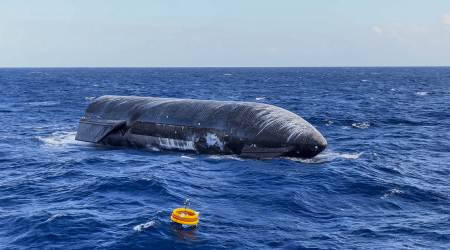
The KID (Kestrel Initial Demonstrator), designed for re-entry testing towards a splashdown in the South Pacific Ocean, transmitted more than three minutes' worth of flight data before crashing back to Earth. It endured forces as high as 28 Gs and kept its inside at a constant temperature of 30°C, even as the outside temperature spiked. "In a non-nominal flight, I would expect, normally, you would get zero data," CEO Francesco Cacciatore told Payload in an exclusive interview. "In this case, it turns out that what we did was enough to survive and transmit, which is mainly the goal." In what was likely a result of the flight anomaly, KID separated from the rocket about 18 minutes after takeoff. "To transmit the data, it means KID had to separate undamaged from the launcher, switch on, and connect to the RF link,” Cacciatore explained. “The working theory we have is that KID fell back to Earth coupled to PSLV stage 4, and the thermal conditions triggered separation."
Technically, the survival of the hardware means success for Orbital Paradigm. For its paying clients, however, it was still a disappointment. Since the rocket never reached the target altitude, Orbital Paradigm could not collect and transmit the payload data before the mission failed. Frontier Space, a major customer aboard, voiced heartbreak and hope. CEO Aqeel Shamsul noted such setbacks are an expected part of pushing new space tech ahead.
Even before liftoff, the company had laid out a strict grading scale: the capsule did "exceed expectations" by returning data during its fall, but it technically failed its "bare minimum" objective of hitting the customer's scientific goals. Already, Orbital Paradigm is turning toward the next plan: a far larger 150-kilogram reentry vehicle that will be fitted with a propulsion system from Pangea Propulsion based in Barcelona. Orbital Paradigm has already booked its next flight aboard a SpaceX rocket in April 2027 and is raising money to implement improvements.
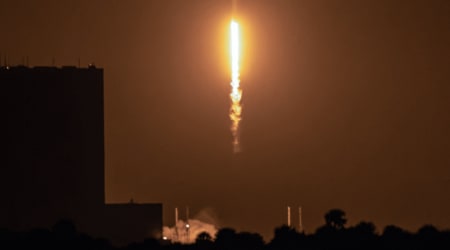
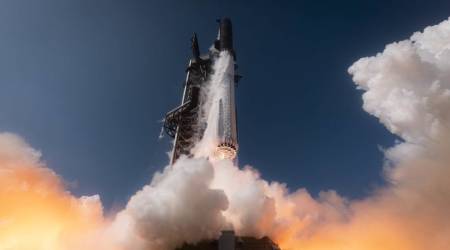
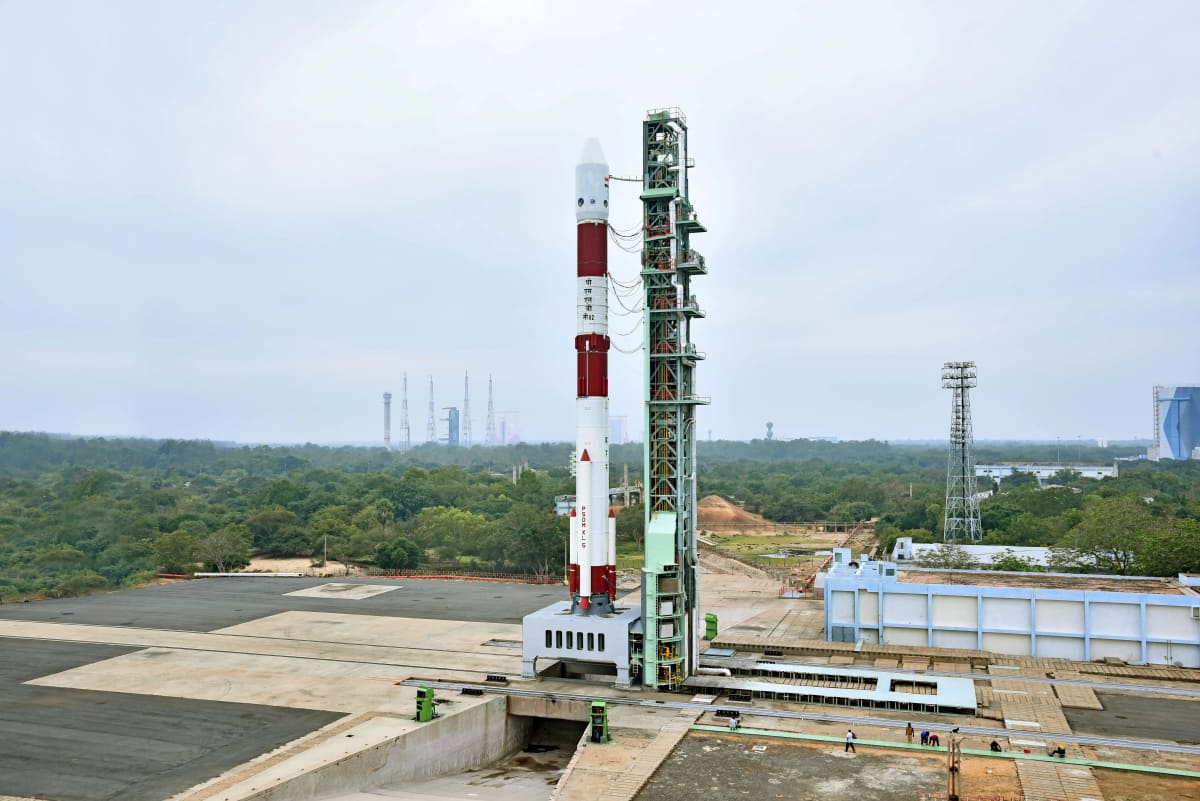
The PSLV-C62 rocket failed soon after it took off from the Satish Dhawan Space Center on January 11 at 11:48 p.m. EST. Live footage revealed that the vehicle lost its orientation during the third-stage burn, despite the four-stage rocket's first two stages operating normally.
The PSLV-C62 mission encountered an anomaly during end of the PS3 stage. A detailed analysis has been initiated.
— ISRO (@isro) January 12, 2026
"We are now analyzing the data from all ground stations, and once the analysis is complete, we will come back to you," ISRO chairman V. Narayanan said after the launch failed. Astronomer Jonathan McDowell's independent flight tracking indicates that the rocket descended into the Indian Ocean after reaching a low, suborbital height. The main payload of the mission, the EOS-N1 (Anvesha) Earth-monitoring satellite, deemed crucial for national security, was lost along with its co-passenger payloads.
I estimate that PSLV-C62 reached a suborbital trajectory of around -3800 x 390 km x 98 deg and fell in the Indian Ocean very roughly near 75E 18S.
— Jonathan McDowell (@planet4589) January 12, 2026