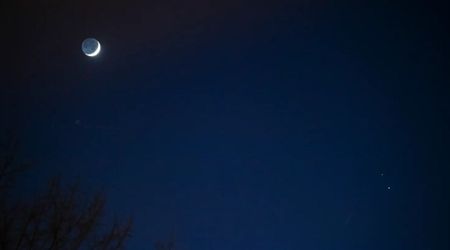
Gemini twins will shine along with Jupiter in the night sky tonight
Castor and Pollux, the Gemini twins, will be visible alongside Jupiter and will provide skywatchers with a celestial show.
Published: 3 days ago | By Juhi Varma
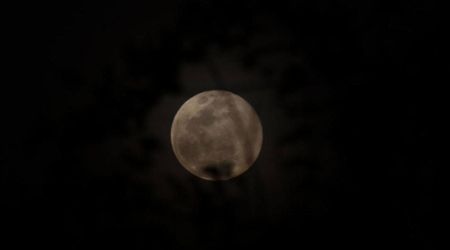
Lunar phases 2026: What is the Moon phase on March 24?
Tonight on March 24, about 44% of the Moon's visible side will be illuminated by the Sun.
Published: 5 days ago | By Juhi Varma
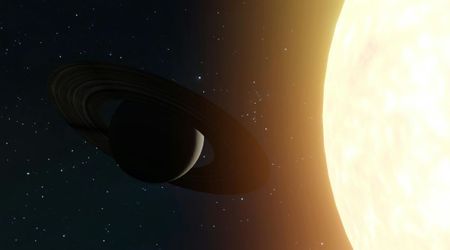
Here's how to watch Sun-Saturn conjunction on March 25
The ringed planet slips behind the Sun as it moves to the far side of the solar system.
Published: 5 days ago | By Sandip Kishan

Starting with spring equinox on March 20, Sun will move northward each day—here's how to track it
The March equinox will take place on March 20 at 14:46 UTC.
Published: Mar 19, 2026 | By Juhi Varma

Meteor breaks apart and causes a loud ‘boom’ over Ohio, fireball seen across multiple US states
In the event identified as 1828-2026 by the American Meteor Society, the meteor weighed 7 tons.
Updated: Mar 18, 2026 | By Pranjal Nath
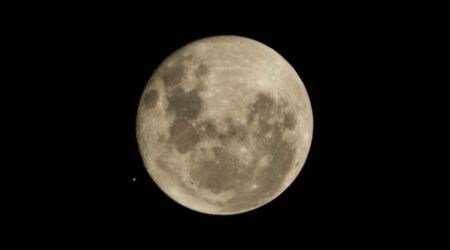
Full Pink Moon 2026: Date, time and how to watch April's Full Moon
A Full Pink Moon will grace our eyes on April 1, appearing as large as a supermoon near the horizon.
Published: Mar 18, 2026 | By Juhi Varma

Skywatching events in March 2026: Onset of spring and more
The latter half of March has some really interesting skywatching events worth looking forward to.
Published: Mar 16, 2026 | By Pranjal Nath
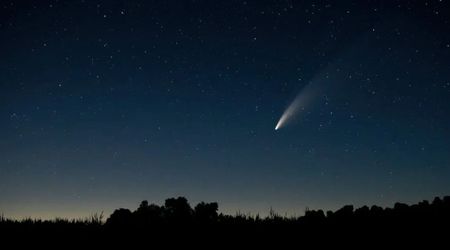
How to spot Comet C/2026 A1 (MAPS) in the evening sky this week: Best viewing tips
The comet might be visible to the naked eye in the daytime next month. For now, observers will need some help spotting it.
Published: Mar 12, 2026 | By Juhi Varma

Here's why March is the best month for viewing the aurora
Breaking down the factors that make this springtime month so prone to aurora.
Published: Mar 6, 2026 | By Pranjal Nath
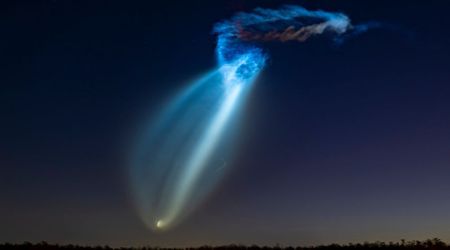
Glowing 'jellyfish' cloud appears over Florida skies after SpaceX Starlink launch
A Falcon 9 rocket carrying 29 Starlink satellites created the glowing cloud.
Published: Mar 5, 2026 | By Sandip Kishan
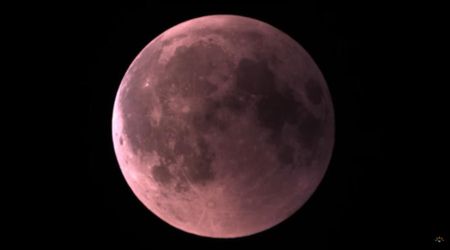
In pics: March 2026 'Blood Worm Moon' from New Orleans, Beijing and New Zealand
New Zealand had one of the best views of the total lunar eclipse.
Updated: Mar 4, 2026 | By Pranjal Nath
March 2026 skywatching guide: Blood Worm Moon, planetary conjunctions and the equinox
Exciting celestial events await skywatchers this March.
Published: Mar 3, 2026 | By Juhi Varma
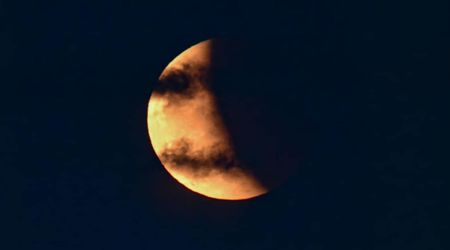
March 3 total lunar eclipse: How to watch the ‘Blood Worm Moon’ if skies are cloudy
Viewers in areas with limited visibility can watch live broadcasts scheduled to capture the total lunar eclipse in real time.
Updated: Mar 2, 2026 | By Juhi Varma
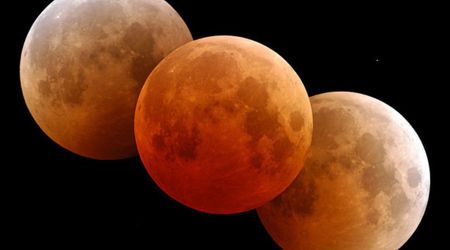
March 3 'Blood Worm Moon': Best locations and viewing tips to observe the lunar eclipse like never before
The world won't get another total lunar eclipse after this until 2028.
Published: Feb 27, 2026 | By Juhi Varma

What is the Moon phase on February 26? Timings, illumination, and viewing tips
On February 26, the waxing gibbous Moon will be visible in the sky with 70% illumination, glowing alongside Jupiter.
Published: Feb 26, 2026 | By Juhi Varma

What is the Moon phase on February 25? Timings, illumination, and viewing tips
On February 25, the waxing gibbous Moon will be visible in the sky with nearly 60% illumination following the first quarter Moon.
Published: Feb 25, 2026 | By Juhi Varma
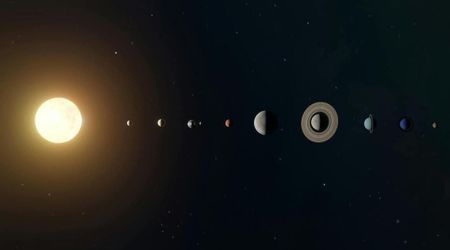
Rare planetary parade on February 28 as six planets gather in the evening sky
Mercury, Venus, Saturn, Jupiter, Uranus, and Neptune would be visible in the sky on February 28.
Published: Feb 25, 2026 | By Sandip Kishan
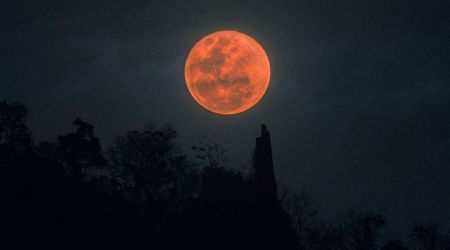
March 3 'Blood Moon' is your last chance to see a total lunar eclipse until 2028
The Blood Moon will be visible from a wide range of locations across the world.
Published: Feb 24, 2026 | By Juhi Varma
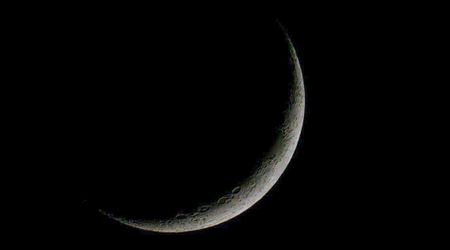
What is the Moon phase on February 23? Time, illumination and other details
On February 23, 2026, a waxing crescent Moon will illuminate the sky with its golden shine.
Updated: Feb 23, 2026 | By Juhi Varma
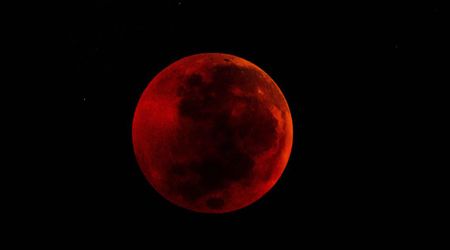
'Blood Worm Moon' 2026: Date, time and how to watch March's Full Moon
The ‘Blood Worm Moon' will grace our eyes on March 3, marking one of the most widely visible astronomical events of the year.
Published: Feb 20, 2026 | By Juhi Varma