Scientists discover rare ancient 'platypus' galaxies unlike anything seen before
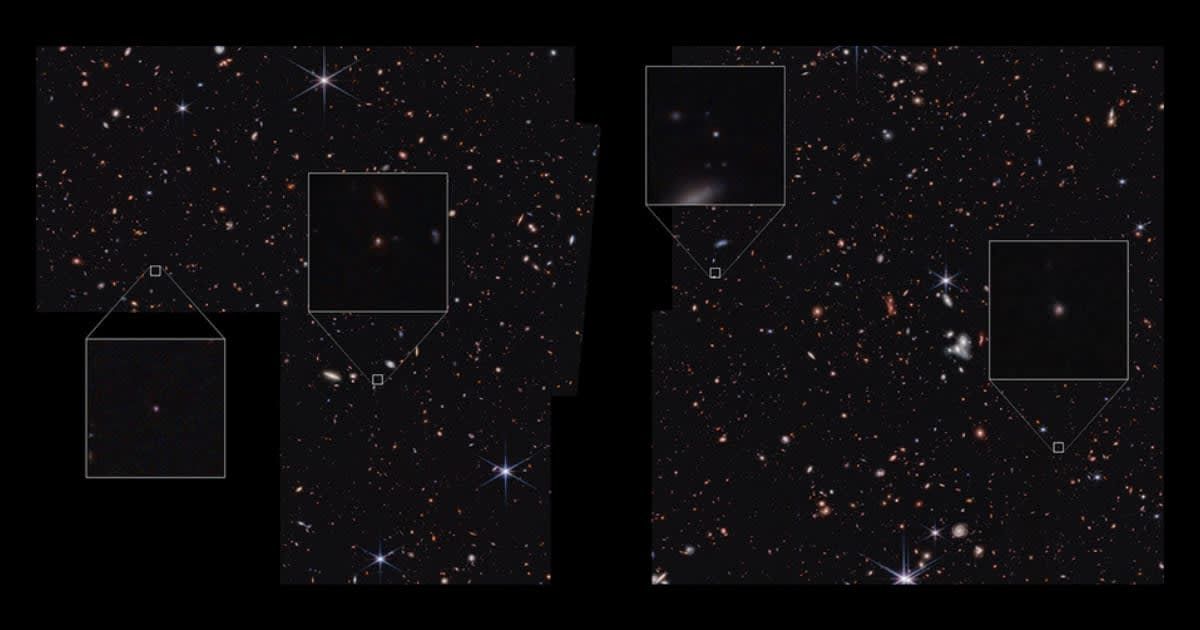
Astronomers have discovered a sample of nine galaxies that defy categorization. In fact, these galaxies detected in the archives of the James Webb Space Telescope (JWST) are so peculiar that they are being compared to the platypus, according to NASA.
A platypus?? A platypus galaxy?! Not exactly. 👇
— NASA Webb Telescope (@NASAWebb) January 6, 2026
Scientists using Webb data have identified a sample of galaxies that have a previously unseen combination of features. One might compare the discovery to another infamous oddball, the platypus. https://t.co/hdFnabPw5q pic.twitter.com/8RxOM8Pm2W
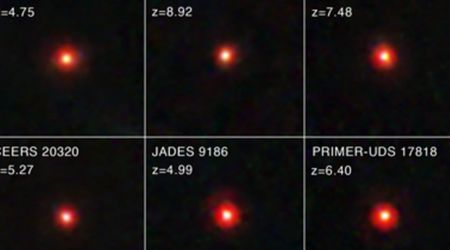
This discovery, which was made public at the 247th American Astronomical Society meeting, leads to the conclusion that the present-day concept of the first galaxies might be incorrect. The lead scientist, Haojing Yan, likened the discovery to a duck-billed platypus since the galaxies exhibited a perplexing combination of features. They seem to be very small and concentrated dots, similar to quasars, yet they do not share their characteristics. Quasars are highly active supermassive black holes with masses millions or even billions of times that of the sun. By the process of consuming surrounding matter, they usually give off huge amounts of radiation, thus outshining even their own galaxies as some of the most luminous objects in the universe. The structures in question, however, are far too faint.
![A graphic illustrating the pronounced narrow peak of the spectra that caught researchers’ attention in a small sample of galaxies, represented here by the galaxy CEERS 4233-42232. [Image Credit: NASA, ESA, CSA, Joseph Olmsted (STScI)]](https://de40cj7fpezr7.cloudfront.net/a0b016b1-3d99-4f51-8a50-88062f1b7a9e.jpg)
“It seems that we’ve identified a population of galaxies that we can’t categorize; they are so odd," said principal investigator Haojing Yan. "On the one hand, they are extremely tiny and compact, like a point source, yet we do not see the characteristics of a quasar, an active supermassive black hole, which is what most distant point sources are.” The nine objects in question were found by Yan's team after sorting through a huge cosmic objects database containing 2,000 entries across several Webb surveys. The distance from us to these galaxies, which are located about 12 billion light-years away, is evidence that they are from the very early days of the universe, which is around 13.8 billion years old.
Moreover, analysis of their spectral emissions revealed that the gas around them moves far slower than the gas seen around supermassive black holes. The objects in question do have some traits of the "green pea" galaxies discovered in 2009, but they are much more compact. "Together, Webb's imaging and spectra are telling us that these galaxies have an unexpected combination of features," Yan explained.
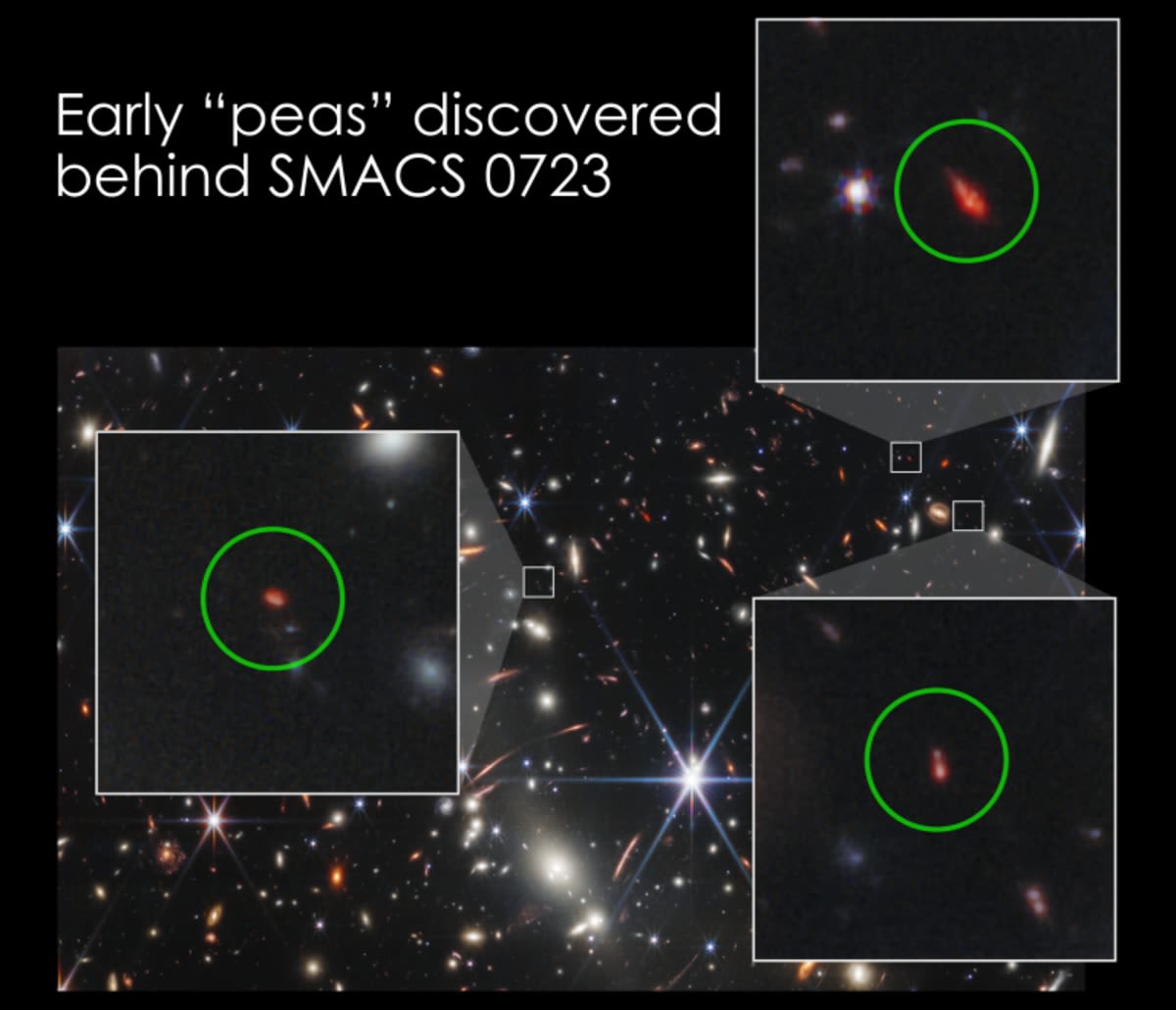
One theory is that Webb has possibly uncovered the early stages of galaxy formation. The majority of astronomers think that large galaxies like ours formed through the merger of smaller ones. These nine objects could signify a "quieter" stage of formation that happened even before those mergers, thus representing an even earlier time in the history of galaxies. Graduate researcher Bangzheng Sun commented that although the data imply these could be star-forming galaxies, their exceptionally small size still puzzles astronomers. The team has decided to go ahead with their plan using the Webb telescope, where they will search for a larger sample of such objects. They are determined to get more detailed data so that they can finally conclude whether they have found a "missing link" in cosmic history or a completely new kind of celestial body.
More on Starlust
53 massive quasars found blasting out jets 50 times the diameter of the Milky Way
Hubble spotted two cores in a nearby galaxy—now James Webb may have caught the reason in action