NASA’s OSIRIS-APEX captured stunning images of Earth and Moon before heading to asteroid Apophis

On September 23, 2025, NASA's OSIRIS-APEX successfully used an Earth flyby to slingshot toward its target: potentially hazardous asteroid Apophis.
PUBLISHED DEC 1, 2025
In this image, the Sun and the Moon appear over the Earth (Representative Cover Image Source: Getty | Matthias Kulka)

NASA's OSIRIS-APEX mission executed an Earth flyby successfully on Tuesday, September 23, 2025, to position the craft on a course for a future rendezvous with the possibly hazardous asteroid Apophis, according to the space agency. The spacecraft, formerly called OSIRIS-REx, came within 2,136 miles (3,438 kilometers) of our planet at 1:00 p.m. EDT on September 23. For the close approach, the probe's cameras turned homeward and delivered striking images of Earth and the Moon.

To verify safe storage of asteroid sample during OSIRIS-APEX’s primary mission, StowCam captures both still and video imagery (Image Source: NASA/Goddard/University of Arizona/Lockheed Martin)
To verify safe storage of the asteroid sample during OSIRIS-APEX’s primary mission, StowCam captures both still and video imagery (Image Source: NASA/Goddard/University of Arizona/Lockheed Martin)

Scientists took advantage of this chance to check and calibrate all the onboard scientific instruments in preparation for the main mission phase. This wasn't only for photos; it was actually a much-needed gravity assist.
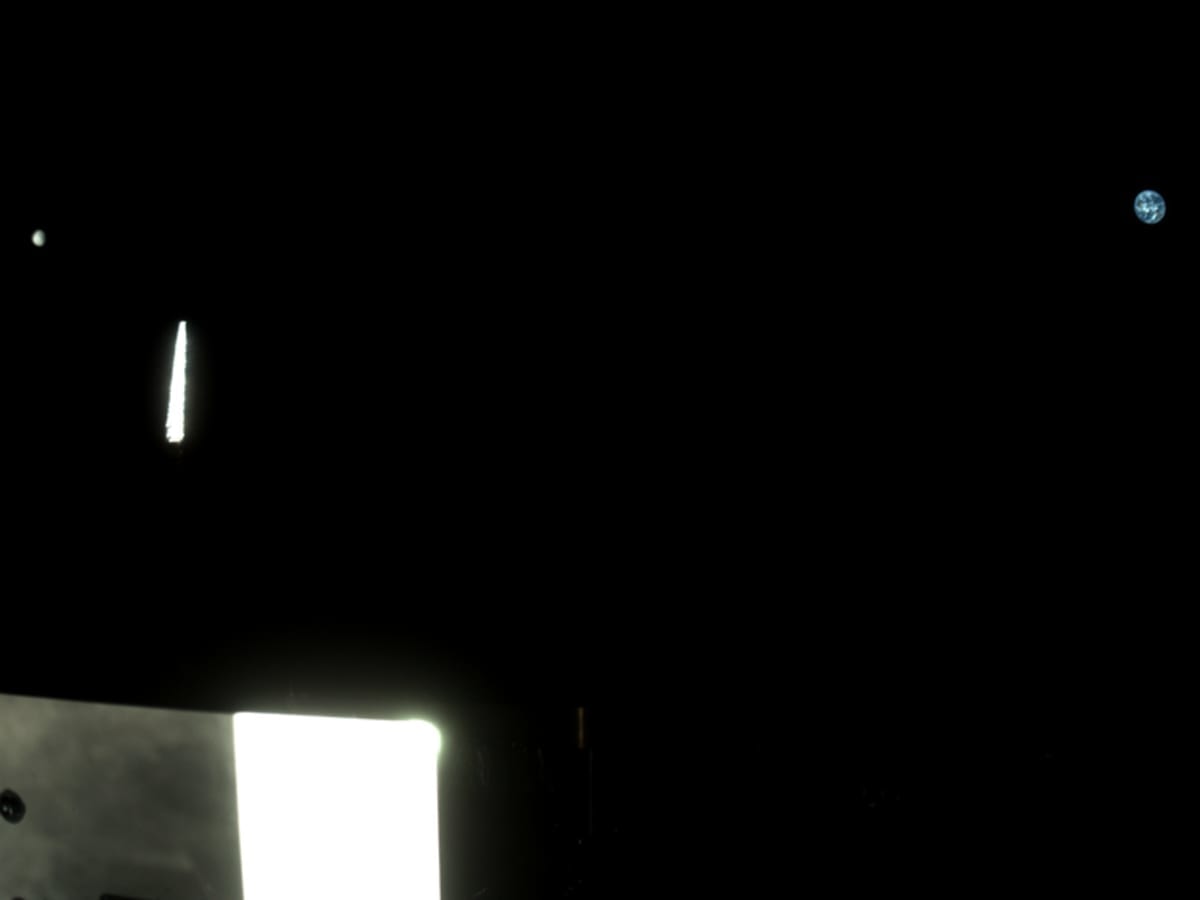
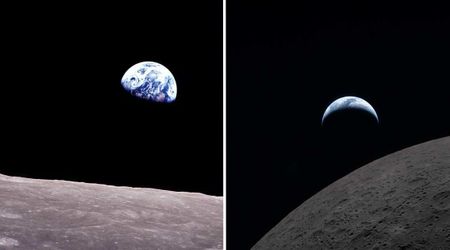
The StowCam also collected imagery as OSIRIS-APEX approached and departed from Earth. Two exposures from the instrument were used in this image of the Moon, on the far left, and Earth, on the far right (Image Source: NASA/Goddard/University of Arizona/Lockheed Martin)
The StowCam also collected imagery as OSIRIS-APEX approached and departed from Earth. Two exposures from the instrument were used in this image of the Moon (left), and Earth (right) (Image Source: NASA/Goddard/University of Arizona/Lockheed Martin)

According to Daily Galaxy, by swinging close to Earth, the spacecraft utilized the planet's gravitational pull to accelerate and precisely adjust its course, conserving precious fuel for the long journey ahead. Importantly, the flyby confirmed all systems, including the high-resolution MapCam and the previously used StowCam, are operational. These tools will be crucial for mapping Apophis in detail.
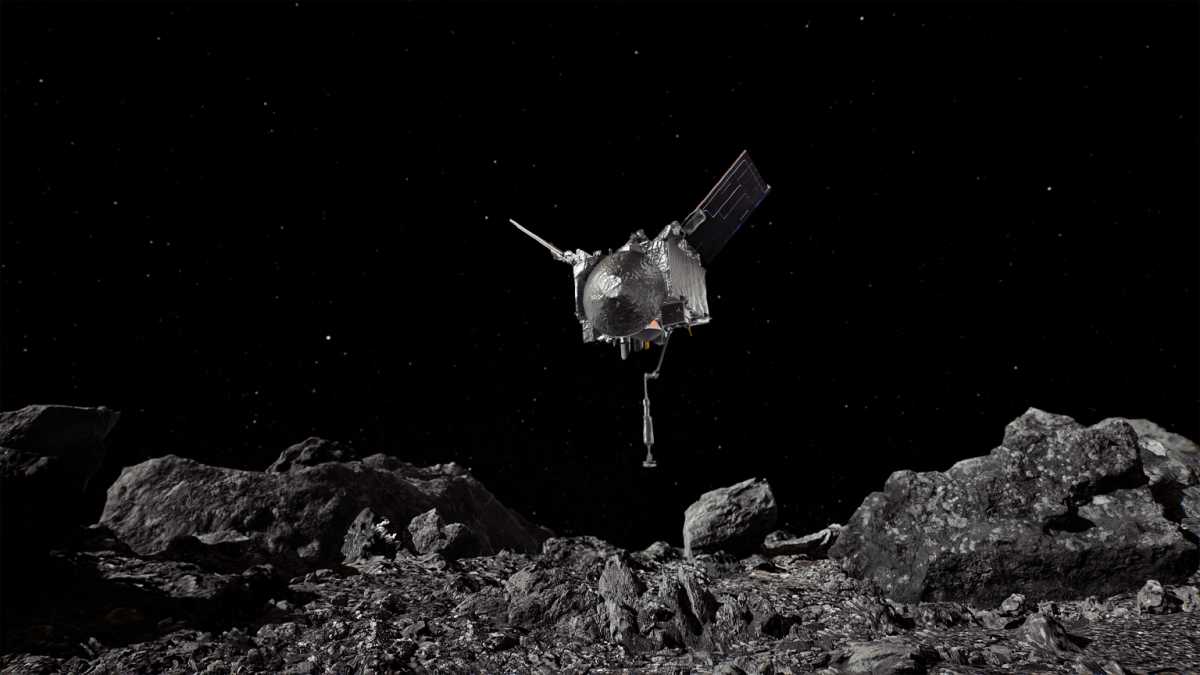
OSIRIS-REx is the first U.S. mission to collect a sample from an asteroid (Image Source: NASA)

The mission's target is the asteroid known as Apophis. The object gained widespread attention back in 2004 with early predictions that it might reach Earth in 2029. NASA explains that upon the discovery of Apophis, the available data showed a real possibility of the asteroid hitting Earth in the near future. However, after close monitoring by astronomers, NASA has confirmed there is no chance that Apophis will hit Earth for at least the next 100 years. 

While that risk was later ruled out, Apophis remains significant. Planetary science expert Dani DellaGiustina told Daily Galaxy, “It will be the closest an asteroid of this size has gotten, for the next 100 years of asteroids we have discovered so far." When it arrives in 2029, OSIRIS-APEX will study Apophis for about 18 months. It will map the surface of the asteroid, analyze its composition, and watch how the strong gravitational pull of Earth affects it during the close pass. One of the most exciting plans calls for the spacecraft to hover just above the surface of Apophis and fire thrusters at the surface to blast away buried, pristine material. The results are expected to yield new clues on the formation of asteroids and their overall role in the history of our solar system. This intentional disturbance will also let scientists get an unprecedented view of the fresh, undisturbed material just beneath the asteroid's outer layer.
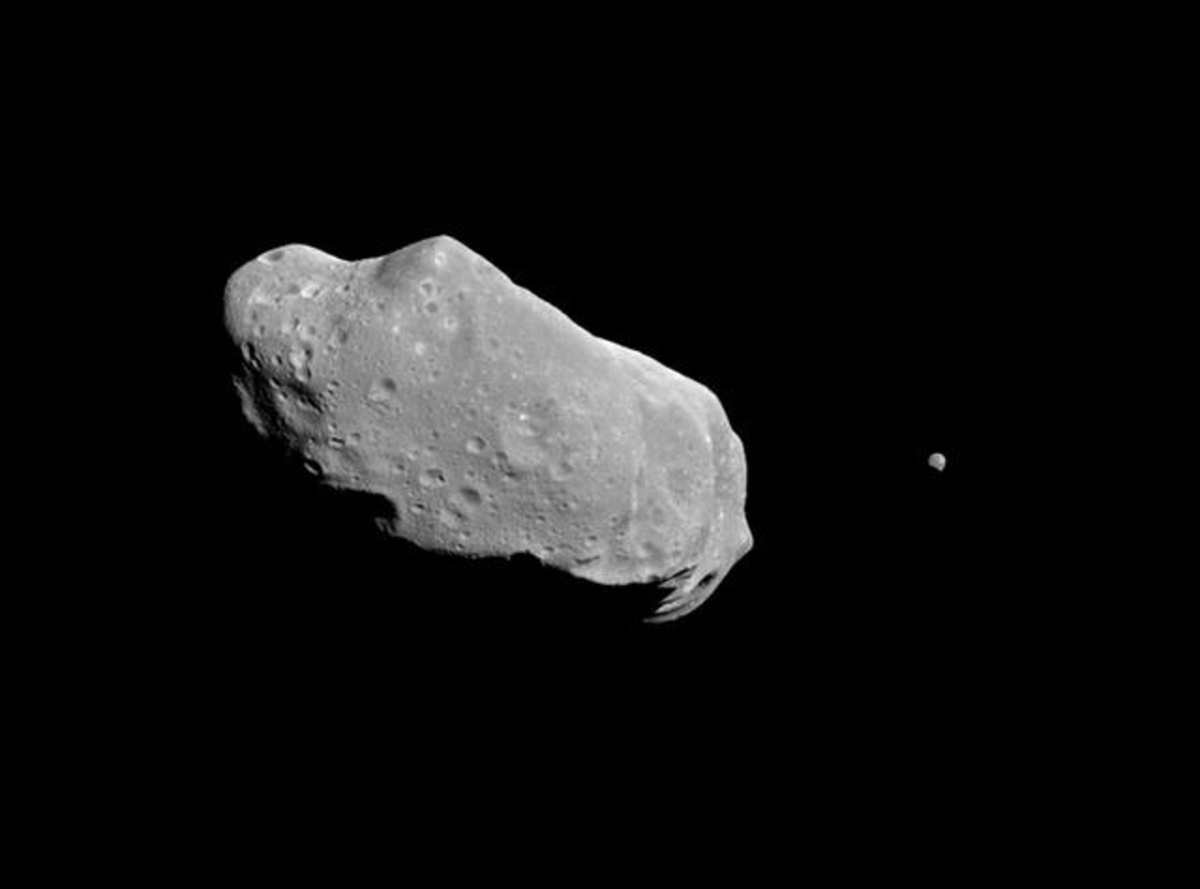
This is the first full picture showing both asteroid 243 Ida and its newly discovered moon to be transmitted to Earth from the National Aeronautics and Space Administration's (NASA's) Galileo spacecraft (Cover Image Source: NASA Image and Video Library | NASA)
This is the first full picture showing both asteroid 243 Ida and its newly discovered moon to be transmitted to Earth from NASA's Galileo spacecraft (Representative Image Source: NASA Image and Video Library | NASA)

The key objective of OSIRIS-APEX is to watch in detail the dramatic physical changes that will occur on Apophis after its extremely rare near-Earth encounter in April 2029. That month, Apophis's orbit will bring it closer than 20,000 miles (32,000 kilometers) to our surface, closer than some of our highest-flying satellites. Experts anticipate that Earth's gravity will not only change the asteroid's orbit and spin rate but could also trigger powerful "asteroid-quakes" or landslides, dramatically reshaping its surface. The OSIRIS-APEX spacecraft will be positioned to witness these changes firsthand.
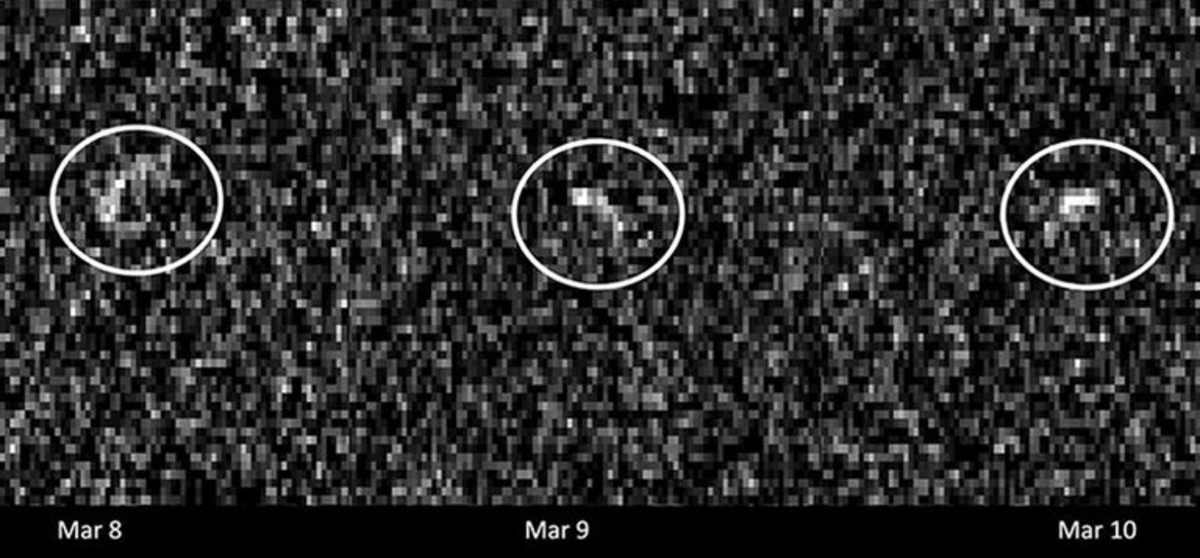
These images of asteroid Apophis were recorded in March 2021 by radio antennas at the Deep Space Network’s Goldstone complex in California and the Green Bank Telescope in West Virginia (Image Source: NASA/JPL-Caltech)

More on Starlust

NASA’s Psyche captures stunning images of Earth and Moon from 180 million miles away

Asteroid discovered just 2 days ago whizzed past the Earth and is now headed for a lunar flyby today

MORE STORIES

From planet nurseries to cosmic rings, James Webb’s 2025 images reveal the universe in stunning detail.
18 hours ago
The Hubble Space Telescope has provided some of the most beautiful visuals of the cosmos over the years, and this year was no different.
1 day ago
Time is running out for the recovery team before Earth and Mars move to opposite sides of the Sun on December 29, triggering a total communications blackout.
2 days ago
The particular Starlink satellite suffered an anomaly, resulting in a loss of communication with the ground on December 17, 2025.
2 days ago
Scientists are hoping for the image to aid in learning more about what happened right after the Big Bang.
2 days ago
From late October through mid-November 2025, the PUNCH satellite captured a dramatic sequence of the comet's tail twisting and reacting to powerful solar activity.
4 days ago
The collisions involved planetesimals, which are rocky building blocks of planets.
4 days ago
A flexible new wheel design could help rovers survive steep drops and harsh terrain inside lunar lava tubes.
6 days ago
The Europa Clipper imaged the comet when Earth-based observation was not possible.
7 days ago
Operators lost contact with the satellite on December 17 when it was at an altitude of 418 kilometers.
7 days ago