NASA's JWST reveals ancient monster stars that could be the ancestors of black holes

The James Webb Space Telescope has identified massive, short-lived stars that are essentially 'seeds' for the universe's first supermassive black holes.
PUBLISHED 1 DAY AGO
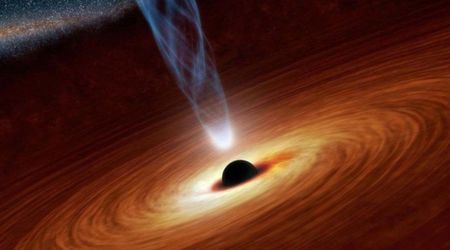
The black holes shown, which range from 100,000 to more than 60 billion times our Sun’s mass, are scaled according to the sizes of their shadows (Representative Cover Image Source: NASA's Goddard Space Flight Center)

The mystery of the "little red dots," detected by NASA's James Webb Space Telescope in the ancient cosmos, might have finally been solved by astronomers. The newest information from the telescope indicates that these objects are, in fact, very large, short-lived stars and serve as "seeds" for the formation of the supermassive black holes, according to the Center for Astrophysics | Harvard & Smithsonian (CfA).
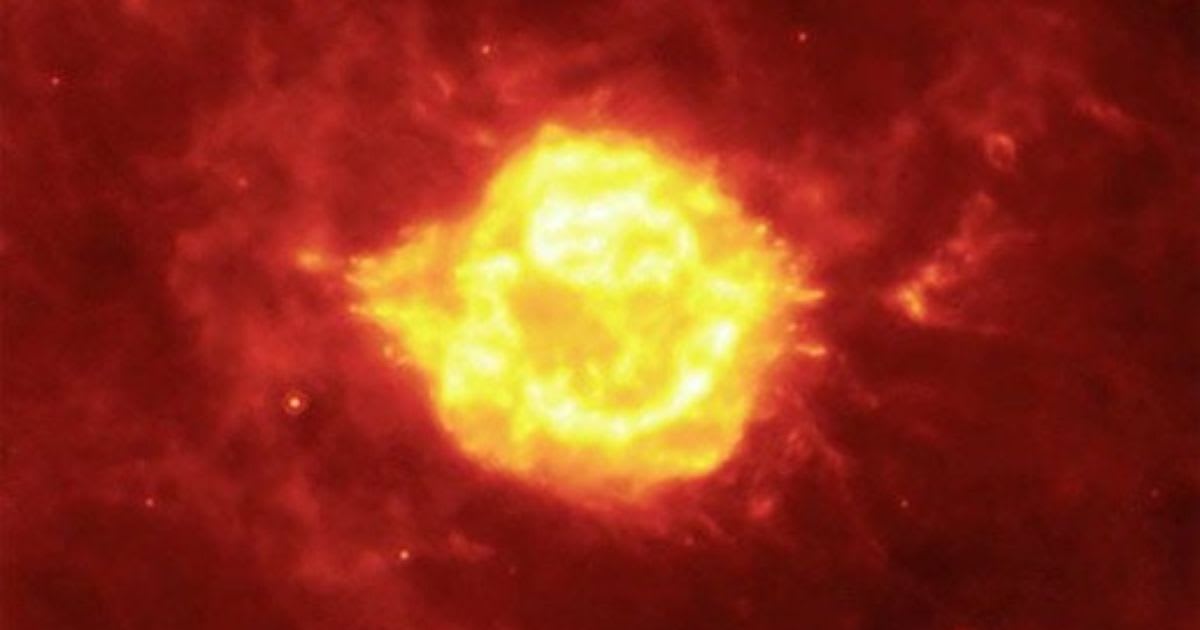
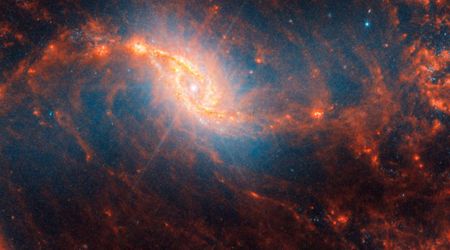
In this animation, a seething cauldron of light appears to bubble and ooze around the remnants of a giant star (Representative Cover Image Source: NASA/JPL-Caltech)
In this animation, a seething cauldron of light appears to bubble and ooze around the remnants of a giant star (Representative Image Source: NASA/JPL-Caltech)

The American Astronomical Society's 247th meeting heralded the announcement of the study, which was organized by the CfA. These faint, red specks had been a puzzle for years to the scientists. The Hubble Space Telescope and other older probes were unable to confirm their existence since the universe's expansion shifts the light from distant stars into longer and redder wavelengths that only the JWST can effectively capture. There were speculations about the dots being intricate systems with black holes concealed behind thick clouds of dust. Nevertheless, the new research comes up with a much easier explanation: one huge star.
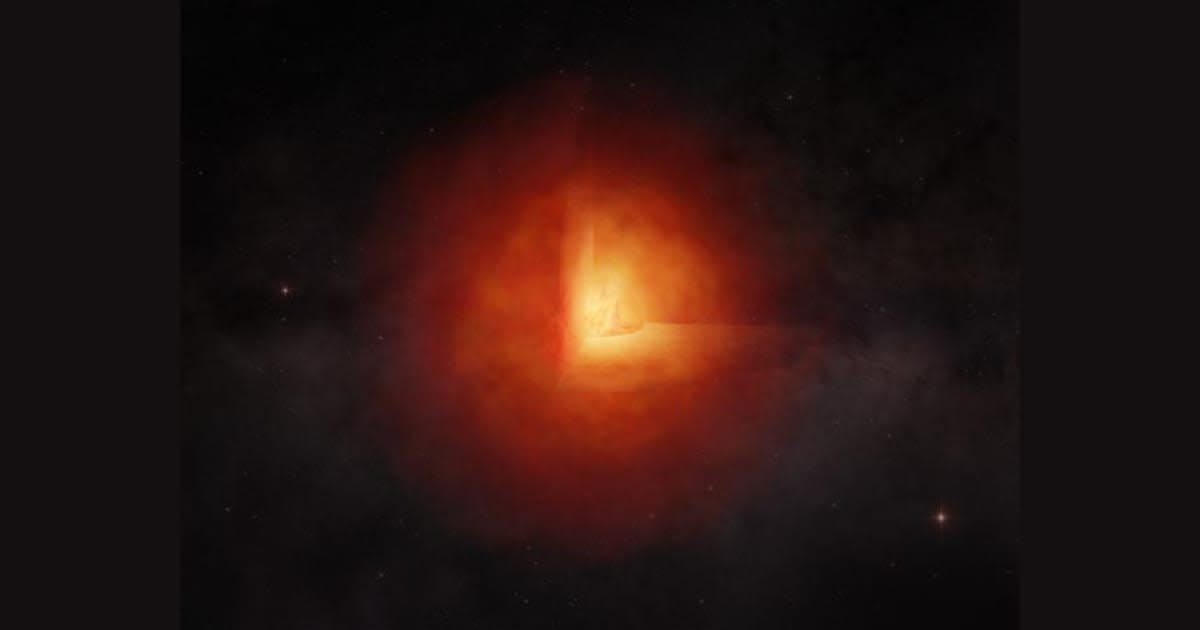
Scientists at the Center for Astrophysics | Harvard & Smithsonian (CfA) have found that the unique features of supermassive stars align with the similarly unique features of little red dots, a class of objects recently revealed in the distant universe by the James Webb Space Telescope (Webb) (Cover Image Source: CfA/Melissa Weiss)
Scientists at the Center for Astrophysics | Harvard & Smithsonian (CfA) have found that the unique features of supermassive stars align with the similarly unique features of little red dots, a class of objects recently revealed in the distant universe by the James Webb Space Telescope (Webb) (Image Source: CfA/Melissa Weiss)

A physical model designed by the team suggests that the stars in question are about a million times heavier than the Sun. These superstars are "metal-free" in the sense that they are composed of the original elements that existed at the very beginning of time, and their distinctive light emissions coincide quite accurately with the data recorded by the JWST. 
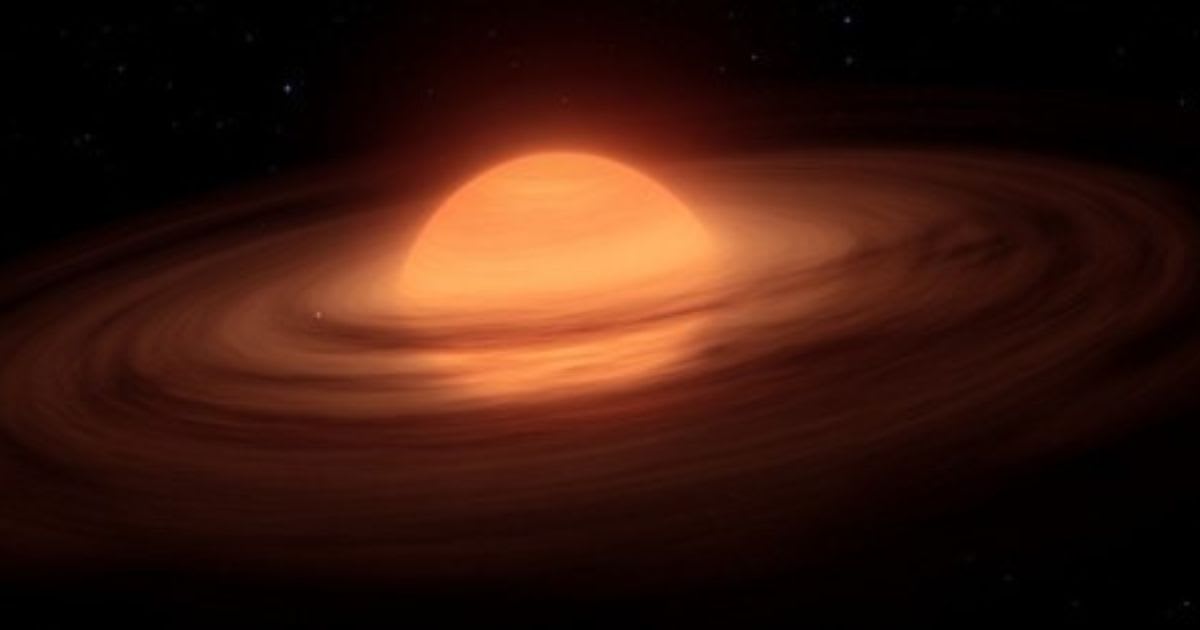
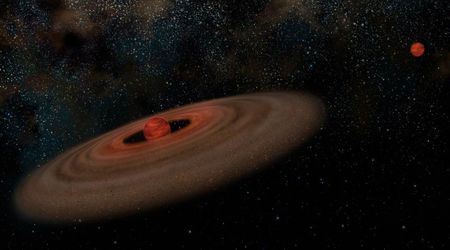
AI-generated image of a young free-floating planetary-mass object surrounded by a dusty disk (Representative Cover Image Source: University of St Andrews)
AI-generated image of a young free-floating planetary-mass object surrounded by a dusty disk (Representative Image Source: University of St Andrews)

The revelation is no longer a list of ancient stars only; it is a linking part in the history of the universe. These stars are so massive that they become unstable and end up dying in a very dramatic way. "We're watching some of them be born in real time," remarked the lead author, Devesh Nandal. He went on to say that these stars were the last bright moments before they are crushed by gravity and turned into "heavy seeds" for the colossal black holes that are now sitting at the centers of galaxies. The present results clarify the brightest red dots identified so far, while the researchers are on the lookout for smaller and fainter ones. The discovery of such stars would not only cement their hypothesis but also point out the exact nascent stages of the first galaxies in our universe.
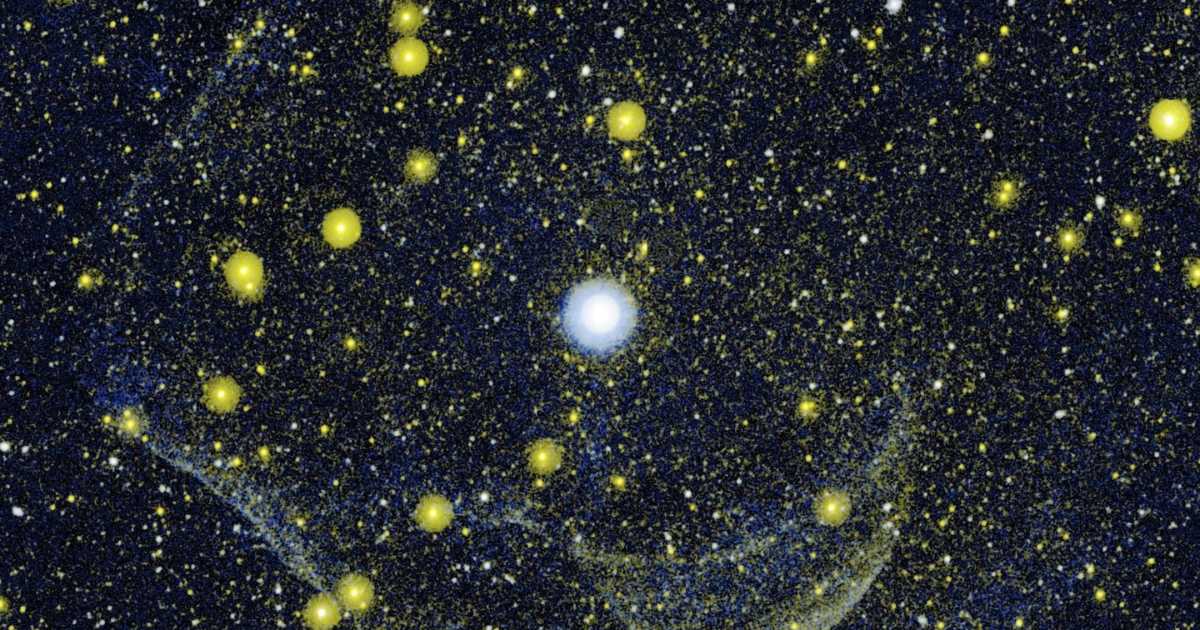
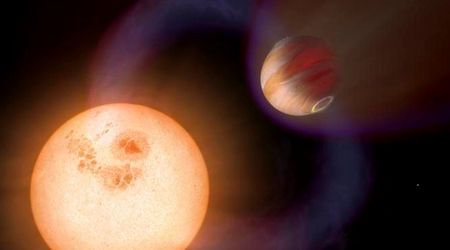
This composite image NASA Galaxy Evolution Explorer shows Z Camelopardalis, or Z Cam, a double-star system featuring a collapsed, dead star, called a white dwarf, and a companion star, as well as a ghostly shell around the system (Representative Cover Image Source: NASA/JPL)
This composite image by NASA Galaxy Evolution Explorer shows Z Camelopardalis, or Z Cam, a double-star system featuring a collapsed, dead star, called a white dwarf, and a companion star, as well as a ghostly shell around the system (Representative Cover Image Source: NASA/JPL)

The $10 billion telescope has revealed a new world of possibilities, and the latest discoveries are nothing short of amazing. A similar object situated right at the "cosmic noon" period was detected by the scientists last year, roughly 4 billion years after the Big Bang. The majority of these hazardous spots are tiny, but this one was so enormous, approximately 100 million solar masses, that researchers called it "Big Red Dot" (BiRD) for a while.
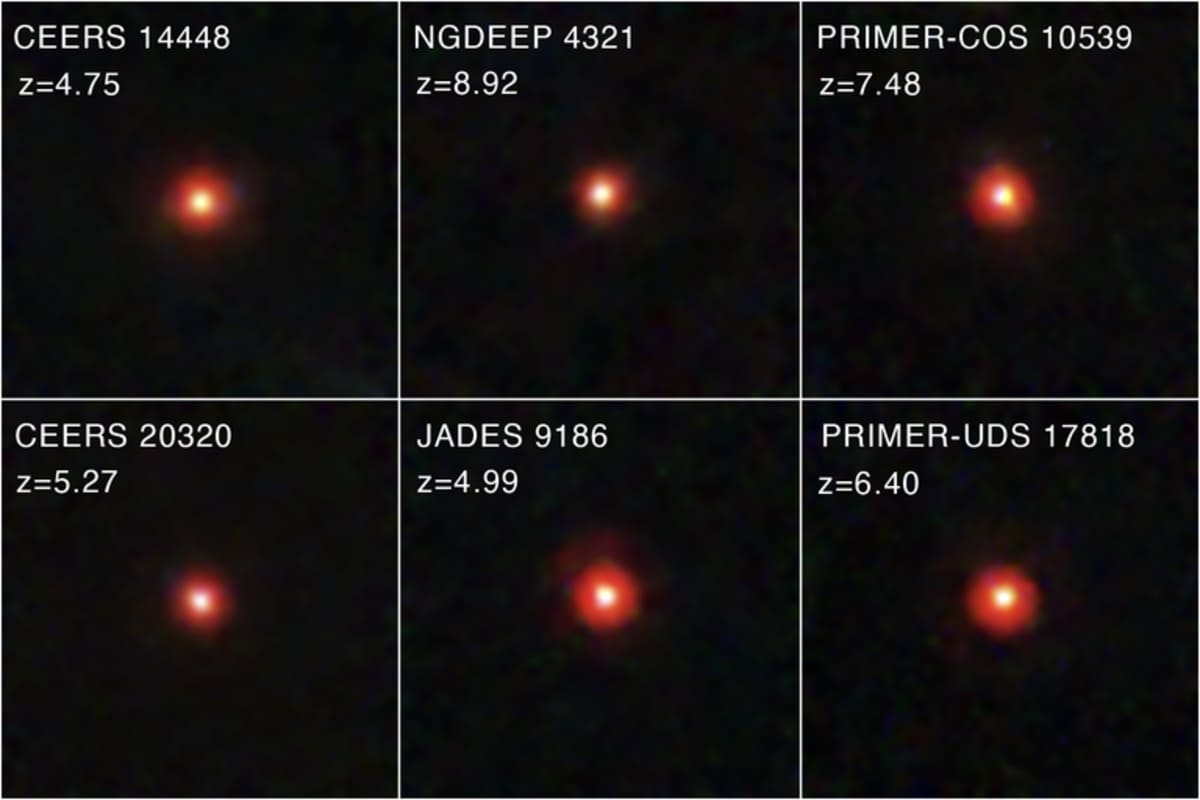
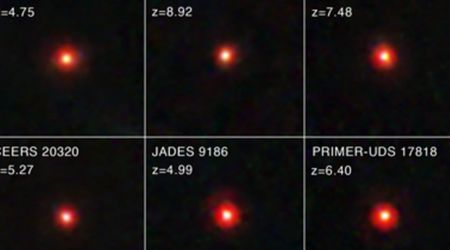
A team of astronomers sifted through James Webb Space Telescope data from multiple surveys to compile one of the largest samples of “little red dots” (LRDs) to date (Image Source: NASA, ESA, CSA, STScI, Dale Kocevski)

The "BiRD" has been discovered by the astronomers at a distance of about 12.5 billion light-years near the brightest and well-known quasar. The area, however, was not seen by previous X-ray and radio telescopes, even after being studied for decades. It was the JWST's Near-Infrared Camera (NIRCam) that illuminated this "Big Red Dot" in the sector as an unexpectedly bright, sharply focused point of light.

More on Starlust

Solving the mystery of 'little red dots' in early universe, scientists discover a new class of black hole stars

Scientists uncover one of the most metal-poor stars ever seen, a rare find in Milky Way's halo
MORE STORIES

The four planets orbit a very young star, V1298 Tau, and have already lost much of their atmospheres.
4 hours ago
Astronomers detect the earliest known galaxy cluster gas from just 1.4 billion years after the Big Bang.
10 hours ago
These newly-discovered objects look like stars but behave like galaxies.
1 day ago
Astronomers used the XRISM mission to separate signals and analyze the extreme gravitational forces at work in active galactic nucleus MCG–6-30-15.
1 day ago
Astronomer had been trying to solve the mystery behind Betelgeuse's behavior for decades.
2 days ago
The Champagne Cluster was discovered back on December 30, 2020.
3 days ago
From a sauna world to one where it rains glass, exoplanets are stranger than science fiction.
Dec 30, 2025
Triple systems like this are rare, but are essential to observe hierarchical galaxy evolution.
Dec 25, 2025
The largest protoplanetary disk ever has been found by the Hubble Space Telescope and is quite active as materials stretch in the system.
Dec 24, 2025
The astronomer looked into the possibility of materials from 3I/ATLAS hitting Earth following the comet's closest approach.
Dec 23, 2025