NASA's James Webb Space Telescope pictures Helix Nebula in extraordinary detail
![NASA’s James Webb Space Telescope zooms into the Helix Nebula’s inner rim. [Cover Image Source: NASA | ESA | CSA | STScI; Image Processing: Alyssa Pagan (STScl)]](https://d3hedi16gruj5j.cloudfront.net/788307/uploads/f5cc3640-f6b5-11f0-b936-e1c733ebae02_1200_630.jpeg)
A new image of the Helix Nebula taken by NASA’s James Webb Space Telescope’s Near-Infrared Camera (NIRCam) shows an unprecedented level of detail within the planetary nebula, telling us more about its origins, and perhaps provides a window into our own sun’s eventual fate.
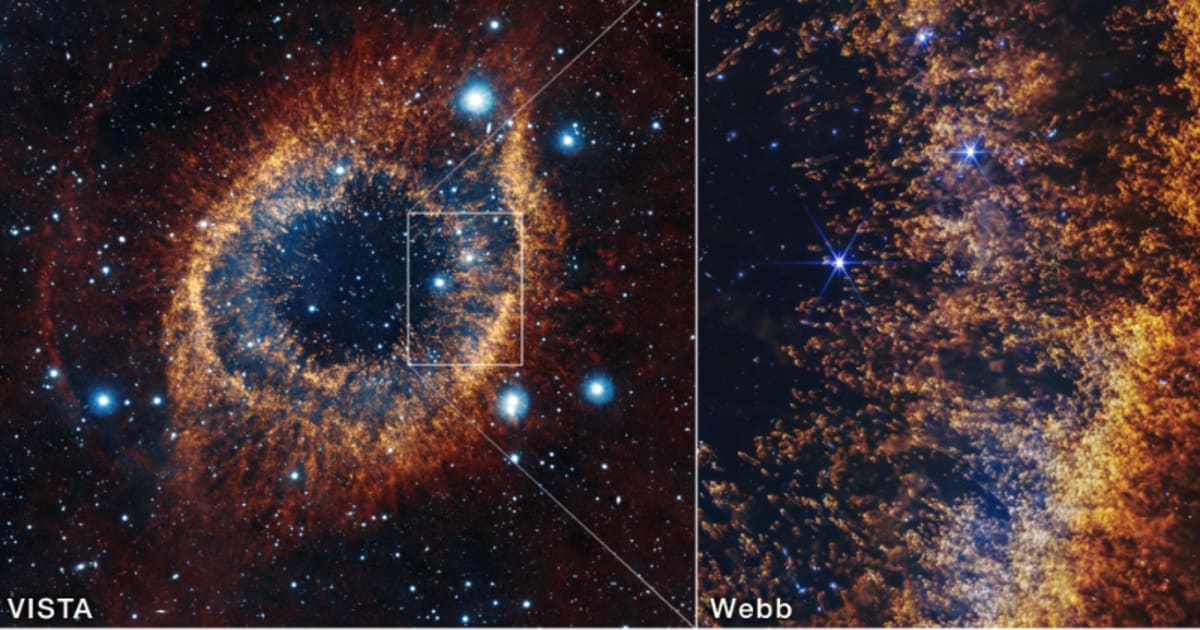 The full Helix Nebula appears in this VISTA ground telescope image (left), with a box marking the detailed Webb view (right) (Image Source: ESO | VISTA | NASA | ESA | CSA | STScI | J. Emerson (ESO); Acknowledgment: CASU)
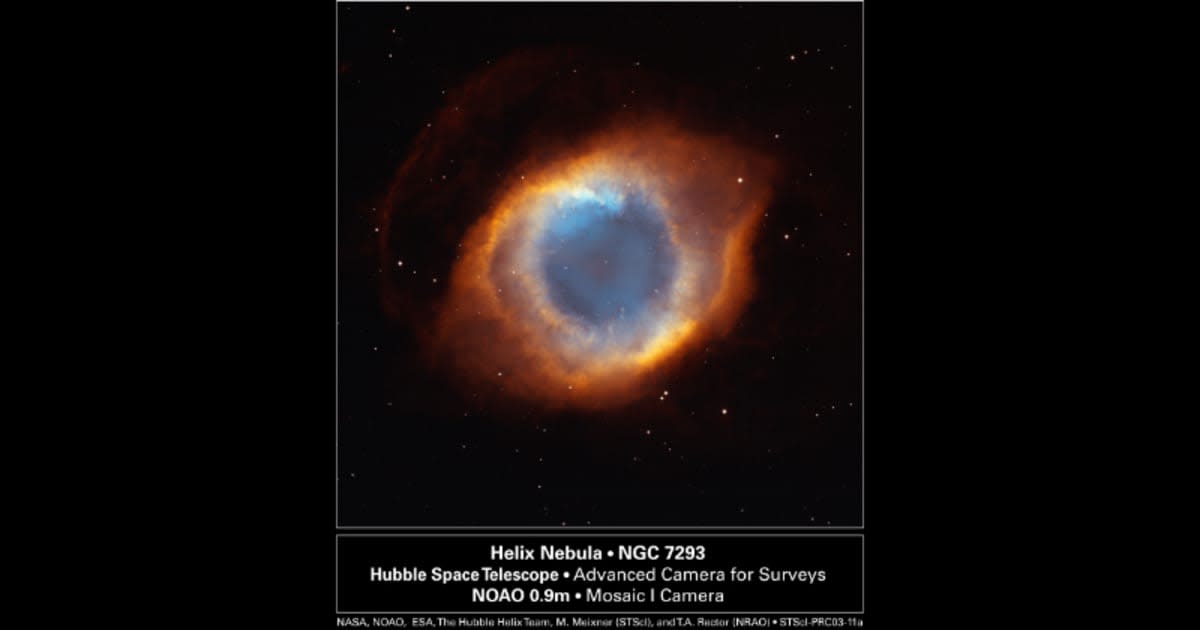
NASA released this striking image on January 20, 2026, originally captured by Webb on October 24, 2024. It zooms into comet-like pillars with tails along the inner rim of the nebula’s gas shell. Strong winds from the dying central star push outward and into the older, cooler clumps of gas and dust, shaping these streaky features. The picture covers about 1 light-year across. Hot blue ionized gas glows near the center of the nebula from the intense ultraviolet light emitted by the central white dwarf, and as we observe outwards, the colors transform from yellow to red in the near-infrared image, showing a change in temperatures. The yellow clouds of gas are where hydrogen molecules are formed, and the red pockets have less gas but more dust. All of these processes will go on to form the requisite materials for a new generation of stars and planets, according to NASA.
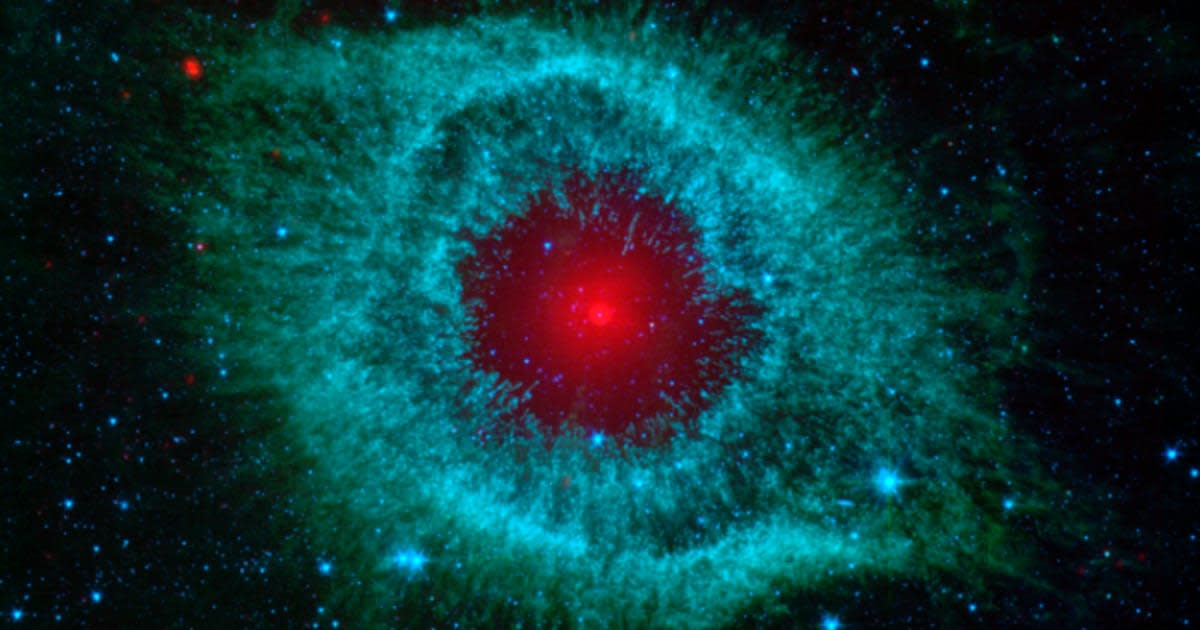
Since it was discovered in the Aquarius constellation, the Helix Nebula has been photographed by many observatories, with one of them being the ESO’s Visible and Infrared Survey Telescope for Astronomy (VISTA) at Paranal Observatory in Chile. VISTA's image of the nebula spans 5 light-years (25.7 arcminutes across). NASA’s Spitzer Space Telescope photographed the nebula in infrared, with the outer gaseous layers represented in blue and green, the white dwarf visible as a bright white dot, and the final layers of the gas blown out by it appearing red. The Hubble Space Telescope also captured Helix, showing its iridescence, but the comet-like knots are not quite in the forefront as in the Webb image.
Understanding nebulae and planetary nebulae
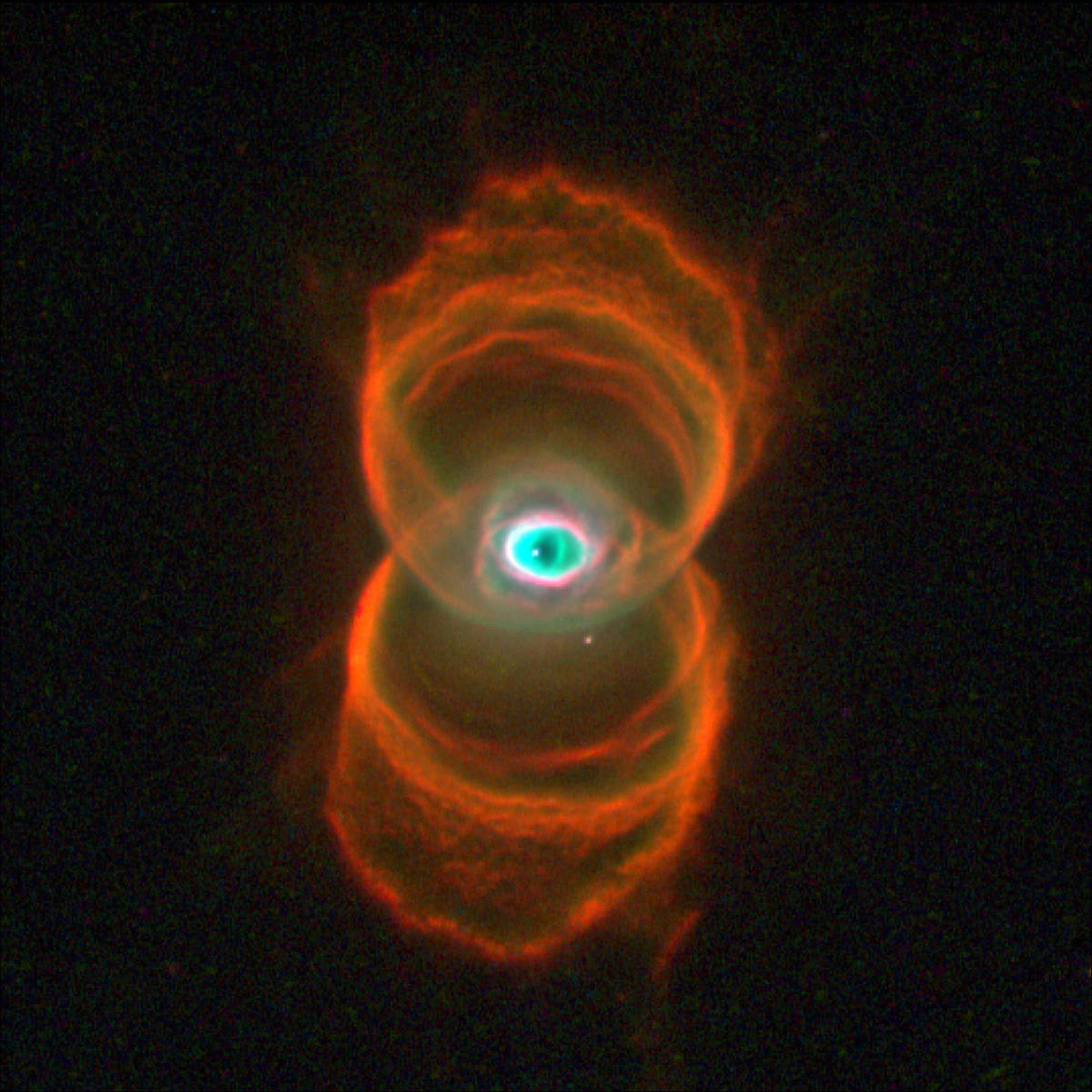
Nebulae are vast clouds of gas or dust scattered across space, serving as stellar nurseries or graveyards. A planetary nebula is formed when a dying star casts off its outer layers of gas and dust. Despite their name, planetary nebulae have nothing to do with planets. And of course, planetary nebulae are not the only type of nebulae that have been observed so far. In fact, NASA has quite an exhaustive list.
Parallels with our Sun’s demise
It is possible that in about 5 billion years, our Sun will mirror Helix’s story. As fuel runs low within its core, the Sun may expand into a red giant, engulfing the inner rocky planets. Though the sun is not massive enough to explode, it could violently expel matter outward, leaving behind a white dwarf. Ultimately, the planetary nebula that our Sun results in following its demise may send back raw materials for the formation of future stars and planets into the vastness of the cosmos.
More on Starlust
The mystery behind 'little red dots' discovered by James Webb Telescope has finally been solved
NASA's James Webb Space Telescope finds a lemon-shaped exoplanet with a never-before-seen atmosphere