How Jupiter ended up with more large moons than Saturn
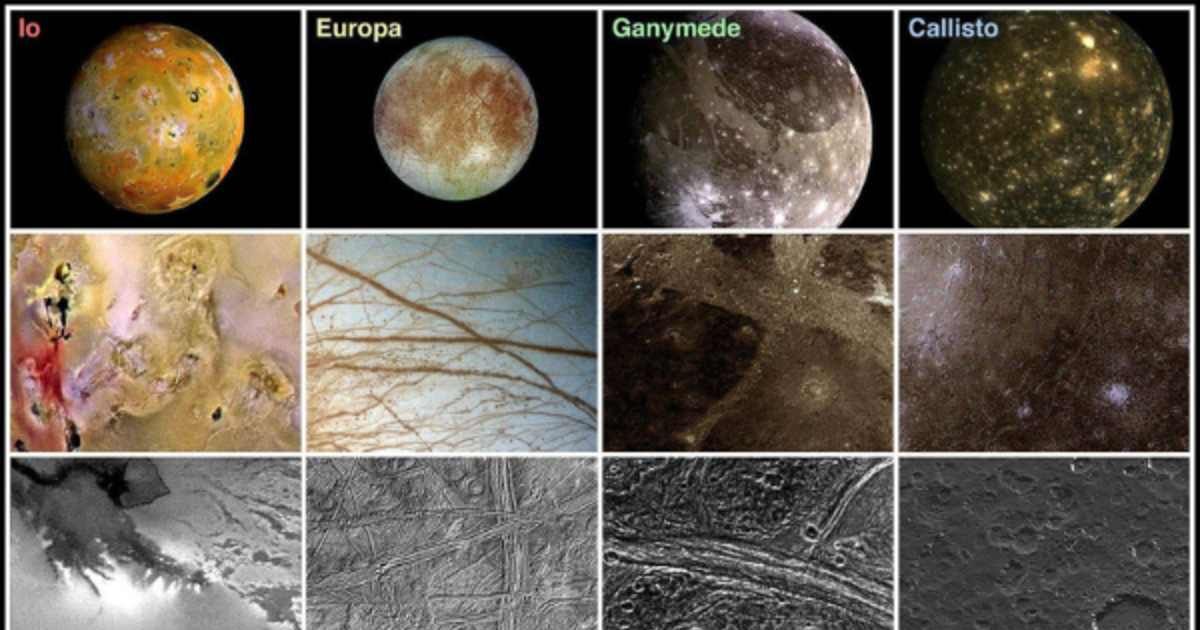
A model based on numerical simulations reveals why Jupiter has a larger number of larger moons than Saturn. The model, developed by a team of astronomers from Japan and China, has also uncovered how Jupiter ended up with four large moons while Saturn managed to form one. However, on moon counts, Saturn beats Jupiter by having 280 moons compared to the largest planet’s moon count, which just crosses 100. The study results, published in Nature Astronomy, show that the difference in size and count of moons has roots in differing disk structures of the gas giants. The disk structures, the study states, are further shaped by the strength of the planets’ magnetic fields.
![Artist's impression of the simulations conducted in this research. Jupiter (lower left) has a strong magnetic field which creates a cavity in its circumplanetary disk. Saturn (upper right) lacks a strong magnetic field so its circumplanetary disk evolves without a cavity. (Credit: Yuri I. Fujii/L-INSIGHT [Kyoto University], Illustrator: Shinichiro Kinoshita)](https://de40cj7fpezr7.cloudfront.net/9c44de3b-47dd-4882-81a6-0bd32fe464d0.jpg)
Saturn, with its iconic rings, owns one large moon, Titan, the second largest in the solar system. Jupiter, on the other hand, has Ganymede, the largest moon in the solar system. It has long been a mystery how the gas giants acquired so many moons. Satellite formation theories have been propounded to explain such a system, but recent studies on stellar magnetic fields suggested a revision of existing theories. It has long been debated whether magnetic accretion and satellite formation have any links. A question has been raised whether Jupiter can form an inner cavity in its circumplanetary disk, allowing accumulation of material from which satellites are born. A model that can explain multiple satellite systems of Jupiter and Saturn may be used to explain the other similar planetary and satellite systems beyond the reaches of the solar system.
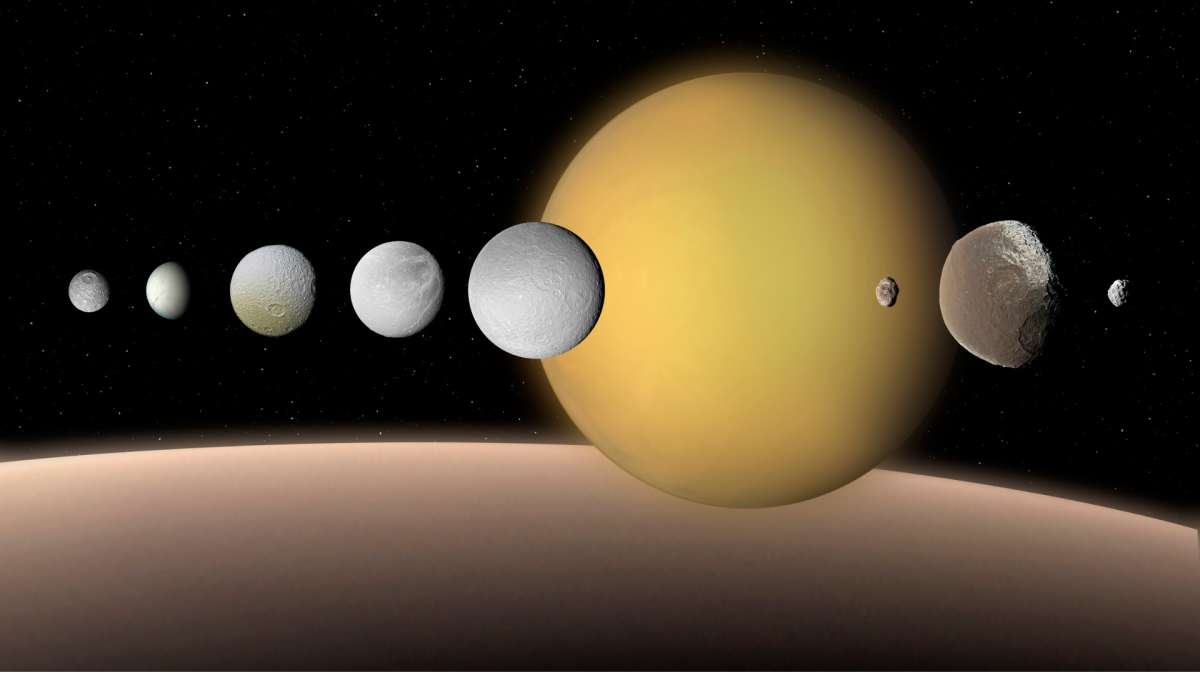
This motivated the researchers from institutions in Japan and China, including Kyoto University, to design a model. To better understand the thermal evolution of the gas giants and how their magnetic fields changed over time, they did numerical simulations on the interior structures of young gas giants. The team also numerically modeled the circumplanetary disk of Jupiter and Saturn. Next, they performed N-body simulations to figure out how satellites form and achieve orbital migration. The team accomplished the simulations using a PC cluster at the Center for Computational Astrophysics, National Astronomical Observatory of Japan.
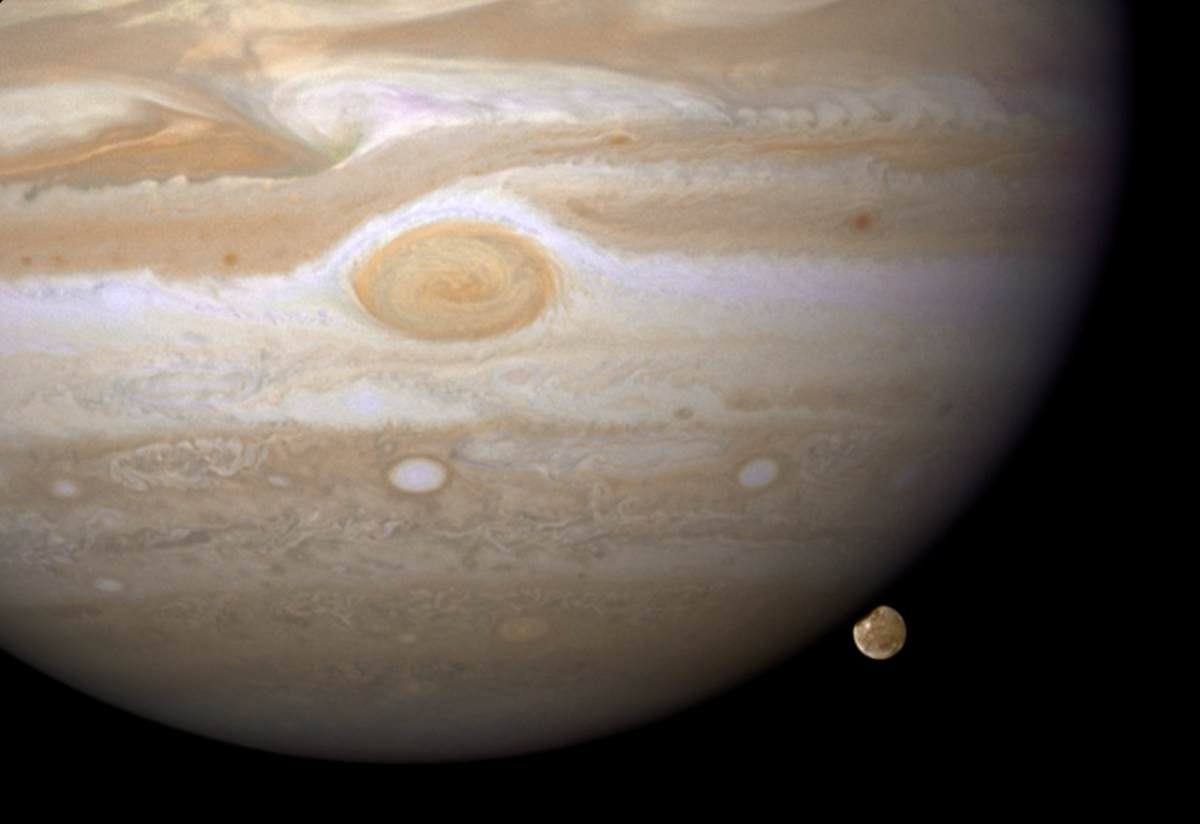
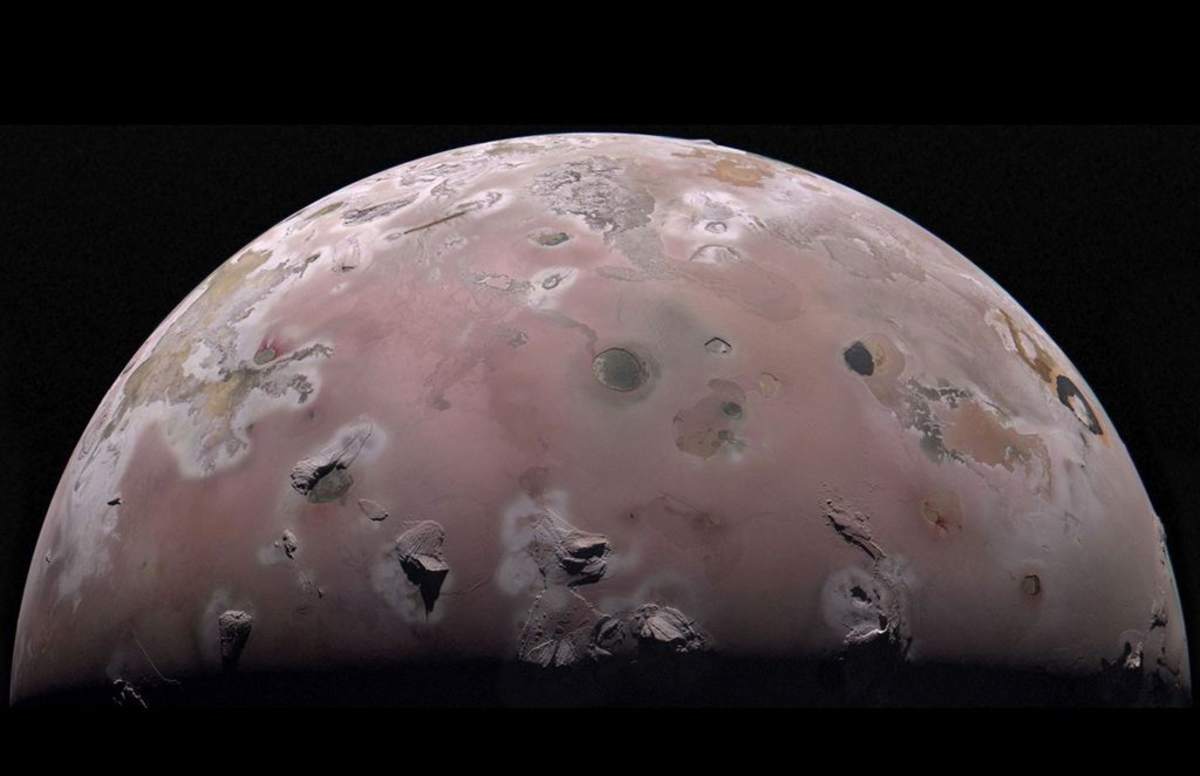
The results of the simulations show that the difference between the moons around Jupiter and Saturn has probably originated from their differing disk structures. The strength of Jupiter’s magnetic fields also differs from that of Saturn. This also played a role in influencing the satellite systems. In fact, a strong magnetic field triggered the formation of a magnetospheric cavity in Jupiter’s circumplanetary disk. This formed when Jupiter was young and allowed it to capture the moons Io, Europa and Ganymede. But young Saturn’s magnetic field was too feeble to form a cavity. So, migrating moons didn’t grow and thrive in their disk.
This is a giant leap toward understanding how multiple satellite systems form around gas giants. "Testing planet formation theory is somewhat difficult because we have only our solar system for reference, but there are multiple satellite systems close to us whose detailed characteristics we can observe," says first author and astronomer Yuri I. Fujii at Kyoto University in a statement. In this regard, this study paves the way for future observations of exomoons and circumplanetary disks around other gas giants elsewhere in the universe.
More on Starlust
NASA's James Webb teams up with Hubble to image Saturn's atmosphere in unprecedented detail
James Webb Space Telescope reveals strange features of auroral footprints of Jupiter's moon Io