"Where are they?": Brian Cox reveals why we still haven’t found aliens
The cosmic mystery
Brian Cox, a professor of particle physics at the University of Manchester and a familiar face on many science programs, has spent years exploring one of astronomy’s oldest questions: if our Milky Way holds hundreds of billions of stars, why haven't we heard a single word from anyone else living among them? For this, Cox has offered several possible explanations, and here’s a look at some of the most famous theories.
“Where is everybody?”
The universe's silence has its own name, called the "Fermi Paradox", named after the famous Physicist Enrico Fermi. He posed the question that we are still unable to answer, "Where is everybody?" Our galaxy alone contains around 400 billion suns, with most of them likely hosting planets of their own. On top of that, we have found thousands of planets beyond our solar system (6316 confirmed as of now), out of billions that NASA believes exist. But so far, Earth is the only planet where life, as we know it, exists.
Maybe Earth just got lucky
Brian Cox says that biology is one likely answer. Life first appeared on Earth roughly 3.8 billion years ago, or even earlier, and it took nearly the entire stretch since then to form a civilization. He explained, in an interview with Big Think, that "on this planet, an unbroken chain of life existed for almost 4 billion years, not withstanding the fact that we live in a violent universe." Our Earth even survived a planet-killing asteroid strike, the one that wiped out the dinosaurs. It could be that most planets don't share this stability, and that’s why worlds capable of building alien civilizations may be rare.
Or they might already be here, just hiding
Another theory Cox raised is that advanced civilizations exist but stay beyond our reach. He said, "Let's think, for example, what such an intelligence might look like. Well, who knows? They could have sent nanomachines to our solar system. There could be probes all over the place in the solar system, but if they're the size of an iPhone, then we'd have no way of detecting them.” Cox also shared the idea that intelligent species might choose to remain hidden to avoid drawing attention to themselves once they realize other civilizations could pose a threat.
Maybe we are just too far, and too hard to reach
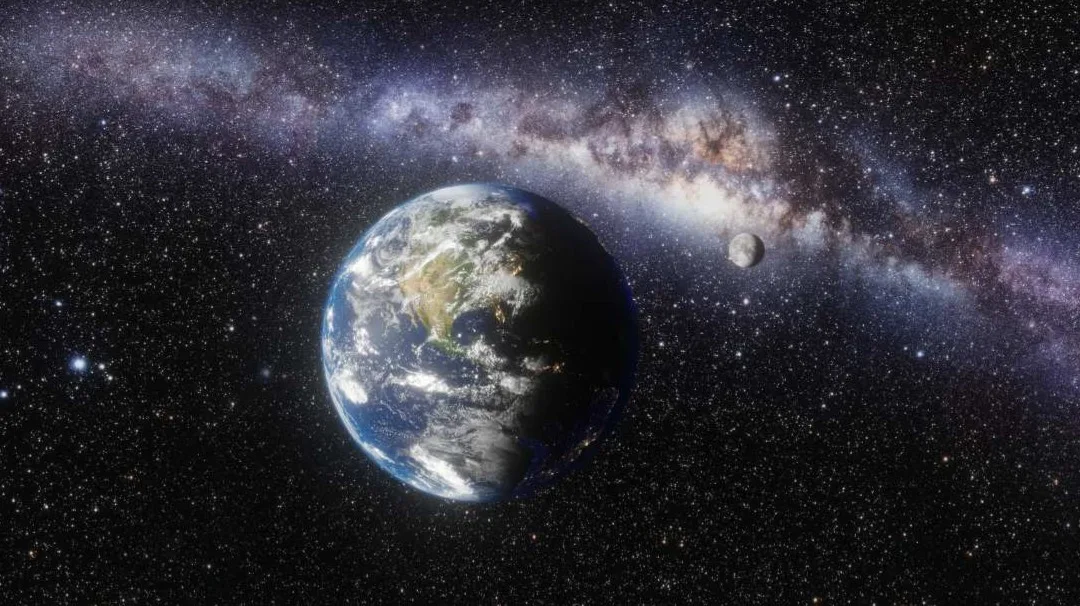
Interstellar travel might just be really difficult for them, since the universe is bigger than we can comprehend. Let’s say there’s a civilization on the far side of the Milky Way. Even if they send powerful radio transmitters, their signals might never reach us because they weaken too much over such vast distances. Cox put it plainly: “It may just be that the distances are so great that the signals are diluted, that we can't detect them because they're too weak.” Building a spacecraft that hops to a nearby star is one thing. Crossing an entire galaxy is another problem altogether.
We might be all alone
When asked for his personal view, Cox said, "I think there's one civilization in the Milky Way galaxy, and there only has ever been one, and there might only ever be one." He added, "That means the Earth is the only island of meaning in a sea of 400 billion suns." Though he welcomes being proven wrong. For him, being mistaken would only happen with actual contact. As he described it, that would mean "a flying saucer landing and some aliens coming out like ET and saying hello." For now, Cox says our best shot at finding anything alive out there is microbial life on places like Saturn's moon Dione, not intelligent neighbors.