4 surprising discoveries NASA's Perseverance rover has made on Mars
What Perseverance found beneath Martian soil
The Perseverance rover landed on Mars back on February 18, 2021. During its time on the Martian soil, the robot was tasked with exploring and finding valuable information about the Red Planet. Interestingly, while doing so, the rover did come across some particular discoveries that intrigued the scientists significantly. Here's a closer look at some of its most intriguing finds.
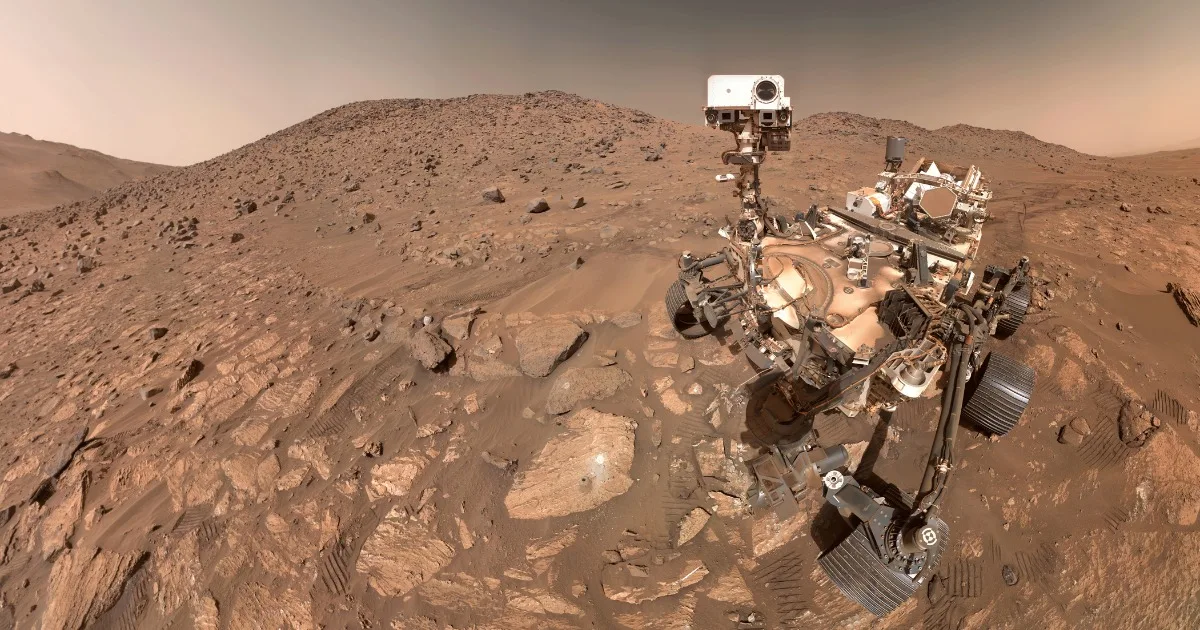
NASA’s Perseverance Mars rover captured this selfie on July 23, 2024, using a composite of 62 individual images.
NASA rover discovers potential biosignatures in ancient Mars rock
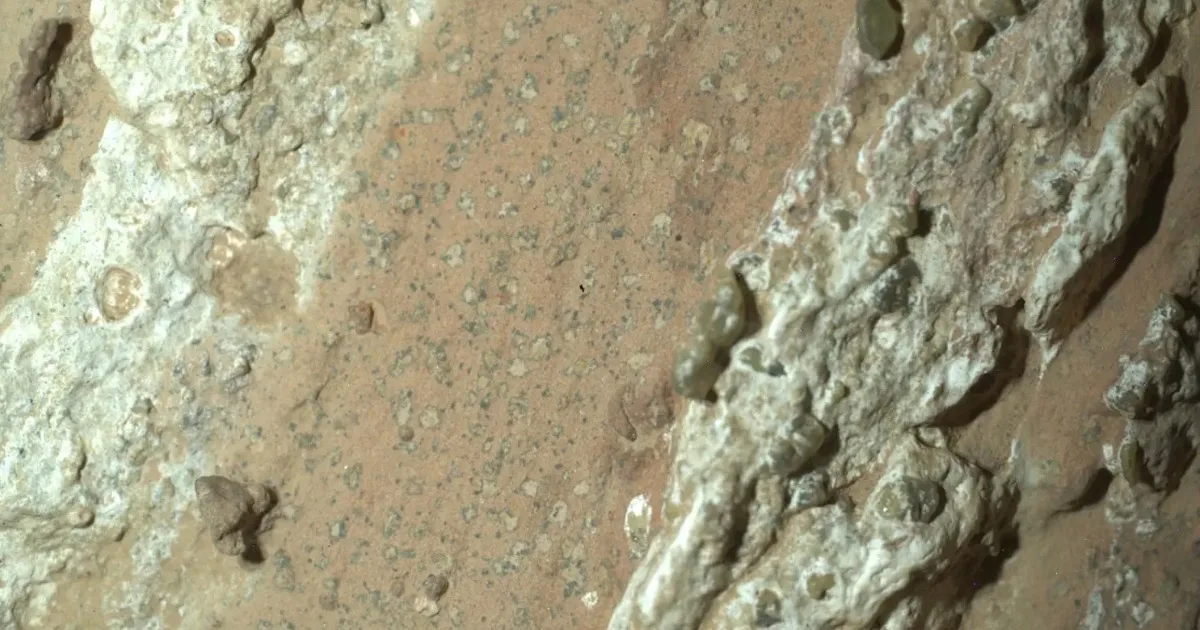
Back in 2024, the Perseverance rover on Mars collected some rock samples from a riverbed in the Jezero Crater. Interestingly, the ‘Sapphire Canyon’ sample taken from the ‘Cheyava Falls’ rock is said to contain biosignatures. According to a paper published in Nature, this might indicate the presence of microbial life on the Red Planet in ancient times.
Acting NASA Administrator Sean Duffy said, “This finding by Perseverance, launched under President Trump in his first term, is the closest we have ever come to discovering life on Mars. The identification of a potential biosignature on the Red Planet is a groundbreaking discovery, and one that will advance our understanding of Mars.”
This is an image of the ‘Cheyava Falls’ in Mars’ Jezero Crater, where the Perseverance rover of NASA discovered leopard spots in July 2024.
Perseverance detects electrical sparks inside Martian dust devils
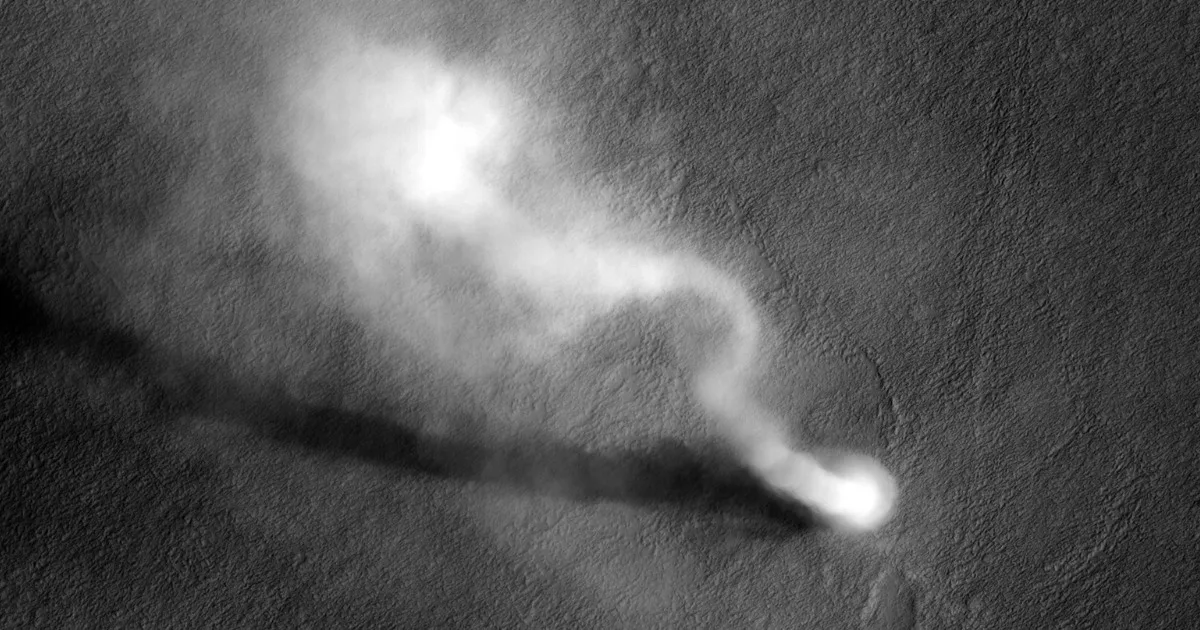
The Perseverance rover has also provided evidence supporting a long-standing scientific theory. Previously, the scientists believed that friction caused by grains of dust within the Martian dust devils might generate electrical charges. Now, Perseverance’s SuperCam microphone has picked up several instances of mini-sonic booms and electrical sparks in Martian dust devils. Since 2021, the SuperCam has recorded 55 such instances. This particular discovery was published in a paper in Nature.
A planetary scientist at L’Institut de Recherche en Astrophysique et Planétologie, Baptiste Chide, said, “Triboelectric charging of sand and snow particles is well documented on Earth, particularly in desert regions, but it rarely results in actual electrical discharges. On Mars, the thin atmosphere makes the phenomenon far more likely, as the amount of charge required to generate sparks is much lower than what is required in Earth’s near-surface atmosphere.”
The above image is of a dust devil taken by the Mars Reconnaissance Orbiter.
Unusual iron-rich rock hints at extraterrestrial origin on Mars
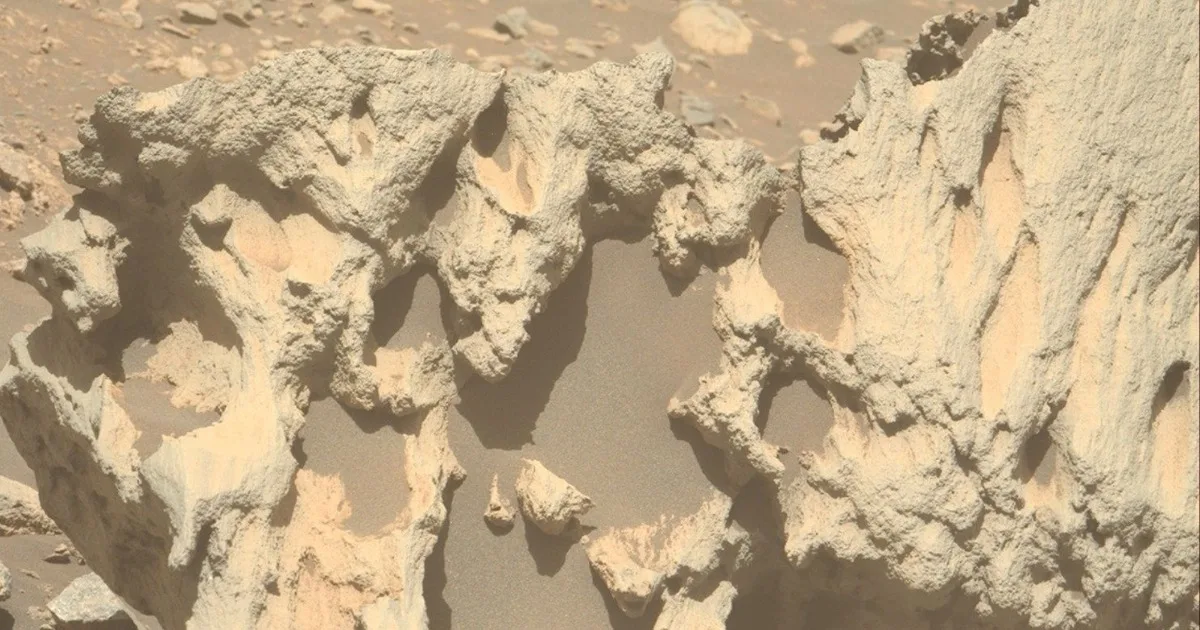
During its time on the Martian surface, the Perseverance rover has come across some unique rocks. Among these findings, one thing was pretty much common. All of the rocks discovered had Martian origins. However, in September 2025, NASA’s robot discovered ‘Phippsaksla.’ ‘Phippsaksla’ was found near the Jezero region of ‘Vernodden.’ The rock measures 31 inches (80 centimeters) across. When scientists studied the rock in detail, they found that the major components were nickel and iron. Both of these components are usually found in meteorites, prompting the scientists to assume that this rock originated outside of the Red Planet.
Purdue University's Candice Bedford stated, “This rock was identified as a target of interest based on its sculpted, high-standing appearance that differed from that of the low-lying, flat and fragmented surrounding rocks.”
In this image, the cavernous weathering texture of an unusually shaped rock, “Phippsaksla,” is visible. It was acquired by NASA’s Mars Perseverance rover, and it was targeted for investigation based on its appearance that differed from the low-lying surrounding rocks.
Strange striped rock intrigues Mars scientists
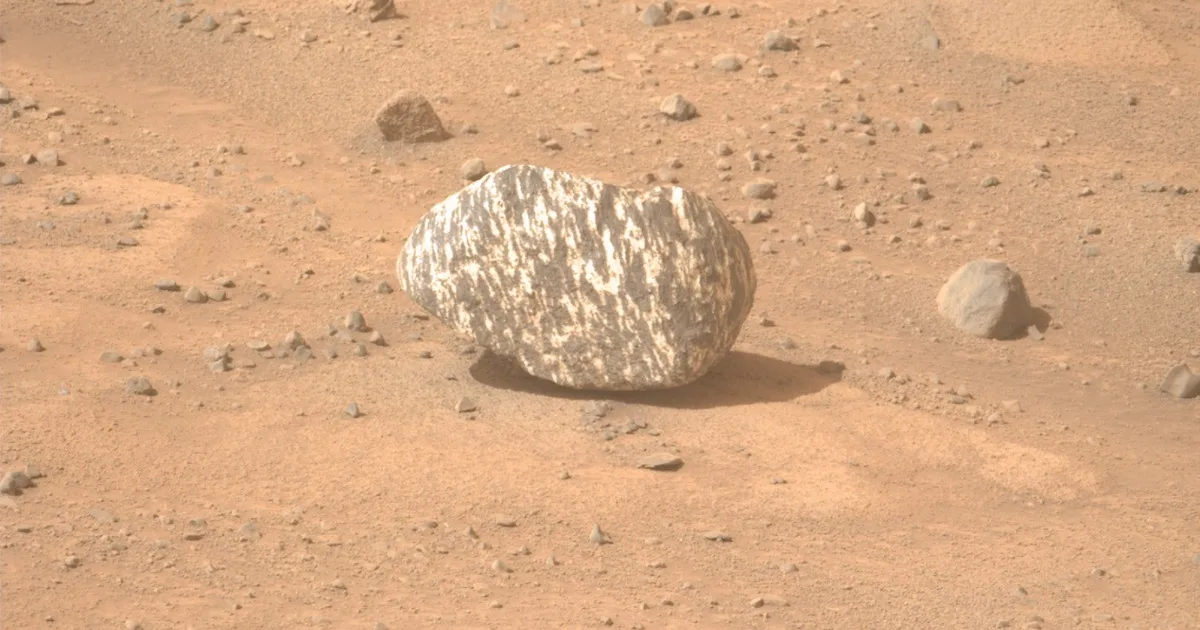
Back in 2024, a few Navcam images caught scientists’ attention. Despite the low-resolution photos, scientists could easily tell that there was a rock lying on the Martian surface that sported an unusual texture. Later on, the team used the Mastcam-Z camera to get a detailed view. Named the ‘Freya Castle,’ the rock exhibited black and white stripes and was approximately 20 centimeters across. While there have been no definitive details about its composition, scientists presume that its unusual stripes might be of metamorphic or igneous origins.
This image of a black-and-white striped rock was captured by NASA's Mars Perseverance rover using its Left Mastcam-Z camera. Mastcam-Z is a pair of cameras located high on the rover's mast on September 13, 2024.