Astronomer reveals one of the biggest misconceptions about alien life
Scientist offers a fresh perspective on the search for aliens
When we speak of aliens, the first image that comes to mind is that of a monstrous being. But University of Victoria, British Columbia’s Professor Jon Willis has an entirely different take on what alien life might look like. In his book ‘The Pale Blue Data Point,’ Willis tries to break down what extraterrestrial beings (if any) are and what might be the best way to find them.
What do Aliens really look like?
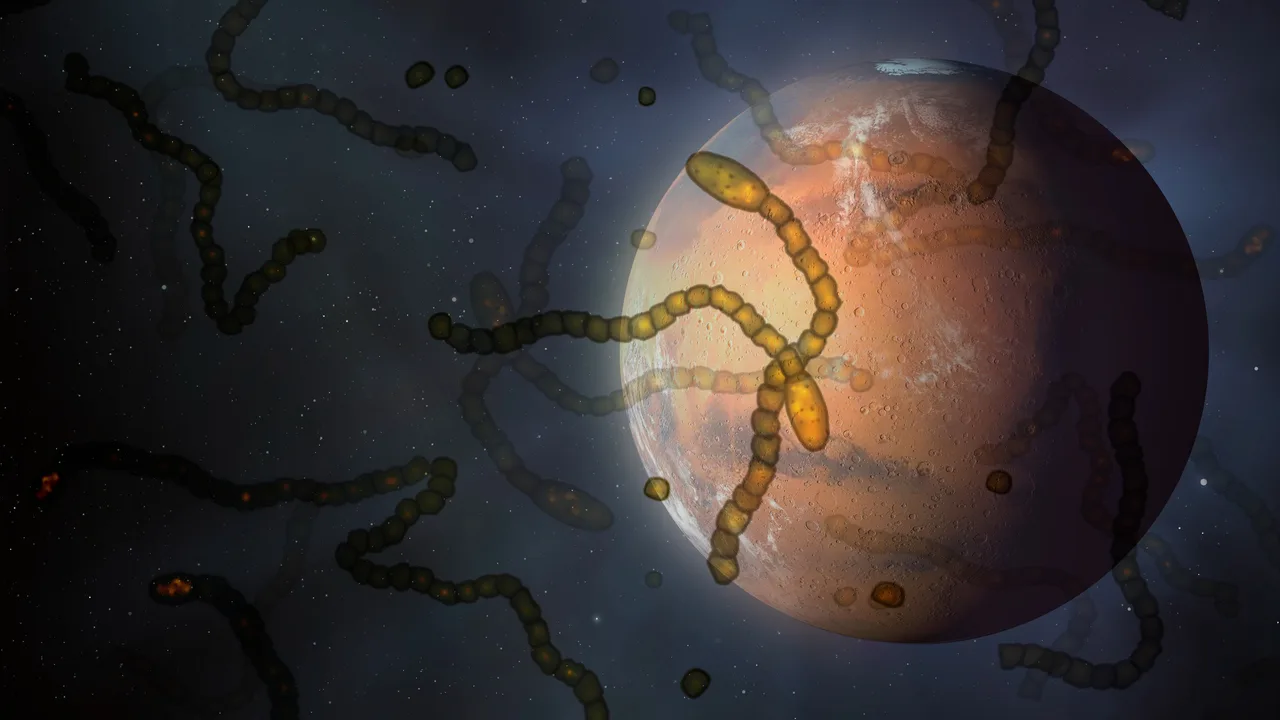
According to Professor Jon Willis, aliens might not be the ones with an elongated head. Rather, alien life can be as simple as a single-celled organism. And the biggest example of the same is Earth itself. Our very own Blue Planet consists of a vast array of single-celled organisms. Thus, Professor Willis feels that scientists must redirect their search for extraterrestrials towards more basic lifeforms.
How do scientists search for alien life?

In his book ‘The Pale Blue Data Point,’ Professor Willis has made an important statement. While researchers are trying to answer the question “Where is everybody?” they might want to look a bit differently. As put by Professor Willis, scientists must try to understand what life actually is. He further explains that life does not refer to a particular appearance. Rather, it is a process. Thus, Professor Willis believes that scientists must question, “Does it metabolize?” “Does it create order?” and “Does it perform unique biological processes?” Looking for these signatures might make it easier for scientists to trace life beyond Earth.
Science doesn't have all the answers—yet
While there is no proven ‘right way’ to search for alien life, the process involves speculation. Professor Willis suggests educated speculations that unlock new doors of possibilities are always welcome. He gave an example of how every new exoplanet discovered has baffled scientists further, while opening new doors. In fact, Professor Willis also pointed out how back in 1995, scientists only knew about one exoplanet. But as the years passed by, educated speculation, coupled with streamlined efforts, made the scientists discover over 6000 exoplanets till now.
Earth is our best alien laboratory
Scientists usually assume that life can only survive under favorable, Earth-like conditions. However, Professor Willis wants scientists to study Earth closely to understand extraterrestrial life. After all, there are extreme environments on Earth where life thrives. For example, there is life thriving in the deep-sea hydrothermal vents. Interestingly, these places resemble conditions on distant icy moons like Enceladus and Europa. Additionally, organisms known as extremophiles can be found living in hostile environments like hot springs. Thus, Professor Willis states that researchers can use this information to further streamline their search for alien beings elsewhere.
Scientists might not be searching the right way
Professor Willis also has a stern warning for our scientists. Till now, all the attempts humans have made to establish alien contact have yielded no verified results. This might be because of one key mistake. Scientists have assumed that alien beings would communicate like us. According to Professor Willis, this might be untrue. In his book, he proposed that intelligent beings (if any) might operate on varying timescales and also use particles unfamiliar to humans. In fact, they might even use methods that would be beyond human comprehension as of now.