This accidental discovery could dramatically reduce astronauts' travel time to Mars
A round trip to Mars takes around 3 years, but this could change
While Mars remains one of the most explored celestial bodies, it's still about 140 million miles away. It generally takes around 7-10 months for a spacecraft to reach Mars from Earth. And since the two planets align for fuel-efficient transfers only once every 26 months, astronauts will have to wait for the right opportunity to commence a return journey. The round trip thus might demand a total of about 3 years. But now, a study published in Acta Astronautica suggests that imprecise paths of near-Earth asteroids might help unlock a faster route to Mars and back.
“Maybe this can change the idea that we need more than two years to go to Mars and return,” study author Marcelo de Oliveira Souza, a cosmologist at the State University of Northern Rio de Janeiro in Brazil, told Live Science.
How an asteroid inspired this idea
Souza came across the possibility of an asteroid suggesting geometric clues for faster travel to Mars back in 2015, when he was studying a near-Earth asteroid, 2001 CA21. Early speculations about the asteroid suggested that it might be following a rare path and would cross both Mars and Earth’s orbital regions. Although later refinements revealed the asteroid's actual trajectory, the previous estimate during the October 2020 opposition (when the two planets were the closest to each other and on the same side of the Sun) indicated a much shorter route between the two planets.
“This was a surprise for me—I was not looking for this," Souza said.
Calculations suggest we could reach Mars in just 34 days, but...
Based on the alignment from October 2020, Souza predicted that the fastest route in the most ideal scenario can take a spacecraft from Earth to Mars in just 34 days. But to make this possible, a launch speed of around 32.5 kilometers per second would be required, which is beyond our current rocket capabilities. Furthermore, the spacecraft would reach Mars at a speed of 64,800 mph, something that current landing systems won't be able to handle.
2031 might offer an excellent opportunity for a quick trip to Mars and back
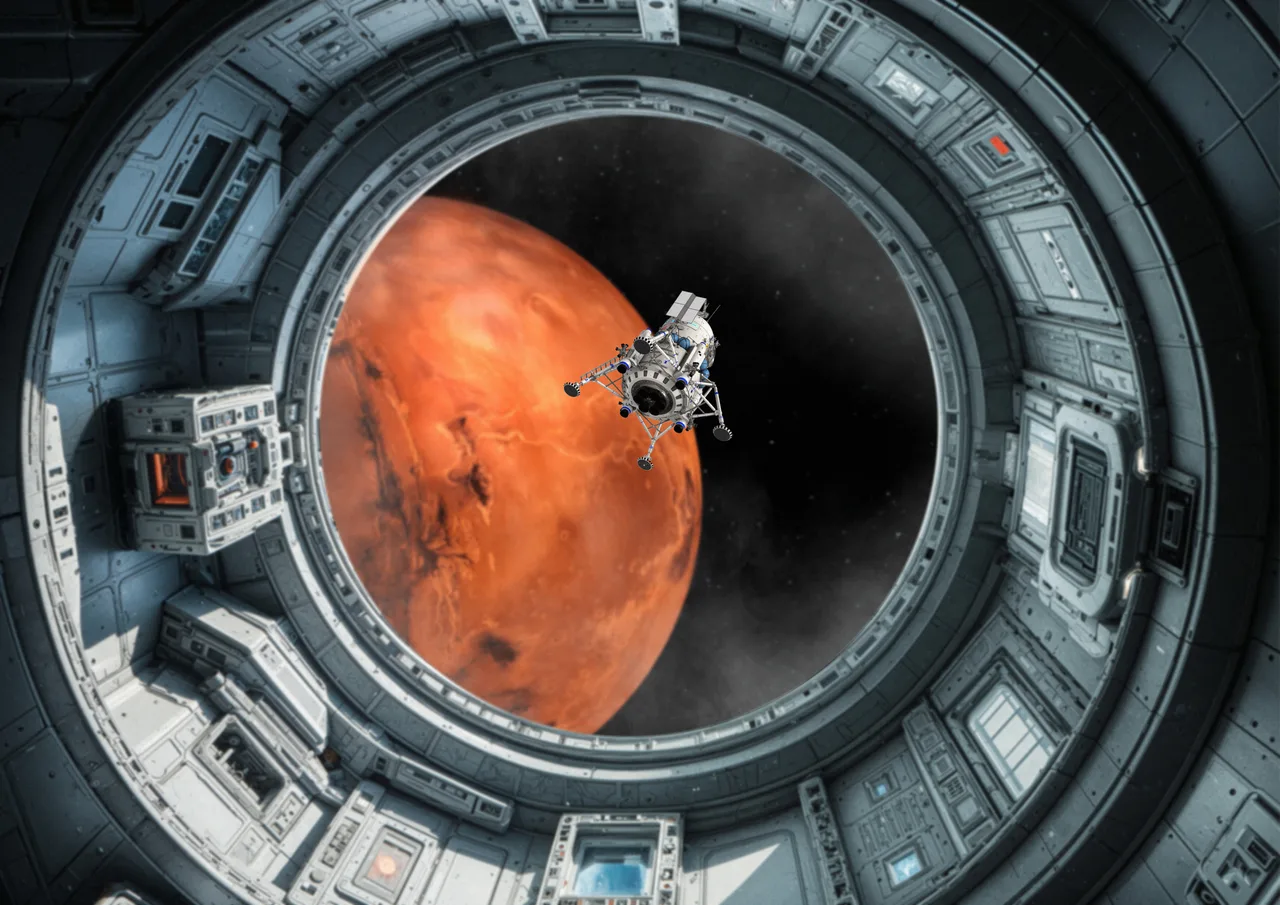
With the 34-day round trip being near-impossible, Souza examined other Mars oppositions in 2027, 2029, and 2031. His calculations revealed that the 2031 opposition might offer a more feasible opportunity at fast travel with respect to near-term technology. The round trip in that scenario would take just 153 days, or just about 5 months. If the spacecraft launched on April 20, 2031, at a speed of 27 km/s, it would reach Mars in just 33 days. After spending 30 days on the surface of Mars, astronauts would be able to begin their journey home on June 22, which would be completed by September 20.
A lower-energy alternative in the same window would require the spacecraft to travel at 16.5 km/s. The round trip in that scenario would last about 7.5 months, which is still way shorter than current mission timelines.
Exactly how realistic is this shortcut to Mars?
As amazing as it sounds, the proposed route still remains theoretical. Several factors, including spacecraft design, payload mass, and future propulsion systems, would act as determining factors for such a mission to be made possible.
That said, the required velocities are comparable to those achieved by spacecraft such as NASA's New Horizons. Moreover, Souza thinks the trajectory requirements could be well within the reach of SpaceX's Starship or Blue Origin's New Glenn.