From life on Mars to interstellar comet 3I/ATLAS: 5 space discoveries that defined 2025
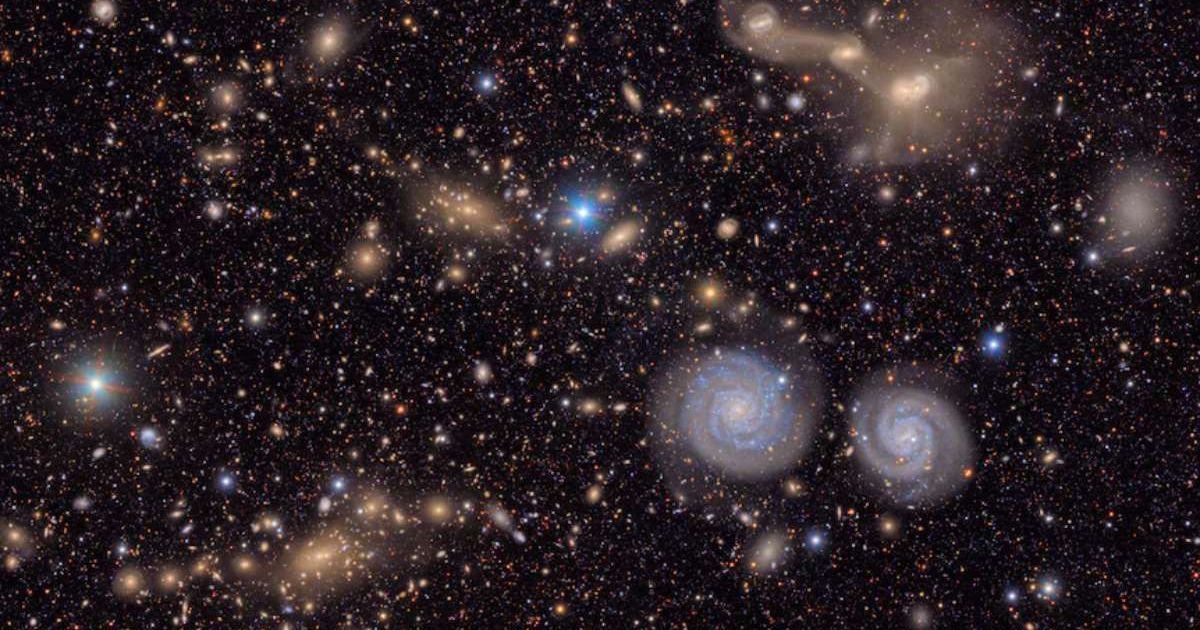
2025 saw space agencies like NASA and the ESA dedicate their time and resources to make some remarkable observations, ranging from an interstellar comet to possible signs of Martian life. The past twelve months saw events that connected theories to realities and phenomena that made us question, yet again, if we are at all alone in this universe. Take a look at some of the most brilliant discoveries of 2025.
Interstellar visitor: comet 3I/ATLAS
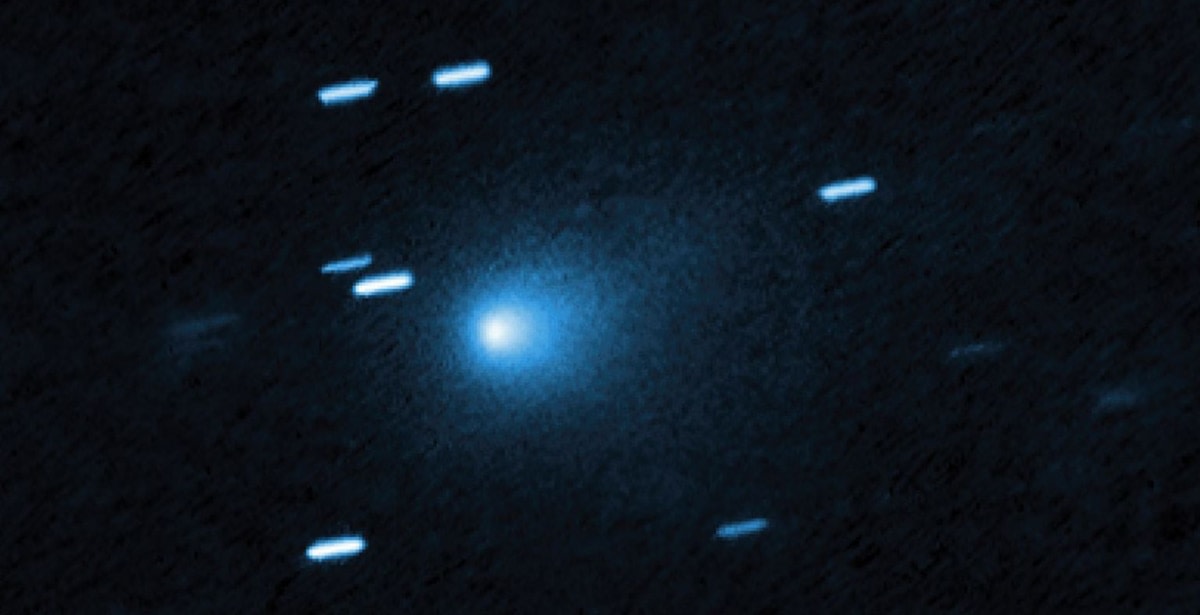
While 'pre-discovery' observations of 3I/ATLAS date back to June 14, 2025, the NASA-funded ATLAS survey telescope in Chile was the first to report observations of the comet to Minor Planet Center on July 1, 2025. Since then, 3I/ATLAS has continued to intrigue astronomers and laymen alike. After all, it is only the third known interstellar object to enter our solar system, is perhaps billions of years older than our solar system, and its many "anomalies" have made astronomers like Avi Loeb question whether it could be a technological object rather than another comet. It made its closest approach to Earth on December 19 and is now heading towards Jupiter as it continues to be observed by various missions.
Biosignatures in "Cheyava Falls" on Mars
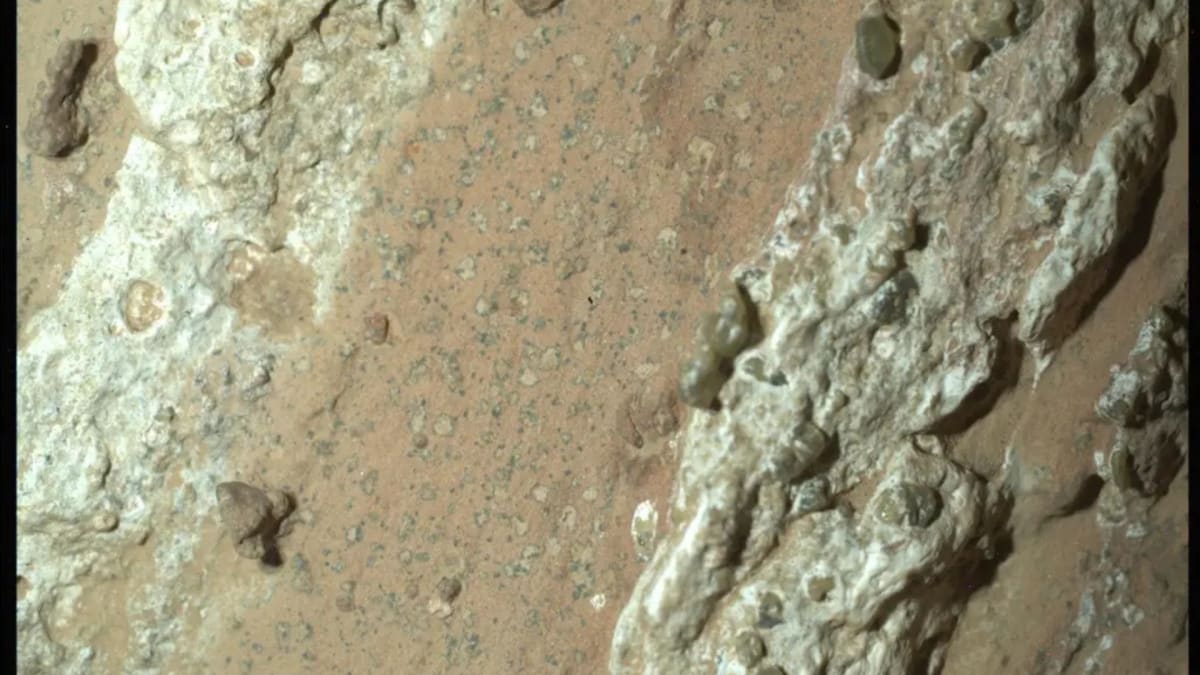
The red planet did not disappoint, as NASA’s Perseverance rover found possible biosignatures in the Jezero Crater. This “potential biosignature” refers to a substance or structure that might have a biological origin but warrants further study before it can be taken as conclusive evidence for the presence or absence of life. While analyzing a sample taken from the rock "Cheyava Falls," the rover's science instruments found that the rocks were composed of clay and silt, which are preservers of past microbial life on Earth. According to NASA, they are also rich in organic carbon, sulfur, oxidized iron (rust), and phosphorus.
The first superkilonova
A kilonova occurs when a pair of neutron stars, which are dense dead stars, merge to form heavier elements that are the basic building blocks of stars and planets. While only one kilonova has been confirmed till now, the first evidence for a superkilonova—one triggered by a supernova—came on August 18, 2025, when the twin detectors of LIGO in Louisiana and Washington, along with Virgo in Italy, detected a gravitational-wave signal. According to Caltech, the signal came from what looked like a merger between two objects, with one being much smaller than a typical neutron star. The event—the kind of which had only been theorized but never observed—was initially called ZTF 25abjmnps before being renamed to AT2025ulz by the International Astronomical Union Transient Name Server.
A glimpse of the invisible: Dark matter 'seen'
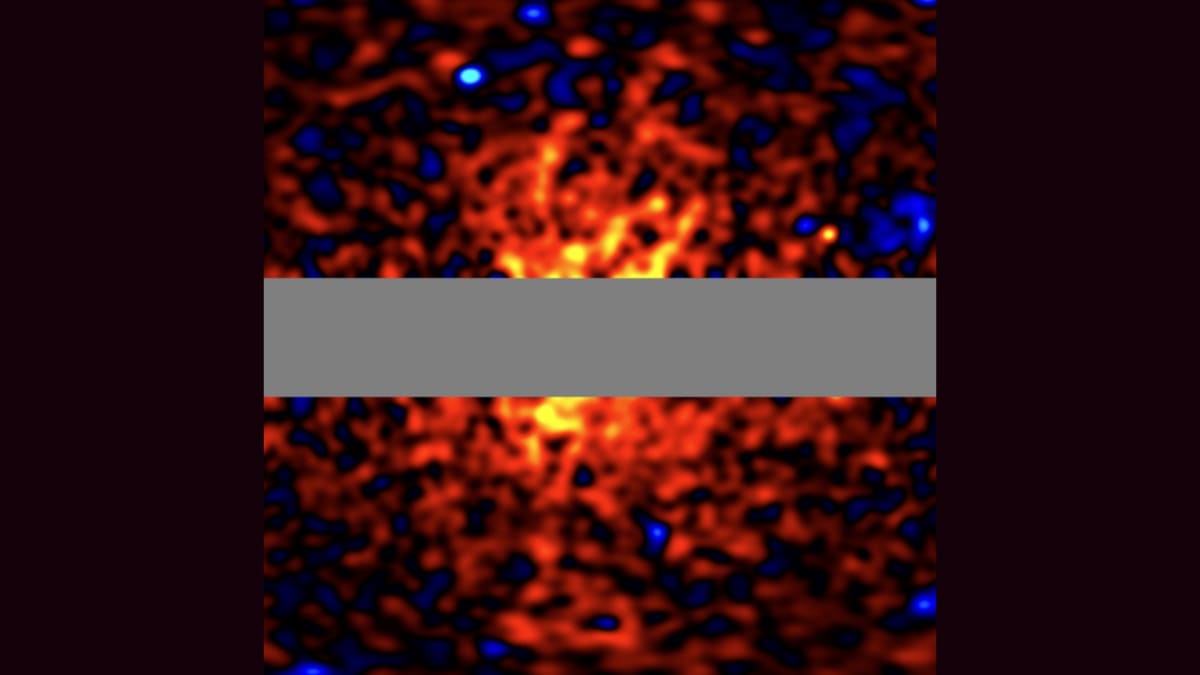
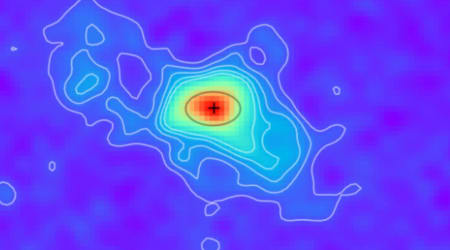
Considered the "ghost" of the universe, scientists made a breakthrough as dark matter was 'seen' for the first time. While dark matter doesn't absorb, emit, or reflect light, theory suggests that it is composed of WIMPs, or weakly interacting massive particles, which upon collision, annihilate each other and release gamma ray photons. According to The University of Tokyo, Professor Tomonori Totani used the latest data from the Fermi Gamma-ray Space Telescope and detected what he believes to be the gamma rays specific to WIMPs.
Chaotic birthplace found in Dracula’s Chivito
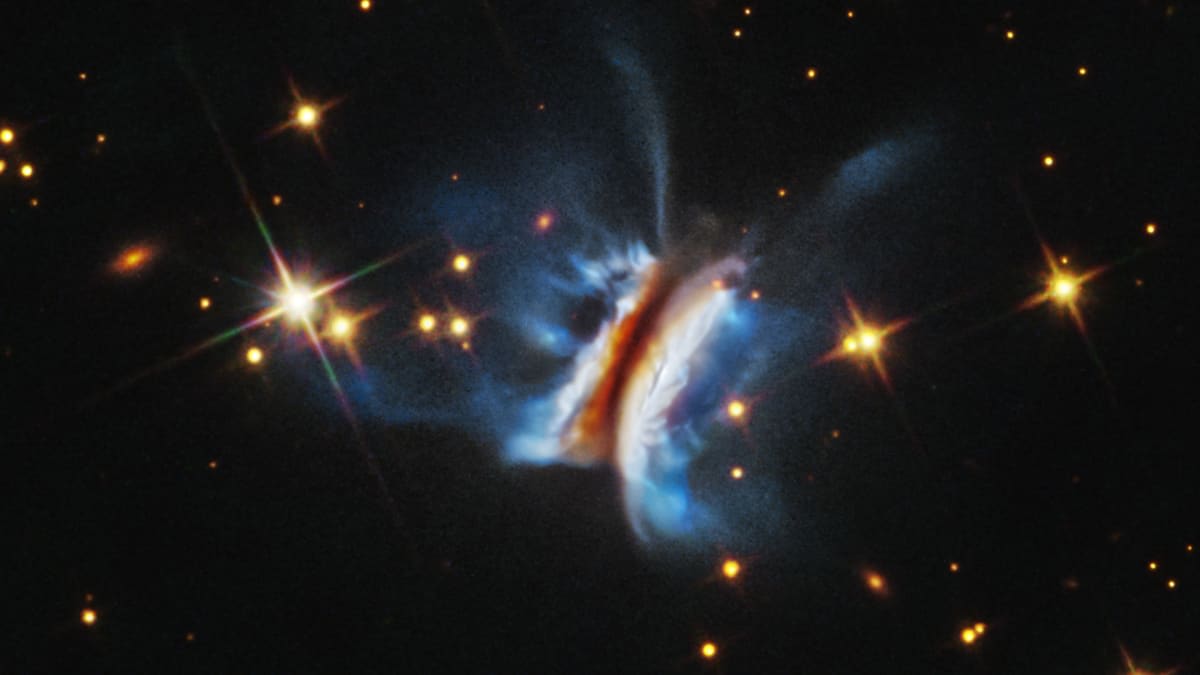
The Hubble Space Telescope recently found the largest protoplanetary disk ever discovered, spanning 400 billion miles, which is 40 times the diameter of our solar system. The IRAS 23077+6707, nicknamed "Dracula’s Chivito," is a massive and turbulent birthplace of planets, with materials extending from either side of a compressed region. The image captured provides an insight into the formation of planets in extreme environments, according to NASA. Located roughly 1,000 light-years from Earth, the disk hides the young star within it.
![A composite Hubble Space Telescope image showing the debris ring and dust clouds cs1 and cs2 around the star Fomalhaut. [Image Credit: NASA, ESA, Paul Kalas (UC Berkeley); Image Processing: Joseph DePasquale (STScI)]](https://de40cj7fpezr7.cloudfront.net/965ff5d0-794c-420b-b45a-2ec4c9cb6b73.png)
Other achievements from this year include the detection of intriguing collisions around the nearby star, Fomalhaut, and an explanation of the mysterious 'little red dots.' Of course, more questions will be asked, and more answers will come our way in 2026, as science continues to push the boundaries of what we know and don't know.
More on Starlust
5 mind-blowing discoveries NASA's James Webb Space Telescope made that Hubble Telescope couldn't
A look at 5 extraordinary images taken by Hubble Space Telescope in 2025