First set of Artemis II lunar flyby photos shows solar eclipse, Earthset, Earthrise and more
The astronauts captured some never-before-seen lunar views during the historic seven-hour flyby.
PUBLISHED 2 HOURS AGO
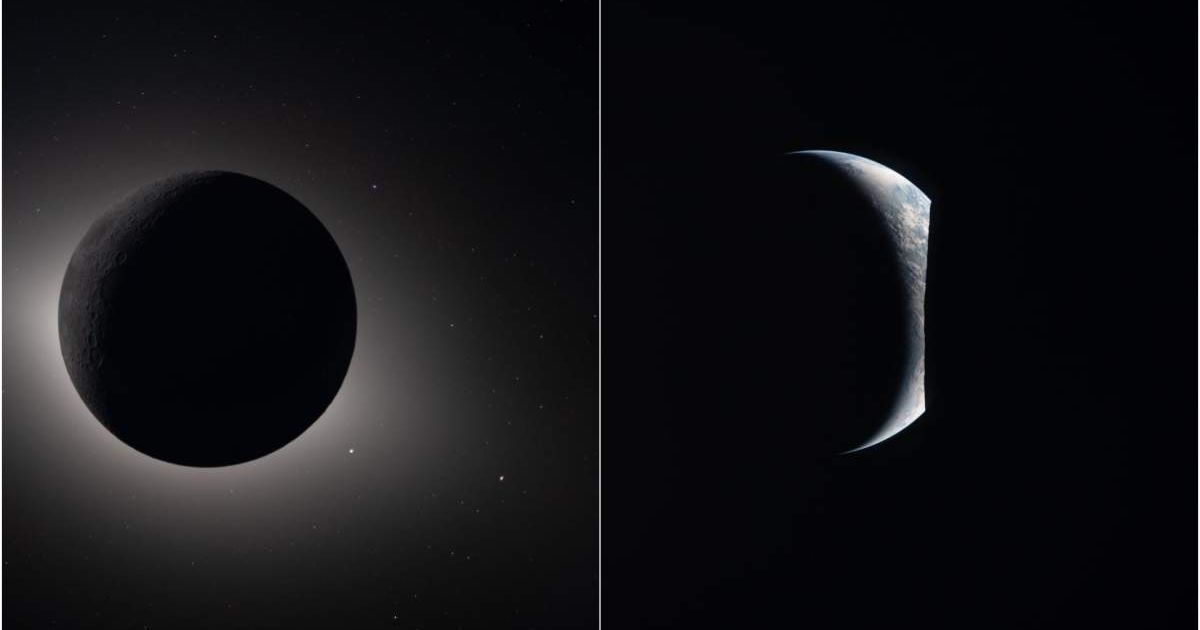
(L) The Moon fully eclipsing the Sun during the Artemis II lunar flyby. (Image Source: NASA) (R) Earthrise captured through Orion during the lunar flyby. (Image Source: NASA)

NASA has released the first official images taken by the Artemis II crew during their historic lunar flyby aboard the Orion spacecraft. And they are as scientifically important as they are breathtaking. “Our four Artemis II astronauts—Reid, Victor, Christina, and Jeremy—took humanity on an incredible journey around the Moon and brought back images so exquisite and brimming with science, they will inspire generations to come,” said Dr. Nicky Fox, the associate administrator for Science Mission Directorate, NASA Headquarters in Washington, per a NASA press release.
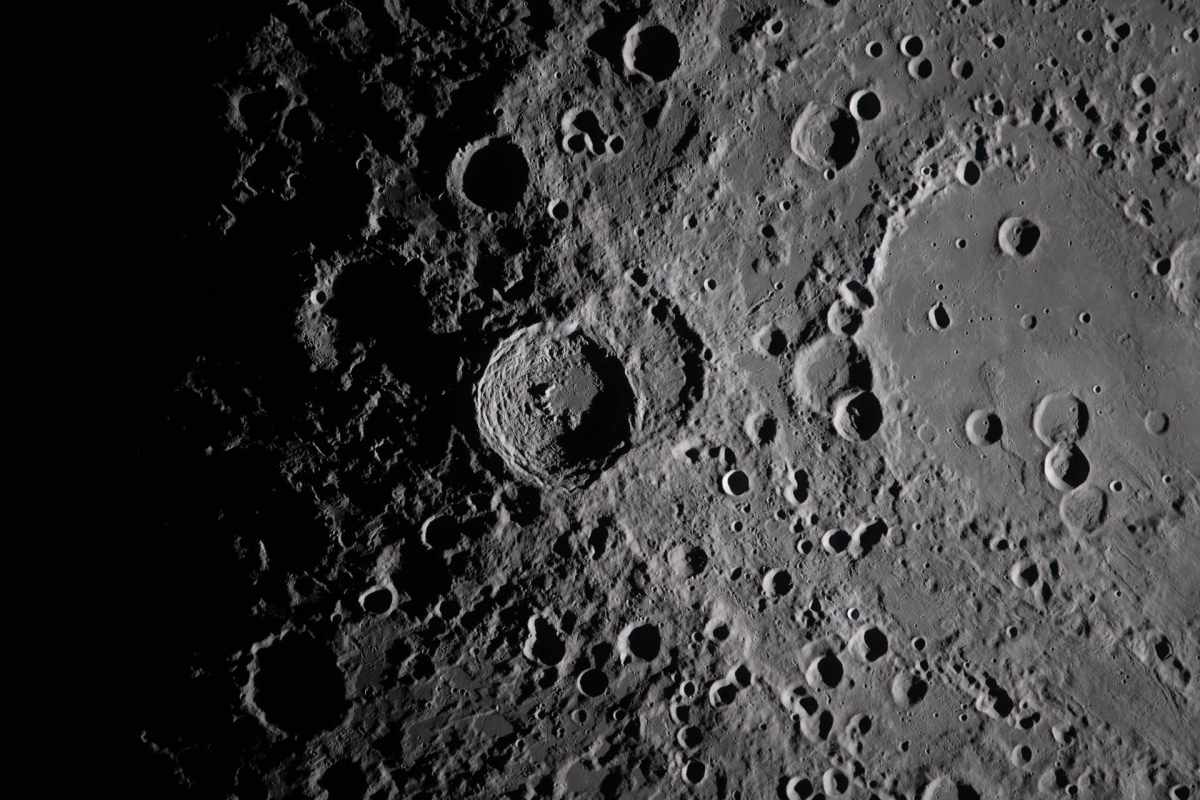
A close-up view taken by the Artemis II crew of Vavilov Crater on the rim of the older and larger Hertzsprung basin on April 6, 2026. (Image Source: NASA)

During the seven-hour-long flyby, the crew captured photos of impact craters, ancient lava flows, and surface fractures, all of which are expected to help scientists get better insights into the Moon's geological evolution. And while images of the Moon aren’t “new” by any means, the Artemis II astronauts are the first humans in over five decades to actually take pictures from the Moon’s vicinity. Over this massive gap in time, photography and imaging equipment have advanced to a large extent in terms of quality, which makes the new images all the more interesting to observe.
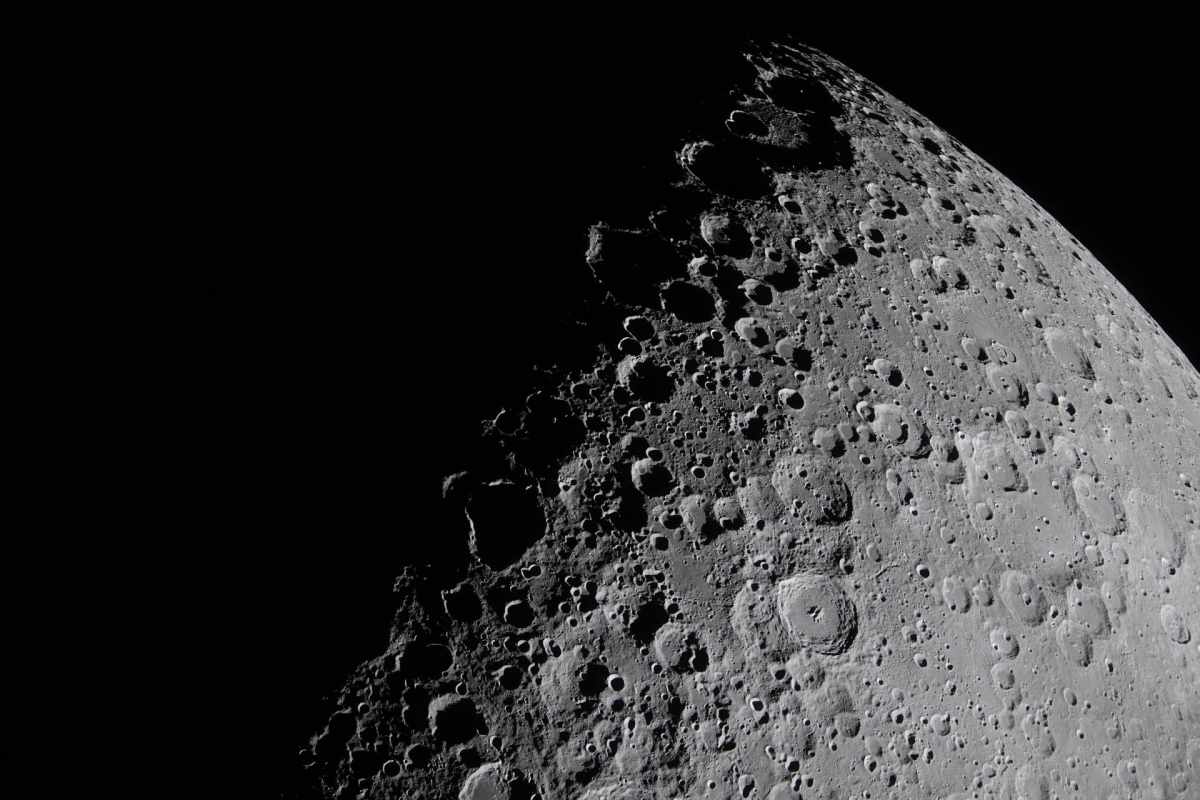
The Artemis II crew captures a portion of the Moon coming into view along the terminator – the boundary between lunar day and night. (Image Source: NASA)
The Artemis II crew captures a portion of the Moon's far side coming into view along the terminator – the boundary between lunar day and night. (Image Source: NASA)

Moreover, previous crewed missions from the Apollo era captured images a little too close to the lunar surface. However, Orion’s closest approach to the Moon was at a distance of 4,067 miles, which gave the astronauts a unique vantage point. NASA describes the Moon’s apparent size from the spacecraft as that of a basketball held at arm’s length. 
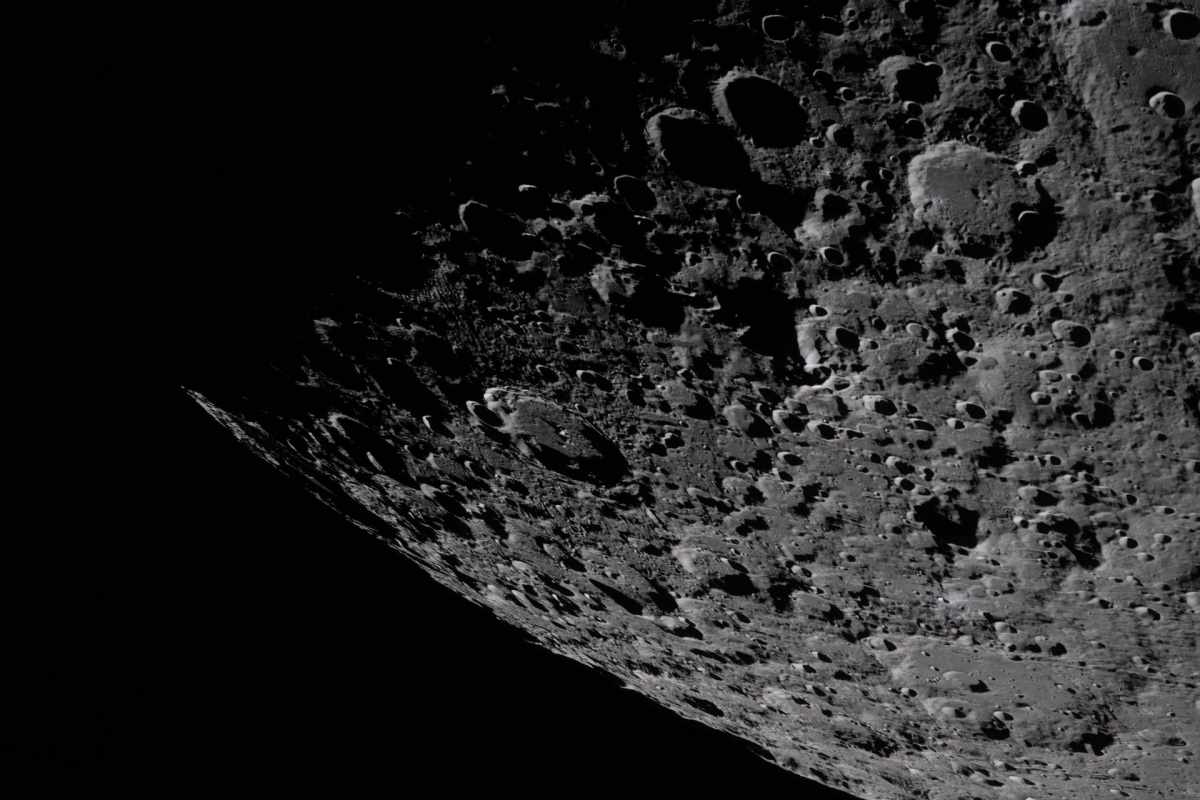
Captured by the Artemis II crew, the heavily cratered terrain of the eastern edge of the South Pole-Aitken basin is seen with the shadowed terminator. (Image Source: NASA)

“At first, their descriptions didn’t quite match what we were seeing on our screens,” said Jacob Bleacher, NASA’s chief exploration scientist at the agency’s headquarters. “Now that higher resolution images are coming down, we can finally experience the moments they were trying to share and truly appreciate the scientific return provided by these images and our other research on this mission.” Scientists will also make use of amateur astronomer observations made from Earth and compare them to the timing and location of the images to refine the Artemis II crew’s findings.
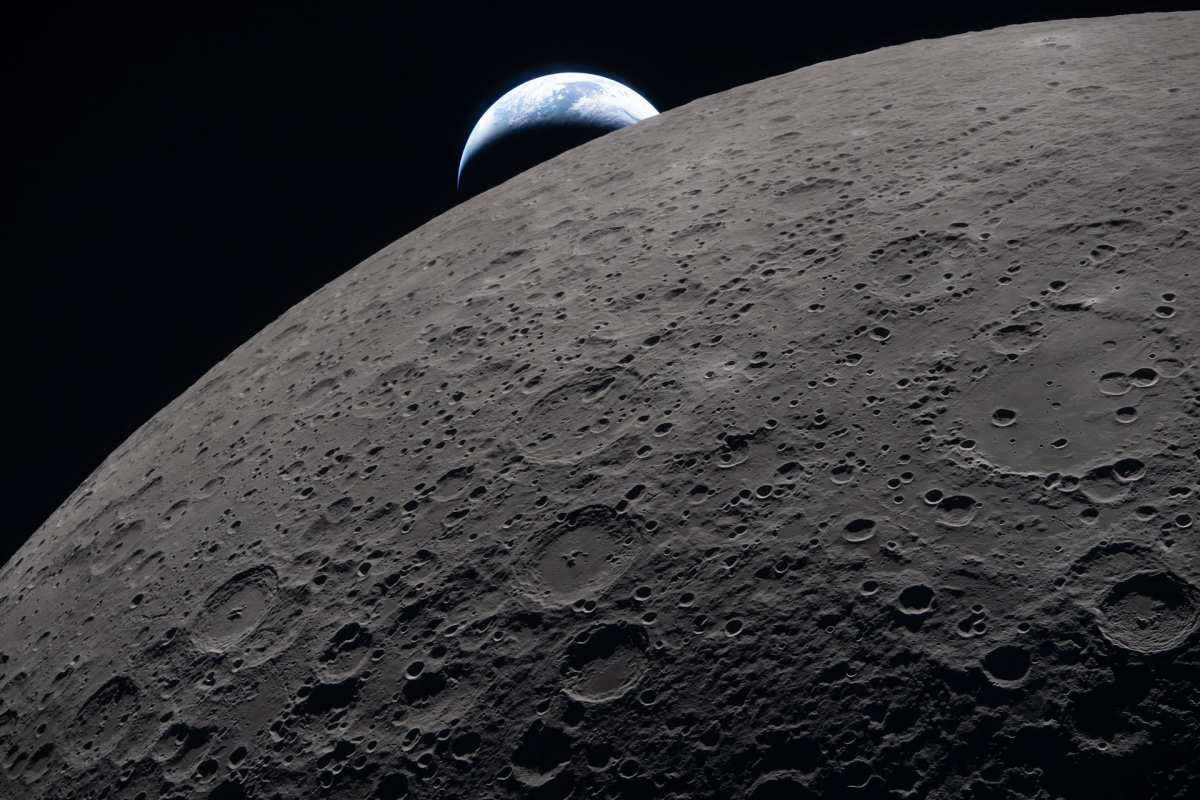
Earthset captured by the Artemis II crew at 6:41 p.m. EDT on April 6, 2026. (Image Source: NASA)

Among other things, Orion's trajectory around the Moon allowed the crew to observe an Earthset and an Earthrise. Moreover, during the flyby, they saw the Moon completely blocking the Sun from their perspective, resulting in a solar eclipse that made the otherwise imperceptible solar corona visible. 
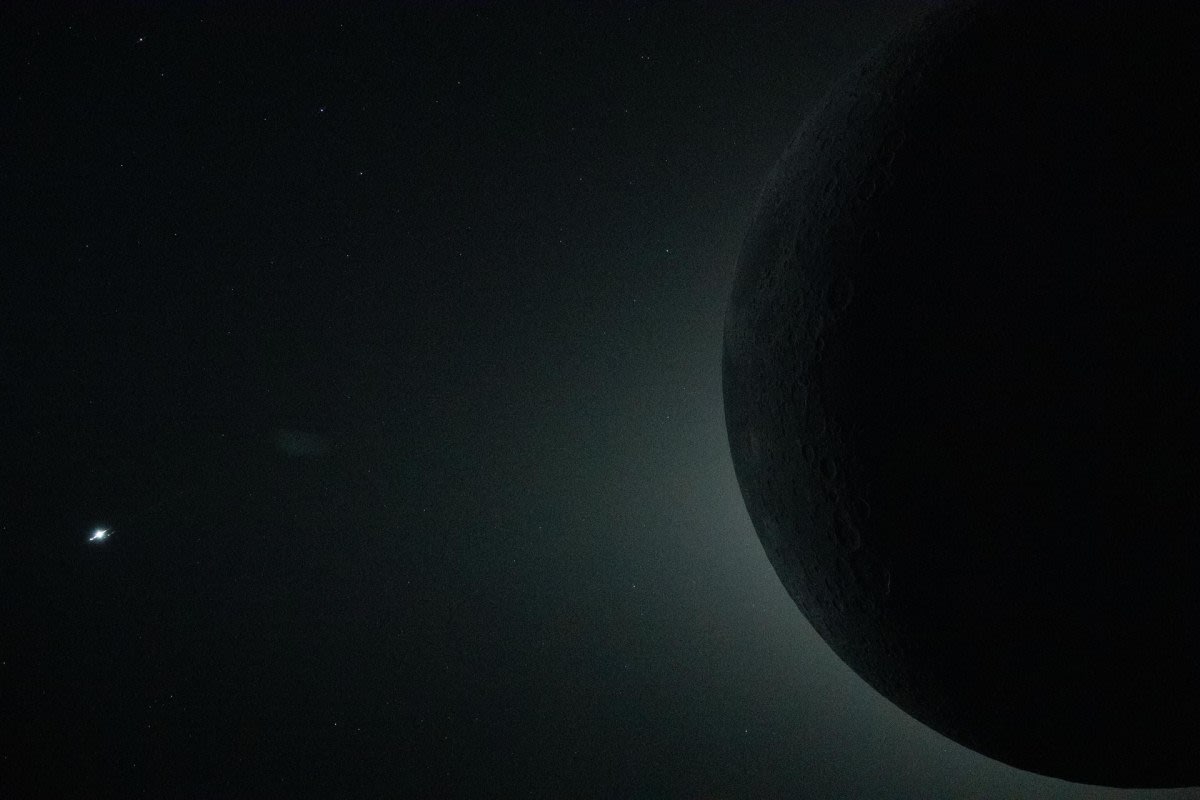
A part of the Moon is visible here in this photo of the total solar eclipse captured by the Artemis II crew. (Image Source: NASA)

NASA also received reports of meteoroid impacts as well as color variations on the surface of the Moon. Of course, more images are expected to arrive as Orion makes its way back to Earth, ready for splashdown on Friday, April 10. 

More on Starlust

Artemis II crew just had a long-distance call with ISS astronauts: Here's what they discussed
‘This time we won't just leave footprints': Donald Trump to Artemis II crew after historic lunar flyby

MORE STORIES

A simulation-based study reveals that Jupiter does this with its stronger magnetic fields.
1 hour ago
They reconstruct the history of ice-trapped craters through computer simulations.
6 hours ago
The gas giant’s rapid rotation and its active moons have contributed to such asymmetry.
6 days ago
Nickel on Earth is used by many microorganisms to run their metabolic processes.
6 days ago
This weird object sparked amusing reactions online, with users suggesting it should be 'killed with fire.'
7 days ago
'We leave as we came and, God willing, as we shall return with peace and hope for all mankind,' were American astronaut Eugene Cernan's closing words while leaving the Moon.
7 days ago
The study shows how some stars churn out heavy elements with no roadblock.
7 days ago
It can even alert occupants of a moon base if there is radioactive debris to hit the lunar surface.
Mar 31, 2026
Back in 2004, Cassini noticed that Saturn's rotation rate was slowly changing. But this was not possible as planets are not known to do that.
Mar 30, 2026
"This is the first time we have been able to show that gravity is an important factor in sperm’s ability to navigate through a channel like the reproductive tract."
Mar 30, 2026