Cosmic collaboration: Hubble and Euclid show Cat’s Eye Nebula in intricate detail
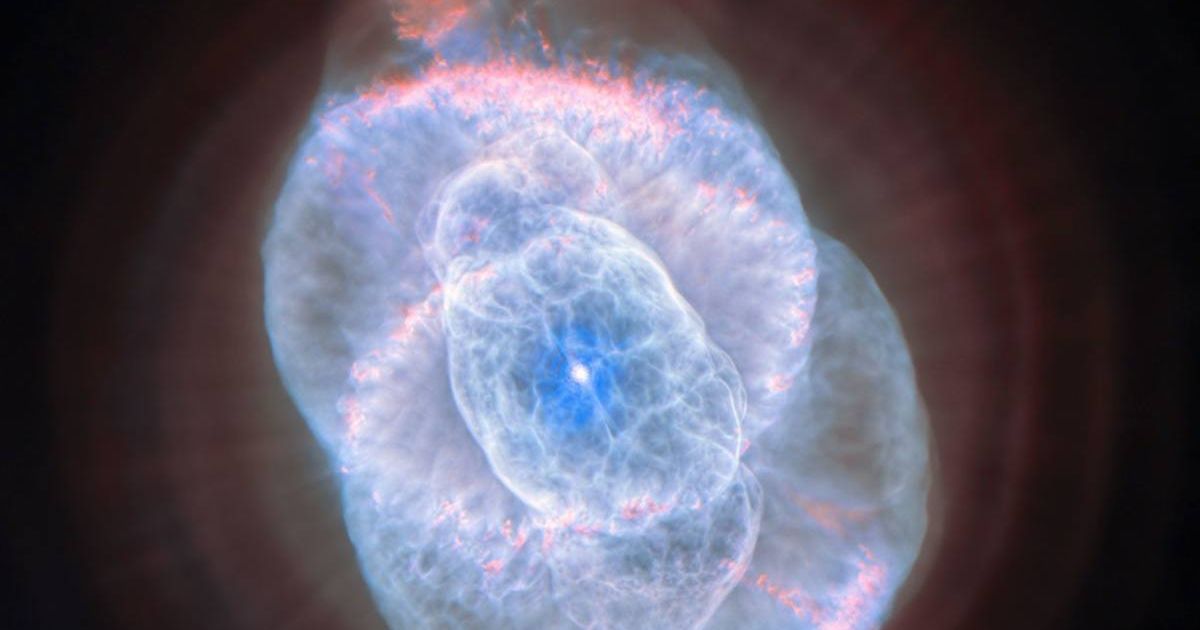
NASA has released the latest images of the Cat's Eye Nebula (NGC 6543) captured by the NASA/ESA Hubble Space Telescope and the ESA’s Euclid Space Telescope. The images reveal the complexities of the planetary nebula, which the ESA's Gaia mission places 4,400 light-years away in the constellation Draco, in exquisite detail.
Despite their name, planetary nebulae have nothing to do with planets. They are called so because they appeared spherical when they were viewed through early telescopes. In fact, they represent one of the dying stages of Sun-like stars. It is to the expanding cloud of gas given off by these stars that the structures owe their planet-like shape. This was revealed when the Cat's Eye Nebula, discovered in 1864, had its spectrum analyzed. The examination showed emissions from individual molecules typical of gas, hence distinguishing planetary nebulae from stars and galaxies.
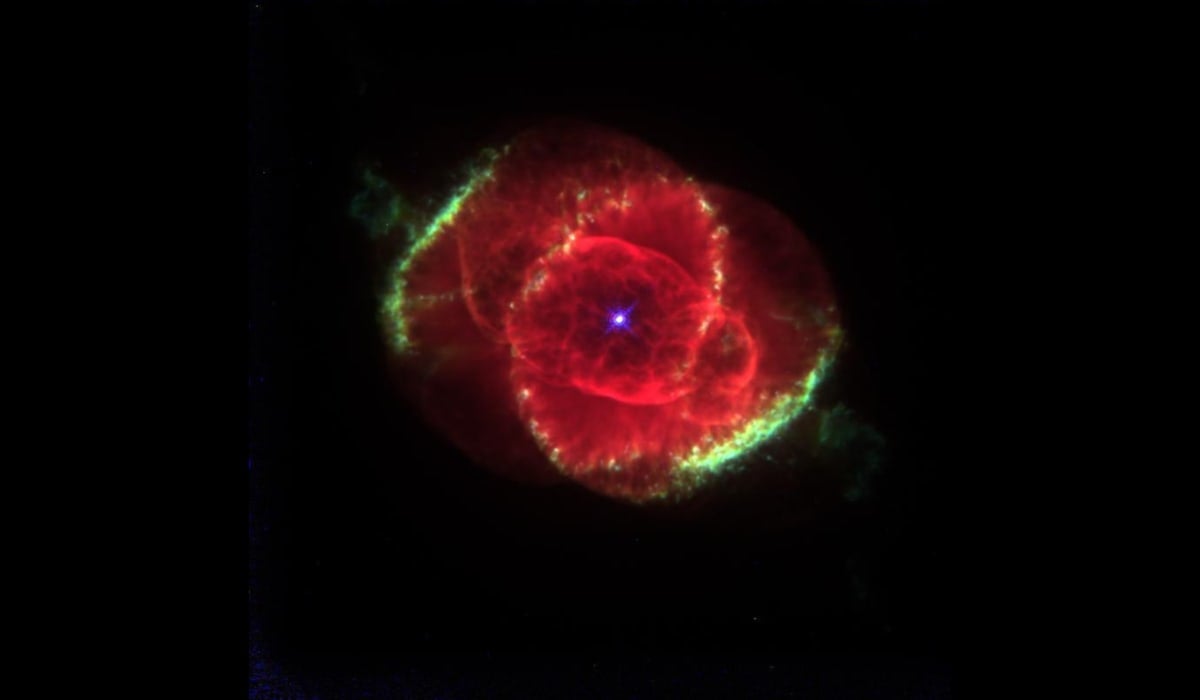
The Hubble Space Telescope, hailed as one of NASA’s most transformative observatories uncovering mysteries about the universe since 1990, has also revolutionized our conception of planetary nebulae, revealing the hidden complexities of their composition. This isn't the first time Hubble has imaged the Cat's Eye Nebula either. The Hubble images of the nebula released in 1995, in fact, brought never-before-seen intricacies of the structure into light, giving scientists a deeper understanding of how planetary nebulae are born.

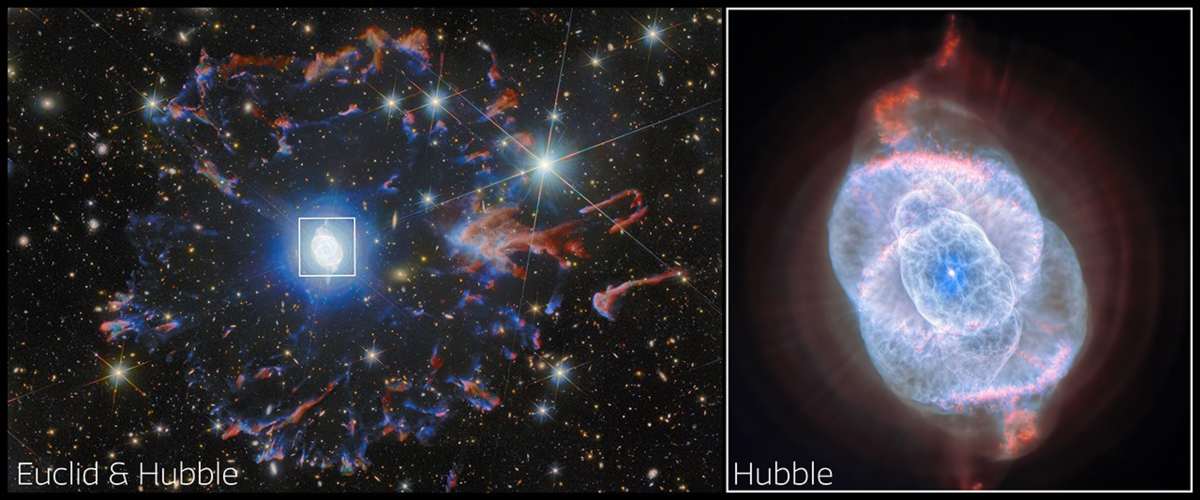
The latest image taken by Hubble is no less impressive. In the new high-resolution visible-light image, Hubble has captured the core of the billowing gas. The data shows a pattern of concentric shells coupled with spurts of fast-moving gas and dense knots that have been shaped by shock waves. These structures are believed to record episodic mass loss from the dying star at the center, thus carrying with them remnants of the star's final days like a cosmic "fossil record."
The Euclid Telescope, which is primarily designed to map the distant universe, managed to capture even the surroundings of the nebula. The nebula shines like a small, colorful dot in the center, while the backdrop glimmers with the light of faraway galaxies. Part of its deep imaging surveys, Euclid’s wide and near-infrared light and visible light view shows the arcs and filaments constituting the central region, situated within a radiating ring of colorful gas blowing away from the star, which was ejected at an earlier stage in the star’s evolution preceding the formation of the nebula's core.
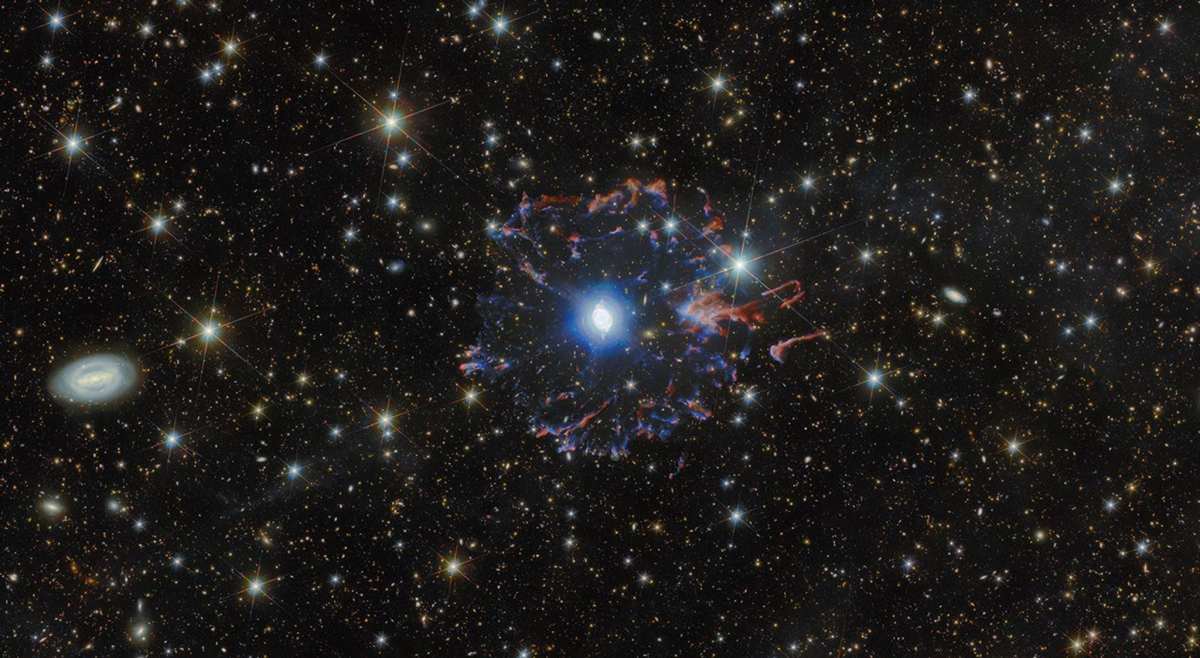
These latest pictures of this cosmic eye enlighten us with a deeper understanding of the nebula’s structure and its formation process. It gives us a clear glimpse of the final stages of a dying star and the sheer beauty this phenomenon holds. The combined power of Hubble and Euclid’s deep field vision has enabled us to place these astronomical entities in the broader context of the universe. And it goes without saying that more such images will be taken by the two observatories and others that represent the endless curiosity of our civilization.
More on Starlust
NASA's Hubble Space Telescope detects a faint galaxy that is almost entirely dark matter
Researchers discover the most compact 3+1-type quadruple star system till date