Comet C/2026 A1 (MAPS) is plunging directly toward the Sun—current location and trajectory
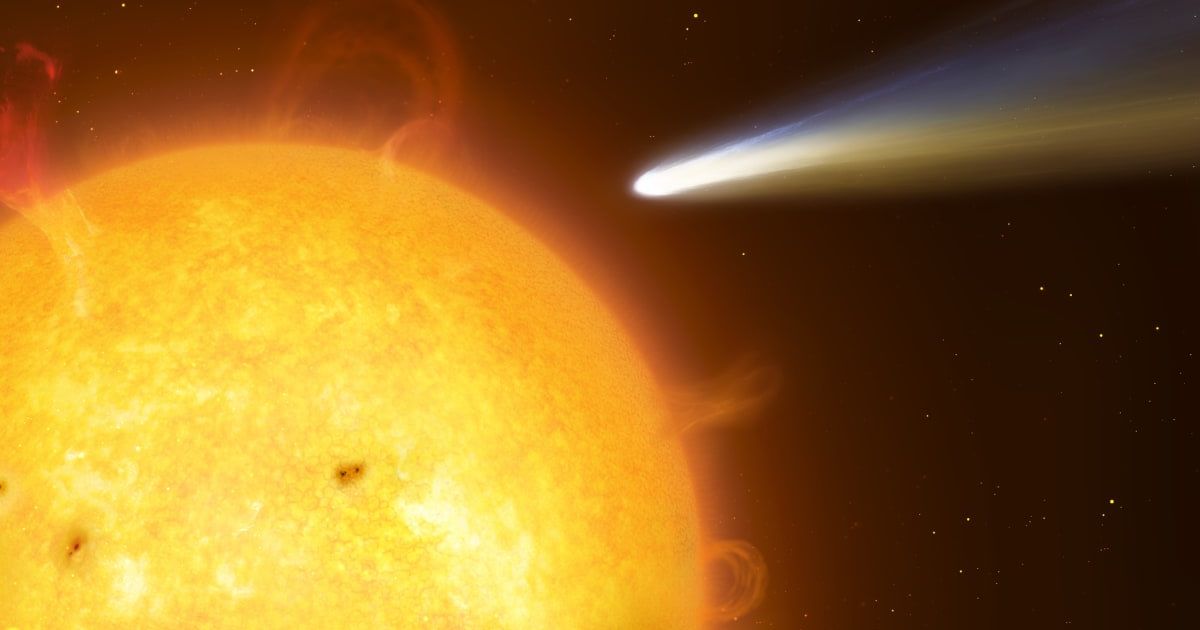
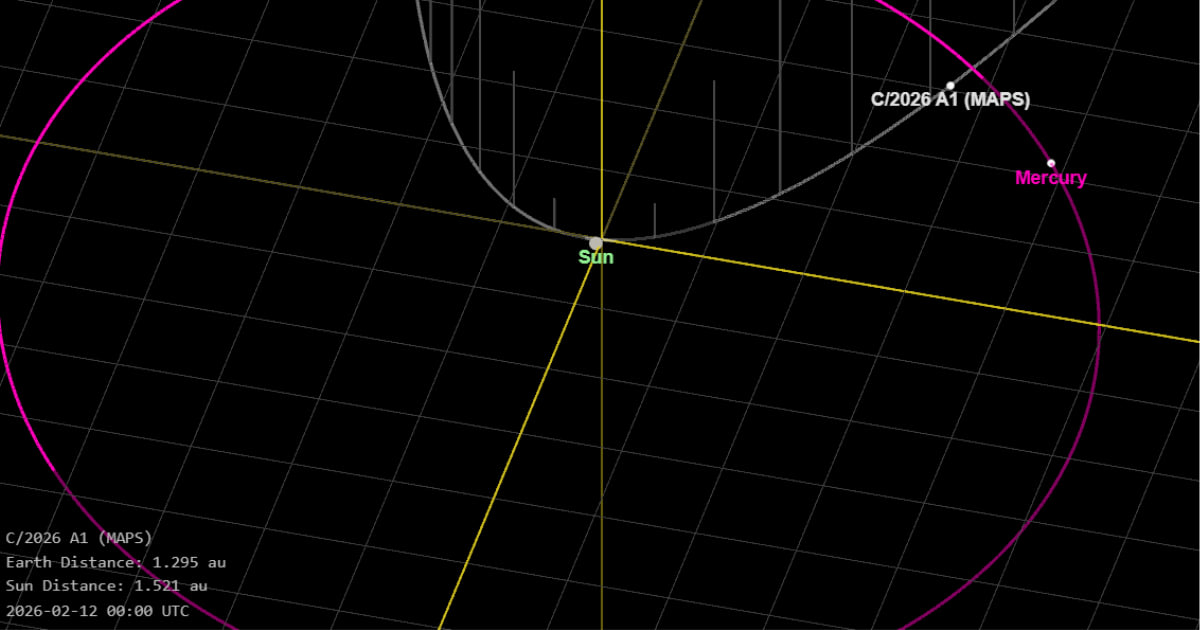
A newly discovered comet, C/2026 A1 (MAPS), is currently plunging toward the center of our solar system on a path that will bring it incredibly close to the Sun this April. First spotted in mid-January, the comet is a member of the Kreutz sungrazer family. The name was given to a group of comets known for passing extremely close to the solar surface. As of February 12, 2026, according to TheSkyLive, the comet is located in the constellation Fornax, positioned roughly 119 million miles (193 million km) from Earth. As far as its apparent coordinates are concerned, it is at a Right Ascension of 03h 31m 41s and a Declination of -24° 58’ 21”. Its fiery encounter with the Sun could either destroy it or create a breathtaking display in our skies, perhaps even during the day. As it gets closer, astronomers are also expected to provide better estimates of what its eventual fate will be.

Comet C/2026 A1 (MAPS)’s current path has put it on course for its perihelion (closest approach to the Sun) on April 4, 2026. Its trajectory resembles an extremely eccentric ellipse, with its aphelion (furthest point from the Sun) being over 20 billion miles (33 billion km). Per SkyLive, during perihelion, the comet will come within 508,591 miles (818,499 km) of the Sun. This is an incredibly narrow margin and will mean that the comet will have to endure extreme solar radiation that can vaporize solid rock and ice in a matter of seconds.
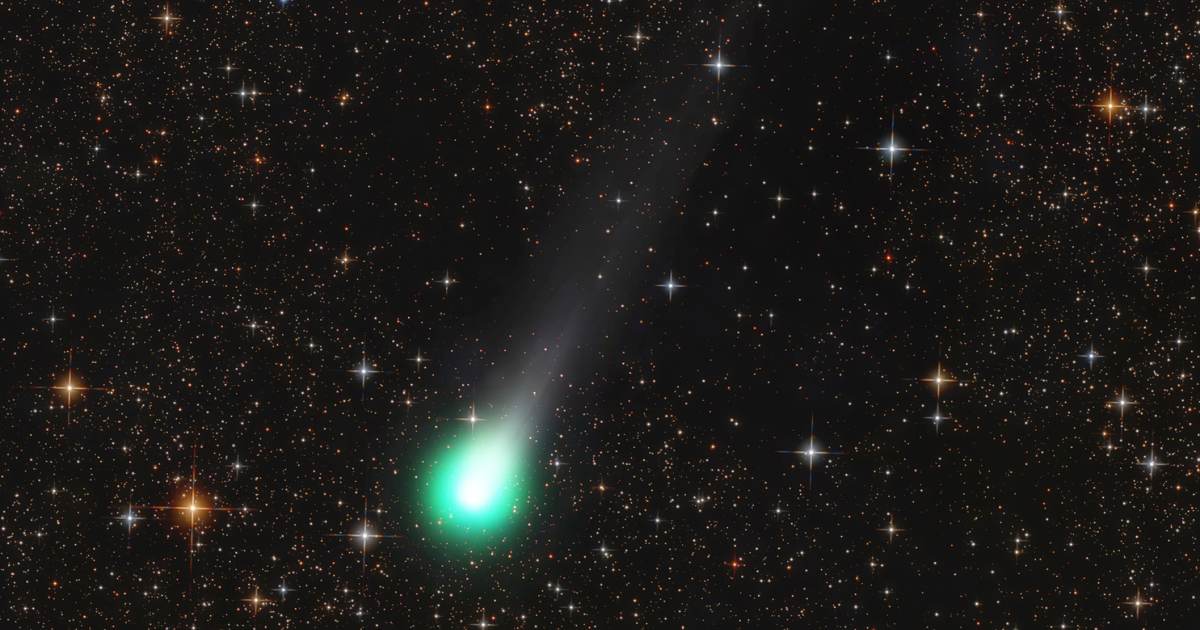
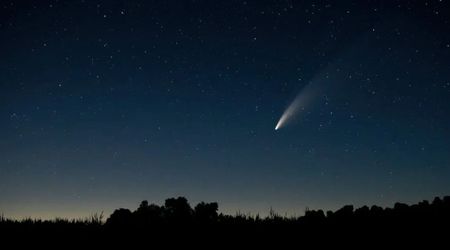
Comets are town-sized dirty snowballs, frozen chunks of ice, dust, and rock. As they near the Sun, solar wind and radiation make their matter glow around them in a formation called a coma. They also develop a tail that points away from the Sun. Short-period comets come back often, looping in under 200 years, while some may take just a few years or decades. Long-period ones take hundreds or thousands of years on much bigger paths. MAPS owes its name to the first letters of the last names of the four astronomers— Alain Maury, Georges Attard, Daniel Parrott, and Florian Signoret—who discovered it while it was still 191 million miles from the Sun, on January 13, 2026, in Chile.
This comet shares the spotlight with others like C/2025 R3 (PanSTARRS), which might turn out to be the brightest of 2026 with its own big show, and will also enter the solar system in April. Throughout ancient times, comets have been regular fixtures in the night sky without even being fully understood or acknowledged by terrestrial observers from back then, often being attributed to intervention from the gods. This is evidenced by reports of a comet being the heavenly body; it later came to be known as the Star of Bethlehem, and also found its mention in ancient Chinese texts.
More on Starlust
Comet 3I/ATLAS displays greenish hue in new Gemini North images
Astrophysicist explains how Mars Orbiters captured closest view of interstellar comet 3I/ATLAS