Astronomers find the ‘missing’ 40 percent of the universe's matter in hot ‘fogs’ between galaxies
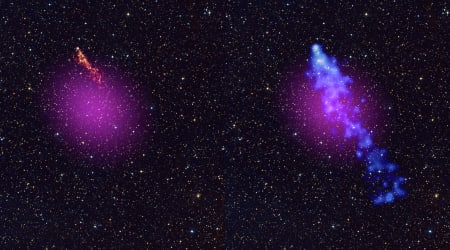
The European Space Agency’s XMM-Newton and JAXA’s Suzaku X-ray space telescopes made a significant discovery. More than one-third of the universe's 'normal' matter is missing, affecting the working models of the cosmos. According to the European Space Agency, the elusive matter that makes up stars, galaxies, planets, etc., might be present in long strings of gas, or filaments, that connect the densest pockets of space. Though these filaments were spotted before, their characteristics were not known, as they were faint and difficult to isolate for study.
The light of these filaments could not be differentiated from galaxies, black holes, and other objects nearby. The new research, however, managed to accurately characterize a single filament of hot gas between four galaxy clusters in the universe. “For the first time, our results closely match what we see in our leading model of the cosmos, something that’s not happened before,” stated lead researcher Konstantinos Migkas of Leiden Observatory in the Netherlands. “It seems that the simulations were right all along,” they added about the results of the study.
“The models were right”: astronomers 👨🚀 find ‘missing’ matter.😯
— Amazing Science (@Sweet_soul6623) June 20, 2025
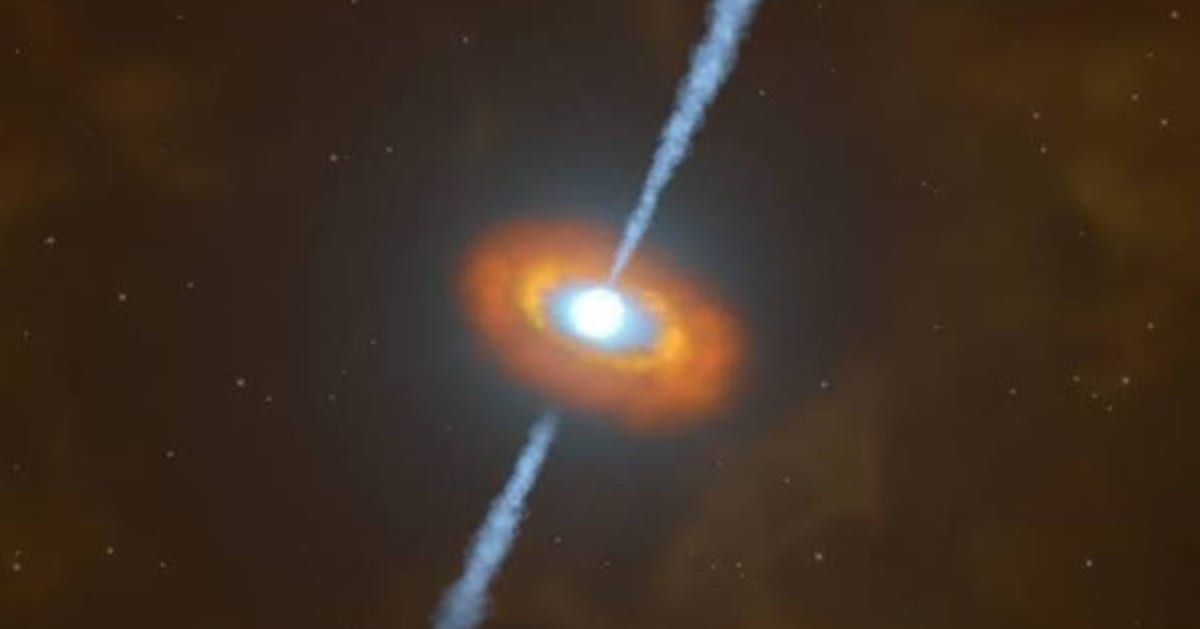
Astronomers have discovered a huge filament of hot gas bridging four galaxy clusters. At 10 times as massive as our #galaxy, the thread could contain some of the Universe’s ‘missing’ matter. #Space
Image : ESA pic.twitter.com/HO0Ri6WxLe
The team utilized brief, bright radio flashes in the distant cosmos, known as fast radio bursts (FRBs), to illuminate the matter between the FRBs and our planet. The FRBs shine through the gaseous fog of the intergalactic medium, which astronomers measured. According to Caltech, the team measured how light slowed down, claiming that these precise calculations can help them weigh the fog irrespective of how faint it may be. The study notes a total of 69 FRBs located at distances between 11.74 million to about 9.1 billion light-years away, with the latter, FRB 20230521B, being the most distant FRB recorded.
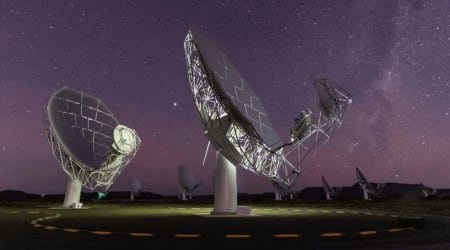
Localized FRBs were required for the study, but only a hundred of the more than a thousand detected could be traced back to their host galaxies. From a total of 69 localized FRBs, 39 were found using the DSA (Deep Synoptic Array)-110, a National Science Foundation (NSF)-funded network of 110 radio telescopes, at Caltech's Owen Valley Radio Observatory (OVRO). The radio array was particularly designed to detect and localize FRBs, while instruments at Hawaii's W. M. Keck Observatory and the Palomar Observatory near San Diego discerned their distance.
The other 30 FRBs in the study were found by telescopes across the globe, mainly the Australian Square Kilometre Array Pathfinder. The missing matter was detected from the radio-frequency light that traveled from the FRBs to Earth. This light spread out in different wavelengths, with the degree of dispersion depending on the amount of matter in the path of the light. "It's like we're seeing the shadow of all the baryons, with FRBs as the backlight," stated Vikram Ravi, assistant professor of astronomy at Caltech, explaining how it was like collecting data from a shadow.
The study that used FRBs to find the missing matter was published in the journal Nature Astronomy. These findings might help better understand the growth of galaxies and also show how FRBs can aid with cosmological problems. This includes determining the weight of subatomic particles, known as neutrinos, from the degree of clustering in baryons. To know the precise mass of neutrinos that were thought to have no mass might lead to a study beyond the standard model of particle physics. The team considers these results to be only the beginning of FRB usage in cosmological studies, with Caltech already planning to build on this mission soon.