Astronomers find molecules vital for life in a nearby star-forming cloud
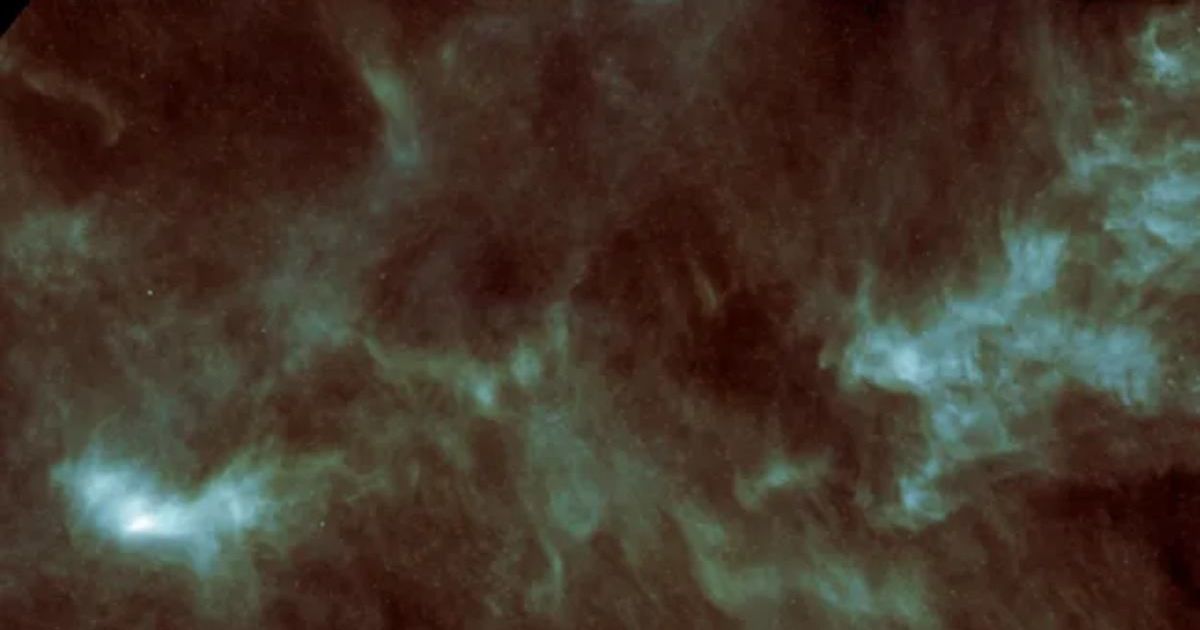
A dust and gas cloud is cooking up methanimine, a key organic molecule that plays a vital role in the formation of amino acids, the building blocks of proteins. A team of astronomers, led by Yuxin Lin, detected the molecule in the cloud named L1544, which lies 554 light-years away in the Taurus Molecular Cloud and will ultimately become a star with a system of planets around it. The findings have been reported in a paper published in the Astrophysical Journal Letters.
![Sharpless 2-106, a bipolar star-forming region, captured by NASA's Hubble Space Telescope. [Representative Image Source: NASA, ESA, Hubble Heritage Team (STScI/ AURA)]](https://de40cj7fpezr7.cloudfront.net/c598131b-4eba-4fd0-b855-bda1924aa1a2.jpg)
"CH₂NH [methanimine] is the simplest interstellar imine and a key nitrogen-bearing organic molecule that serves as a building block for more complex prebiotic species," the researchers note in their paper. It has been detected in a host of different places, including hot massive cores of newborn stars and interstellar ice. "The detection of CH₂NH in a variety of astrophysical environments highlights its relevance to prebiotic chemistry," the paper explains.
![A view of one of the most dynamic and intricately detailed star-forming regions in space, located 210,000 light-years away in the Small Magellanic Cloud. [Representative Image Source: NASA, ESA and A. Nota (STScI/ESA)]](https://de40cj7fpezr7.cloudfront.net/01f0f626-5a4e-41d6-b8ed-6a85937fbc73.png)
The Taurus Molecular Cloud, where L1544 is located, has numerous dense clumps of gas and dust that are collapsing under their own gravity to birth new stars with masses thousands of times that of our Sun. L1544, however, is in a comparatively quieter phase, with its material slowly falling into the dense, cold center from the warmer outer edges. It is in these outer edges that the concentration of methanimine seems to be the highest. Thus, as material from the outer edges falls into the pre-stellar core, it distributes the methanimine across the cold stellar core. It is, in fact, quite likely that this process will go on till the collapse takes place, and whatever remains on the outer edges at that point in time will constitute a planetary disk around a newborn star.

When the disk eventually births planets, it is likely that many of them will come seeded with the building blocks of amino acids. Moreover, in the scenario that any of them turn out to be habitable, the molecules could lead to the development of life. "This demonstrates that key prebiotic nitrogen and carbon chemistry remains active even in the cold, quiescent phase preceding collapse, ensuring that organic precursors such as CH₂N₂ can be inherited by the next generation of forming stars and planets," Lin and his colleagues conclude.
More on Starlust
Astronomers have discovered a unique planetary system where planets are arranged 'inside out'
Scientists find new way to spot life beyond Earth using clouds on distant exoplanets