Are materials from 3I/ATLAS on their way towards Earth? Avi Loeb shares his thoughts
The astronomer looked into the possibility of materials from 3I/ATLAS hitting Earth following the comet's closest approach.
UPDATED 1 HOUR AGO
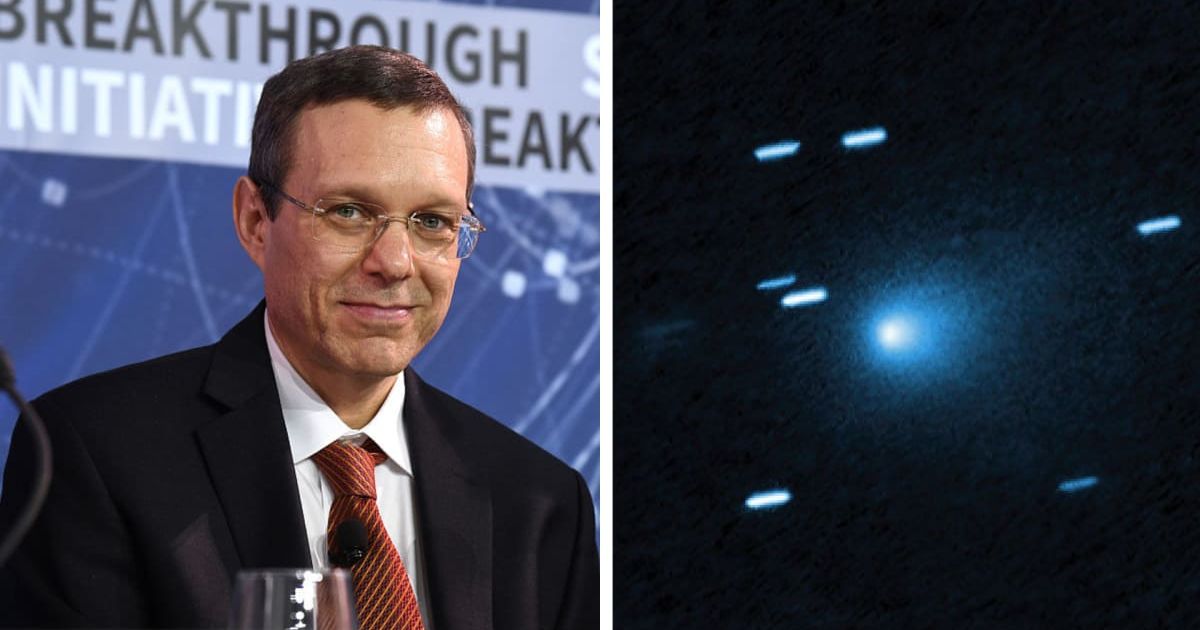
Harvard Astronomer Avi Loeb (L) Hubble captured the interstellar comet 3I/ATLAS (R) (Representative Cover Image Source: Getty Images (L), NASA (R) | Photo by Bryan Bedder (L), Hubble Space Telescope (R))

While 3I/ATLAS did make its closest approach to Earth on December 19, 2025, it was still around 167 million miles away at the time. That's about twice the average distance between Earth and the Sun. But in case you are still wondering if it was close enough to send some of its material our way, Harvard astronomer Avi Loeb has got you covered. He doesn't think it's a real possibility. And we might want to thank your stars that it's not. 
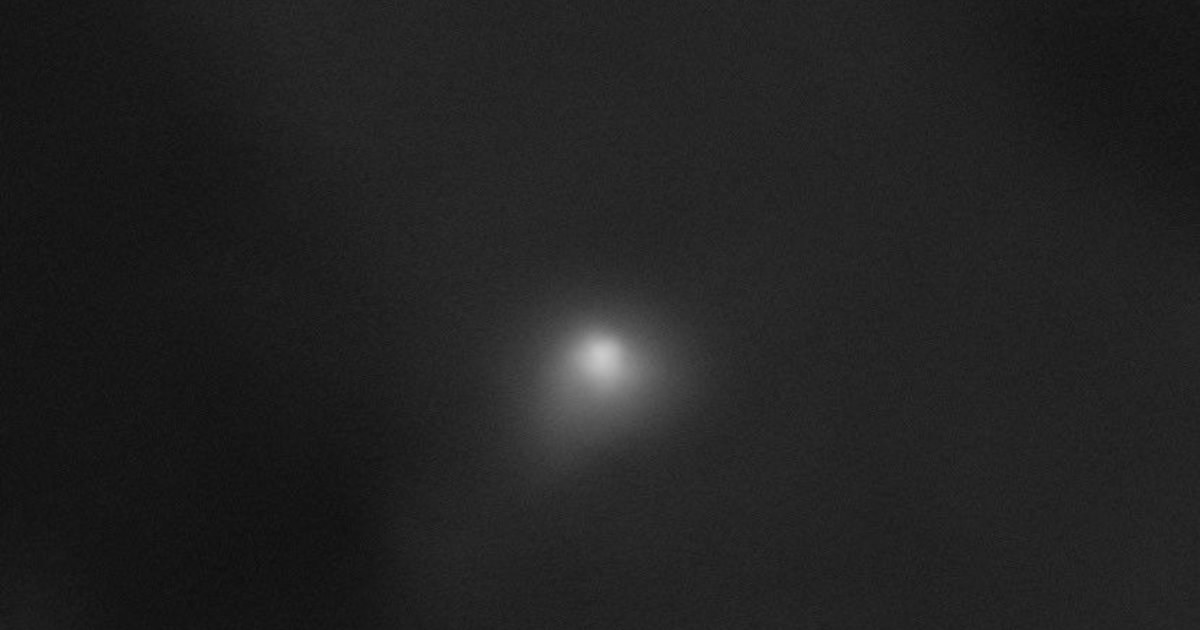
The High Resolution Imaging Science Experiment (HiRISE) camera aboard NASA’s Mars Reconnaissance Orbiter captured this image of interstellar comet 3I/ATLAS on Oct. 2, 2025. At the time it was imaged, the comet was about 0.2 astronomical units (19 million miles, or 30 million kilometers) from the spacecraft. (Image Credit: NASA/JPL-Caltech/University of Arizona)
The High Resolution Imaging Science Experiment (HiRISE) camera aboard NASA’s Mars Reconnaissance Orbiter captured this image of interstellar comet 3I/ATLAS. (Image Credit: NASA/JPL-Caltech/University of Arizona)

That's because the gas plume that surrounds 3I/ATLAS contains cyanide and hydrogen cyanide, which, as Loeb reminded in his blog on Medium, was used as a chemical weapon during World War I. However, Loeb claims that the mass loss rate measured by the James Webb Telescope (reported in the study here) indicates that the gas would be swept away by the solar wind within just a few million kilometers of the comet. 
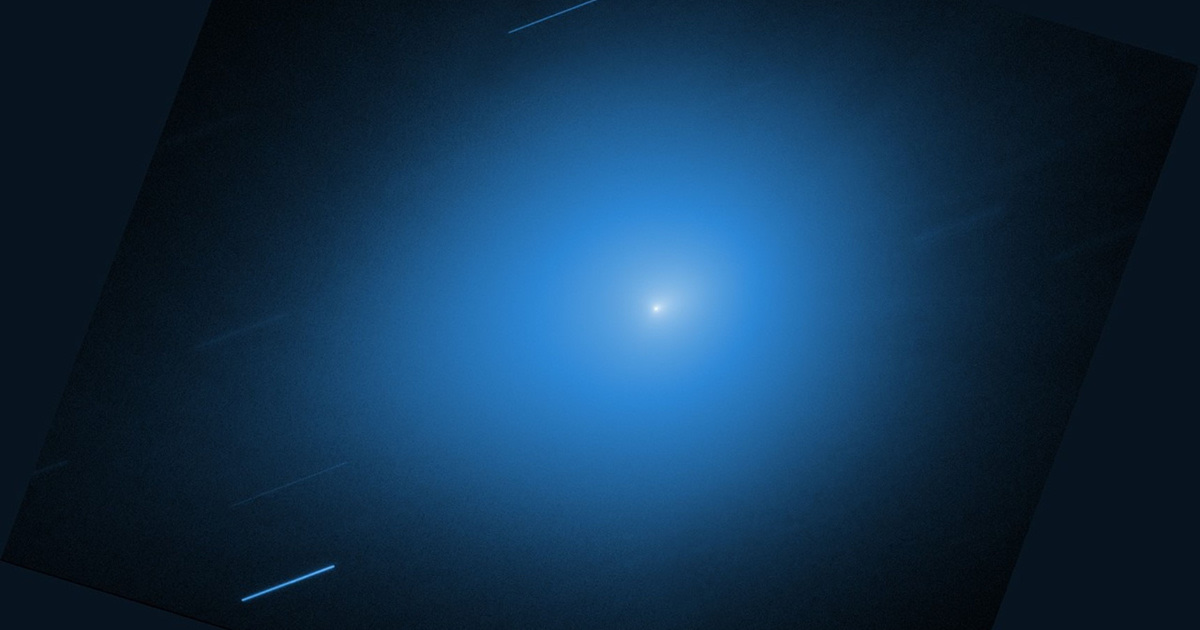
Hubble Space Telescope reobserved 3I/ATLAS on November 30, with its Wide Field Camera 3 instrument. (Cover Image Source: NASA, ESA, STScI, D. Jewitt (UCLA), M.-T. Hui (Shanghai Astronomical Observatory)
Hubble Space Telescope reobserved 3I/ATLAS on November 30, with its Wide Field Camera 3 instrument. (Image Source: NASA, ESA, STScI, D. Jewitt (UCLA), M.-T. Hui (Shanghai Astronomical Observatory)

Loeb said that dust particles smaller than a micrometer would be swept by the solar radiation pressure much faster than by the solar wind. The solar wind, however, would not affect solid particles or objects bigger than a millimeter. That's because their smaller cross-section per unit mass allows them to continue on their path without too much interference from the solar wind. That being said, despite the failure of solar winds, these particles will burn up in the Earth’s atmosphere before hitting the ground. Then again, Loeb highlighted that this was only possible if the material shed was “much smaller than a meter.”
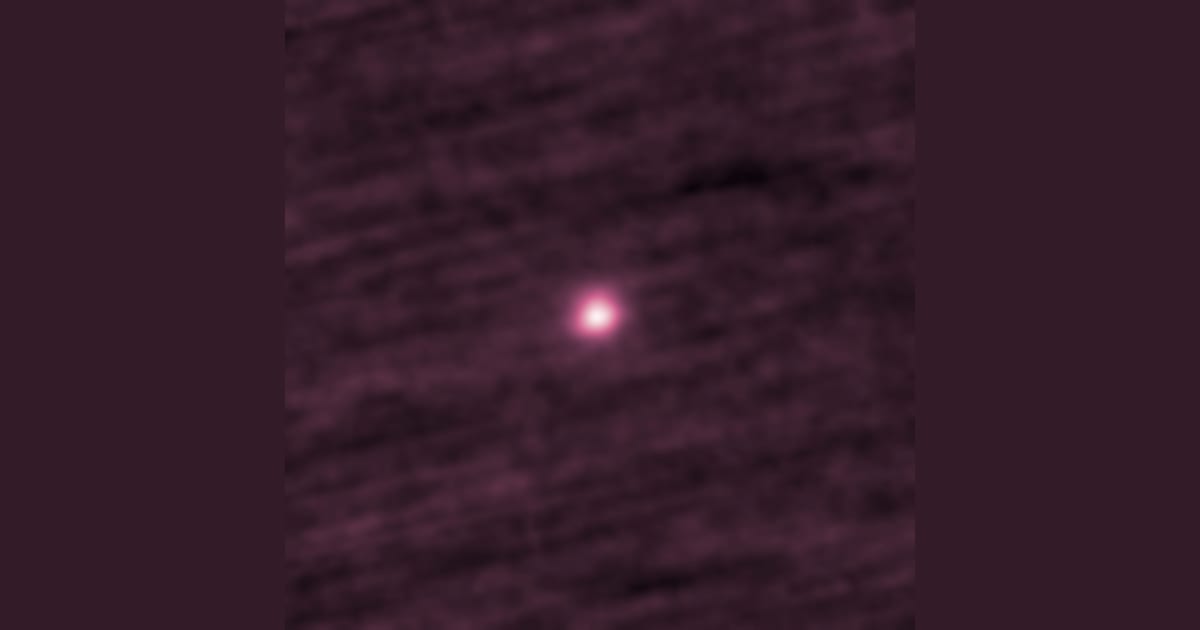
This image shows the 3I/ATLAS interstellar comet as a bright, fuzzy orb in the center. Traveling through our solar system at a staggering 130,000 miles (209,000 kilometers) per hour (Image Source: NASA/Lowell Observatory/Qicheng Zhang)
This image shows the 3I/ATLAS interstellar comet as a bright, fuzzy orb in the center. (Image Source: NASA / Lowell Observatory / Qicheng Zhang)

While 3I/ATLAS might have also released objects bigger than a meter, Loeb thinks there is a negligible chance that any of them would hit Earth. That's because the mass loss rate of the comet suggests that there are fewer than a million such objects, which is too low to cause any alarm or interest. On top of that, the fact that they originated at a distance larger than that between Earth and the Sun means that they wouldn't get any closer than ten times the Earth's radius.
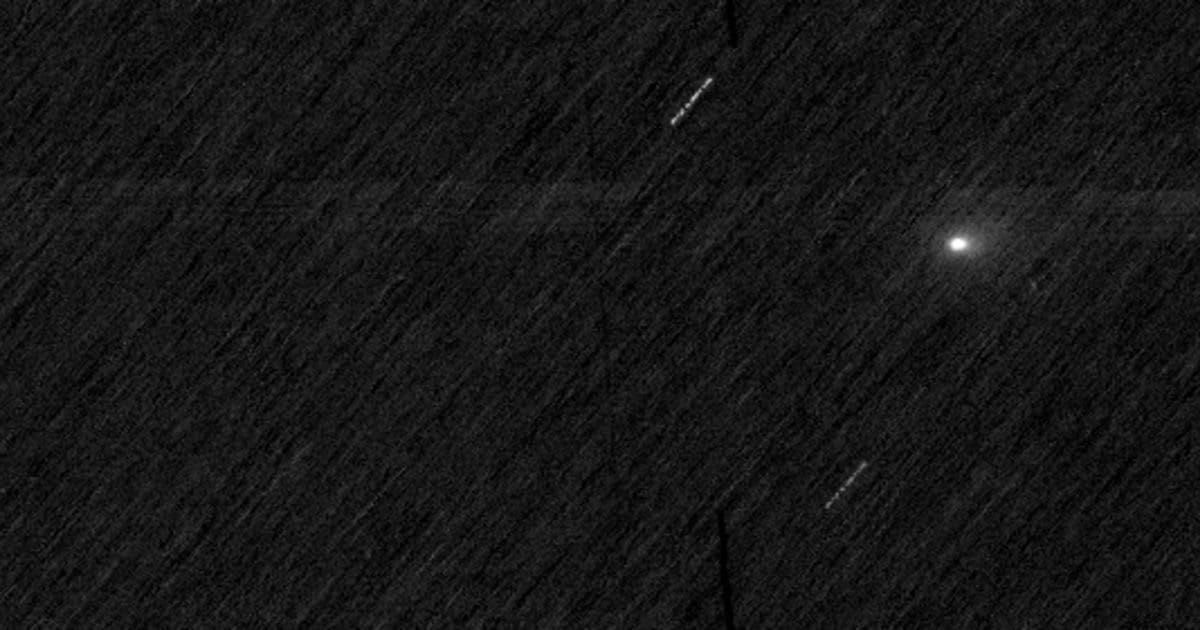
Hubble captured this image of the interstellar comet 3I/ATLAS on July 21, 2025 (Image Source: NASA/ESA | David Jewitt)
Hubble captured this image of the interstellar comet 3I/ATLAS on July 21, 2025 (Image Source: NASA/ESA | Photo by David Jewitt)

“This, of course, is under the assumption that the released objects cannot maneuver by technological propulsion,” Loeb warned at the end, referring to his controversial argument that there is a chance, no matter how small, that 3I/ATLAS could be a technological object—a position that drew considerable flak from the scientific community.
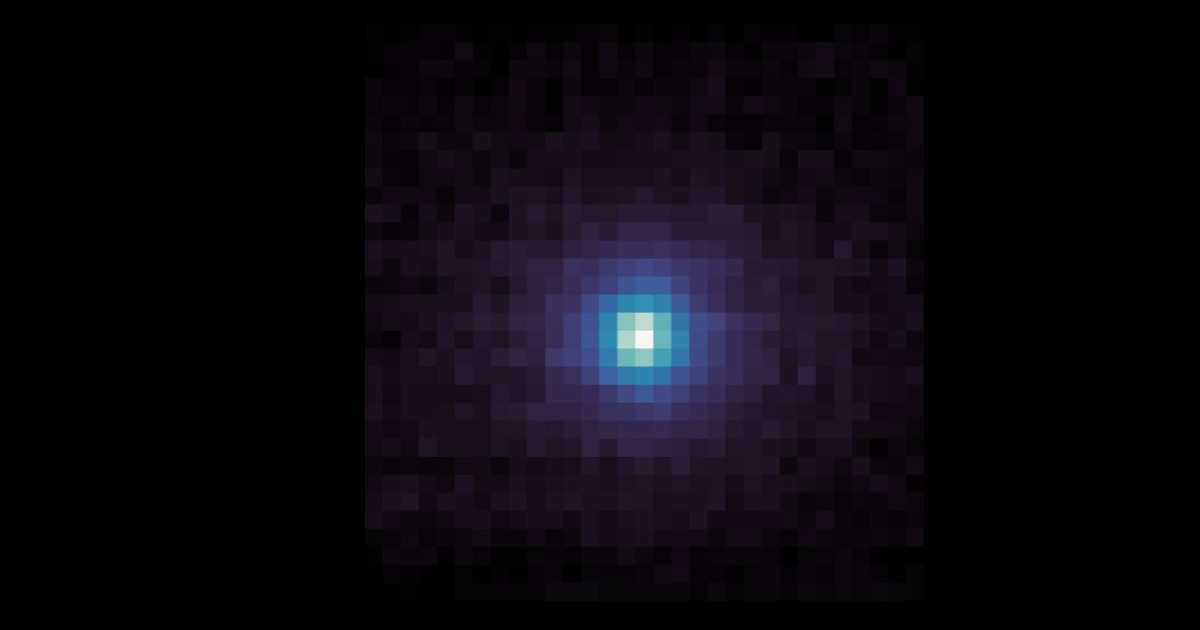
This image, taken by the MAVEN spacecraft on Oct. 9, shows the halo of gas and dust, or coma, surrounding comet 3I/ATLAS. (Image Credit: NASA/Goddard/LASP/CU Boulder)

However, despite flagging certain anomalies in the interstellar comet to support the “alien technology” theory, Loeb’s final stand is clear. He wrote in his blog that he always stood with the theory that “3I/ATLAS is most likely a natural object.” He disapproved of the media reporting his stand as “news,” likely because his constant association with the alien theory drowned out his position. He clarified that his view was to always be open to the technological aspect of the object and not to discard the possibility entirely, all of which influenced his “Loeb scale.”

More on Starlust

Harvard astronomer Avi Loeb criticizes NASA’s big 3I/ATLAS reveal: 'Boring messages'
Harvard's Avi Loeb says 3I/ATLAS may be more than a typical 'icy rock' after surviving perihelion as a single body

MORE STORIES

NASA scientists have finally pinpointed the source of mysterious radiation from a supermassive black hole, solving a puzzle that has lasted for years.
6 days ago
Webb uncovers evidence of giant primordial stars that may explain how early black holes formed less than a billion years after the Big Bang.
7 days ago
Smaller black holes tend to attract less material, making them naturally dimmer. Chandra would miss many of these faint objects.
Dec 15, 2025
The data suggest this small, super-hot world is shrouded in a thick layer of gas, likely hovering above a planet-wide ocean of magma.
Dec 13, 2025
The region around black holes was not thought to be conducive to star formation, yet research proved otherwise.
Dec 12, 2025
The discovery, validated by a separate European team led by the University of Exeter, may offer fresh insight into interactions between planets and binary star systems.
Dec 12, 2025
During its 1986 observation of the planet in the first and only flyby, the spacecraft measured a surprisingly strong electron radiation belt.
Dec 11, 2025
Previously, the most ancient supernova ever confirmed dated back to when the universe was 1.8 billion years old.
Dec 10, 2025
NASA's Fermi telescope was the first to identify the highly unusual cosmic explosion.
Dec 10, 2025