A nearby brown dwarf pair could give birth to a new star: Here's how
![An artist's illustration of the tight-knit pair of brown dwarfs, named ZTF J1239+8347. [Representative Cover Image Source: Caltech/R. Hurt (IPAC)]](https://d3hedi16gruj5j.cloudfront.net/796510/uploads/5d9358b0-275f-11f1-93fd-1f1a17d6a2d9_1200_630.jpeg)
For the longest time, in the stellar community, brown dwarfs have been infamously dubbed as ‘failed stars.' The title refers to their inability to sustain nuclear fusion in their cores—a key process that delineates a ‘main sequence' star, like our Sun. However, a recent study led by researchers at Caltech, published in The Astrophysical Journal Letters, has revealed that two such bodies can come close to each other and merge to form a bright new star, marking a first-of-its-kind discovery in the stellar arena. "The failed stars get a second chance," said Samuel Whitebook, a Caltech graduate student and lead author of the study, in a statement.
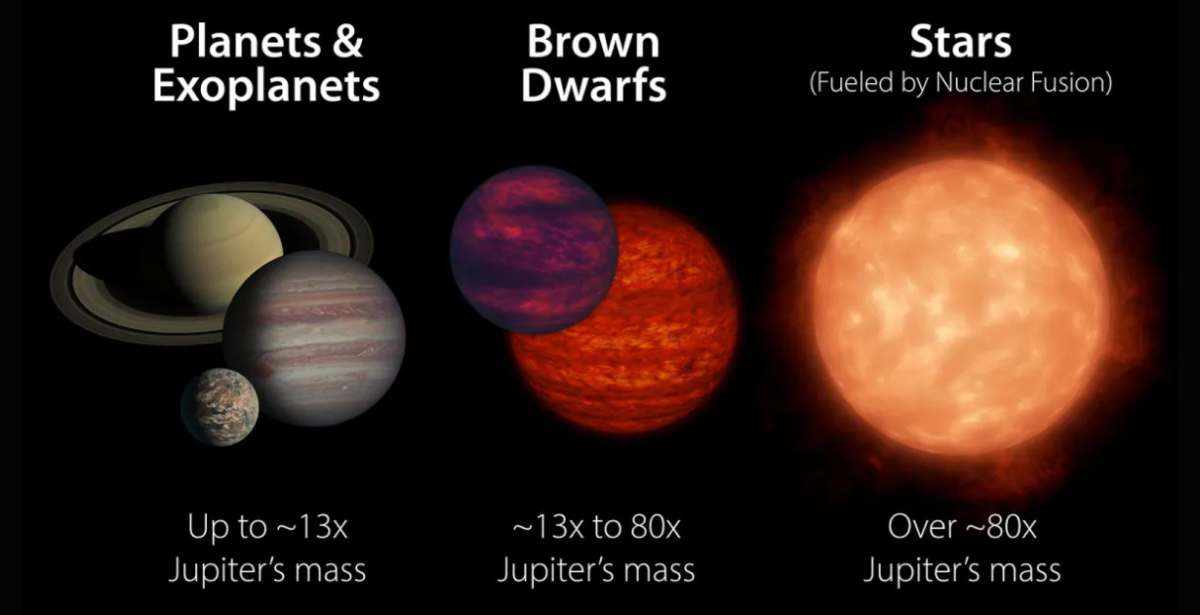
Brown dwarfs are cosmic entities that are 13 to 80 times heavier than Jupiter but lighter than a small star. As they aren’t massive enough to undergo fusion, they are much fainter and cooler than their fiery stellar counterparts. The recent study centers on the brown dwarf pair ZTF J1239+8347 (or ZTF J1239 for short) located 1,000 light-years away in the constellation Ursa Major. The objects are 60–80 times as massive as Jupiter and were found in the archival database known as ZVAR, or the ZTF (Zwicky Transient Facility) Variability Archive. What made ZTF J1239 stand out amidst the 2 billion objects in the database was the significant changes in its brightness every 57 minutes.
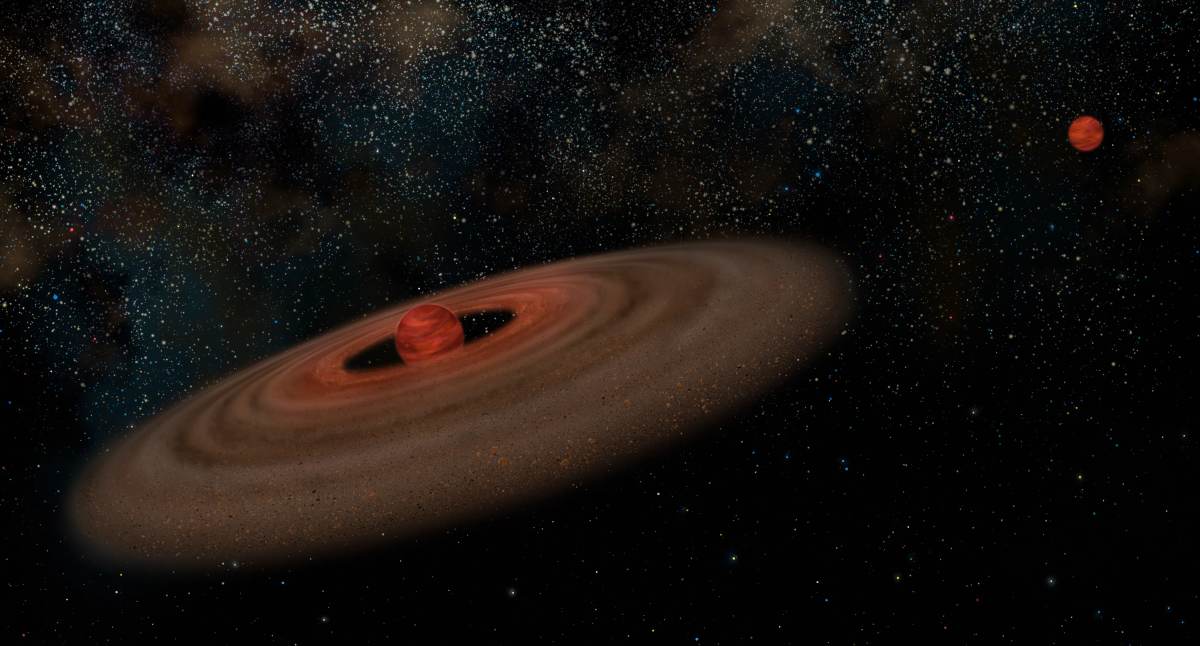
It turns out that one dwarf is actively funneling matter from the other into a fixed spot on itself, which is then heating up and glowing in blue and ultraviolet light. And it is the rotation of the fixed spot that is behind the periodic changes in brightness that the ZTF picked up. The scientists think that ultimately, the dwarf siphoning material from its companion will grow large enough to become a star. Either that, or both the brown dwarfs will fuse to form a star. "Brown dwarfs don't have internal engines like stars do, but this result shows they can exhibit very interesting dynamic physics," said Whitebook. This is a pioneering discovery, as the only similar mass transfer observed previously occurred between binary objects with far greater masses, like white dwarfs. "These are very exotic objects," said study co-author Tom Prince. "We've told some of our colleagues about them, and they didn't believe such a thing exists."
The researchers are unsure how these two brown dwarfs initially converged, but they believe that maybe the gravitational force from a third star pushed them closer together. Once they came together, one of the brown dwarfs expanded and became less dense due to the gravitational force of its partner. "When one star's gravity is overcome by the other's, matter starts flowing from the less dense star to the denser star," Whitebook explained. "It's like the matter sloughs off through a nozzle."
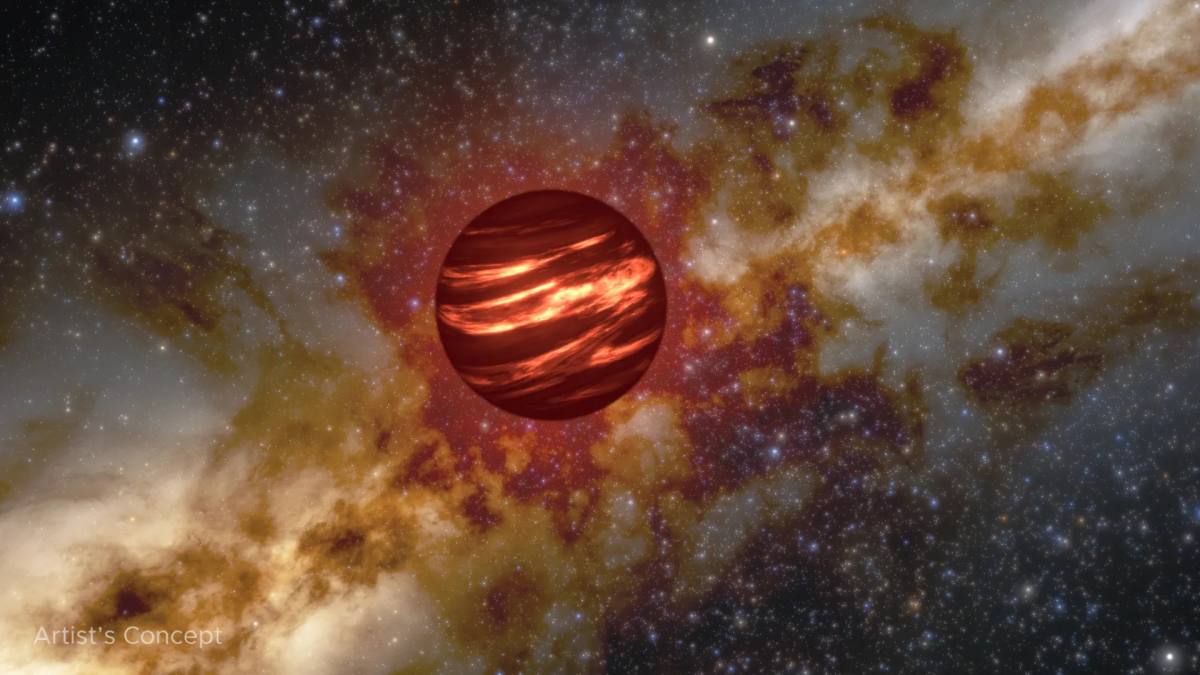
As this newfound pair was spotted quite close to Earth, the researchers think that more pairs like this await discovery. "We expect the Vera Rubin Observatory [a ground-based observatory in Chile] to detect dozens more of these objects," Whitebook added. "We want to find more to understand the population and how common it is. We predict this happens more than you think."
More on Starlust
Rotation may be the key factor separating giant planets from 'failed stars,' say scientists
A brown dwarf may have dimmed a star in what was one of the longest eclipses ever