A brown dwarf may have dimmed a star in what was one of the longest eclipses ever
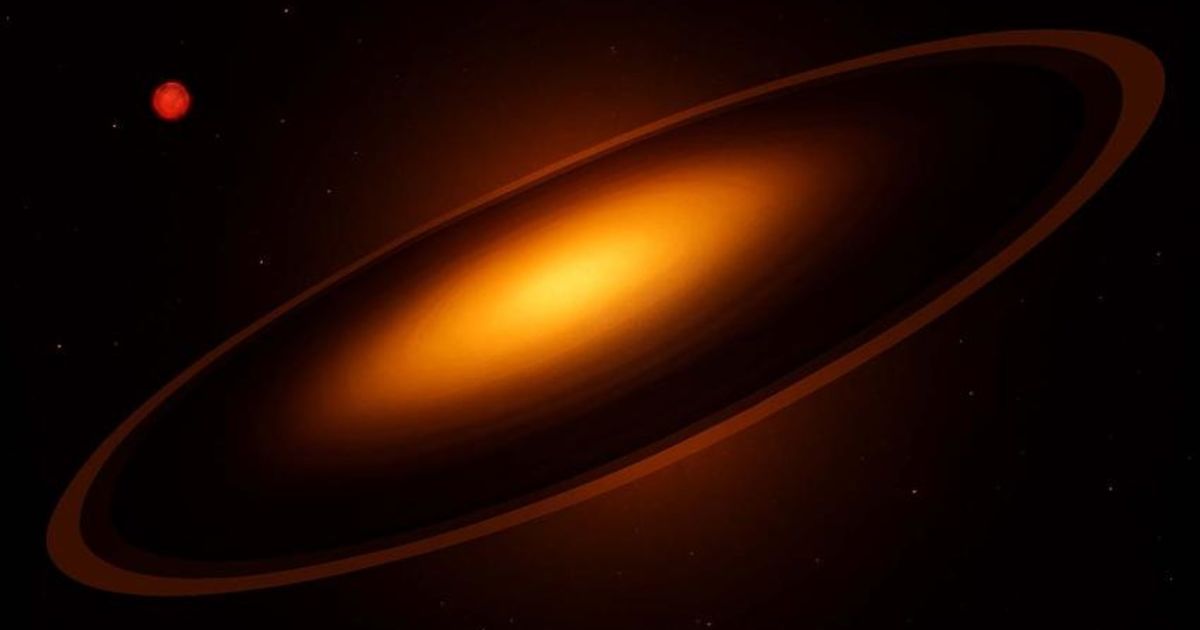
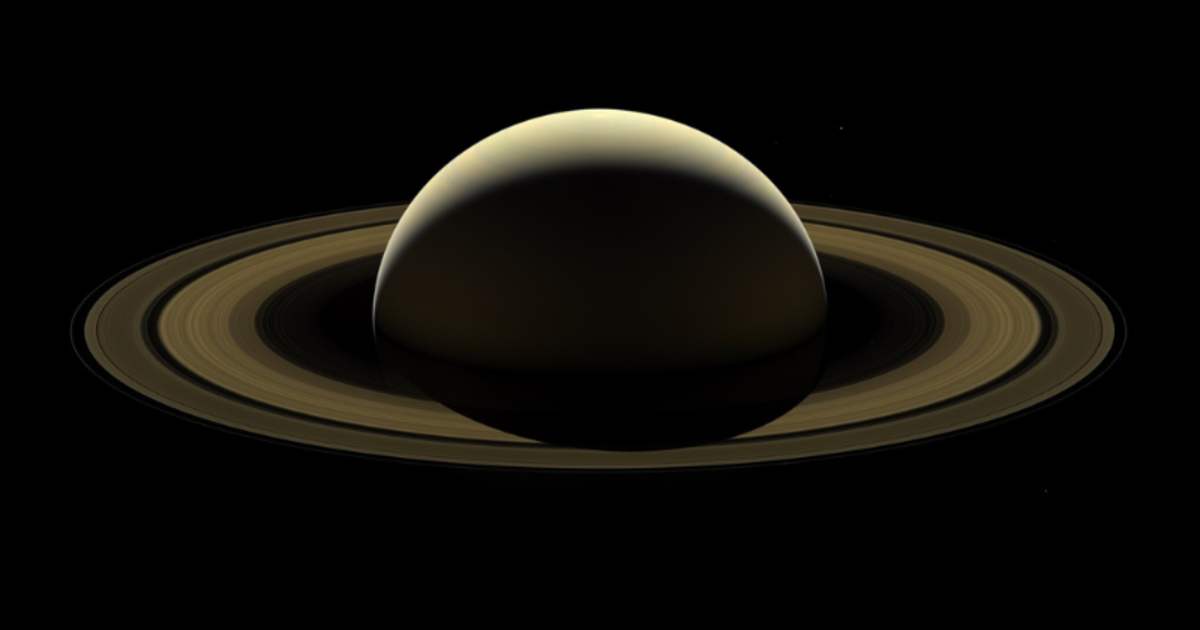
After twinkling in the sky for decades, a star named ASASSN-24fw lost its brightness rather dramatically in late 2024. The dimming event lingered for months, provoking astronomers across the globe to keep an eye on it. Now, a study published in the Monthly Notices of the Royal Astronomical Society suggests that the culprit that blocked the star's light could have been a brown dwarf—a celestial body too big to be considered a planet but too small to be a star. The astronomers think that the brown dwarf has Saturn-like rings, which allowed it to dim the star by 97 percent. The ring system, in fact, is so big that it is comparable to half the distance between the Sun and Mercury.
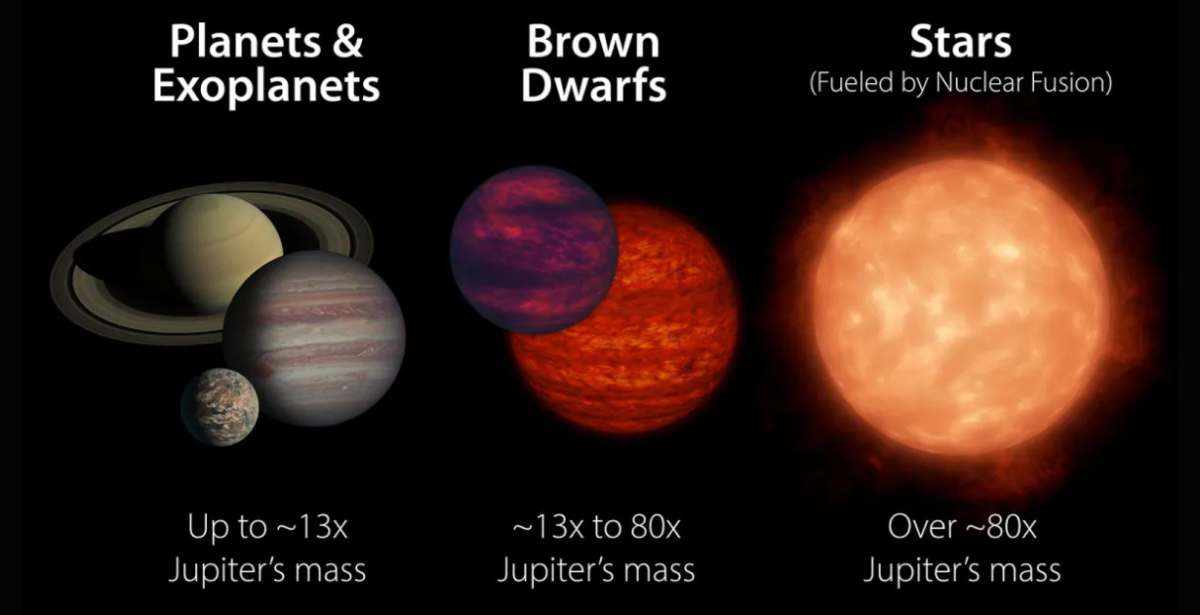
Located 3,200 light-years away from Earth, the star sits in the Monoceros constellation. Its dimming event is not new. Historical data reveal that light from the star had been eclipsed before in 1937 and 1982, suggesting a gap of 43.8 years. The latest one started in September 2024 with a drastic drop in brightness, and this loss stayed till the first week of October 2024 and then continued up to mid-May of 2025. Usual eclipses last for a few days or weeks. This one, which went on for around 200 days, stands as one of the longest eclipses ever observed. While the researchers suspect that a brown dwarf was responsible for it, they also say that it could have been a super-Jupiter instead. With masses way greater than Jupiter, these gas exoplanets bridge the gap between brown dwarfs and planets. Either way, the study shows that the body that caused the dimming has more than three times the mass of Jupiter.
"Various models made by our group show that the most likely explanation for the dimming is a brown dwarf—an object heavier than a planet but lighter than a star—surrounded by a vast and dense ring system. It is orbiting the star at a farther distance with the ring," said lead author Dr. Sarang Shah, a post-doctoral researcher at the Inter-University Centre for Astronomy and Astrophysics (IUCAA), in Pune, India, in a statement. "Long-lasting dimming events like this are exceptionally uncommon as they require very perfect line-ups. The dimming began gradually because the outer parts of the rings are thin, and only became obvious when the denser regions passed in front of the star."
The analysis by Shah and his colleagues shows that the star has a circumstellar environment (possible remnants from past planetary collisions) in its vicinity. This is very unusual for a star whose age is more than 1 billion years. “Large ring systems are expected around massive objects, but they are very difficult to observe directly to determine their characteristics," said study co-author Dr. Jonathan Marshall, a post-doctoral researcher affiliated with Academia Sinica in Taiwan. “This rare event allows us to study such a complex system in remarkable detail. In fact, while studying this dimming, we also serendipitously discovered that ASASSN-24fw also has a red dwarf star in its vicinity."
Next, Shah and his teammates want to better understand the motion, temperature, and chemical composition of the star and the disk that surrounds the star by observing them with the James Webb Space Telescope and the European Southern Observatory’s Very Large Telescope in Chile. They wait for the star to dim again in 43 years, giving them a unique opportunity to probe this fascinating system again.
More on Starlust
Massive gas giants in an alien star system may have formed the same way as Jupiter