39-year-old mystery about Uranus may have been solved by revisiting Voyager 2 data
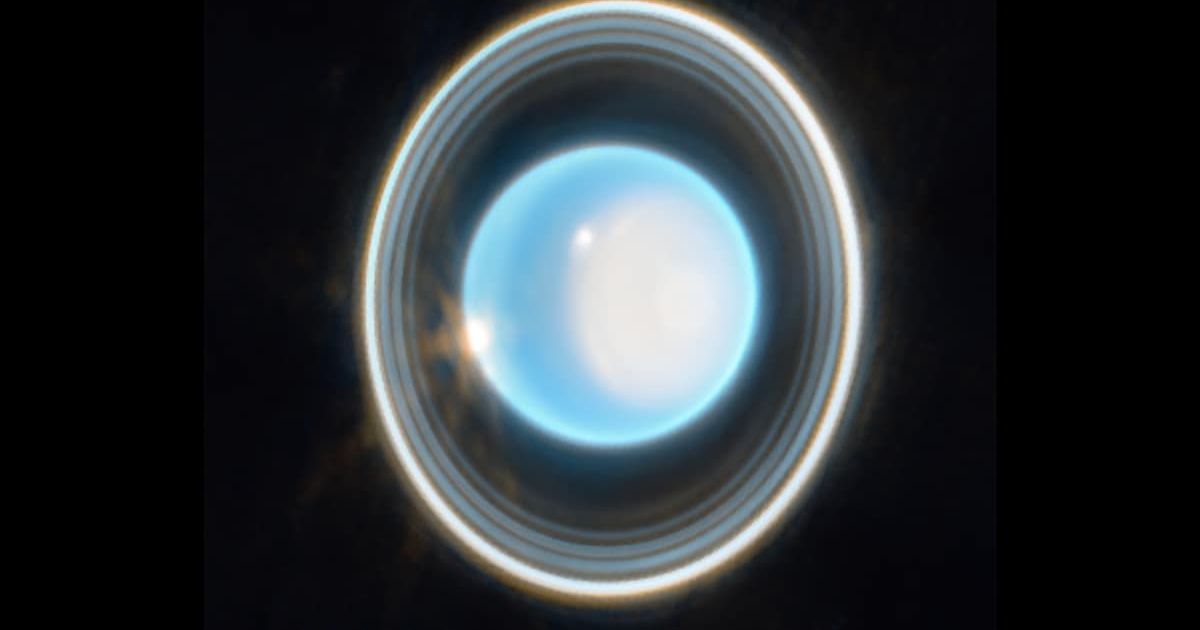
Scientists may have resolved a mystery about the radiation belts around Uranus by decoding the first and only flyby observations made by Voyager 2. The flyby that took place in 1986 noted that Uranus' radiation belt was much stronger compared to those belonging to other planetary systems. The research, now published in Geophysical Research Letters, looked into how this was possible. Turns out, Voyager 2 had captured the planet at a unique time, during an unusual gust of solar wind.
“We decided to take a comparative approach, looking at the Voyager 2 data and compare it to Earth observations we’ve made in the decades since,” said SwRI’s Dr. Robert Allen, who is also the lead author. According to Southwest Research Institute, the observations from Voyager 2 are similar to the processes triggered by large solar wind storms on Earth. A solar wind structure, known as a co-rotating interaction region, might have been passing through the Uranian system. This could explain the extreme energy levels recorded by the spacecraft.
According to the study, the Uranian system may have experienced a space weather event resulting in powerful high-frequency waves. Scientists thought in 1986 that these waves would scatter electrons from Uranus’s atmosphere. Since then, it has been found that the same waves under certain conditions can also accelerate electrons and add more energy into planetary systems. “In 2019, Earth experienced one of these events, which caused an immense amount of radiation belt electron acceleration,” said co-author Dr. Sarah Vines, also of SwRI. “If a similar mechanism interacted with the Uranian system, it would explain why Voyager 2 saw all this unexpected additional energy.”
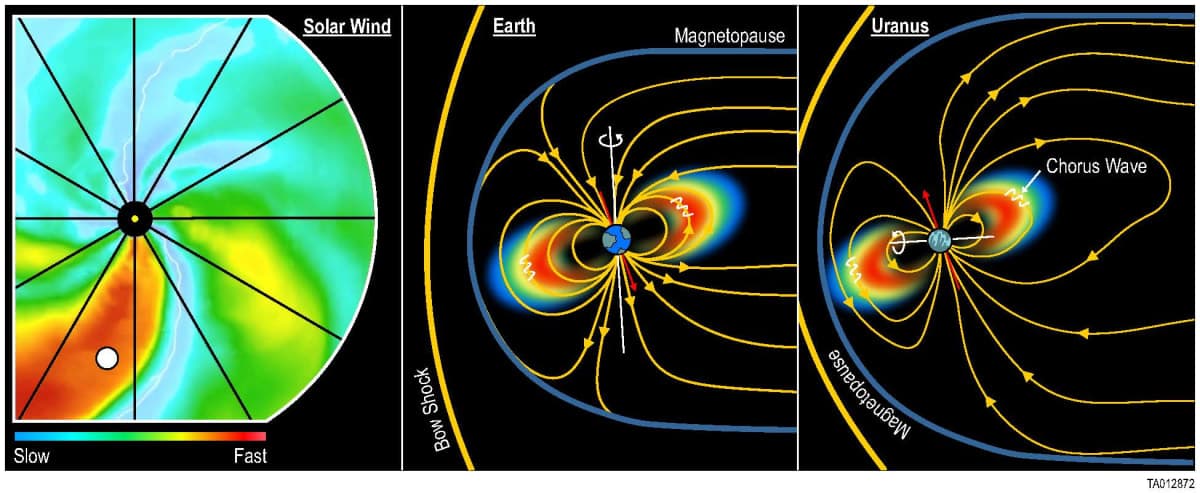
These findings also raise questions about the primary physics and sequence of events enabling the intense wave emissions. Moreover, the interaction between solar winds and plasma storms can also explain the unique magnetosphere of Uranus. The chaotic activity can also be the result of the planet’s unique magnetic field tilt and the density of the solar storms combined. According to the Daily Galaxy, these insights can also influence what is known about the planetary magnetic fields far from the Sun.
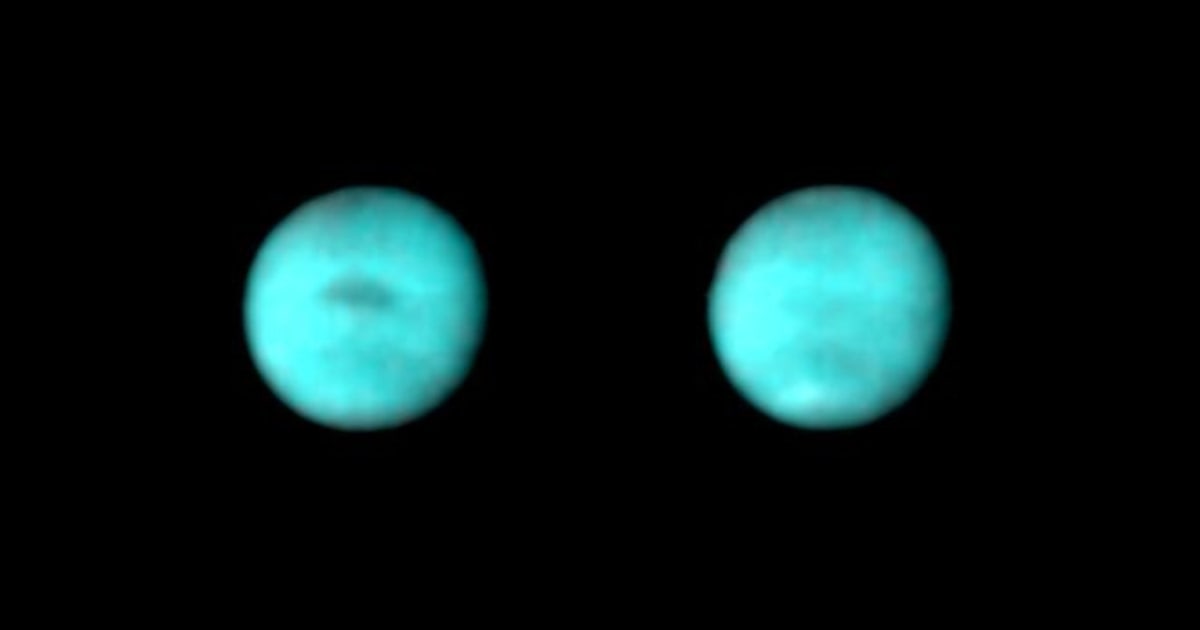
The initial Voyager data was looked into again, as researchers had not explored how solar winds and plasma storms influenced the readings. “This is just one more reason to send a mission targeting Uranus,” Allen said. “The findings have some important implications for similar systems, such as Neptune’s.” Only the Voyager 2 probe has the direct measurements of the radiation environment at Uranus to this day, according to Universe Today. This explains the accepted characterization of a weaker ion radiation belt and an intense electron radiation belt.
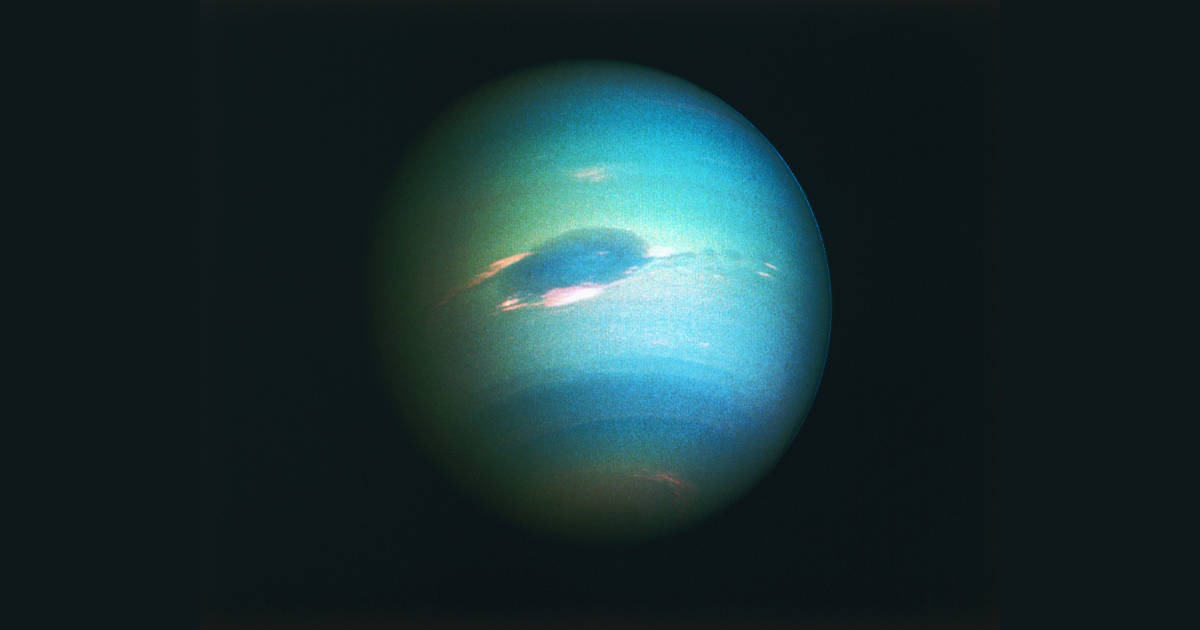
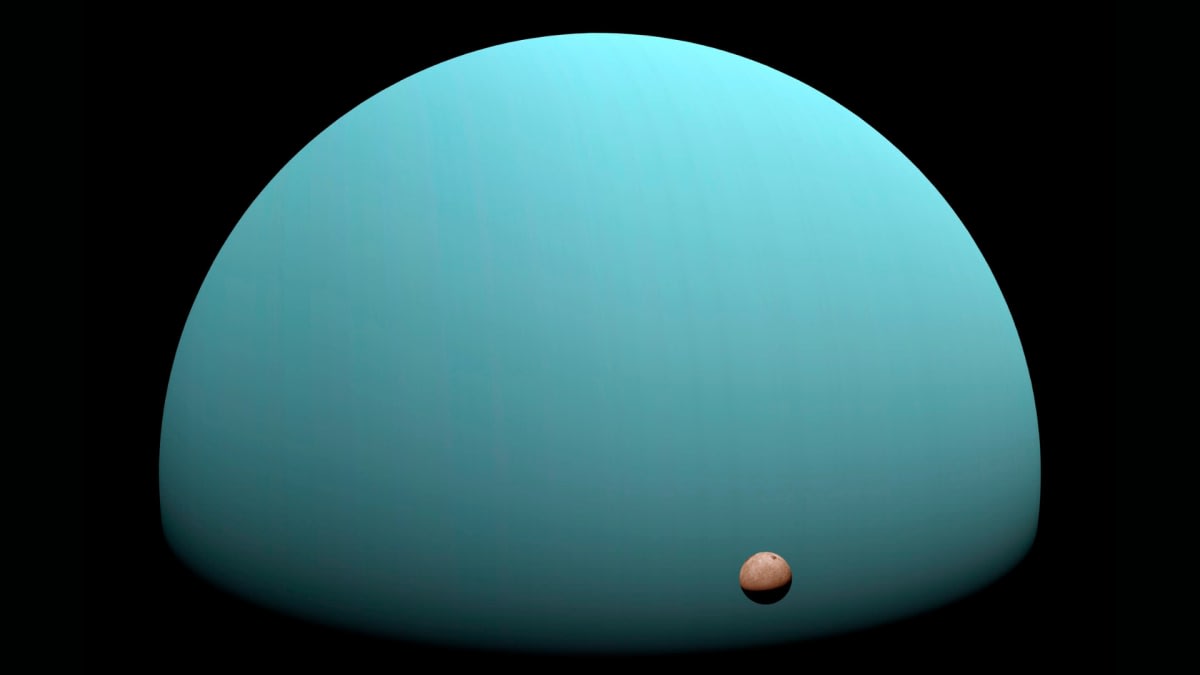
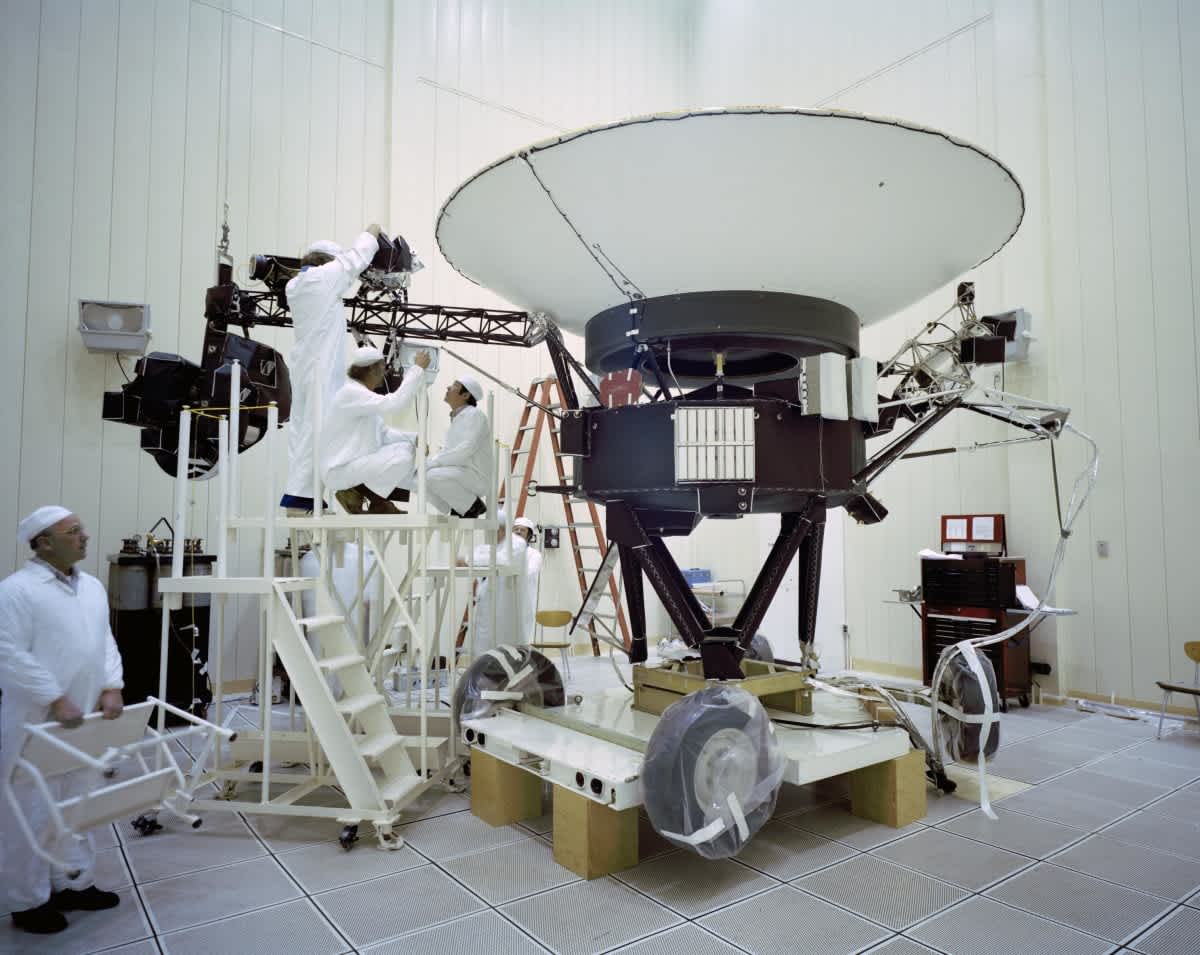
The Voyager 1 and 2 spacecraft were launched in 1977 to study the gas giants Jupiter and Saturn. Voyager 2 became the only spacecraft to visit Uranus and Neptune due to a planetary alignment that takes place every 175 years, according to IFLScience. Thus, it became the first and only mission to take images of the planet. It also discovered "Puck", a new moon, besides presenting scientists with the mystery that took them 39 years to make some sense of.
More on Starlust
Study by NASA and Oxford reveals Uranus possesses more internal heat than previously thought
Astronomers discover a new moon in Uranus' orbit using the James Webb Telescope