Why it's 'almost impossible to track' meteoroids in space, NASA explains
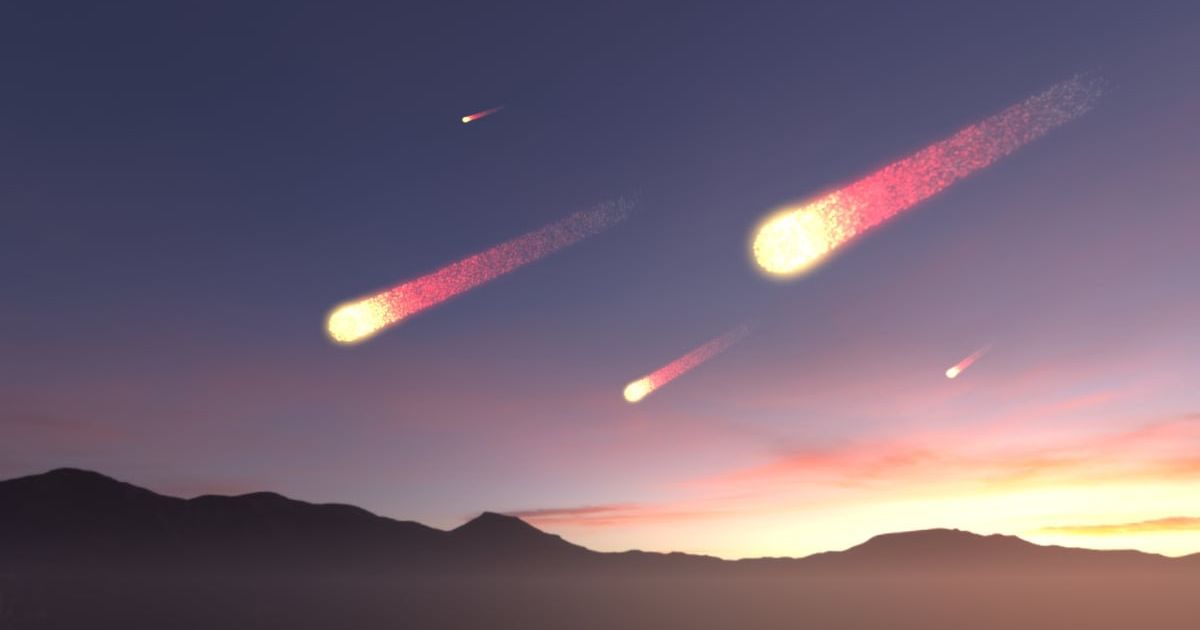
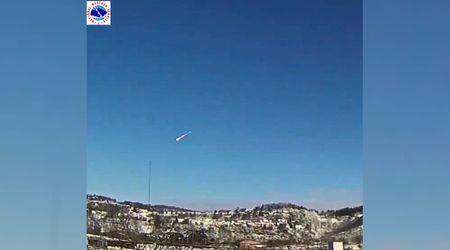
Astronomers reported more than 40 meteor events in March 2026 alone, nearly double the historical average, with many producing loud detonations and drawing widespread eyewitness accounts. The surge included a massive fireball over Western Europe on March 8, a large asteroid event over Ohio on March 17 at around 8:00 a.m. EST, and multiple sightings across Texas, California, and Michigan through March 24, highlighting an unusually active period for meteor activity worldwide.
#MeteorSighting: Eyewitnesses in Texas observed a bright fireball today, March 21, at 4:40 p.m. CDT. Current data indicates that the meteor became visible at 49 miles above Stagecoach, northwest of Houston. It moved southeast at 35,000 mph, breaking apart 29 miles above Bammel,… pic.twitter.com/nTXroI89XI
— NASA Space Alerts (@NASASpaceAlerts) March 22, 2026
According to NASA, a bright fireball streaked across Texas skies on March 21 at 4:40 p.m. CDT, startling eyewitnesses. The meteor first appeared about 49 miles above Stagecoach, northwest of Houston, traveling southeast at nearly 35,000 mph. It broke apart at an altitude of 29 miles above Bammel, near Cypress Station. Weighing roughly a ton and measuring around 3 feet in diameter, the meteor’s fragmentation generated a pressure wave, producing loud sonic booms heard across the region. Doppler weather radar later detected debris, with meteorites likely landing between Willowbrook and Northgate Crossing, confirming the event’s dramatic atmospheric breakup.
With so many sightings of meteoroids in a span of a month, one is bound to wonder why NASA did not predict when these would appear. The answer has a lot to do with the size of meteors. As per the space agency, it's achievable for them to track asteroids that are 140 meters and larger, but because of the small size of the meteoroids, it's "almost impossible to track (them) in space." However, it is the same factor that puts them in the 'no-harm' category for people on Earth. Meteoroids don't make it through the atmosphere intact and by the time they reach ground, only fragments are left.
Why Are Fireballs Increasing?
The fireball spike is seasonal. From February to April, the Northern Hemisphere hits peak "fireball season," with bright meteor sightings climbing 10% to 30%. This will mostly be near the March equinox. Scientists believe such sightings are more common as the Earth might pass through denser space debris streams around this time. The rise in phones and cameras makes it easier to snap and share them, allowing us to see more of them.
Are Meteors Rare?
No. They happen all the time. Fireballs flash over night skies regularly. Most never get seen because they burn over oceans, deserts, or during the day. When they show up in dark places, it's flashy - but not surprising.
Where Do Meteors Come From?
Most meteorites come from the belt between Mars and Jupiter. A few come from the Moon or Mars. Those fragments help us learn about how our solar system formed.
Why Do Some Meteors Go Boom?
Meteors zip through the air at speeds faster than sound. They make pressure waves as they go. If they break apart, that energy causes a boom - sometimes loud enough to rattle walls. That's what people hear with bright flashes.
🚨🇺🇸 A suspected meteorite just crashed through a woman's roof in Houston.
— Mario Nawfal (@MarioNawfal) March 22, 2026
Fire department found an unusual rock inside.
No construction or trees nearby.
Half of Houston heard the boom and felt their houses shake.
Is it just me or has there been a lot of meteor activity… https://t.co/5KpSmnptXq pic.twitter.com/Kma5exUpdV
Daytime meteor events on this scale are very rare because fireballs of this size are usually only seen at night. Meteorites hitting Earth happen all the time, but the most spectacular and widely seen ones like this are few and far between. In fact, scientists estimate that most of these fiery visitors come unobserved, and those making a big public showing happen every once in a while. They have also been suggesting that others out there should keep an eye on the ground for small, black pieces of rock that could be meteorites. And those meteorites can be a real treasure not only for a collector, but from a scientific point of view as well, especially since they can help to understand how the whole solar system came to be. Minor tremors and shaking were felt in some areas as the shockwave passed through; however, no injuries have been reported.

Most meteorites come from the asteroid belt between Mars and Jupiter, though rare samples originate from the Moon or Mars. Some meteors also produce loud sonic booms due to their hypersonic speeds and fragmentation, releasing powerful shockwaves that can sometimes be heard or even felt on the ground.
A bright fireball meteor lit up the night sky over Ohio in the United States, with sightings reported across multiple states. Footage captured by Jim Yeater near Vanlue shows the meteor streaking across the sky around 9:31 PM ET, briefly illuminating the horizon. pic.twitter.com/D0WsacEKtk
— Radar Africa (@radarafricacom) March 24, 2026
Why is this change happening?
The data, drawn from the American Meteor Society going back to 2011, shows a pattern that warrants serious investigation. Since the start of 2026, the AMS has been fielding a growing number of inquiries from journalists, scientists, and the public about whether fireball activity has increased. The most important finding from the analysis of AMS is that the total number of fireball events is not dramatically unusual. Q1 2026’s 2,046 total events is the highest on record but only marginally above 2022 (2,037) and 2021 (1,947).
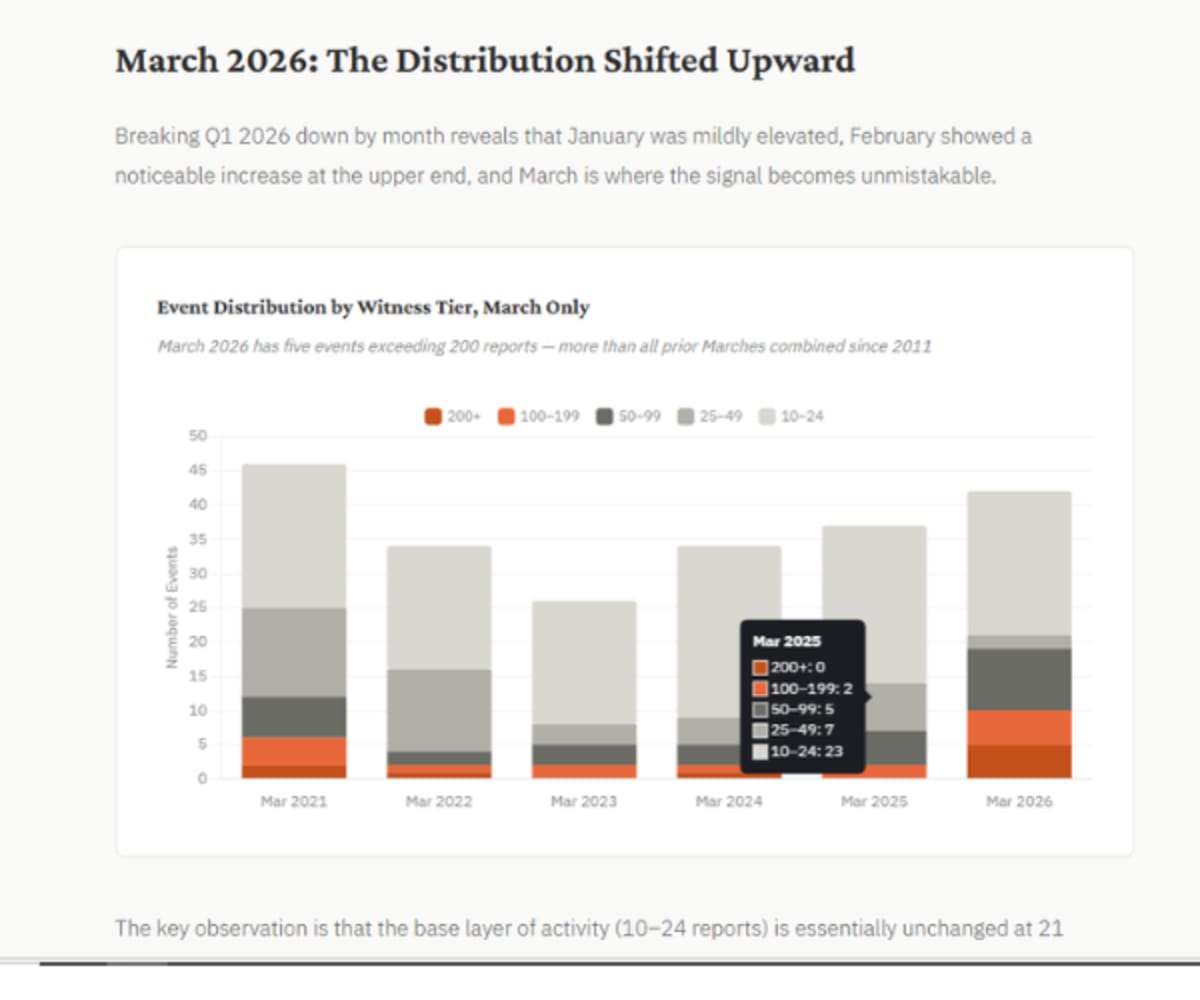
According to Astrophotographer Mike Hankey from AMS, "Our radiant analysis shows the increase is concentrated around the Anthelion source — the region of sky directly opposite the Sun. These are asteroidal objects on orbits similar to Earth’s, moving in the same direction we are. When they encounter Earth, our orbital velocity is effectively subtracted from theirs, so they enter the atmosphere at relatively low speeds. Slower entry means the meteor lasts longer in the sky, is visible over a wider area, produces sonic booms more often, and more material survives to reach the ground as meteorites. That’s exactly what we’ve been seeing — including two rare HED achondrite falls (Germany and Ohio) in just nine days."
More on Starlust
Meteor breaks apart and causes a loud ‘boom’ over Ohio, fireball seen across multiple US states
Asteroid previously projected to hit the Moon in 2032 will now miss, says NASA