What is the Moon phase on February 23? Time, illumination and other details
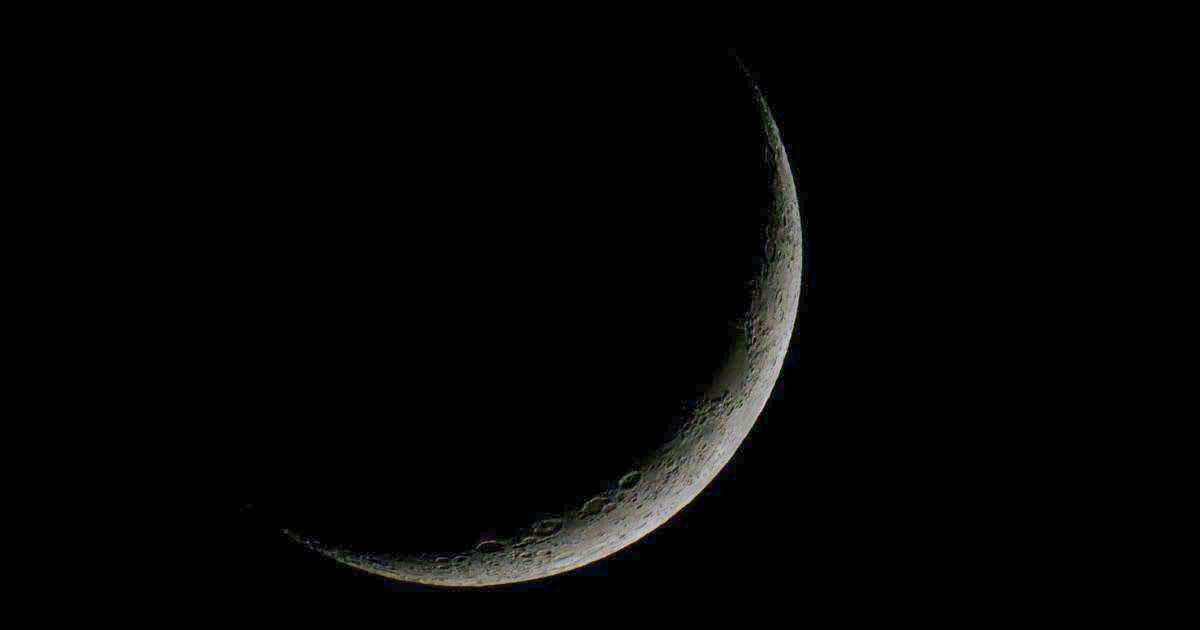
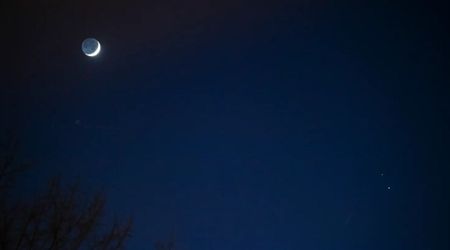
On February 23, viewers worldwide will observe the Moon in its lovely waxing crescent phase, with its slender, growing sliver of light illuminating the night sky. This phase follows the new Moon and presents a good opportunity for skywatchers to view a variety of objects in the night sky. Here we tell you all you need to know about this lunar phase.
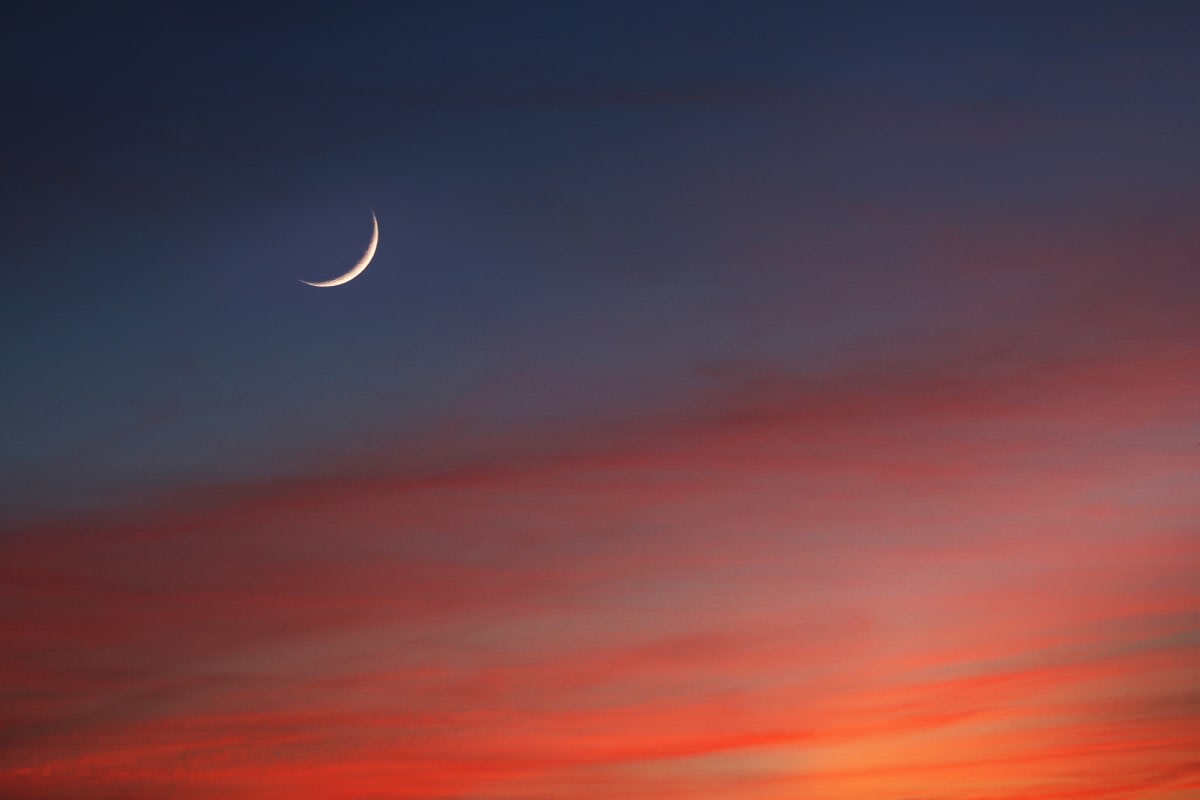
The waxing crescent Moon
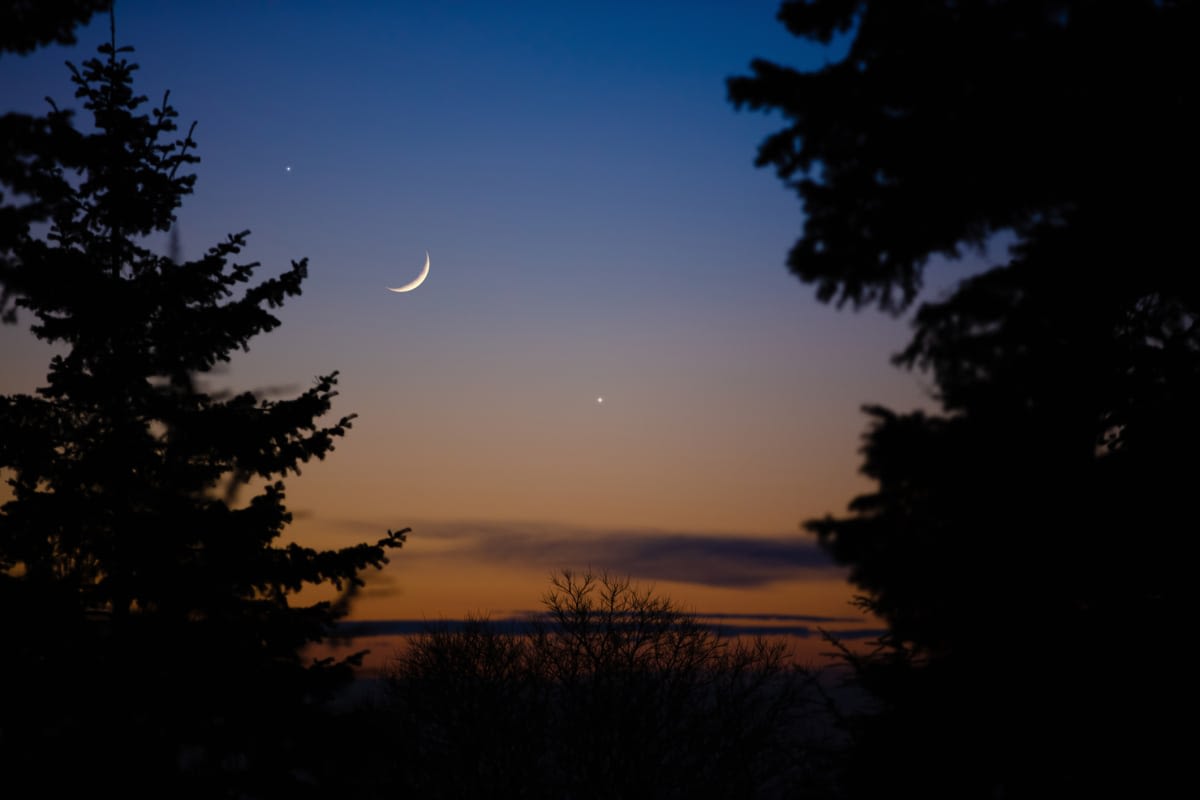
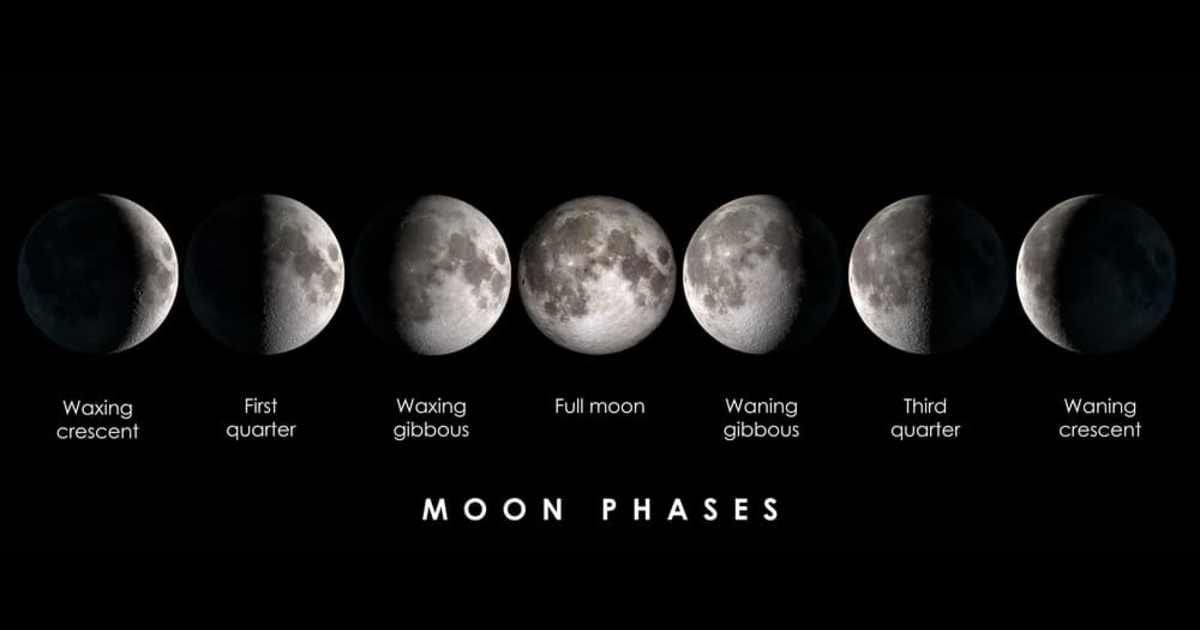
The waxing crescent phase occurs when the illuminated half of the Moon faces mostly away from Earth, leaving only a tiny sliver visible to us. The term ‘waxing’ signifies that it is growing, while 'crescent' refers to the curved sickle shape of the Moon. The crescent grows daily as the Moon continues on its orbit, carrying its dayside farther into view. The Moon in its waxing crescent phase rises shortly after sunrise and sets shortly after sunset, rising a little later with each passing day. The best time to see the Moon in its face is in the evening when the sky is dark.
Illumination and distance
NASA's moon guide confirms this as pre-First Quarter, with the First Quarter arriving on February 24. Currently, the Moon is in its sixth day in its 29.5-day cycle of phases. 36% of the lunar surface will be illuminated tonight. Its distance from Earth is around 370,824 km, and the angular diameter is 1932.8 arcseconds.
What the crescent Moon means for skywatchers
It is a beautiful time for viewers to observe earthshine, also known as the ‘Da Vinci glow,’ which is a faint, ashen glow that lights up the darkened portion of a crescent Moon as a result of the sunlight reflected off Earth's surface. The planet Venus may also be visible close to the crescent Moon tonight. Mercury and Saturn could also be spotted with the naked eye shortly after sunset, per The Sky Live. As far as features on the surface of our Moon are concerned, keep an eye out for Mare Serenitatis, Mare Tranquillitatis, and Mare Fecunditatis. If you have binoculars, you may get to see the Endymion and Posidonius craters, while a telescope could allow you to see the Apollo 11 and 16 landing sites.

Moonrise and moonset timings
Moonrise and moonset timings will vary depending on location. The timings for some cities, according to TimeandDate, are as follows:
1. New York - Moonrise at 09:32 local time and moonset at 01:12 (Feb 24)
2. Los Angeles - Moonrise at 09:54 local time and moonset at 00:55 (Feb 24)
3. Shanghai - Moonrise at 9:34 local time and moonset at 00:00 (Feb 24)
4. Beijing – Moonrise at 9:33 local time and moonset at 00:47 (Feb 24)
5. London - Moonrise at 8:43 local time and moonset at 01:53 (Feb 24)
6. Birmingham – Moonrise at 8:48 local time and moonset at 02:46 (Feb 24)
Photographing the crescent
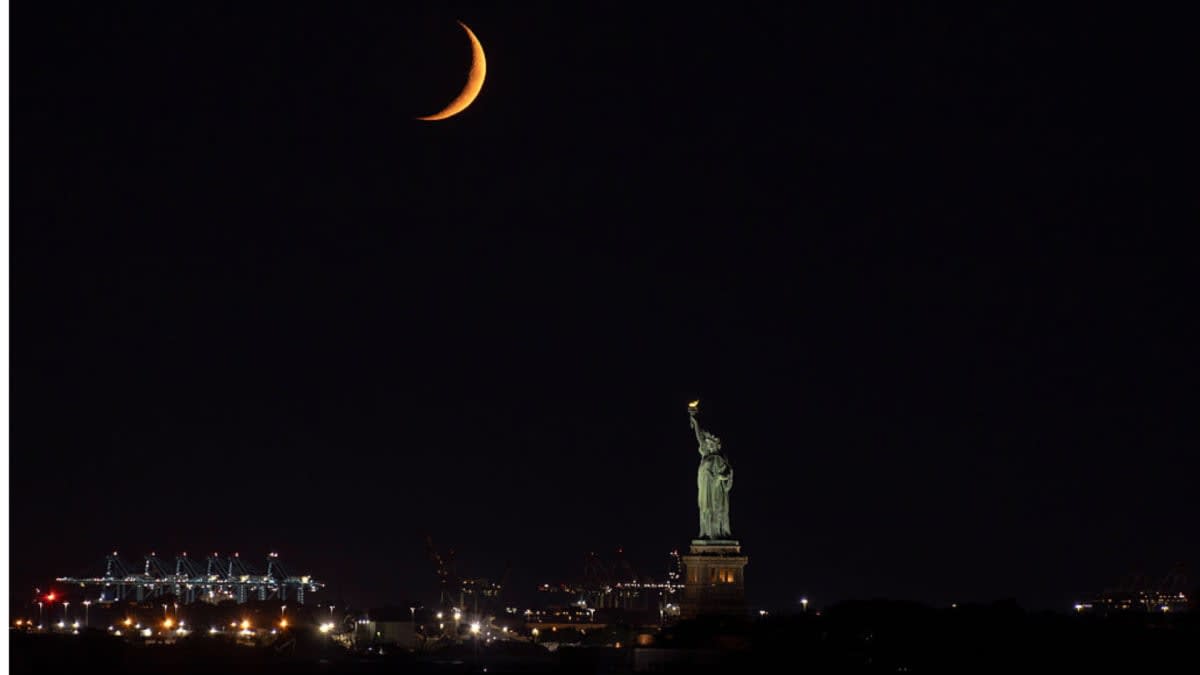
The crescent Moon is often a very attractive subject for photographers, both professional and amateur. Tamron recommends lenses in the 200 to 300 mm range to capture the surface features of the Moon. As for the shutter speed, setting it between 1/200 and 1/400 is usually the way to go. However, you can switch to a slower shutter speed if you have a tripod. As far as the ISO sensitivity is concerned, keep it between 400 and 800.
More on Starlust
NASA's top skywatching events for 2026: Total lunar eclipse, Perseid meteor shower and more
'Blood Worm Moon' 2026: Date, time and how to watch March's Full Moon