SpaceX aims to shatter records with 170 orbital launches in 2025, nearly one every other day

SpaceX aims to launch an orbital mission almost every other day in 2025, significantly increasing its liftoff cadence. SpaceX's Director of National Security Space Launch Anne Mason, the company is targeting 170 launches by the end of the year. This aggressive schedule would far exceed their previous record of 134 orbital liftoffs, which was set just last year, as reported by Space.com.

"I always find it amazing that this cadence has become somewhat normal," Mason added during a call that gave a sneak peek into SpaceX's Friday, May 30, launch of the GPS III SV-08 satellite for the US Space Force. She further explained, "But if we look back just five years ago, in 2020 when we launched roughly 25 times, which is still a healthy rate at twice a month, and now launching on average every two to three days — I think this demonstrates how Falcon's reusability and reliability, plus the hard work and dedication of the SpaceX team, has been critical to supporting assured access to space." SpaceX's warhorse Falcon 9 rocket was responsible for 132 of last year's orbital liftoffs, with the remaining two performed by the more powerful Falcon Heavy. Both Falcon rockets utilize reusable first stages, a key factor in SpaceX's remarkable launch frequency. While the upper stages of both Falcons are expendable, SpaceX has become efficient at producing these complex components.

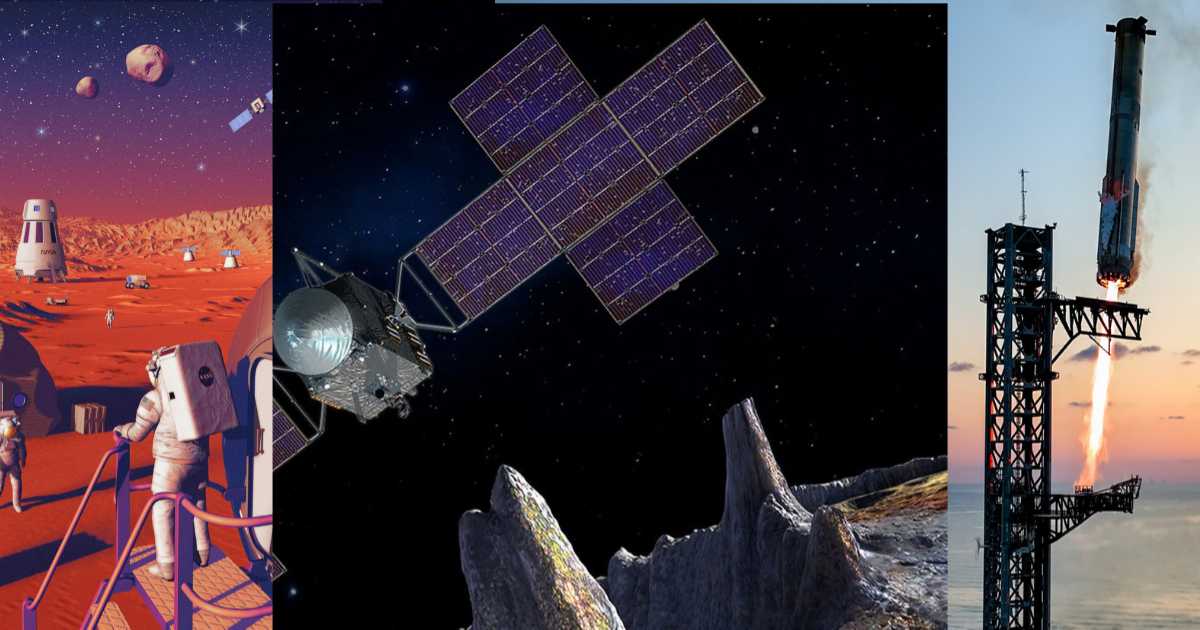
In parallel, SpaceX continues to push the boundaries of its next-gen Starship vehicle. On Tuesday, May 27, Starship's ninth flight test was launched from Starbase, Texas, marking a commendable step with the first reflight of a Super Heavy booster (which had previously flown in January 2025). The booster completed its ascent and a hot-staging separation, also demonstrating controlled flight at a higher angle of attack during its descent. However, contact with the booster was lost approximately six minutes after launch during the landing burn due to a rapid unscheduled disassembly.
The Starship upper stage successfully ignited its engine. In-space objectives included payload deployment and a Raptor engine relight, but the payload bay door failed to open, preventing the release of Starlink simulator satellites. An attitude control error also prevented the planned Raptor relight and proper re-entry positioning, with contact lost approximately 46 minutes into the flight. Despite these challenges, this flight test was vital for proving booster reuse and reaching space again with Starship. SpaceX is analysing the data to implement improvements for future Starship and Super Heavy flights, viewing each test as progress toward making life multiplanetary.

Even with three consecutive test failures, Elon Musk has reiterated SpaceX's ambitious plan to launch its first uncrewed Starship mission to Mars by the end of 2026. While Elon Musk shared his timeline in a recent video, he tempered expectations, giving it only a "50-50 chance" of success. This proposed 2026 Mars mission would take advantage of a rare orbital alignment between Earth and Mars, occurring every two years, which shortens the interplanetary journey to between seven and nine months. "If it's not ready in time," Musk stated, "we'll have to wait for the next window two years later," meaning the next opportunity would be in 2028, per NewsBytes.
The Road to Making Life Multiplanetary: an update from @elonmusk on SpaceX's plan to reach Mars pic.twitter.com/d2cnsVKK80
— SpaceX (@SpaceX) May 29, 2025