South Pole Telescope detects unexpected intense stellar flares in the heart of the Milky Way

Looking deep into the center of the Milky Way, researchers observed intense bursts of light emanating from a pair of accreting white dwarf systems. This is significant not only because it is the first event of its kind to be detected during a millimeter-wavelength survey but also because it could open more doors into the workings at the center of our galaxy. The findings have been published in The Astrophysical Journal.
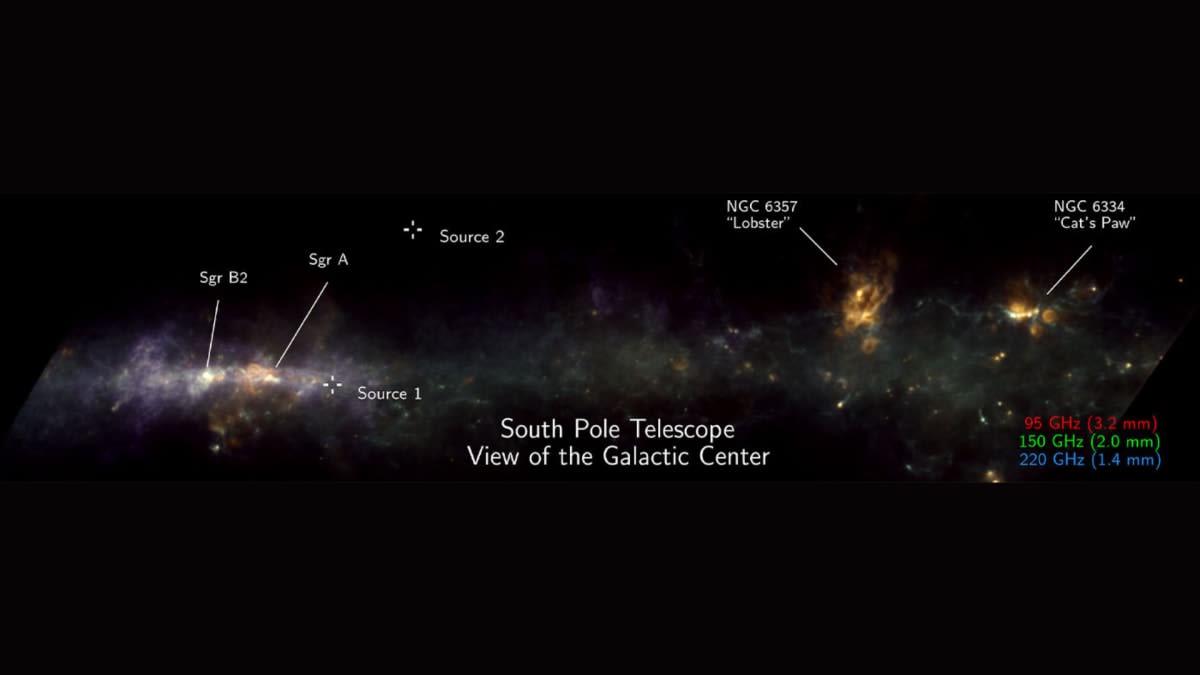
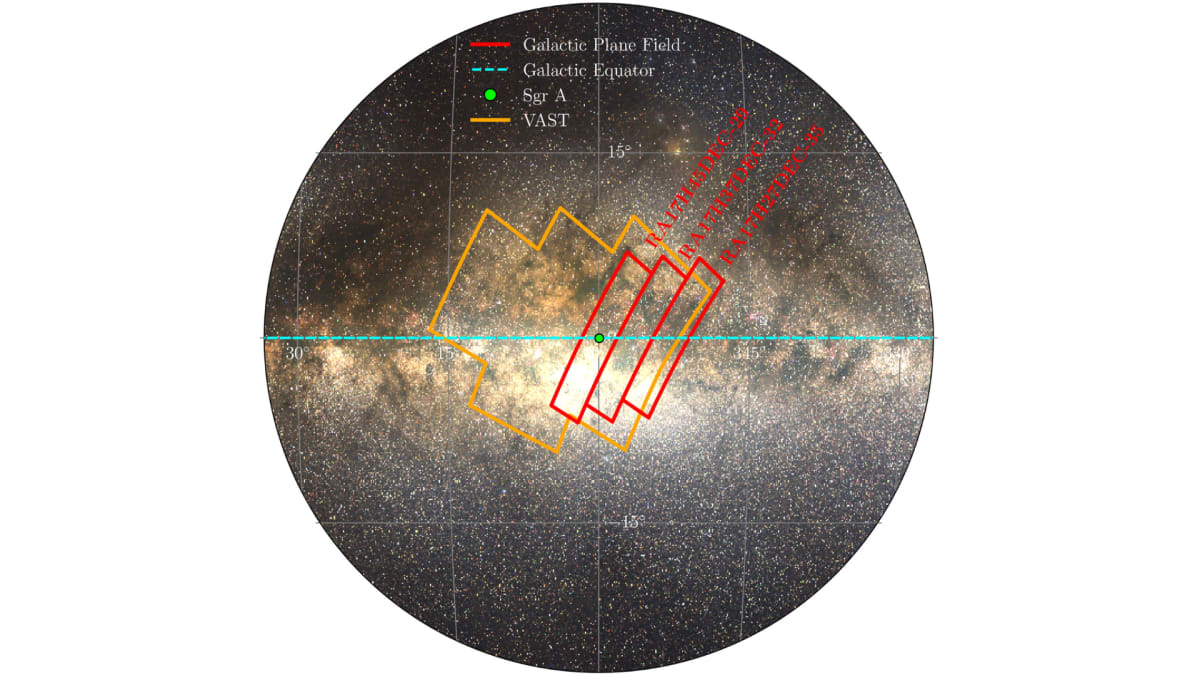
Rather than targeting a scheduled list of candidate objects, the survey used the South Pole Telescope (SPT) to repeatedly scan a massive area of the Galactic Plane, catching the short-lived flares. “We’ve only searched for transients in two years and already found two remarkable events,” said Professor Tom Maccarone, a professor in the Department of Physics and Astronomy at Texas Tech University, in a statement. “We’ve only scratched the surface of what can be done with millimeter transient surveys of the Galactic Plane and are looking forward to discoveries of many more new events in years to come.”
The research team believes that the flares were triggered by sudden magnetic explosions in the accretion flow. This is quite similar to solar flares except that it happens in a much more extreme environment. When it comes to the Sun, stored magnetic energy is converted into heat and energetic particles quickly as a result of magnetic reconnection. On the other hand, in an accretion disk surrounding a compact object, similar things can happen at densities and energies that are much higher, producing luminous but momentary bursts spreading across multiple bands. If confirmed, millimeter observations can provide new insights into the magnetic nature of the accretion disks, dictating how compact binaries evolve, transport angular momentum, and generate outflows.

Each burst that was detected lasted for about a day. While the duration was much longer than millisecond radio bursts, they were still short-lived and indicate strict constraints as far as the size and physical properties of the emitting region are concerned. More significantly, these bursts were caught in millimeter bands, which is much less common compared to X-ray or optical detections. The source of the outburst was accreting white dwarfs, as already mentioned. As a white dwarf’s gravity pulls gas from its companion, the material forms a swirling accretion disk, driving the flares across spectrums.

The SPT-3G Galactic Plane Survey aims to prove that millimeter astronomy can also be a great tool in understanding the more dynamic aspects of our galaxy, besides mapping the static universe. To this effect, it will carry on observing the Milky Way for about a month every year so that a more sensitive time-domain record of the Galactic Center region can be created.