Saturn has an asymmetric magnetic shield, unlike Earth, suggests NASA's Cassini mission data
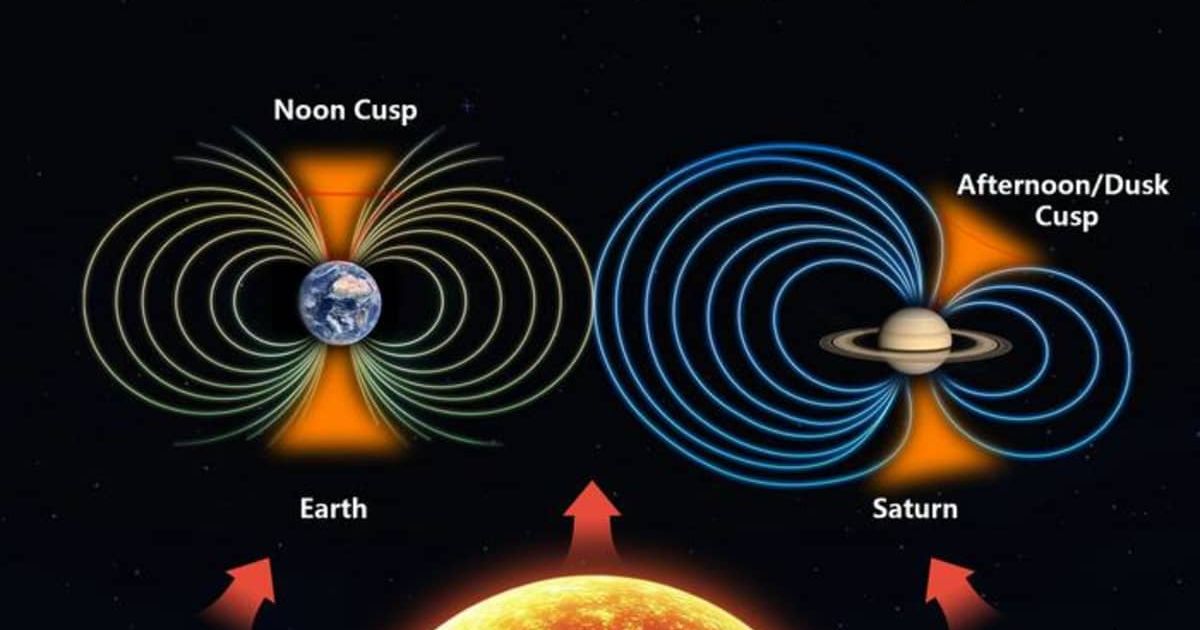
A new study shows that Saturn has an asymmetric magnetic shield when compared to Earth's. The gas giant’s fast rotation, coupled with the heavy material it pulls around it from its moons, has likely resulted in such asymmetry, according to a study published in Nature Communications. The new study, conducted by researchers at the University of Hong Kong, Lancaster University, and University College London, analyzed six years of data from the Cassini space mission. The data helped the researchers to detect the precise location of Saturn’s cusp—a crucial region where solar wind interacts with the planetary magnetic field.
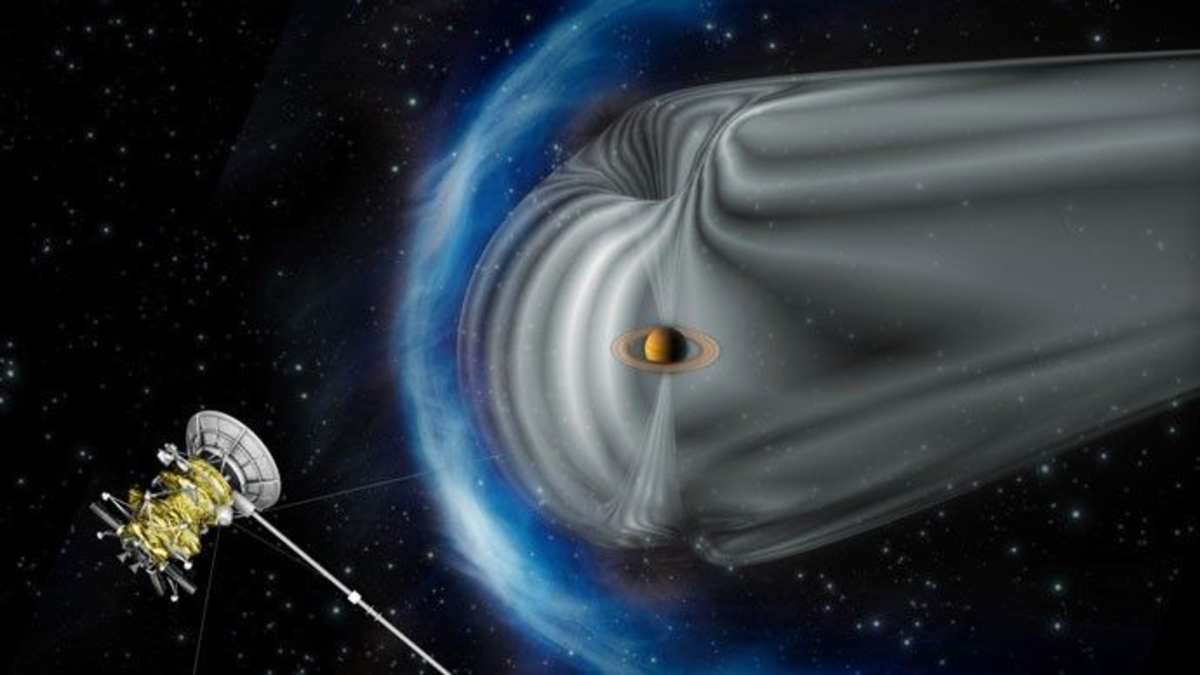
A cusp is the place where magnetic field lines start to curve back into the planet’s poles and funnel charged particles down into the atmosphere. Planetary magnetic fields, also known as magnetospheres, protect planets from the highly charged particles of the solar wind. Saturn’s magnetic field is 10 times wider than the planet itself. Analyzing dawn-dusk asymmetry in Saturn’s cusp distribution, they found 67 cusp events compared to 11 detected by previous studies. The Cassini spacecraft captured data about cusp events as it flew through Saturn’s cusp between 2004 and 2010.
The cusp events peaked in the post-noon sector, and their signature extended to post-dusk. Saturn’s post-dusk cusp resembles recent observations of Jupiter’s post-dusk cusp. “The team found that the cusp was dragged to the right as viewed from the Sun, and was located most often between 13:00 and 15:00 (as it might appear on a clock face), compared to 12:00 as it would be on Earth,” read a statement.
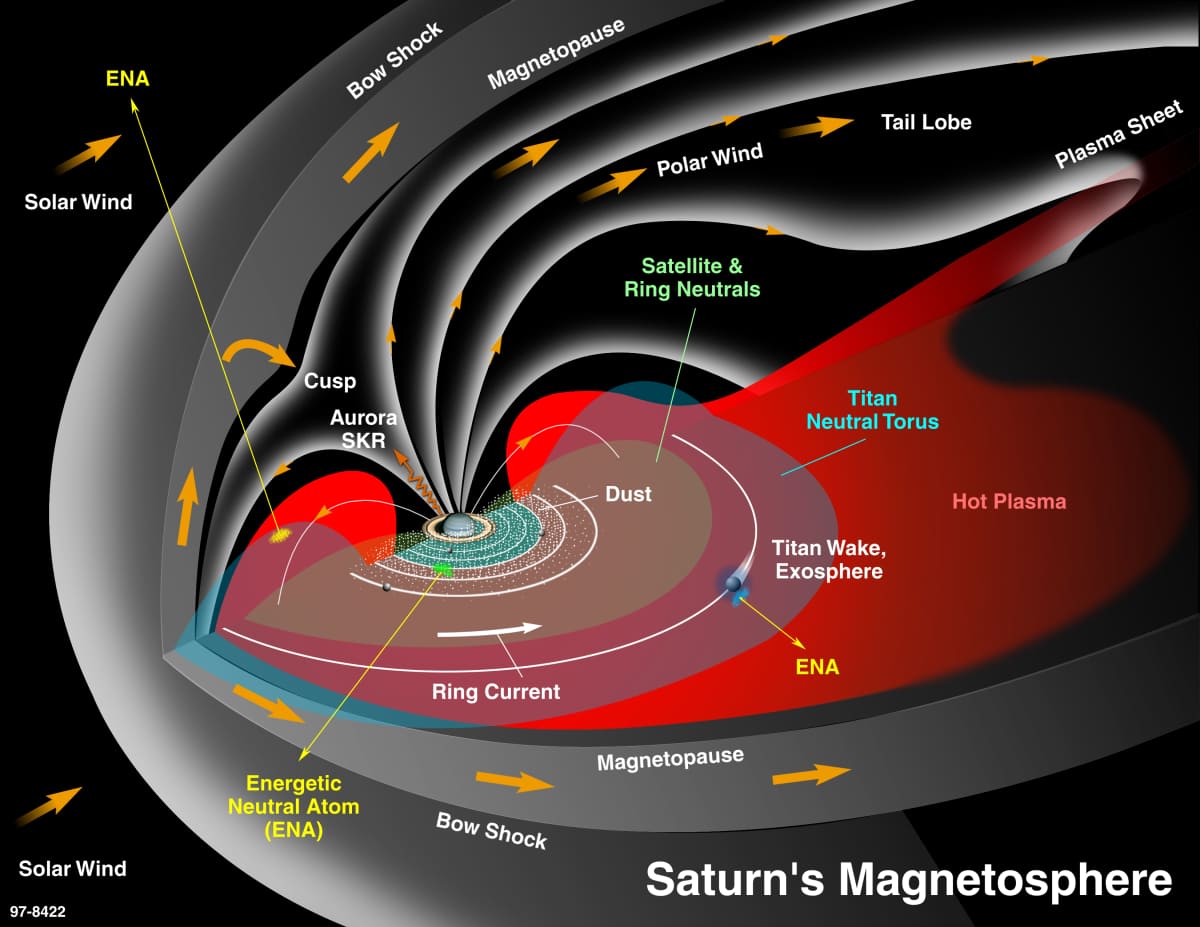
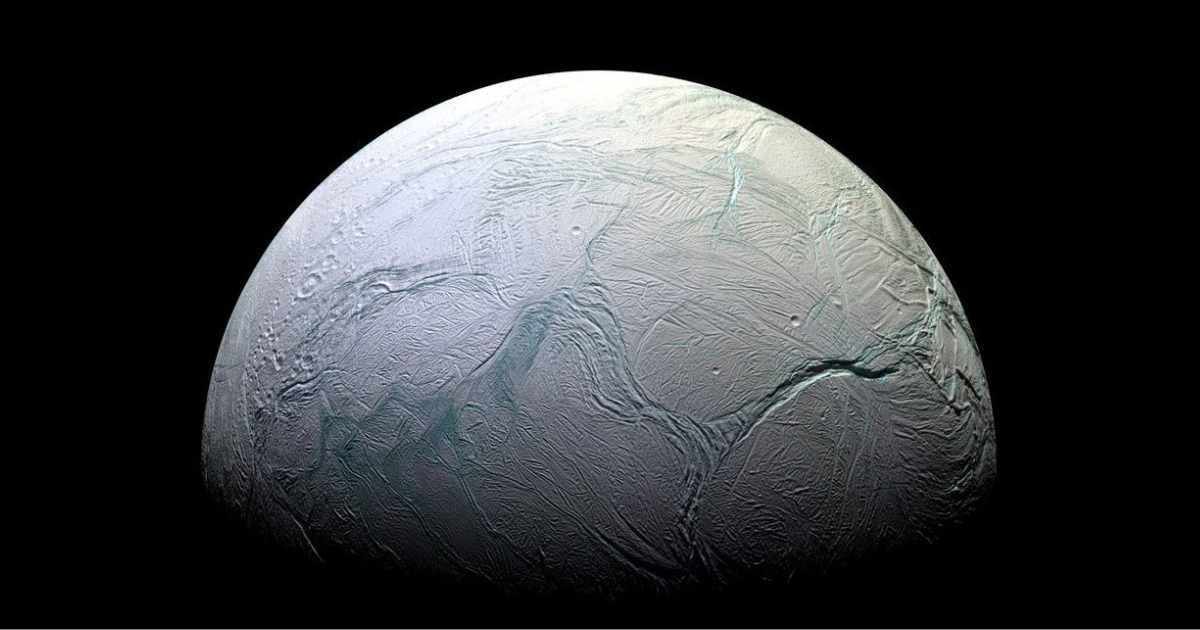
Saturn rotates very fast on its axis, completing one revolution every 10.7 hours. The giant planet also pulls in a lot of ionized gas from its moons, particularly that of Enceladus. These activities are thought to drag the magnetic field lines to the right. But more simulations are needed to corroborate this link. The environment around Saturn is of particular interest. Its moon, Enceladus, which has icy plumes welling up from a subsurface ocean, is the preferred destination of the European Space Agency’s future space missions to be launched in the 2040s. “The cusp is the place where the solar wind can slip directly into the magnetosphere. Knowing the location of Saturn’s cusp can help us better understand and map the whole magnetic bubble,” said co-author Professor Andrew Coates at the Mullard Space Science Laboratory at UCL.
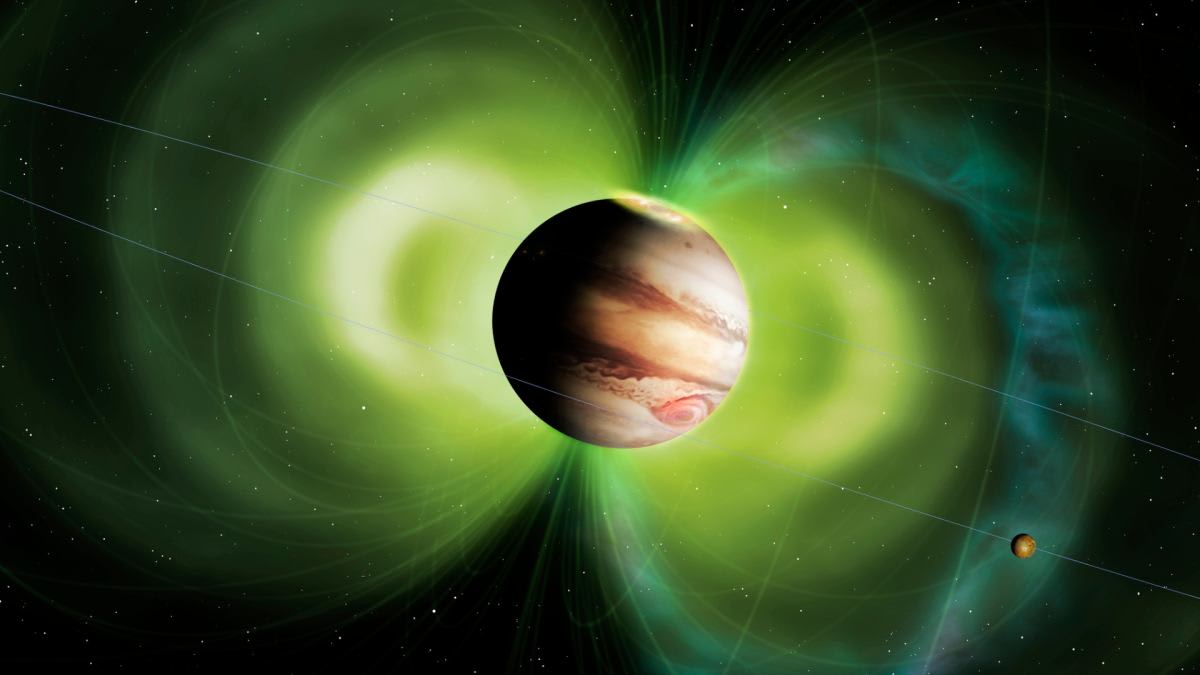
“A better understanding of Saturn’s environment is especially urgent now as plans for our return to Saturn and its moon Enceladus start to be developed. These results feed into the excitement that we are going back there,” he added. Based on the findings, the researchers further carried out simulations of Saturn’s magnetic field. They found that interactions between the magnetic field and solar wind at the edge of the magnetosphere closely resembled those of Jupiter’s. “This study provides critical evidence for a long-held theory—that the rapid spin of massive planets like Saturn with active moons replaces the solar wind as the dominant force shaping magnetospheres,” Coates noted.
More on Starlust
NASA's James Webb teams up with Hubble to image Saturn's atmosphere in unprecedented detail
Saturn's auroras are the reason why the planet appears to change its spin, new study finds