One of Milky Way's neighbors is still reeling from a collision that sent its stars into chaos
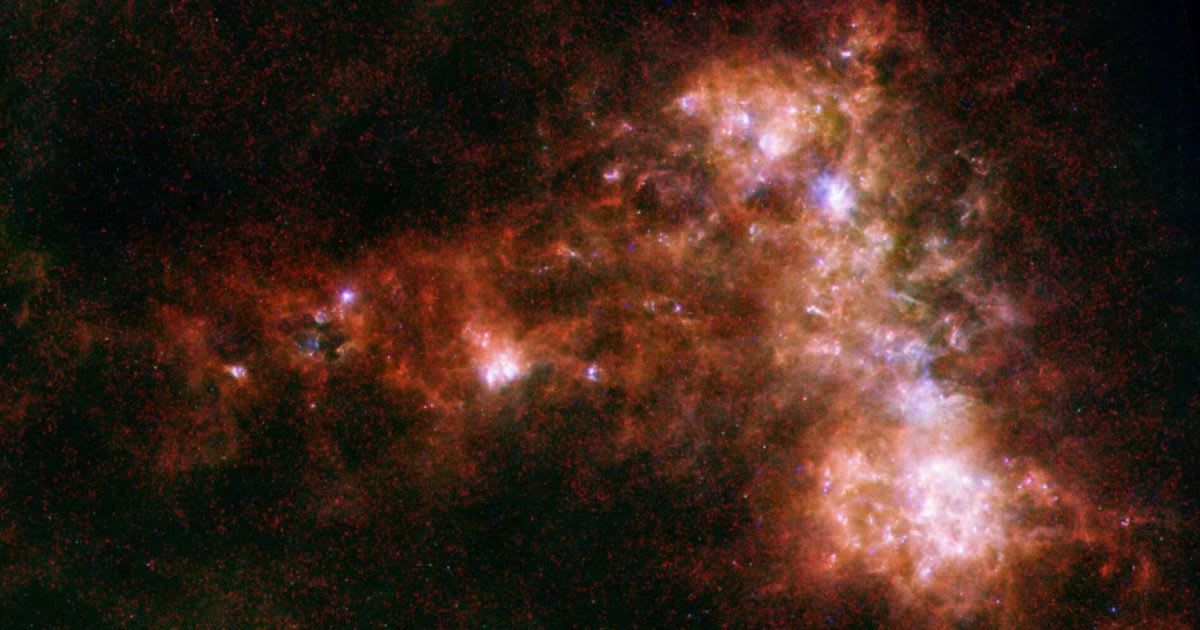
A new study of the Small Magellanic Cloud (SMC) reveals that the gas-rich galaxy is transforming in real time, still possibly recovering from a direct collision with the Large Magellanic Cloud (LMC) a few hundred million years ago. Both the SMC and LMC are two of the Milky Way’s closest galaxies and are bound to it by gravity. For more than half a century, the Small Magellanic Cloud has been a key subject of astronomical study. While researchers have catalogued the SMC’s stars, mapped its gas, and tracked its movement through space, there still isn’t a concrete explanation as to why the galaxy's stars do not orbit around its center the way stars in most galaxies do.
Hi, neighbor! 👋
— NASA Marshall (@NASA_Marshall) March 23, 2025
This @NASAHubble image features a scene from one of the closest galaxies to the Milky Way, the Small Magellanic Cloud (SMC). The SMC is a dwarf galaxy located about 200,000 light-years away.
Learn more >> https://t.co/MXKs5elB7D pic.twitter.com/6FMvhFj4iB
Unlike stars that orbit the galactic center in a rotating disk, the SMC’s stars move rather chaotically. Typically, a galaxy’s gas cools, collapses under gravity, and forms the said rotating disk, which is how our solar system formed as well. So, why is the Small Magellanic Cloud an exception? The recent study published in The Astrophysical Journal claims that during the collision between the SMC and the LMC, the larger galaxy’s gravity likely disturbed the smaller galaxy’s structure. The SMC’s gas rotation was also affected by the LMC’s dense gas environment and the pressure it exerted.
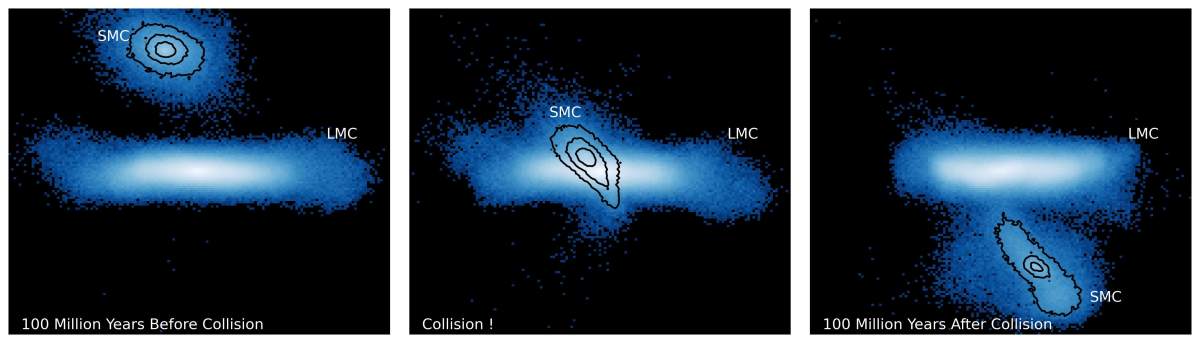
As a result, the Small Magellanic Cloud’s internal structure changed, and its stars were sent into random chaotic motion rather than a typical orderly orbit. Speaking to University of Arizona News, the study’s lead author, Himansh Rathore, a graduate student at Steward Observatory, broke down the phenomenon with a simple analogy. "Imagine sprinkling water droplets on your hand and moving it through the air—as the air rushes past, the droplets get blown off because of the pressure it exerts,” Rathore said. “Something similar happened to the SMC's gas as it punched through the LMC.”
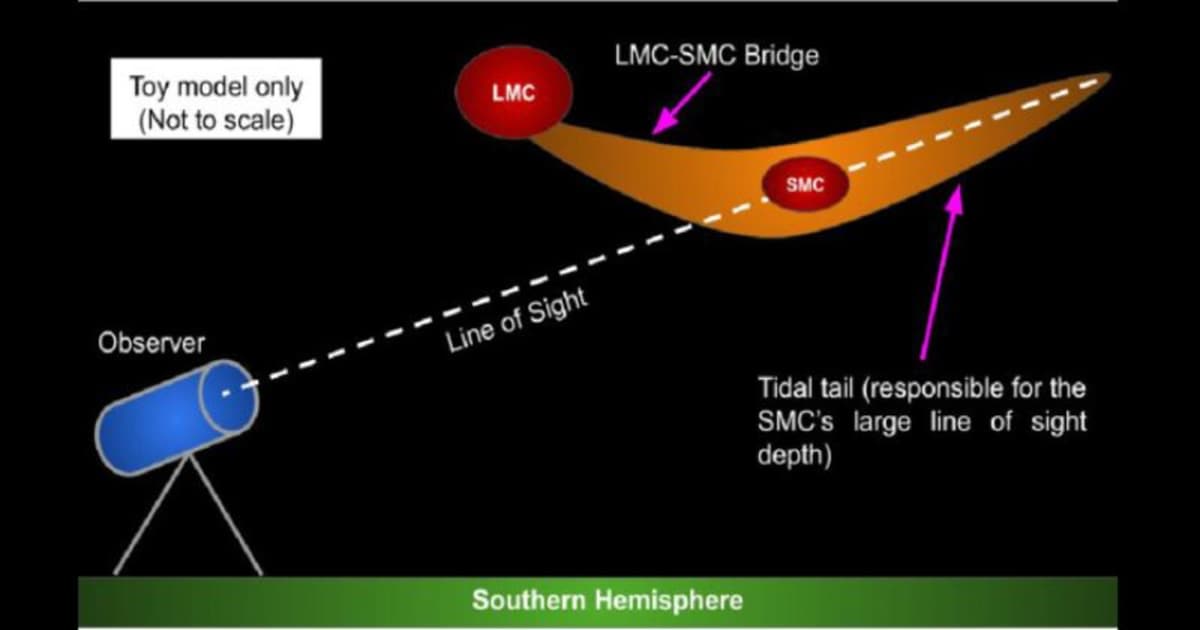
The study’s senior author, Gurtina Besla, an astronomy professor at Steward Observatory, explained how studying the SMC-LMC collision helped solve another puzzle. For many years, data from telescopes suggested that the gas inside the SMC was rotating, but this meant that its stars should be rotating too, since they are formed from the same gas and inherit its motion. But this apparent gas rotation is simply an illusion caused by viewing angle, according to the study. The collision is stretching the SMC, and the gas moving along this stretch makes it look like it's rotating when observed from certain angles.
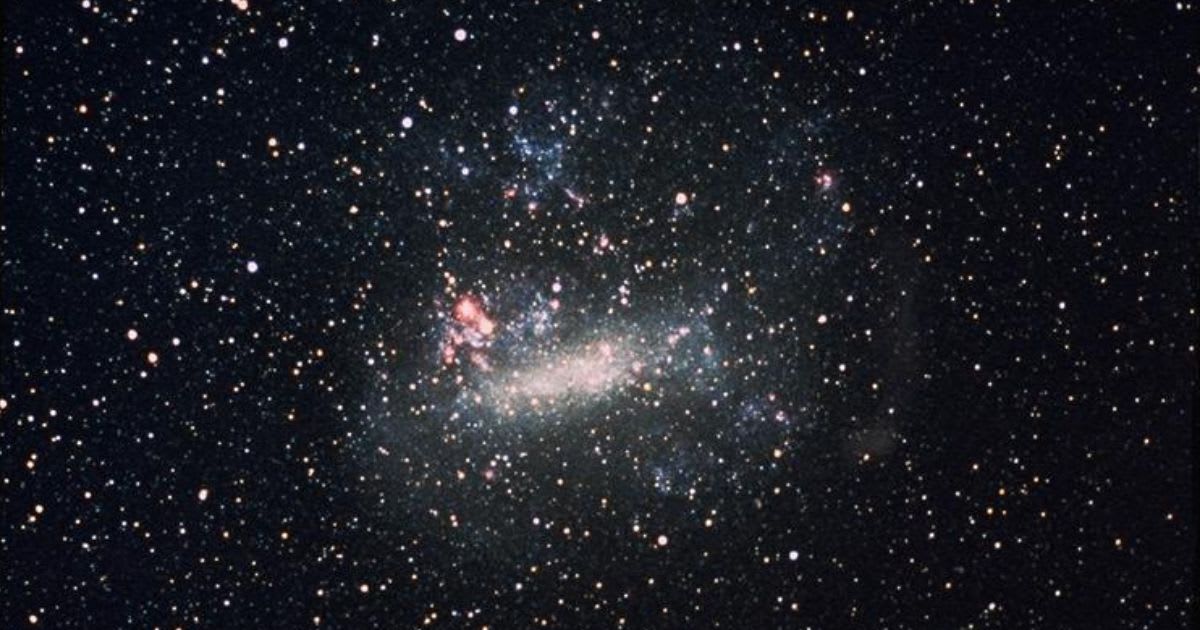
The Small Magellanic Cloud is visible to the naked eye from the Southern Hemisphere and has been a reference point for studying galaxies for decades. It continues to help astronomers study how stars are formed and evolve across cosmic time, but the recent study challenges this idea. "The SMC went through a catastrophic crash that injected a lot of energy into the system. It is not a 'normal' galaxy by any means," Besla said. A galaxy still reeling from a collision may not be a clean reference point.
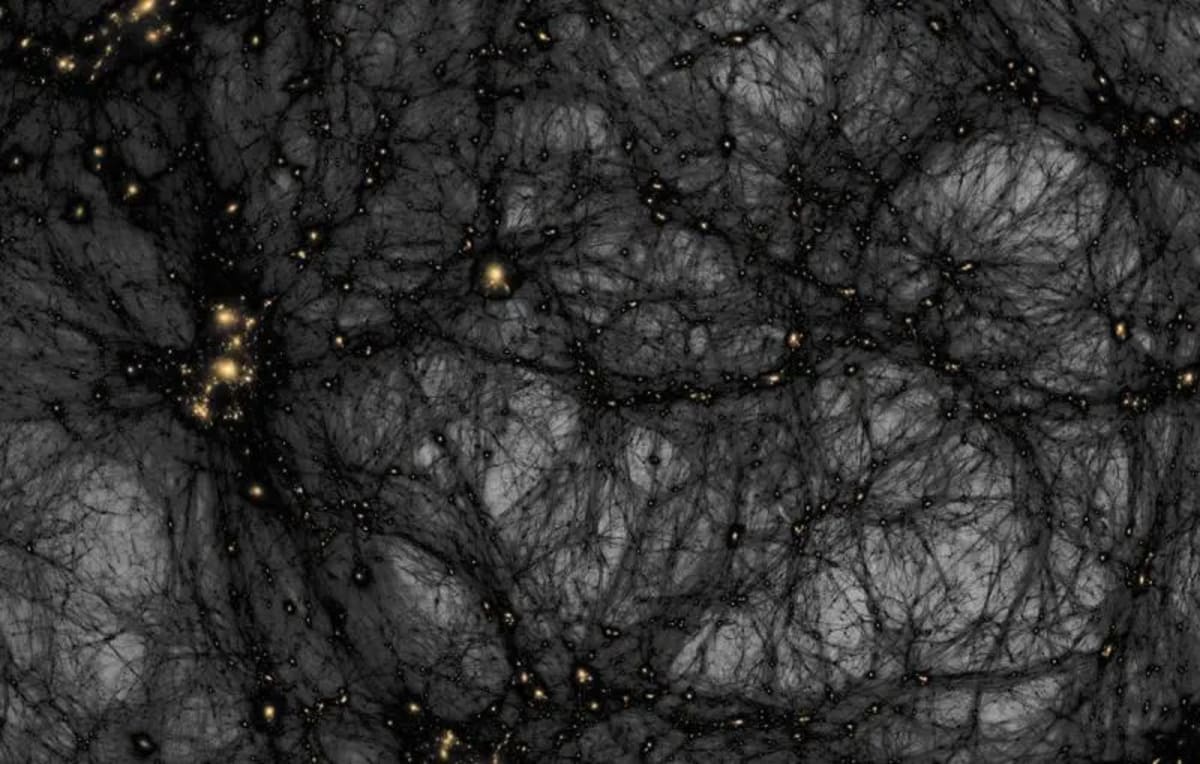
The collision’s impact isn’t a one-way thing, as the Large Magellanic Cloud, too, was affected, as confirmed in a 2025 companion study by this team. The LMC has a bar-shaped structure at its center, and colliding with the SMC tilted this bar out of the galaxy’s plane. The degree of the tilt depends on the amount of dark matter in the SMC. This finding gave a way to measure dark matter—something that has never been directly detected and only inferred through gravitational effects. The 2026 study, too, has led to new methods to read the scrambled motion of stars in a post-collision galaxy like the SMC and, on a broader level, understand how a galaxy can transform in live action.
More on Starlust
Scientists find evidence our Sun may have migrated from the galaxy center with stellar 'twins'
Red supergiant in a nearby galaxy not as close to death as once thought