New solar telescope uses sunspots to help detect distant exoplanets
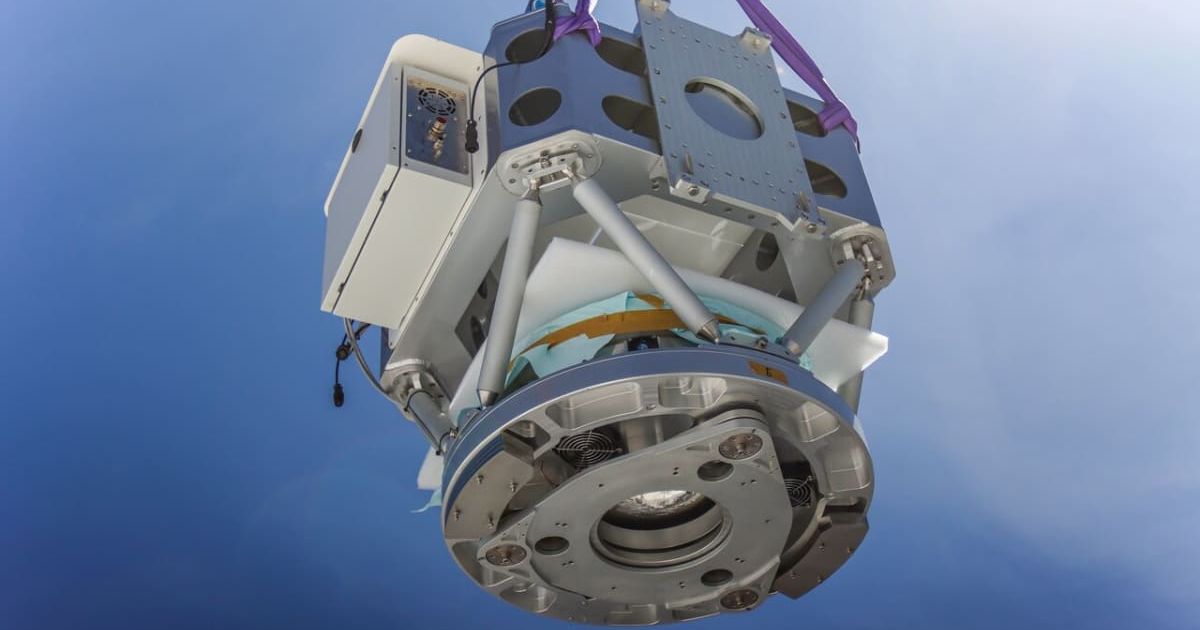
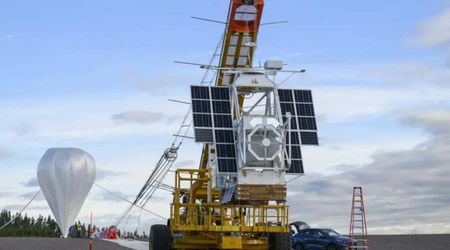
The Paranal solar ESPRESSO Telescope (PoET), installed at the European Southern Observatory’s (ESO’s) Paranal site in Chile, has made its debut by observing the Sun. The telescope, designed to monitor the Sun and distant Sun-like stars, will team up with ESO’s ESPRESSO instrument that looks for Earth twins in the habitable zone around stars similar to the Sun. PoET will also search for planets around distant stars. The telescope aims to detect how slight changes in the light from stars like the Sun can hide the planets orbiting the stars, speeding up the search for stars and planetary systems beyond the solar system.
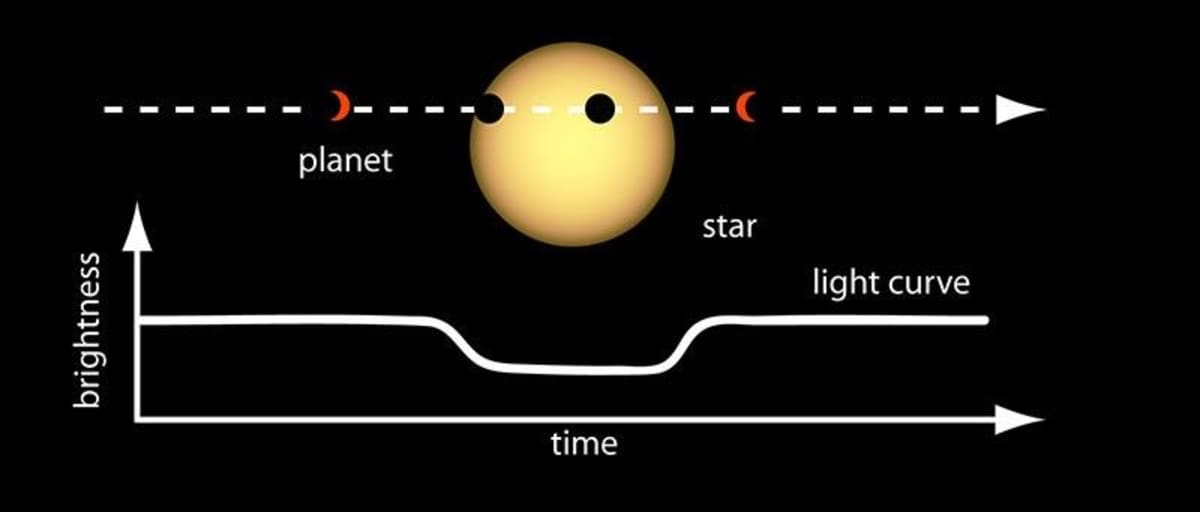
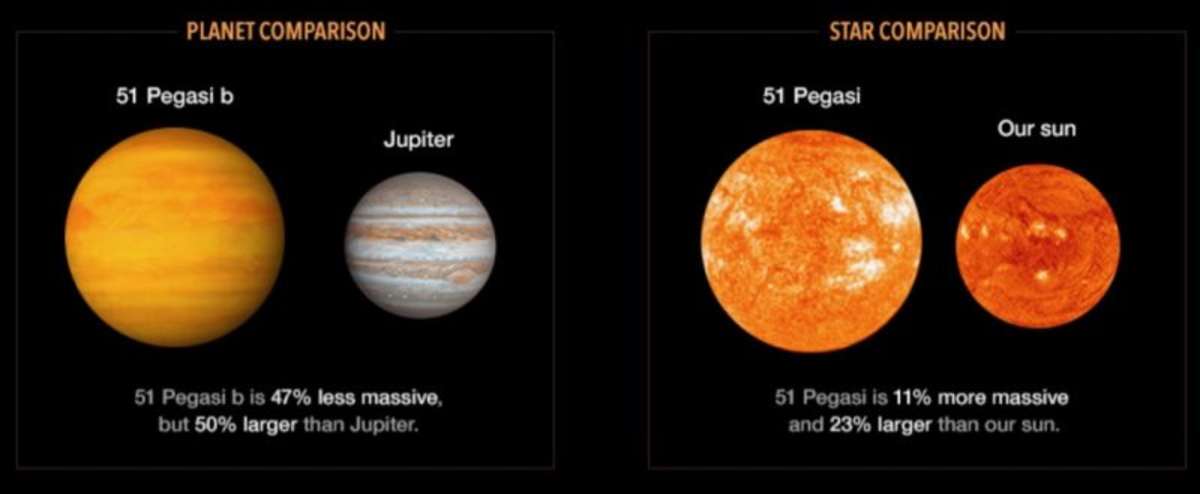
"One of the greatest challenges for the detection of other Earths orbiting other suns is the astrophysical 'noise' coming from the host stars," explains Nuno Santos, the Principal Investigator for PoET, based at the Institute of Astrophysics and Space Sciences and the Faculty of Sciences of the University of Porto, Portugal in a press release by ESO. "PoET observations could be key to the discovery and characterization of exoplanets, which may currently be hidden in the noise." Hunt for exoplanets rely on the light from their host stars. The first exoplanet Pegasi 51b was detected by decoding a shift in the host star’s spectra. The visible light from a star is split up into a rainbow. By looking at small changes in such light or a dip in a host star’s brightness, astronomers can detect the presence of exoplanets.
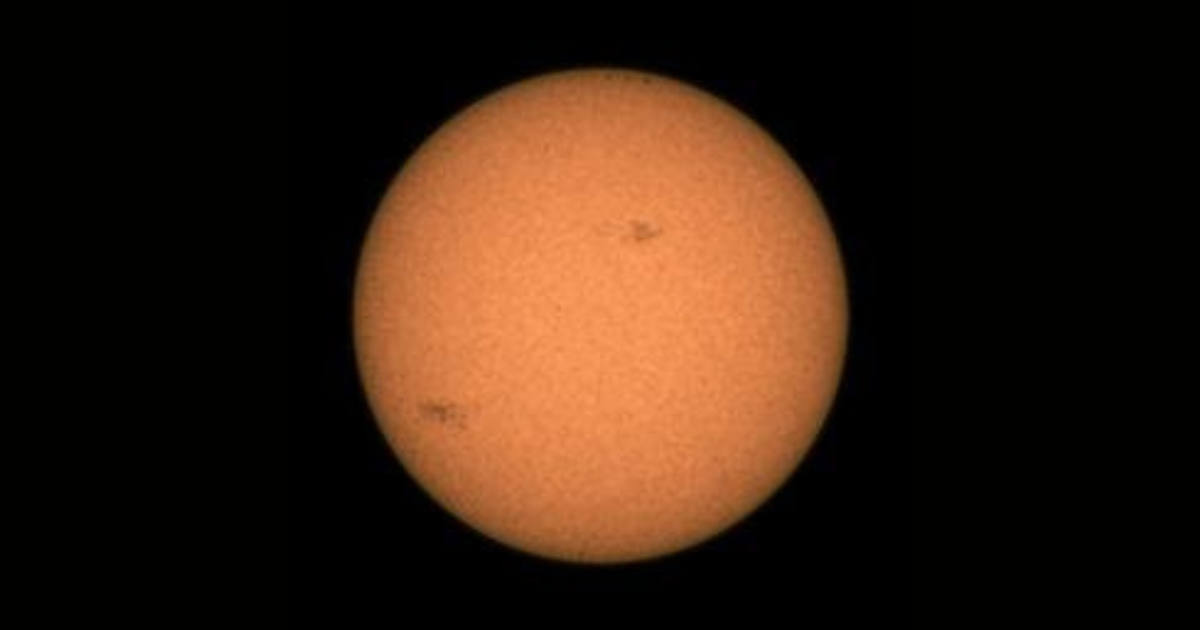
Sunspots are known to alter sunlight. Similar phenomena on other stars can distort their spectrum. Such distortion can be measured as ‘noise’ with the exoplanet-hunting instrument. But removing this ‘noise’ from the spectra of distant stars is a daunting task. Moreover, we don’t yet understand how such noise will change the light emitted by the stars. But we can find a way out by closely monitoring the Sun. PoET is the right telescope to do this. Its sophisticated design will allow it to use the Sun to shed light on the spectra of distant stars. It has a mirror with 60-centimeter diameter that can gather light from the Sun, including areas where sunspots form. PoET has a smaller telescope that is designed to pick up light signals from the Sun’s entire visible surface or the solar disk.
"We will be able to analyze very specific areas of the sun, with a very high resolution, in a way never done before," says Alexandre Cabral, PoET co-Principal Investigator and the Faculty of Sciences of the University of Lisbon, Portugal. By keeping an eye on the solar disk and individual surface features, astronomers can decipher exactly how the Sun’s activity changes the spectrum of its emitted light. Insights gleaned from such studies can then guide them to remove "noise" from distant stars that are possibly orbited by exoplanets. In its hunt for exoplanet, PoET needs a competent companion. "ESPRESSO is the top instrument in the field, so the choice was obvious," says Santos.

ESPRESSO is a precise, high-resolution spectrograph, on ESO's Very Large Telescope (VLT) that searches for distant stars by night. During the day, it will aid PoET to analyze solar spectra. In early April, PoET did its test observations, also known as first light. It passed the test, by showing that it can capture light signals from the entire solar disk and specific areas of it. In the coming weeks, the team will test the telescope further and optimize the system, before they start scientific observations.
More on Starlust
A new solar system may have been caught in the act of formation, study suggests