NASA's PUNCH captures stunning footage of 'time-traveling' Comet Lemmon (C/2025 A6)
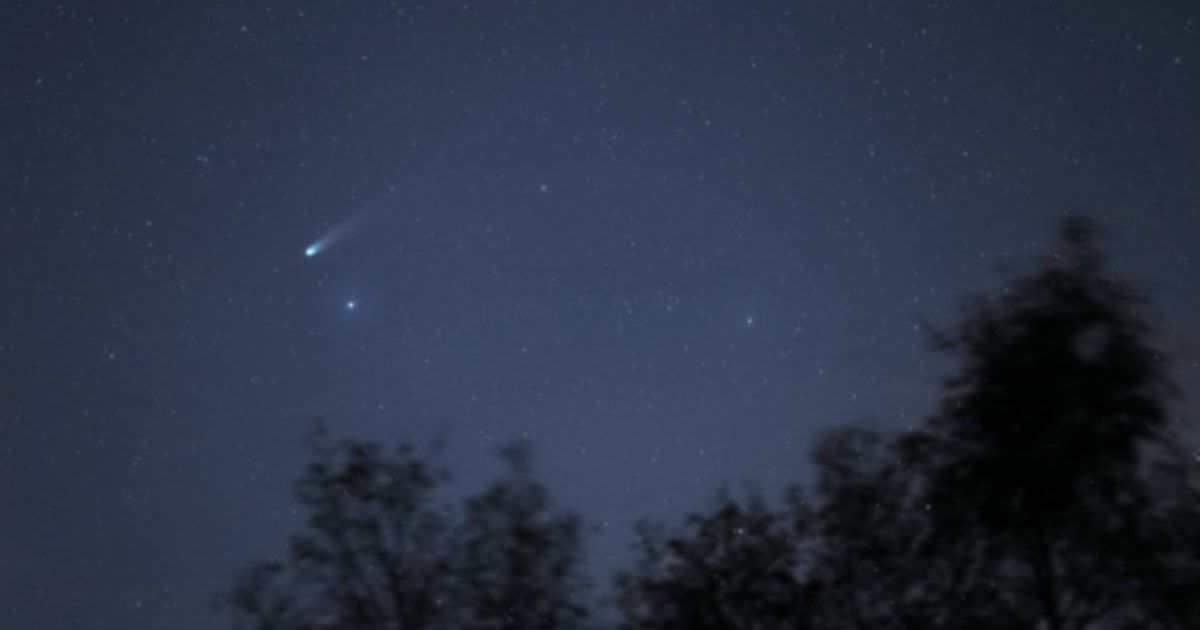
A NASA mission has produced incredible images of a comet that looks like it is "time-traveling" and is going through a turbulent life past the sun. The comet C/2025 A6 (Lemmon), which has not visited our solar system for more than 1,300 years, has recently come into view of NASA’s PUNCH mission, the space agency announced.
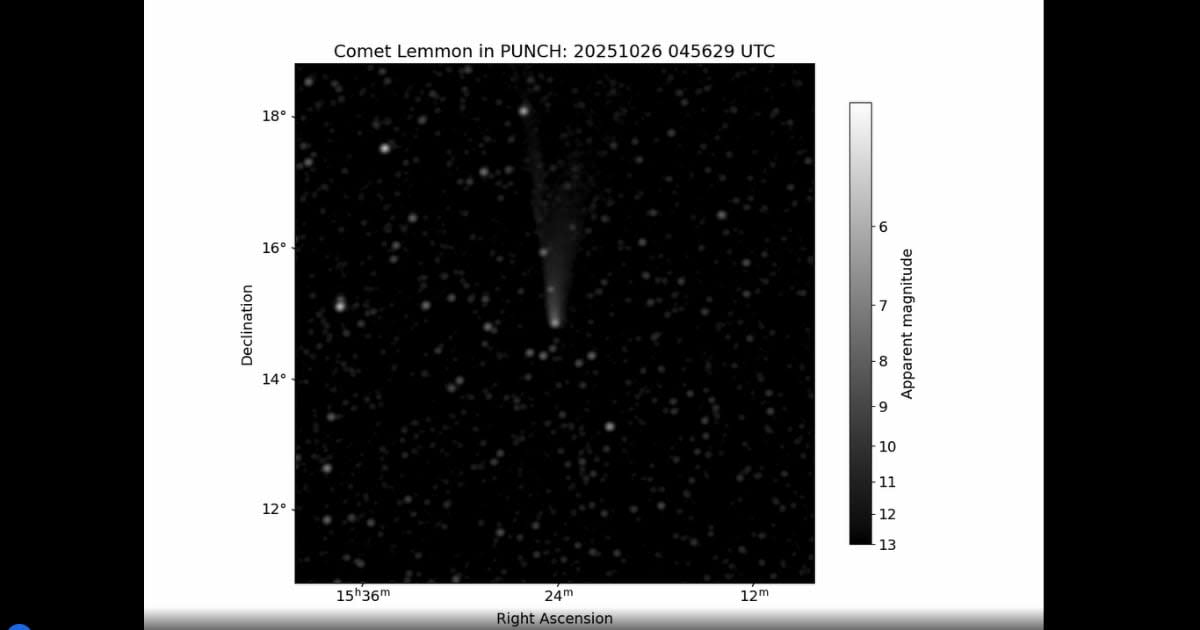
The satellite, whose mission is to observe the Sun’s heliosphere in 3D, took the comet as a natural reference to monitor the movement of solar winds through the cosmos. During the period from October 22 to November 12, the PUNCH satellite captured dramatic footage of the comet’s tail responding to the solar activity. Scientists observed that on November 1 and November 4, the tail of the comet appeared to "waver and break in response to solar activity." However, even though the comet’s tail was subjected to such strong solar winds, it still grew back within a few days as the comet proceeded on its journey.
This isn't just any other space rock. Astronomers describe comet Lemmon as a "time traveler" because of its massive, 1,350-year orbit. Its journey began roughly 240 astronomical units away, a distance that puts its origin far beyond the orbit of Pluto. The comet was originally imaged as an apparent asteroidal object on January 3, 2025, by astronomer David Fuls, who was using the 1.5-m reflector of the Mt. Lemmon Survey. Initially placed on The Possible Comet (and A/ objects) Confirmation Page (PCCP) as CCNG6P2, it was later renamed to C/2025 A6 (Lemmon) after follow-up images showed cometary properties. This long-distance visitor made its closest approach to Earth on October 21, 2025, at a distance of about 55 million miles (89 million kilometers) before making its perihelion (closest approach to the Sun) on November 8.
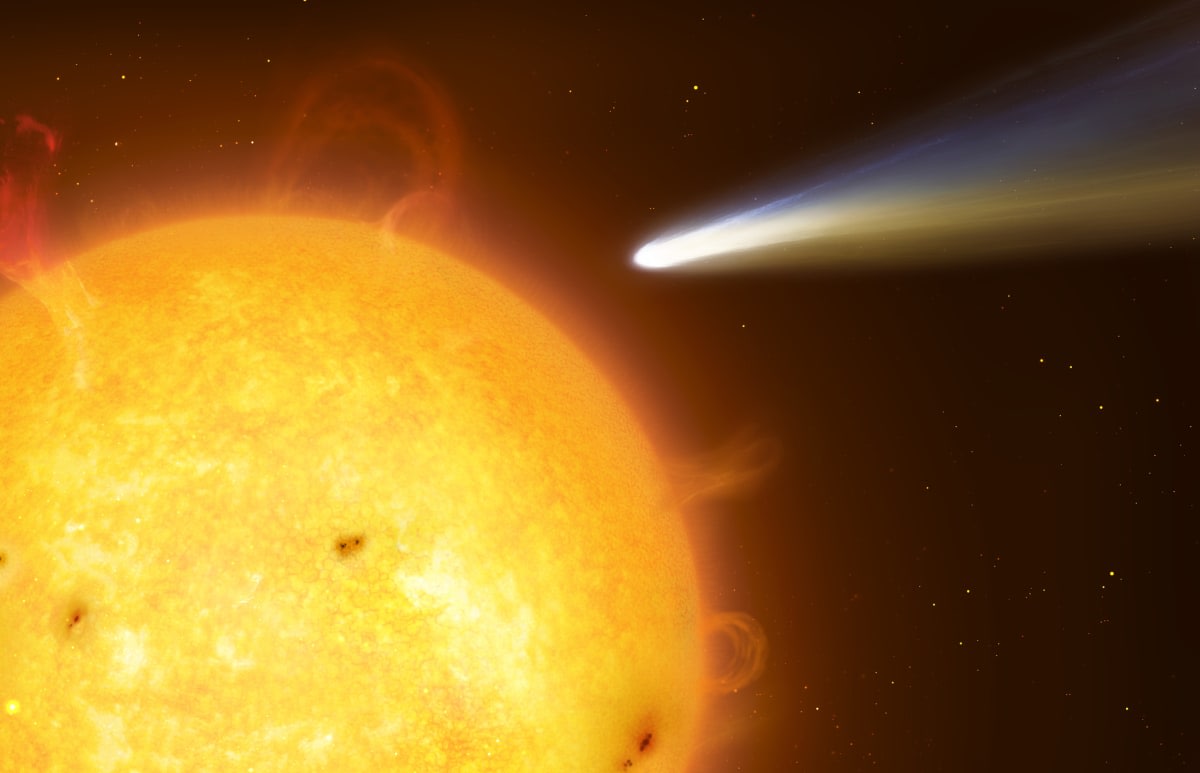
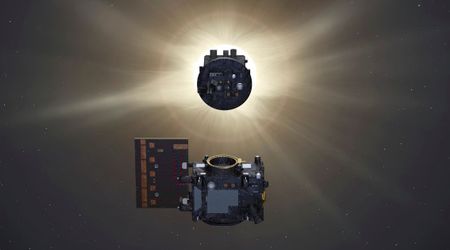
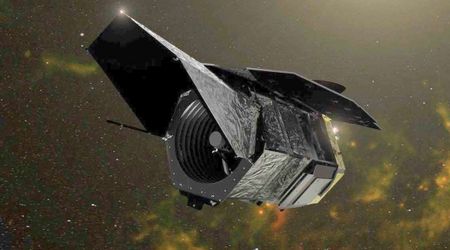
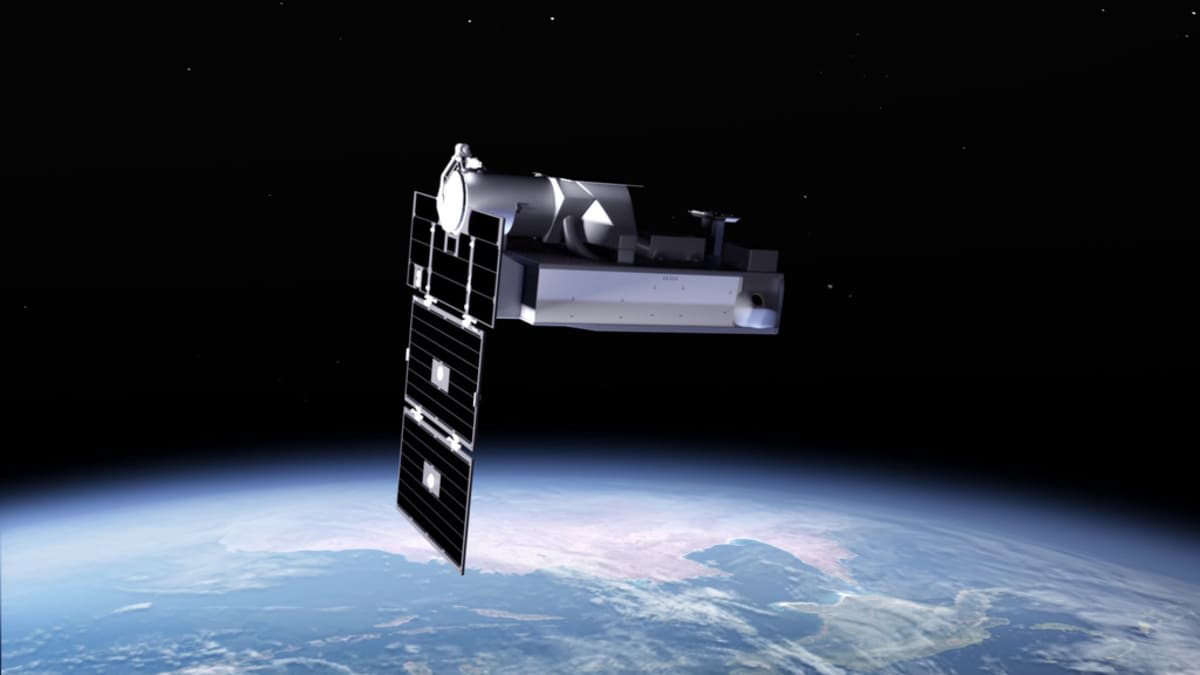
The PUNCH (Polarimeter to Unify the Corona and Heliosphere) mission is a fleet of four suitcase-sized satellites that are spread across roughly 8,000 miles of space, working as a single system. While Comet Lemmon still continues to be visible in PUNCH images, it is getting dimmer and dimmer with time. In fact, its scientists expect the comet to disappear from the mission's view by mid-January 2026 as it heads farther away from Earth and the Sun into the darkness of space for another millennium. Its brief appearance serves as a spectacular reminder of the vast, ever-changing universe beyond our world.
As of today, the comet is passing through the constellation Scorpius, per Sky Live. It has moved nearly 185 million miles (297 million kilometers) away from Earth, with its expected magnitude (brightness) being 12.49. Because of its current distance, light from it takes about 16 minutes to reach us. For astronomers trying to locate the comet's position, it is currently at a Right Ascension of 17h 14m 01s and a Declination of -36° 05’ 33”.
More on Starlust
Solar storm temporarily rips apart comet Lemmon's tail in rare celestial spectacle
Where is comet C/2025 A6 (Lemmon) now: Current location and coordinates