NASA's James Webb Space Telescope captures a rare jellyfish galaxy from 8.5 billion years ago
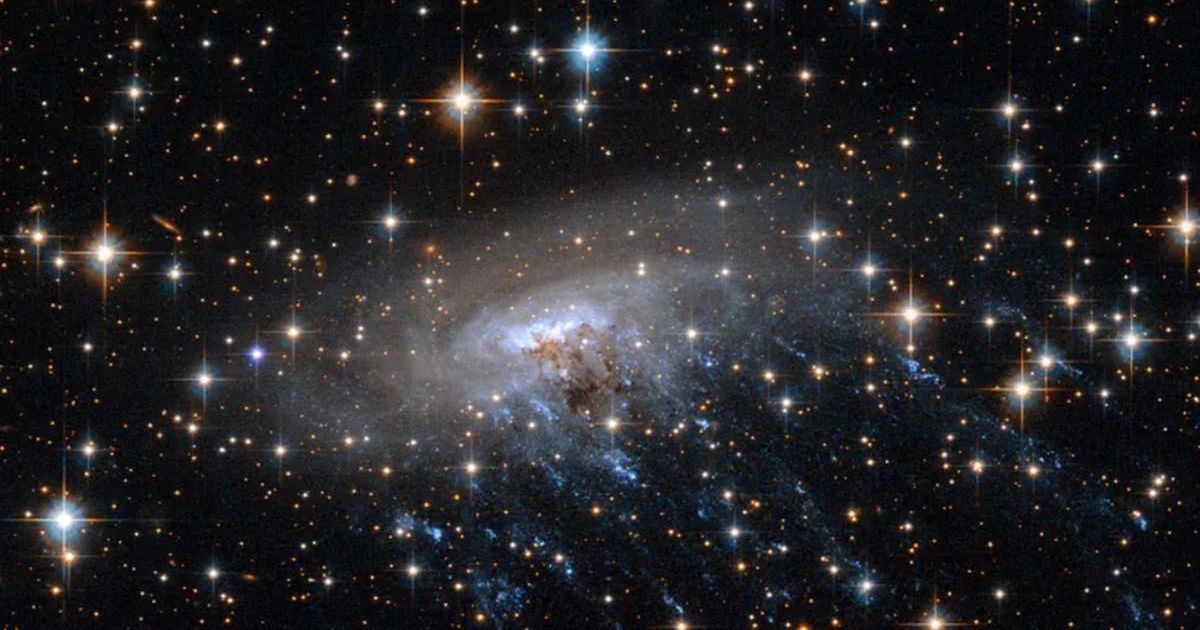
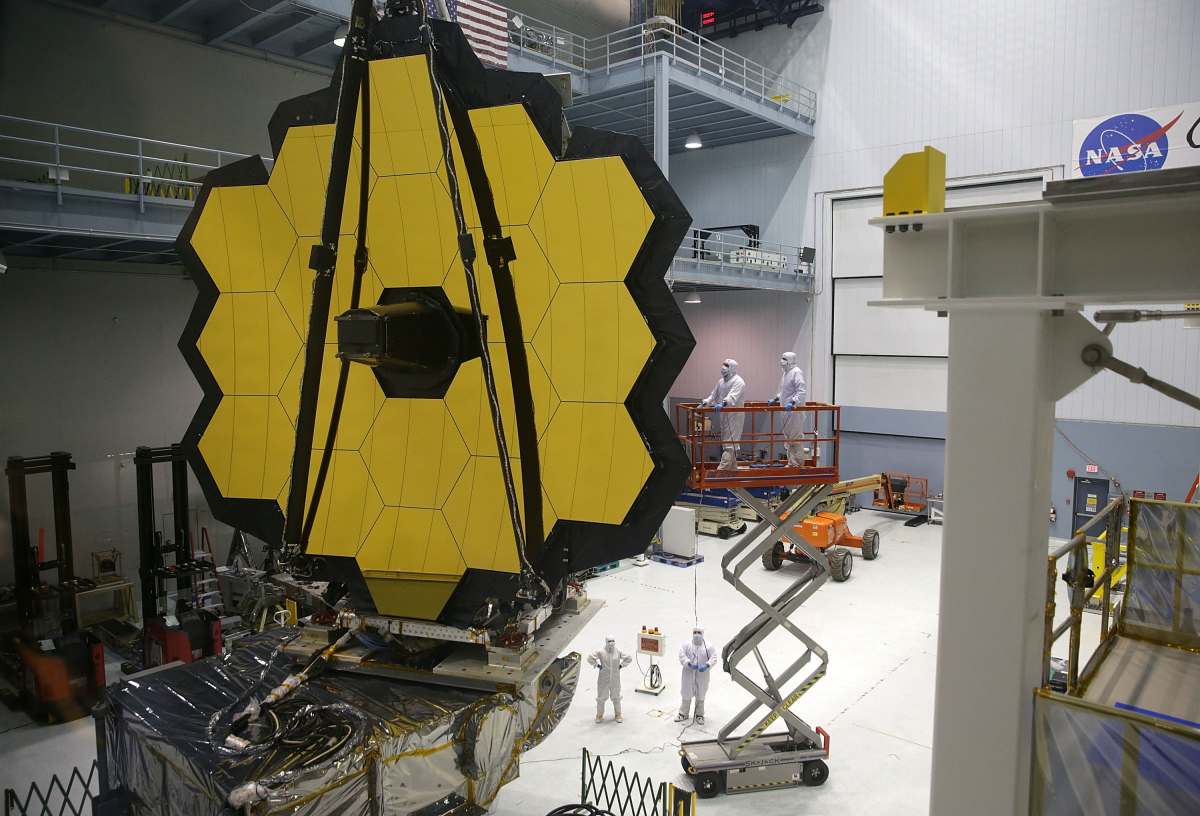
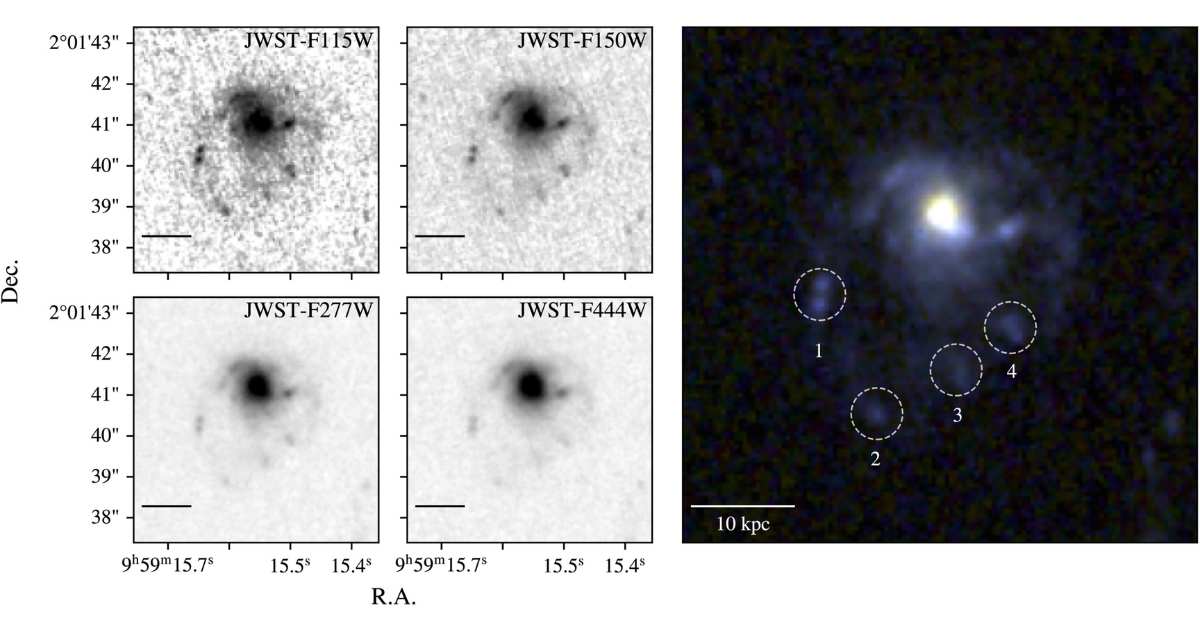
Using the James Webb Space Telescope (JWST), astrophysicists from the University of Waterloo (UW) have caught a glimpse of a new jellyfish galaxy that wades through a hot, dense cluster of galaxies. The object, designated as COSMOS2020-635829, drifts through the cluster, lashing tentacle-like streams of gas that trail behind it. Light signals that helped the researchers piece together the motion of the jellyfish galaxy had traveled a distance of 8.5 billion light-years before being captured by the JWST. It means that the cosmic event that has unfolded now actually happened 8.5 billion years ago. This provides new insights into how the galaxies evolved in the early universe, according to the study published in The Astrophysical Journal.
Galaxy clusters are enormous structures that contain huge amounts of hot gas, dark matter, and hundreds to thousands of galaxies. As an individual galaxy hurtles through a cluster, the gas in the cluster exerts pressure on that of the galaxy—a phenomenon known as ram-pressure stripping—and pushes it out the back, resulting in trails that resemble the tentacles of a jellyfish.
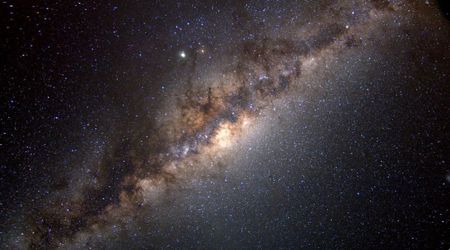
The team discovered the galaxy while analyzing the COSMOS field—Cosmic Evolution Survey Deep field—a particular part of the sky that astronomers often look into while studying distant galaxies. This patch of sky lies beyond the dense plane of the Milky Way. As a result, there is little interference from the stars and interstellar dust of our host galaxy. In addition, the patch can be viewed from the northern as well as southern hemispheres. “We were looking through a large amount of data from this well-studied region in the sky with the hopes of spotting jellyfish galaxies that haven’t been studied before,” said Dr. Ian Roberts, Banting Postdoctoral Fellow at the Waterloo Centre for Astrophysics, in a UW press release. “Early on in our search of the JWST data, we spotted a distant, undocumented jellyfish galaxy that sparked immediate interest.”
The jellyfish galaxy has blue knots in its trails that indicate the presence of very young stars. Their age proves that the stars formed outside the main galaxy in the trails of stripped gas. Insights gleaned from this study could challenge conventional wisdom of astrophysics, particularly ones that focus on the early universe. So far, the general belief was that galaxy clusters were still forming and ram-pressure stripping was not that common. Roberts and his teammates discovered three more things related to the period when the jellyfish galaxies were forming and rushing away. These could reshape how we think of the universe.

“The first is that cluster environments were already harsh enough to strip galaxies, and the second is that galaxy clusters may strongly alter galaxy properties earlier than expected,” Roberts said. “Another is that all the challenges listed might have played a part in building the large population of dead galaxies we see in galaxy clusters today. This data provides us with rare insight into how galaxies were transformed in the early universe.” Roberts and his team have placed a request for more time on the JWST so that they may uncover more about the galaxy.
More on Starlust
What triggers massive Milky Way stars to run away from their birthplaces?
Astronomers find 'barred' galaxy from two billion years after the Big Bang