NASA's Hubble Space Telescope confirms first-ever failed starless galaxy made of dark matter
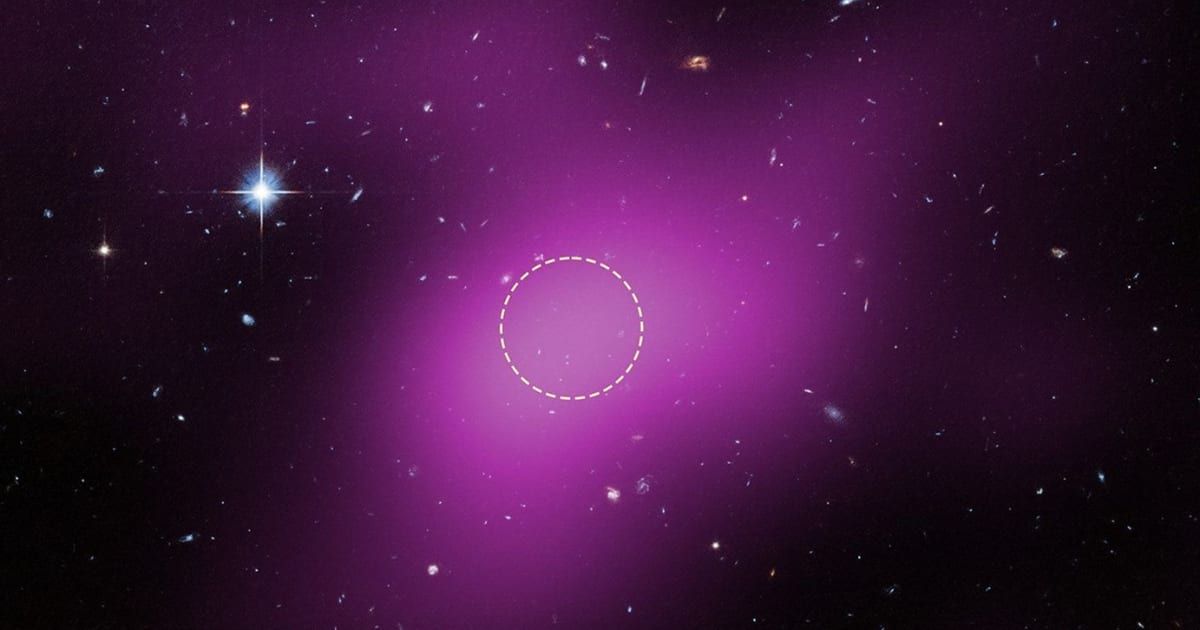
Astronomers have spotted a unique cosmic phenomenon: a "relic," which is a primordial building block of a galaxy that never came to be. The failed galaxy, henceforth called Cloud-9, was confirmed by NASA's Hubble Space Telescope to be the very first of its type, comprising mostly gas and the unseen dark matter, according to NASA.
A team using @NASAHubble has made the first confirmed detection of a new type of astronomical object: a starless, gas-rich, dark-matter cloud, nicknamed Cloud-9. Here's what this object is teaching us about dark matter and the early universe: https://t.co/csCRXnzgDM pic.twitter.com/ZnUnhy9EYL
— NASA (@NASA) January 5, 2026
The results of the study, published in The Astrophysical Journal Letter, were unveiled on January 4 at the American Astronomical Society's 247th annual meeting. Unlike most gas clouds in space that eventually give rise to stars and galaxies, Cloud-9 is a frozen past. It has been designated by scientists as a RELHIC (Reionization-Limited H I Cloud), wherein "H I" stands for neutral hydrogen, while RELHIC signifies a cloud of natal hydrogen from when the universe was taking its baby steps. "In this case, seeing no stars is what proves the theory right," commented Alejandro Benitez-Llambay, the principal investigator of the project at UniMilano-Bicocca. "It tells us that we have found in the local universe a primordial building block of a galaxy that hasn't formed."
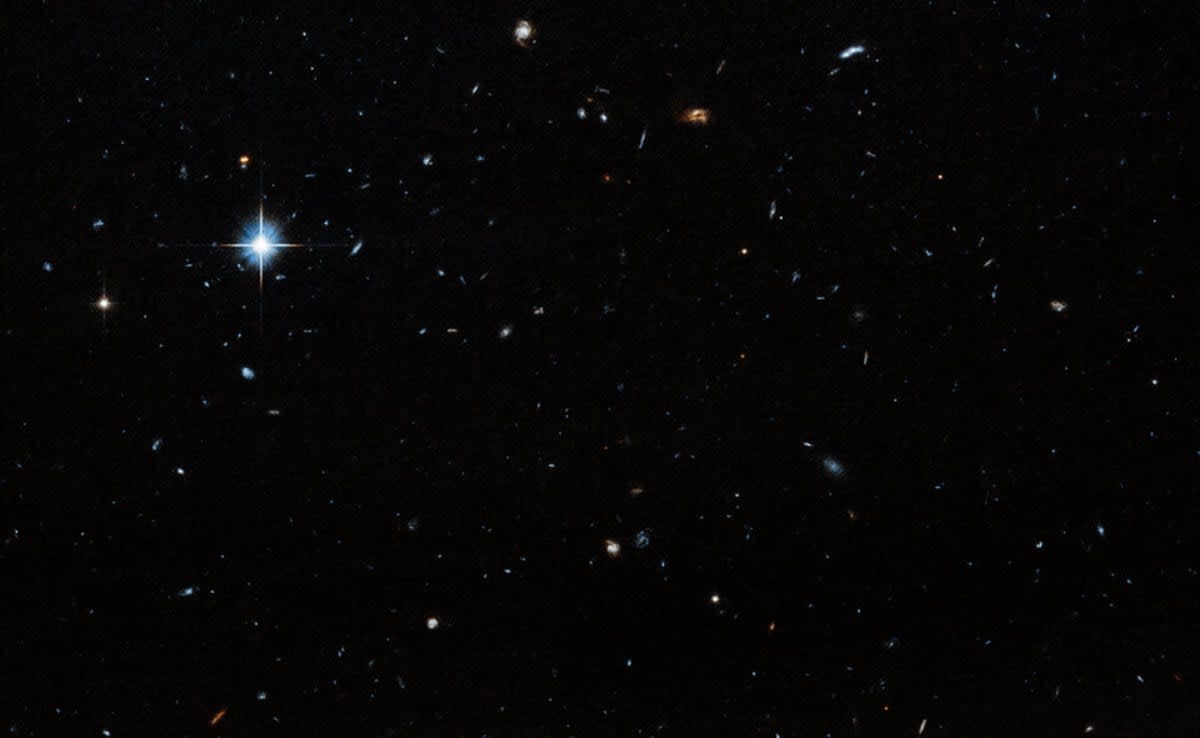
The cloud was originally spotted by radio telescopes in China and the U.S., but researchers couldn't be sure it was starless. Previous telescopes weren't sensitive enough to rule out the presence of tiny, dim stars. Lead author Gagandeep Anand of the Space Telescope Science Institute (STScI) explained that before Hubble, one could argue it was just a faint dwarf galaxy invisible to ground-based tools. “But with Hubble’s Advanced Camera for Surveys, we're able to nail down that there's nothing there,” Anand said.
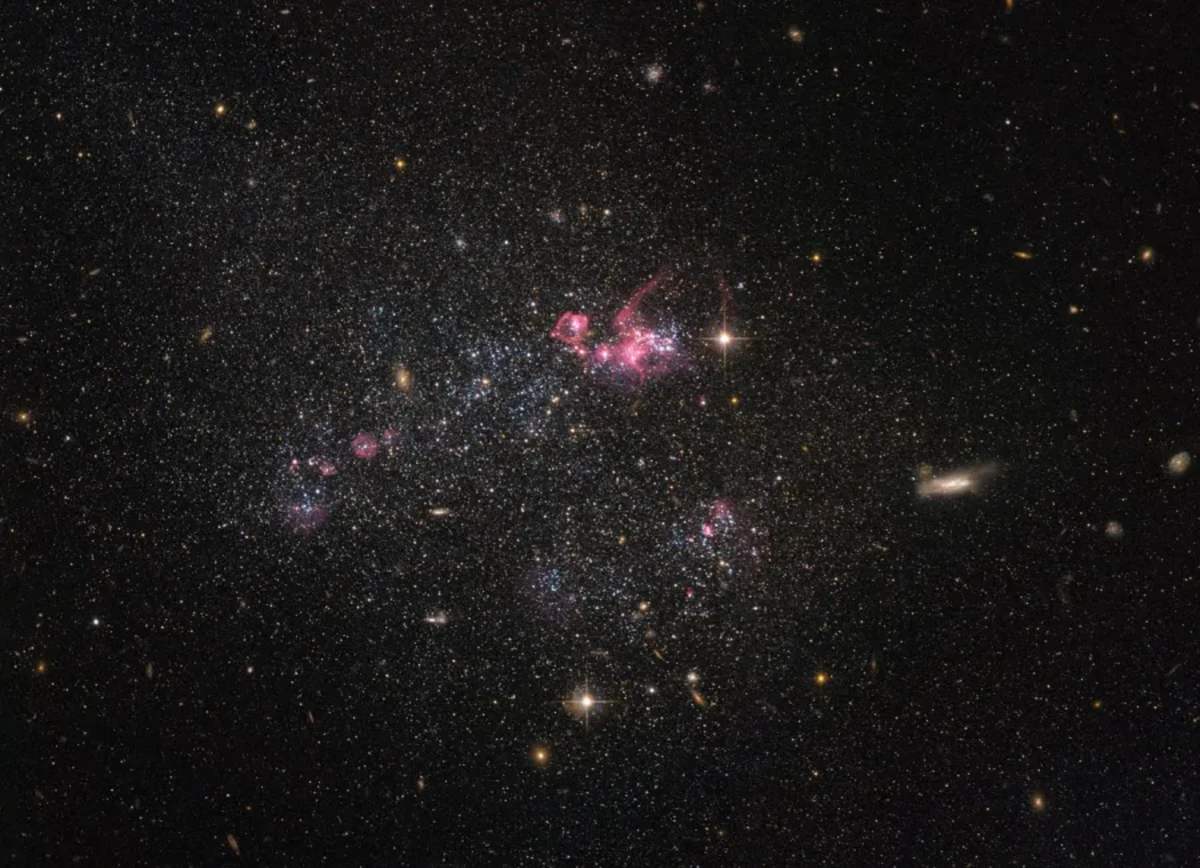
Researchers found that Cloud-9 is composed almost entirely of neutral hydrogen gas and invisible dark matter, with a gas core spanning roughly 4,900 light-years in diameter. While the detectable gas weighs about a million times more than our Sun, the massive gravitational pull holding the cloud together suggests it contains an immense amount of dark matter, estimated at 5 billion times the Sun's mass.
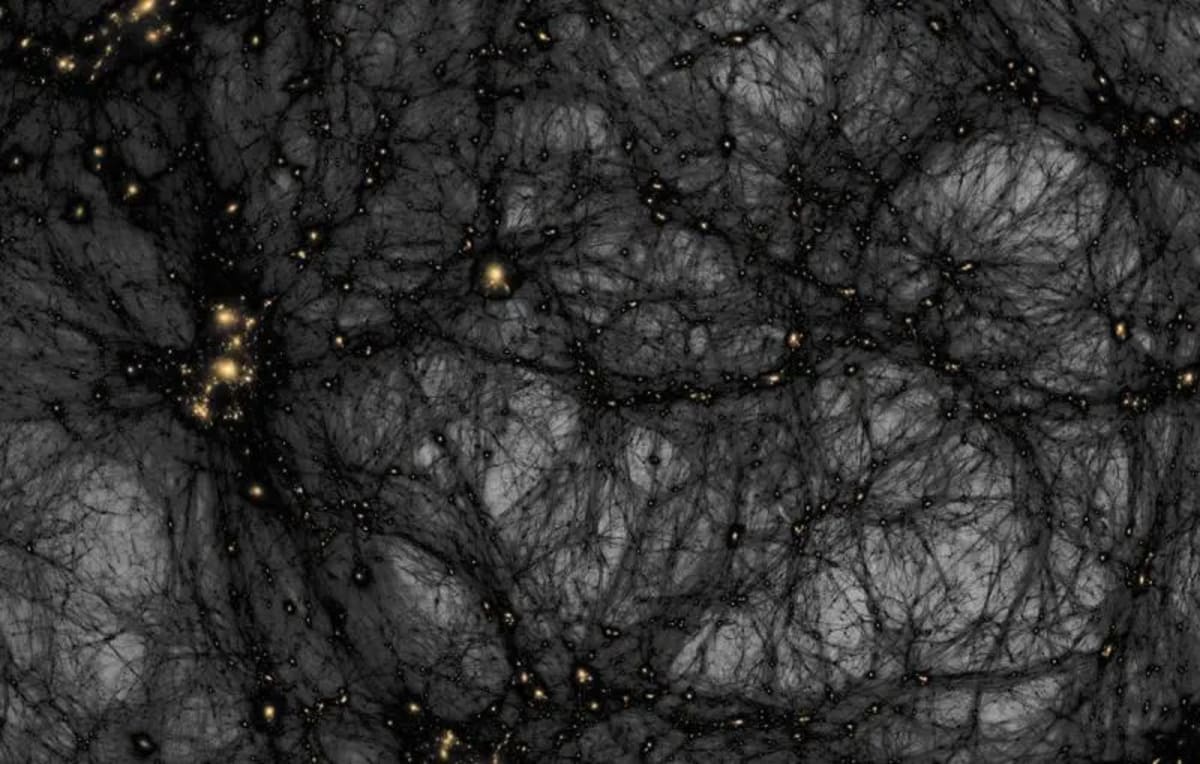
Although dark matter is theorized to constitute most of the mass in the universe, it is virtually undetectable because it does not emit light. Cloud-9 is a sort of window into this dark universe. Cloud-9, positioned close to a spiral galaxy known as Messier 94, is in a "sweet spot." It would have turned into a normal galaxy if it were any more massive, and if it were less massive, its gas would have scattered away. Instead, it is still a clear fossil from the early universe, thereby implying that there may be numerous such "abandoned houses" concealed in our galactic neighborhood.
This finding has come at an essential point where perceptions of dark matter have changed drastically. For a long time, zillions of subatomic particles were believed to make up dark matter. But since the hypothesis has yielded very little success, scientists are beginning to look for dark matter in much larger, star-sized structures. A paper released on the preprint server arXiv details this change in approach.
More on Starlust
Physicists predict dark matter will doom the Universe to a catastrophic 'Big Crunch' soon
Cosmic mystery solved? Dark matter may not be entirely 'dark' after all, new research suggests