Magma ocean on an alien planet could reveal clues to Earth's turbulent history
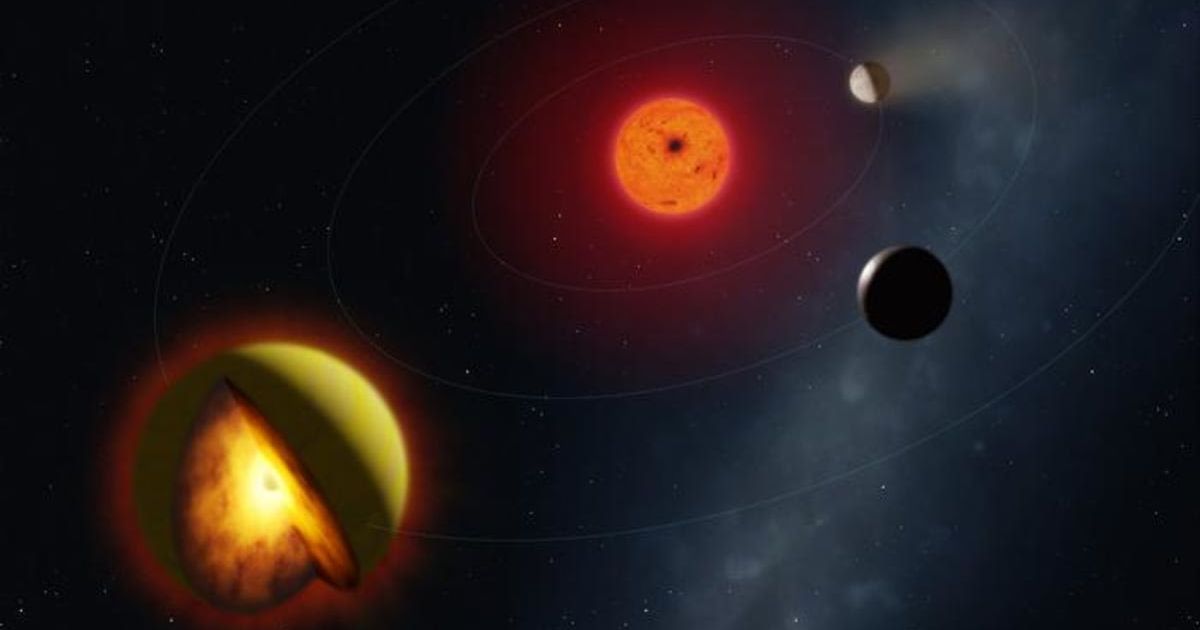
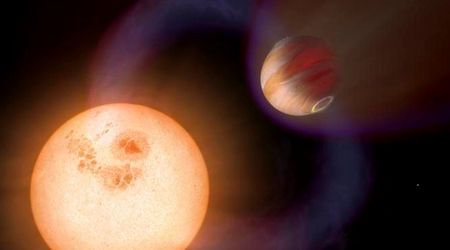
Astronomers at the University of Oxford have discovered a new type of exoplanet that has a rich store of sulphur deep beneath a magma ocean. Ground-based observations, supported by the James Webb Space Telescope, reveal that the planet is 1.6 times the size of Earth. Its atmosphere also has hydrogen sulfide, but thinner than that of Earth. Named as L 98-59 d, it orbits a small red star that is located 35 light-years away from us, according to a study published in Nature Astronomy. The new planet doesn’t fit into conventional categories of planets. So far, planet hunters have found planets that fall broadly into two categories – one type is a rocky "gas dwarf" with hydrogen in its atmosphere and the other type is water-rich deep oceans with ice known as "water worlds." However, the new planet has heavy sulphur molecules.
With support from researchers at the University of Groningen, the University of Leeds and ETH Zurich, the Oxford team did computer simulations. This allowed them to reconstruct the history of the planet that spans five billion years since birth. Simulations, bolstered by observational evidence, helped them figure out what exactly happens deep inside the planet. The analysis uncovers the existence of a mantle that is likely made of molten silicate, which is akin to lava on Earth. The mantle hides a global magma ocean that extends thousands of kilometers beneath. This molten outer core stores huge amounts of sulphur and the magma ocean helps the planet to hold back a hydrogen-rich atmosphere and sulphur-bearing gases. Without these protective layers, the host star’s radiation could have caused these gases to escape into space.
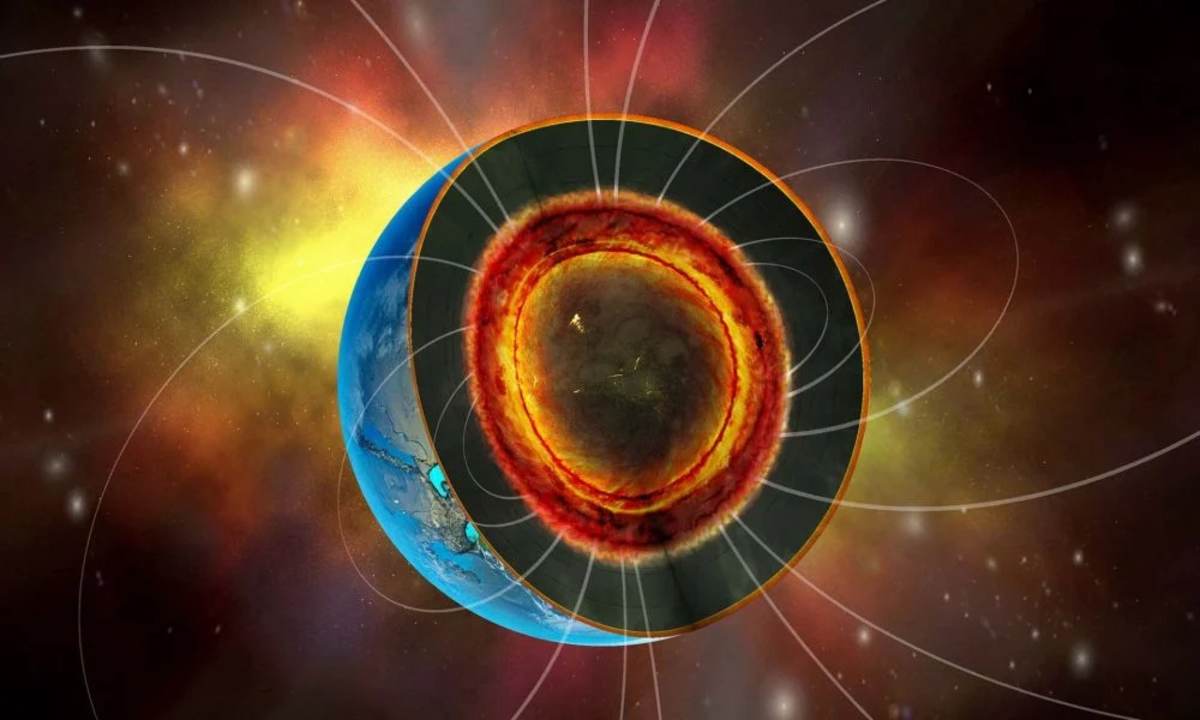
The chemical exchanges between the molten inner core and atmosphere shaped the planet over billions of years, giving rise to features that are captured by the telescopes. The researchers point out that this planet is the first of its kind that has been found to sustain a gas-rich environment under a magma ocean. “This discovery suggests that the categories astronomers currently use to describe small planets may be too simple. While this molten planet is unlikely to support life, it reflects the wide diversity of the worlds which exist beyond the Solar System,” said lead author Dr Harrison Nicholls from the Department of Physics at the University of Oxford in a statement. “We may then ask: what other types of planets are waiting to be uncovered?”

In 2024, JWST images revealed the presence of sulphur dioxide gas in the planet’s upper atmosphere. With the help of new models, the astronomers show that the ultraviolet light from the host’s star can induce chemical reactions that can create such gases. The magma ocean works like a buffering layer for such volatile gases. The ocean stores and releases them into the atmosphere, making them available for ultraviolet light to trigger reactions that have been happening over billions of years. The astronomers think that the planet might have been bigger than it is today. In fact, it looked like a larger sub-Neptune planet. Then it cooled and shrank, losing some of its atmosphere. “Importantly, magma oceans represent the universal initial states of all rocky planets (including the Earth and Mars), so new insights into magma ocean physics can inform us about our own world and its primordial history,” according to the statement.
More on Starlust
An exoplanet discovered by ESA's CHEOPS is turning theories of planetary formation 'inside out'
Two exoplanets collided—and the impact was similar to the one that created Earth and the Moon