James Webb Telescope's new map is strong proof that there would be no life without dark matter
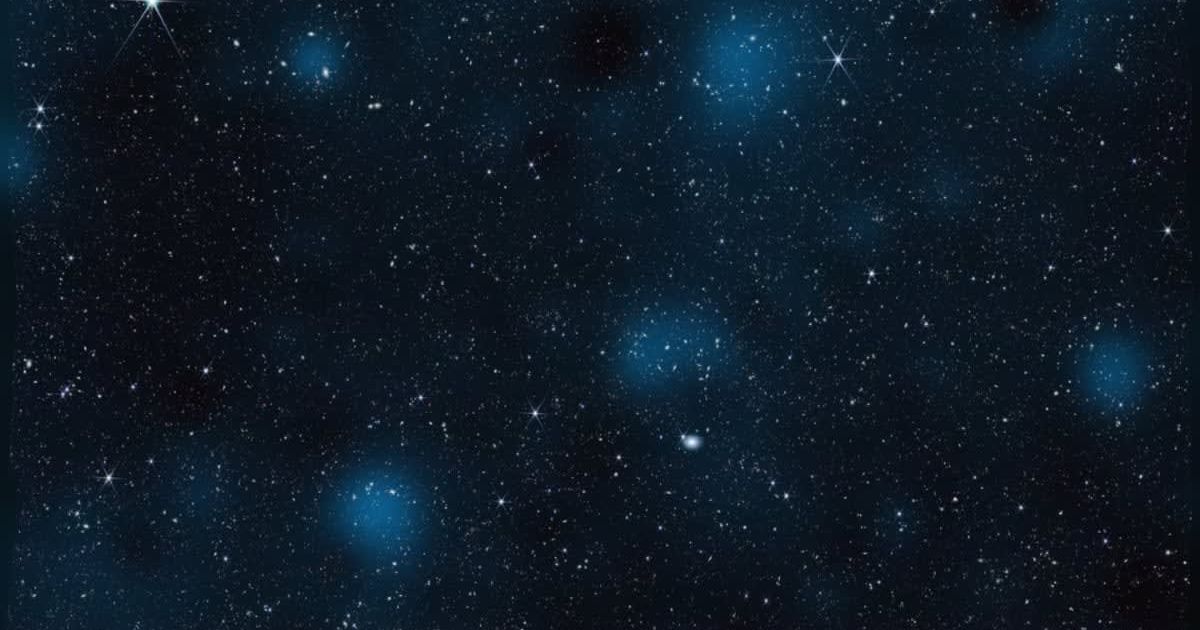
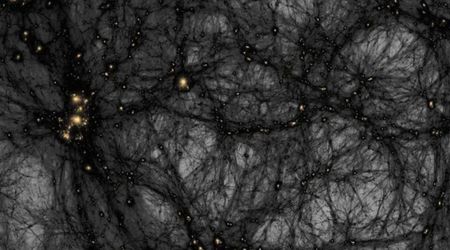
NASA’s James Webb Space Telescope has helped astronomers create the most detailed, high-resolution map of dark matter ever produced. The map shows how the invisible dark matter co-exists with visible matter, the stuff that makes up light-emitting celestial entities such as stars and galaxies and the rest that we see. “This is the largest dark matter map we have made with Webb, and it is twice as sharp as any dark matter map made by other observatories,” said Diana Scognamiglio, lead author of the study published in Nature Astronomy and an astrophysicist at NASA’s Jet Propulsion Laboratory in Southern California, in a press release. “Previously, we were looking at a blurry picture of dark matter. Now we’re seeing the invisible scaffolding of the universe in stunning detail, thanks to Webb’s incredible resolution.”
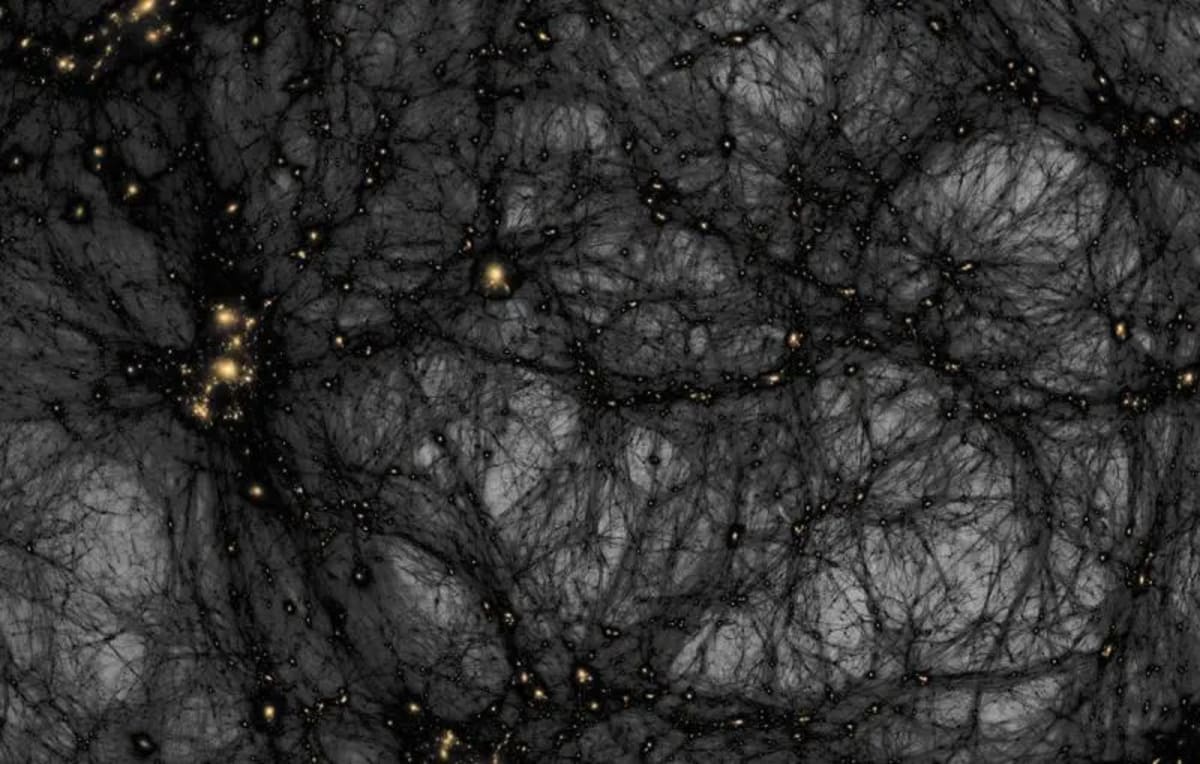
Dark matter doesn’t interact with ordinary matter. It doesn’t even emit light or absorb or reflect, making itself invisible to us. It drifts in space through regular matter like a ghost. But evidence shows that it does interact with gravity, the same force that the Sun exerts on the planets around it and the Moon uses to create tides on Earth. This is evidenced by the new map, which shows dark matter overlapping with regular matter. According to the authors of the study, Webb's observation confirms that dark matter pulls regular matter towards it via its gravity. In fact, the theory is that dark matter began to come together first before pulling regular matter towards it, thereby birthing regions with enough raw material to trigger the formation of stars and galaxies. This essentially means that dark matter, in a way, was also what ushered in planets. Think about it. The first stars turned hydrogen and helium into the elements that make up planets like our own. “This map provides stronger evidence that without dark matter, we might not have the elements in our galaxy that allowed life to appear,” said JPL astrophysicist and co-author of the paper, Jason Rhodes.

While creating the new map, the astronomers focused on a section of sky that is about 2.5 times larger than the full Moon and located in the constellation Sextans. The same location was first mapped by NASA’s Hubble Space Telescope in 2007, a project led by astrophysicist Richard Massey at Durham University in the UK and Rhodes. Webb observed this region for about 255 hours and detected nearly 800,000 galaxies, some of which were identified for the first time.
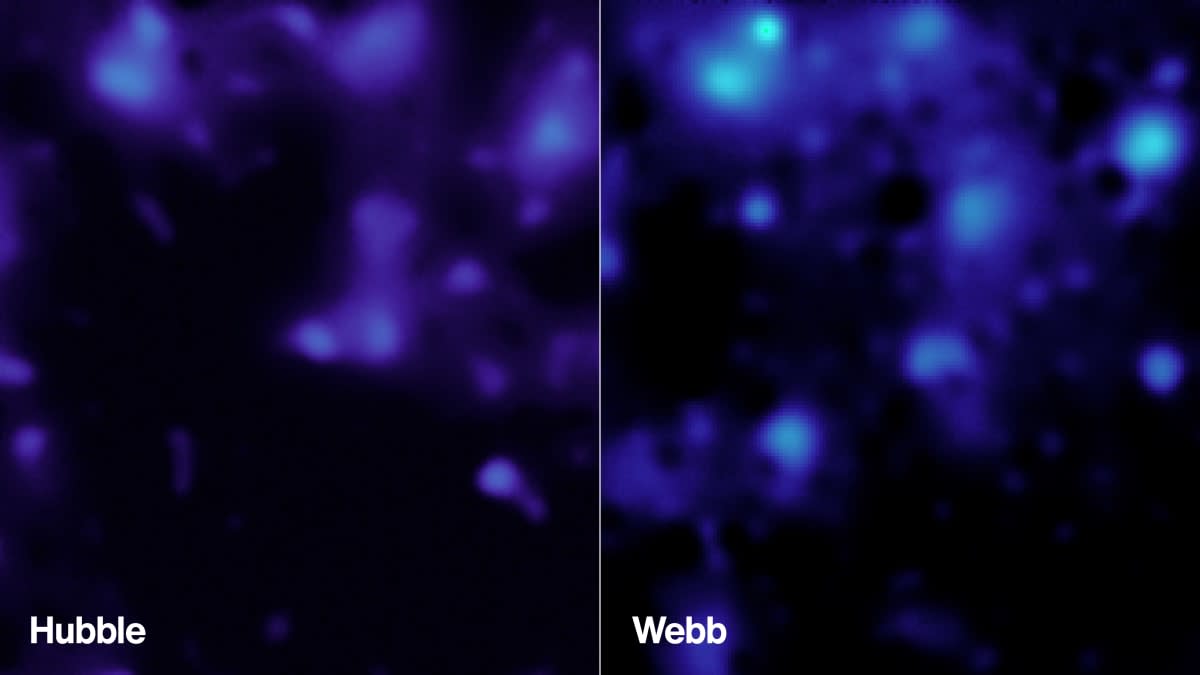
The researchers looked for dark matter by detecting how its mass warps space and eventually bends the light traveling toward Earth from distant galaxies. Massey says, “Wherever we see a big cluster of thousands of galaxies, we also see an equally massive amount of dark matter in the same place. And when we see a thin string of regular matter connecting two of those clusters, we see a string of dark matter as well.” This new map shows us that dark matter and regular matter have always been in the same place, and they grew up together. The new map has 10 times more galaxies than the previous maps created using ground-based telescopes and twice that of one made using the Hubble. The Webb is adept at detecting galaxies that are usually shrouded by cosmic dust clouds, revealing new clumps of dark matter.
More on Starlust
Century-old mystery solved? Scientists may have 'seen' dark matter for the very first time