ISRO’s PSLV launch fails after third-stage anomaly; 16 payloads lost
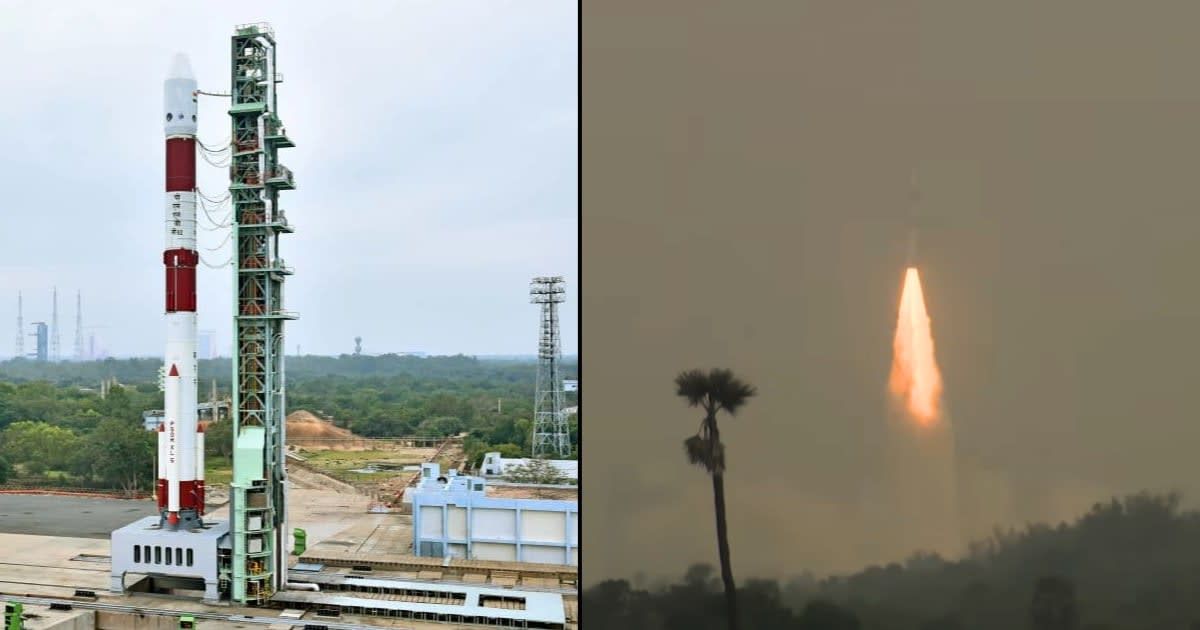
A key Earth observation satellite and fifteen smaller co-passenger satellites were lost when India's Polar Satellite Launch Vehicle crashed during ascent late on Sunday. PSLV-C62 launched from the Satish Dhawan Space Center at 11:48 p.m. Eastern Standard Time on January 11 (04:48 UTC on January 12). Six minutes into the flight, during a third-stage burn, a loss of attitude control was visible on the launch webcast. As a result, the stage fell and the mission was lost. This failed mission resulted in the loss of 16 payloads, including the EOS-N1 (Anvesha) Earth monitoring satellite.
The PSLV-C62 mission encountered an anomaly during end of the PS3 stage. A detailed analysis has been initiated.
— ISRO (@isro) January 12, 2026
"We attempted the PSLV-C62 EOS-N1 mission. The PSLV is a four-stage vehicle—the first stage is a solid motor with two strap-ons, the second stage is liquid, the third stage is solid, and the fourth stage is liquid. The performance of the vehicle close to the third stage was as expected and as predicted," ISRO chairman V. Narayanan said following the unsuccessful launch at the Sriharikota spaceport. "However, near the end of the third stage, we observed some disturbance in the vehicle, and there was a deviation in its flight path. As a result, the mission could not proceed as expected. We are now analyzing the data from all ground stations, and once the analysis is complete, we will come back to you." According to astronomer Jonathan McDowell, the stage reached a suborbital trajectory before crashing into the Indian Ocean.
I estimate that PSLV-C62 reached a suborbital trajectory of around -3800 x 390 km x 98 deg and fell in the Indian Ocean very roughly near 75E 18S.
— Jonathan McDowell (@planet4589) January 12, 2026
The mission's primary payload, EOS-N1, a hyperspectral imaging satellite capable of seeing in numerous wavelengths to identify materials on the ground, was an important asset for Indian national security and surveillance. Moreover, had the mission been successful, it would have also helped agriculture, urban mapping, and environmental observation. Other satellites lost during the launch included the Theos-2 Earth observation satellite, which was developed by SSTL of the United Kingdom in partnership with Thailand; satellites for the Indian company Dhruva Space; a diplomatic satellite involving Nepal; and five satellites for the Brazilian company AlltoSpace, which includes satellites for collecting agricultural data, demonstrating Internet of Things sensors, and helping fishing vessels in distress. Additionally lost was the Kestrel Initial Technology Demonstrator (KID), a 25-kilogram scaled reentry vehicle prototype from the European Space Agency-backed Spanish startup Orbital Paradigm.

Last year, on May 17, 2025, the PSLV-C61 mission failed also because of a malfunction in the third stage, costing India a crucial defense satellite, EOS-09. While the PSLV rocket is credited with successfully launching major missions like Chandrayaan-1, Mars Orbiter, and Aditya-L1, this failure may result in delays to upcoming launches, according to Space News. These include PSLV-C63, which is supposed to launch the Technology Demonstrator Satellite-01 (TDS-01), and PSLV-N1, which will carry EOS-10 in the first PSLV produced in its entirety by Indian Industry consortium HAL (Hindustan Aeronautics Limited) and L&T (Larsen & Toubro).
More on Starlust
A look at NASA-ISRO’s billion-dollar 'first-of-its-kind satellite' NISAR in numbers
NASA and ISRO's collaborative satellite delivers groundbreaking first radar images of Earth surface