Hubble Space Telescope captures sharpest image of rare 'lens-shaped' galaxy
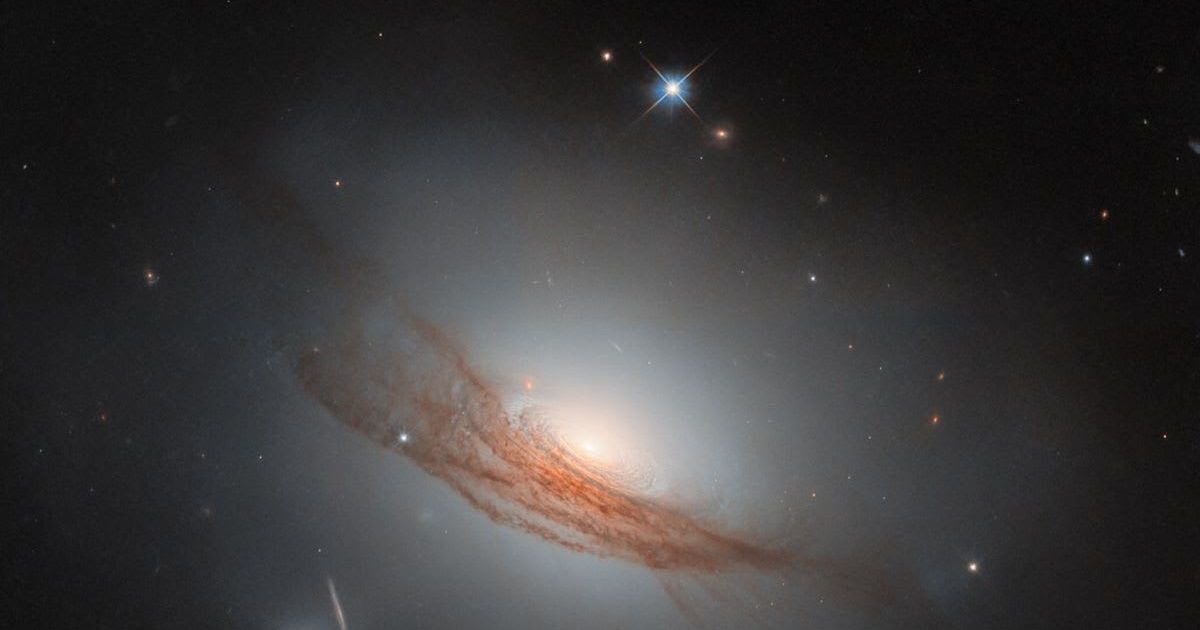
The Hubble Space Telescope has captured a fresh image of NGC 7722, a ‘lens-shaped’ galaxy that is somewhere between more familiar spiral and elliptical galaxies. Located about 187 million light-years away from Earth, it has an extended halo and a bright bulge in its center like an elliptical galaxy. But a bright nucleus surrounded by concentric rings sets it apart from elliptical galaxies. It sits in the constellation Pegasus and also lacks any arms like a spiral galaxy. However, it stands out with its long lanes of dark red dust that circle the outer disk and halo.

Since its discovery, this galaxy has puzzled astronomers, making it difficult for them to classify whether it is a spiral, an elliptical, or something in between. The new Hubble image, the clearest so far of the galaxy, reveals its distinct dust lanes, which are usually found in lenticular galaxies. Astronomers say that the dust lanes probably formed through a merger with another galaxy. But they are not sure about how such galaxies are born. Mergers definitely reshape them, as do other gravitational interactions, that deplete their gas while bringing in new dust.
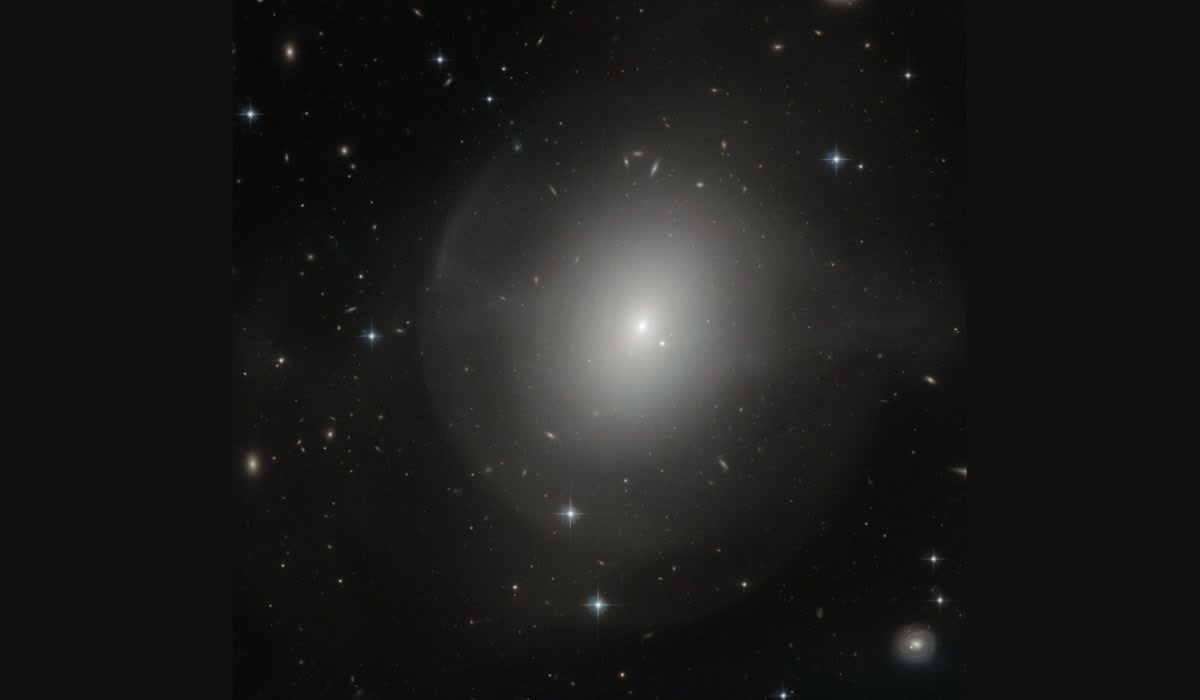
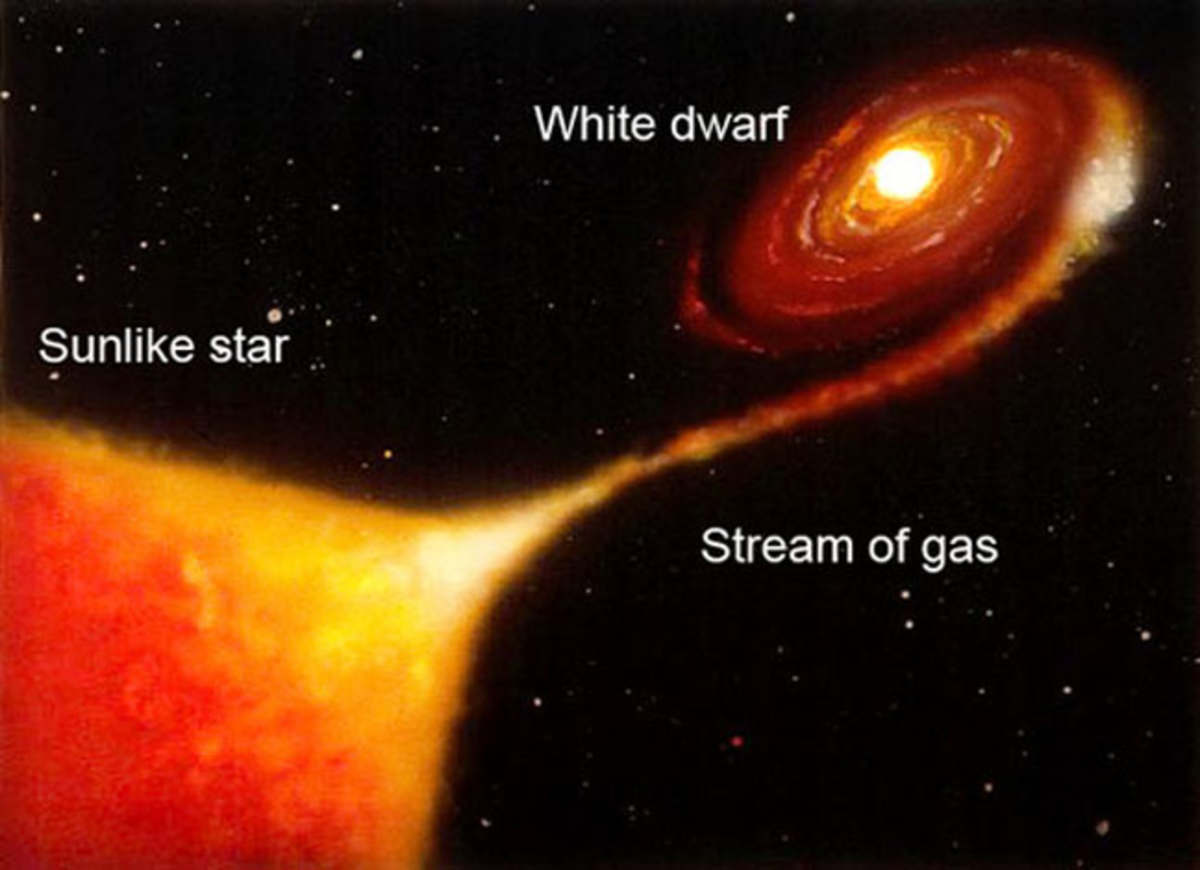
NGC 7722 has fewer young stars than a spiral galaxy. But this doesn’t mean that this galaxy is silent. In 2020, astronomers detected an explosion of a star in this galaxy. Named SN2020SSF, it was a Type Ia supernova, a cosmic event that happens when a white dwarf star in a binary system sucks in enough mass from its partner, making it grow and eventually explode. Such exploding stars consistently pour out light, outshining any celestial objects in the vicinity. At the same time, they give away secrets like how they are born and how far they are from Earth. All these can be revealed by measuring the intensity of their light.
The latest image of NGC 7722 was captured as part of an observing program meant for tracking recent supernovae. Researchers glimpsed the galaxy two years after the supernova faded. Initially, the intense light of the supernova prevented them from studying it. Its aftereffects and surroundings were only understood once the glaring light was gone. Astronomers can use Hubble’s clear vision to search for radioactive materials spilled by the supernova, detect its neighbors, determine the age of original star and study the lone companion it left. It all can be done sitting on Earth, almost 200 million light-years away from the place where the star exploded.
More on Starlust
Astrophotographer captures rare footage of Hubble Space Telescope crossing the Sun
Hubble Telescope spots mysterious collisions in nearby star system echoing our solar system's birth